| Author |
 Replies: 20 / Views: 3,471 Replies: 20 / Views: 3,471 |
Page 2 of 2
|
|
|
|
Bedrock of the Community
United States
20031 Posts |
Quote:
only there's more green corrosion than verdigris That's one in the same! Verdigris is COPPER CORROSION. |
|
Pillar of the Community
 United States
1314 Posts |
|
|
Bedrock of the Community
United States
20031 Posts |
Cupric-nickel corrosion is usually quite difficult to remove without stripping the coin. Often you can get some improvement with VC but normally some of the corrosion will remain. It would be an ambitious project. It'd probably be better to just buy a new coin.
|
|
Pillar of the Community
 United States
5828 Posts |
|
|
Pillar of the Community
United States
1314 Posts |
I did things I'm not proud of. But this is the result. 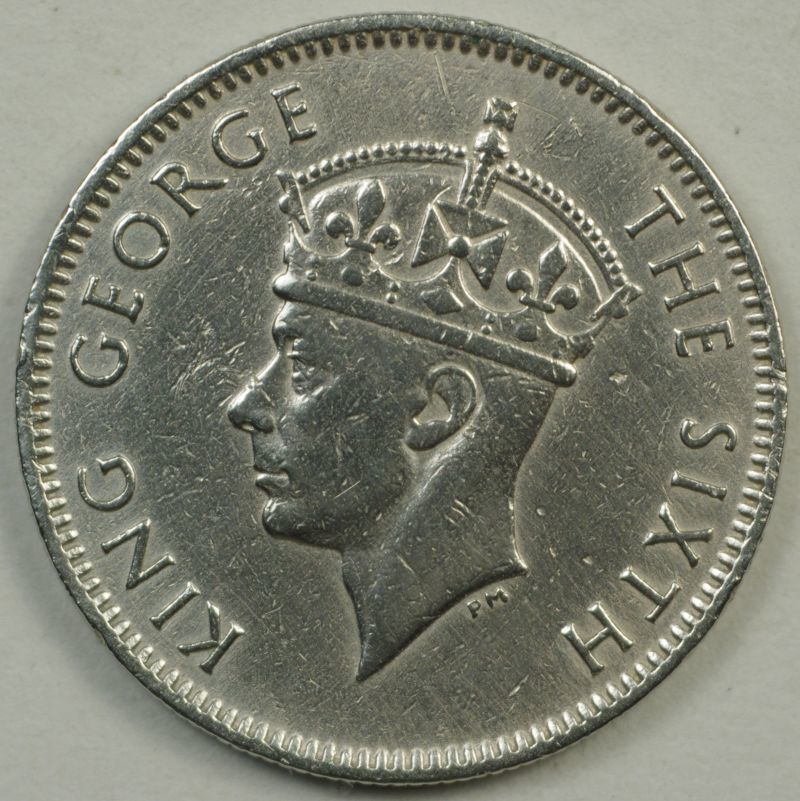 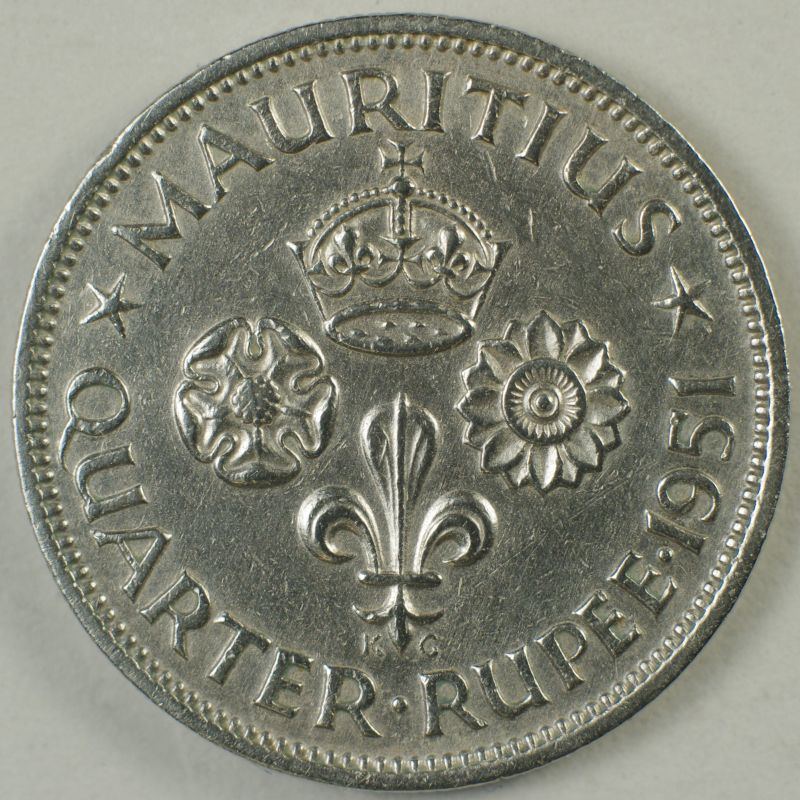 |
|
Pillar of the Community
United States
5828 Posts |
Yikes... What did you do?!
|
|
Pillar of the Community
United States
8533 Posts |
Toothpaste ?
Oregon coin geek.....*** GO BEAVS ! ! ! ***
|
|
Bedrock of the Community
United States
20031 Posts |
Well, which is worse, corroded or cleaned? I'd say it's a tie. LOL
Lincoln Cent Lover!VERDI-CARE™ INVENTOR https://verdi.care/
|
|
Moderator
 United States
195053 Posts |
Quote:
If this were a more valuable coin, I probably would have stopped there. But I'm experimenting, and simply wanted to see what else I could learn. I can certainly understand that. |
|
Pillar of the Community
United States
1314 Posts |
Like I said, I'm not proud of what I had to do to remove the hard green crust, but maybe the coin can begin to age with a more pleasant patina. First I started with an acetone bath just to remove the easy stuff. Then I added a drop of Verdi-Care to each side and spread it around. (It seems to bead up rather than "wet" on the metal. But it will cling to the corrosion spots. I don't know if I have improperly prepared the coin, or if it is supposed to work that way.) After letting it sit in a warm spot for a few hours, much of the green came off. What remained was the hard and crusty stuff, and a lot of the brown staining. If this were a more valuable coin, I probably would have stopped there. But I'm experimenting, and simply wanted to see what else I could learn. Next I swabbed on some phosphoric acid. That stuff was too strong to be easily controlled and it very quickly removed the stain, and etched the surface. 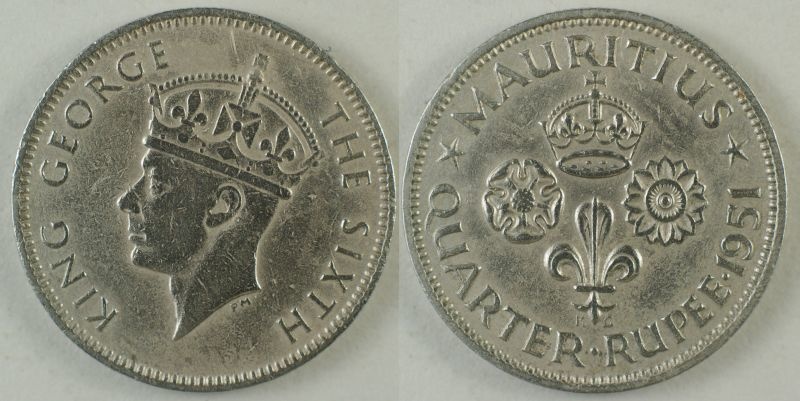 To remove the "frosty" appearance, I rubbed it with a fine polish, similar to tooth paste. This caused the polished look on the central features. I'm guessing a little time in the pocket, followed by exposure to air, will help give it a more natural look. I'm not suggesting that other people do this to their coins, or even that it is a good idea for me to be doing it to mine. I'm just showing what happens if you do certain things to a coin. Naturally, I would never sell a coin that had been cleaned without full disclosure. In a little bit, I'll show some of the more conventional applications of Verdi-Care. Comments are always welcome, and in the case of this topic, I'm expecting some criticism. |
|
Pillar of the Community
United States
1314 Posts |
In another post, Earle42, made mention of porcupine quills as an alternative to the toothpick. https://goccf.com/t/241856&whichpage=2 I haven't tried them yet, but my brother has some dogs that aren't very bright, so I should be able to get some if I'm patient. Earle42's observation is that the quill is sharper than the toothpick, and is used to "scoop" the debris off the coin. I can appreciate that, as I usually sharpen the toothpick with a pen knife, and try to get underneath the crud and lift it off like I'm using a spatula. When I want something softer, I hammer the tip of the toothpick until the fibers separate and use it as a tiny brush. Fluid helps. I've also heard that rose thorns can be used, but haven't tried them either. For a more conventional application of Verti-Care, I selected a pair of Swedish 10 Ore coins. The 1937, is perhaps in VF condition, but has some spots. Verdi-Care seemed to remove much of the crud, and I am happy to stop there. Note: The after shot may appear lighter because of changes in lighting. 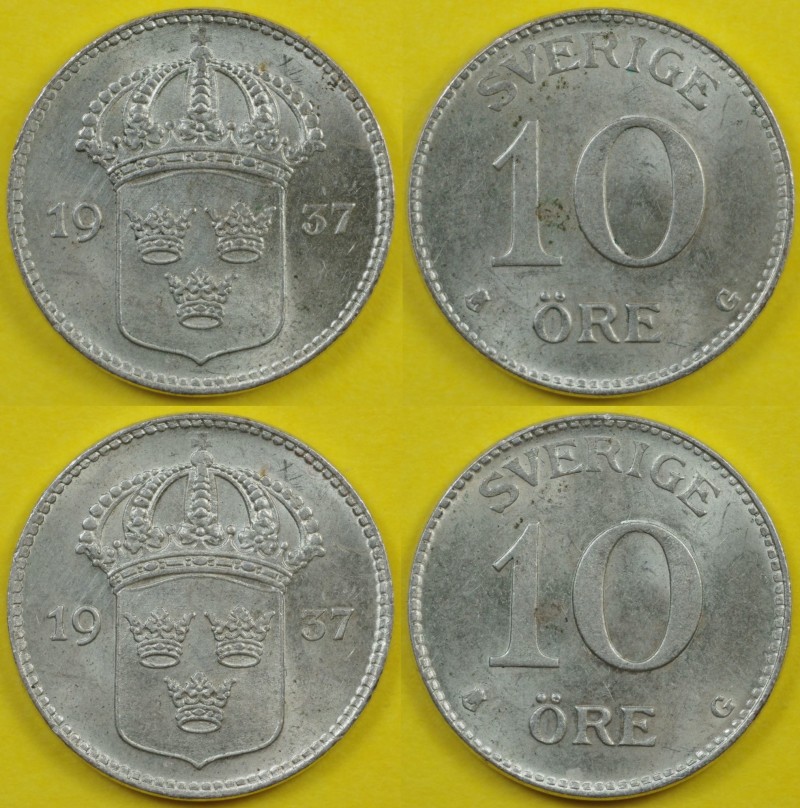 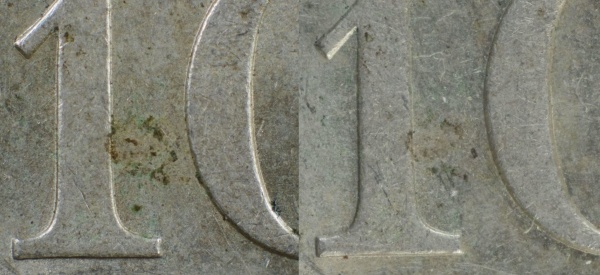 |
|
Pillar of the Community
United States
1314 Posts |
The second of my Swedish 10 Ore coins is a 1917 with a fair amount of verdigris. Like the previous 1937 example it is .400 silver. Again, I applied one drop of Verdi-Care on the obverse and reverse, then let sit for less than 1 hour. 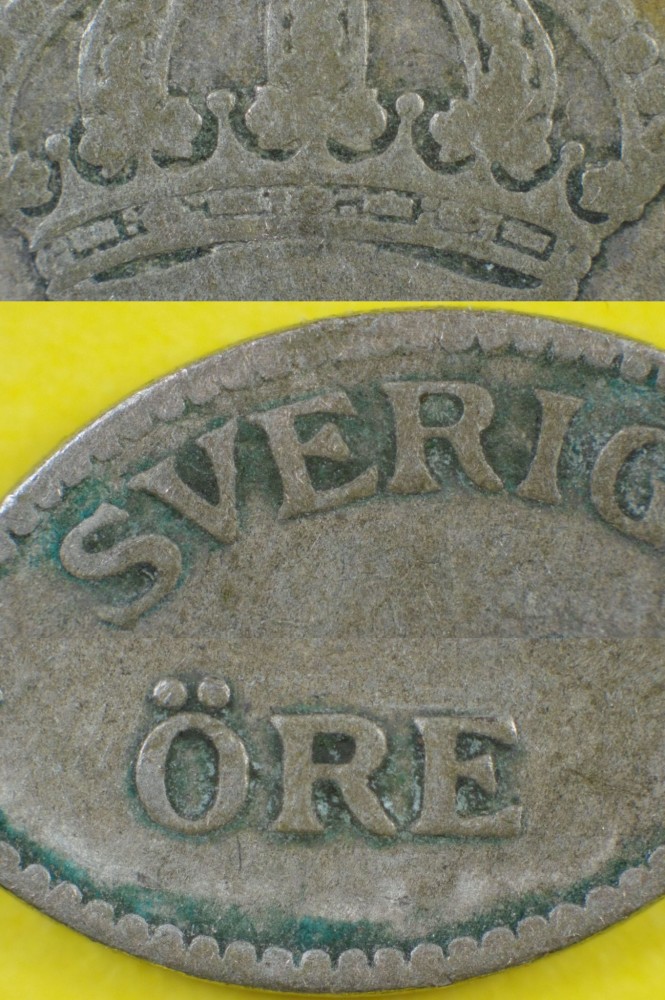 The verdigris turned to slime with the consistency of peanut butter. I didn't use the tooth pick, but immersed it in acetone and while submerged, brushed it gently with a small artist's paint brush. The slime dissolved entirely, leaving no particulate matter. You can see that the protected areas have a lighter patina. I chose to stop there. It is a nice European war-time issue deserving to keep its well earned bumps and tone. 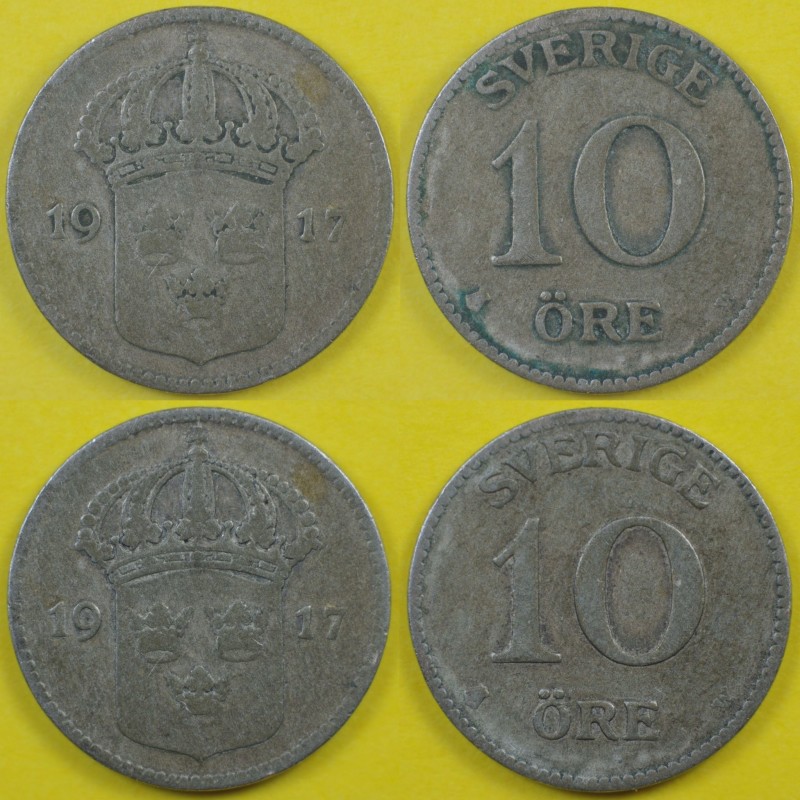 |
|
Pillar of the Community
United States
1314 Posts |
This Chinese 10 Cash from 1912, was an easy one. My primary goal was to remove crud. 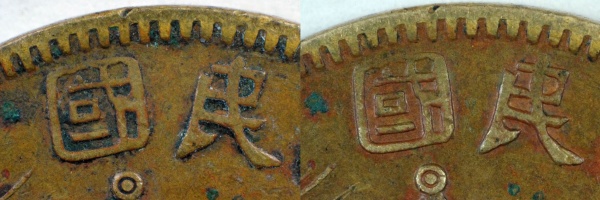 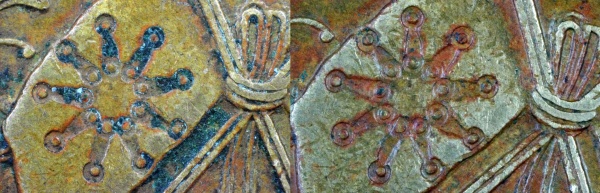 Verti-Care was applied, and about an hour later, the crud almost floated off. I rinsed the coin in acetone and filtered the results. 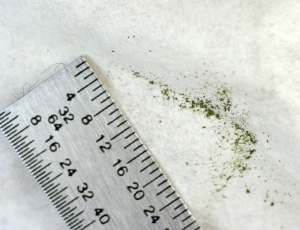 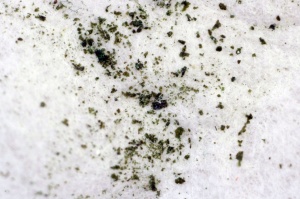 There are still a few crusty green spots, but it was easy and I'm happy with the results. 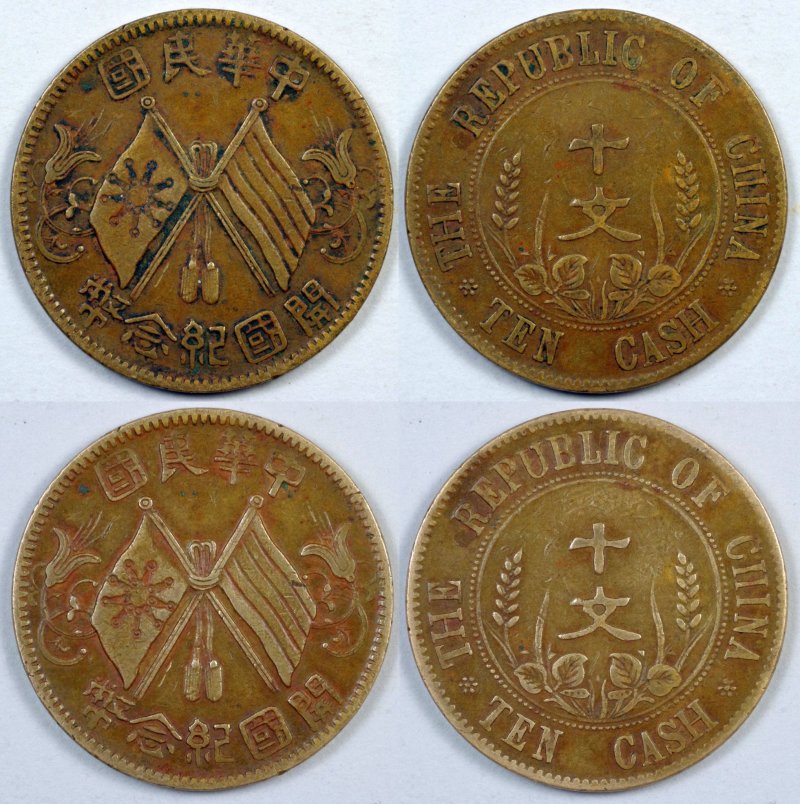 |
|
Bedrock of the Community
United States
20031 Posts |
Now those are closer to true conservation! Nice work!
Lincoln Cent Lover!VERDI-CARE™ INVENTOR https://verdi.care/
|
|
Bedrock of the Community
United States
10065 Posts |
This is some beautiful work here. Good job  Quote:
I haven't tried them yet, but my brother has some dogs that aren't very bright, so I should be able to get some if I'm patient.  Quote:
Earle42's observation is that the quill is sharper than the toothpick, and is used to "scoop" the debris off the coin. Remember to pick the one of least diameter. These can be pretty thin. My perfect sized one for reaching into the middle of a D mint mark finally gave out the other day... here porc-y, porc-y. |
|
Page 2 of 2
|
Replies: 20 / Views: 3,471 |
Page 2 of 2
|






 First Page


 Posted 10/30/2015 8:20 pm





