| Author |
 Replies: 22 / Views: 3,786 Replies: 22 / Views: 3,786 |
Page 2 of 2
|
|
|
|
Moderator
 United States
6563 Posts |
Looks like both of them had some type of contact with some chemicals that changed the color of them. I'm gonna sit back and wait for some of the experts views
|
|
Pillar of the Community
United States
2049 Posts |
Quote:
Looks like both of them had some type of contact with some chemicals that changed the color of them. I'm gonna sit back and wait for some of the experts views That was my first thought when I saw it and bought it, but then the local coin shop that specializes in errors said it looked like a lamination error and he didnt think it was from being in contact with a chemical. It's still a mystery to me. |
|
New Member
 United States
9 Posts |
Everybody I have talked to said it is impossible to be a lamination error due to the fact that it would be copper underneath and not zinc. Also no way a chemical did it or the edges of the flake would be gradual. You can also take your fingernail and flake more off.
|
|
Pillar of the Community
United States
7629 Posts |
I doubt either of these are errors - both appear to be environmental damage of some sort.
|
|
Pillar of the Community
United States
2049 Posts |
Quote:
I doubt either of these are errors - both appear to be environmental damage of some sort. Fair enough but on mine it clearly looks like the top layer of copper came off exposing zinc below. So my question is how are these coins made if they are 95% copper and 5% zinc? Is it a copper core, then dipped in zinc, and then dipped in copper again? I am trying to learn how this could look this way. Or do you think there is any chance that some zinc metal was on the die at the time of stamping? |
|
New Member
United States
9 Posts |
Could not possibly be environmental damage. I can actually take a piece of sharp plastic and flake more of the copper off. The planchet under a microscope has the same surface as the metal zinc. This is a zinc penny with a copper coating. 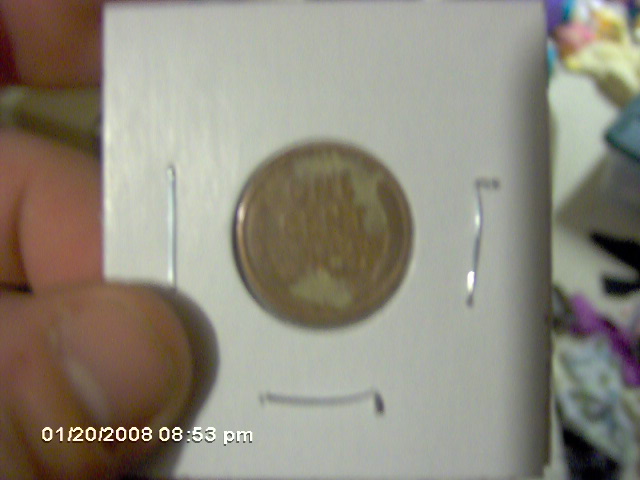 |
|
Pillar of the Community
United States
2049 Posts |
Could not possibly be enviromental damage. I can actually take a piece of sharp plastic and flake more of the copper off. The planchet under a microscope has the same surface as the metal zinc. This is a zinc penny with a copper coating. That's what mine seems to be too. Has anyone here taken a common Wheat penny and it cut it in half so see what the composition is? |
|
New Member
United States
9 Posts |
after I found this coin, I took 5 1930 wheats and scratched them. Not one of them showed any zinc. I then cut them in half. (I know its not legal, but its for the cause) All of them are solid copper.
|
|
Pillar of the Community
United States
1571 Posts |
I could be wrong, but my thought is a bad mix of the alloys. There is historical proof that this was an issue for many years. Note the "striping" on many of the older cents, almost like a piece of paneling.
Dick
|
|
Valued Member
138 Posts |
Laminated split or broken planchet. for a variety of reasons the coin layers may split due to the milling process, and that common causes are gas or alloy mix problems. Lamination cracks usually enter surface of coin at very shallow angle or right angles to the edge.
Edited by Homer1
01/21/2008 7:00 pm
|
|
Pillar of the Community
United States
3507 Posts |
The 1932 D has laquer or glue on it so what is under the laquer or glue has not toned. I see that all the time.
The coin in question is not zinc and is probably coated with something else that can be flaked off. It is damaged. It may even be coated with a thin layer of mercury. For some goofy reason, many years ago, it was a plating experiment in high school before the dangers of mercury were known.
In any case, damage.
|
|
Pillar of the Community
United States
1424 Posts |
Rhino80 said "after I found this coin, I took 5 1930 wheats and scratched them. Not one of them showed any zinc. I then cut them in half. (I know its not legal, but its for the cause) All of them are solid copper." There is nothing illegal about damaging a coin unless you try to pass it off as something it's not. Like gold plating a V nickel to look like a $5 gold piece or adding/removing a mintmark on a coin. |
|
Bedrock of the Community
United States
20049 Posts |
Could be a poor planchet, perhaps the metal was completely mixed so you're seeing a "vein" of zinc or other metallic impurity....just a guess.
|
|
Pillar of the Community
United States
2049 Posts |
Quote:
after I found this coin, I took 5 1930 wheats and scratched them. Not one of them showed any zinc. I then cut them in half. (I know its not legal, but its for the cause) All of them are solid copper. That's what I thought so I am wondering if there is a solid copper core, followed by a zinc coating, followed by a copper coating? As far as if it's legal or not, I believe the way the mint (and Federal Bureau of Engraving for paper money) say that you can do whatever you want with your money since you own it. Maybe someone out there knows for sure? |
|
Bedrock of the Community
United States
12437 Posts |
All pre-1982 Lincolns are copper-zinc/tin alloy, no plating was involved at all until 1982. The one exception was 1943 when the zinc-plated steel planchets were used and had no copper content at all.
|
|
Page 2 of 2
|
Replies: 22 / Views: 3,786 |
Page 2 of 2
|








 First Page


 Posted 01/21/2008 12:08 am


