| Author |
 Replies: 24 / Views: 6,857 Replies: 24 / Views: 6,857 |
Page 2 of 2
|
|
|
|
Valued Member
 United States
165 Posts |
Edited by Earendil
01/28/2016 6:47 pm
|
|
Bedrock of the Community
United States
12057 Posts |
I think it's real, but dug/detector find; how did you establish that it's not silver? Specific gravity test, XRF, ring test.. ?
Member ANA - EAC - TNA - SSDC - CCT #890 "Most of the things worth doing in the world had been declared impossible before they were done." -- Louis D. Brandeis |
|
Valued Member
United States
165 Posts |
Thanks for looking at it. I was honestly going more by the look and feel of the coin than anything else; it just seemed to be a bit too uniformly worn/ damaged. In-hand, the "crudeness" of the coin seems to be resultant more from a poor alloy/ alloy mix, rather than from environmental effects. I could certainly be wrong, though!
Regrettably, I do not have access to any specialized equipment. However, with regard to the ring test, I have tried to get the coin to make silver's characteristic "ping," but all I've been able to get out of it is a dull "thud." If the coin is truly silver, it's as if it's inner structure is compromised, or riddled with holes. Or, the coin could be some other metal. I honestly don't know; I'll probably see what it looks like under magnification.
The other problem was the weight difference. Do you know if it's possible for a full 20% (0.50 grams) of the dime's weight to leach away underground?
Edited by Earendil
01/28/2016 9:13 pm
|
|
Bedrock of the Community
United States
12057 Posts |
I've seen coins lose 50% or more of their planchet weight in acidic soils and beach/marine recovery.
Member ANA - EAC - TNA - SSDC - CCT #890 "Most of the things worth doing in the world had been declared impossible before they were done." -- Louis D. Brandeis |
|
Pillar of the Community
United States
3363 Posts |
I'll go with it being a contemporary forgery. I have a similar mushy-detailed French 2 franc brass forgery. It was no doubt sharper looking before it lost its plating.   Forgery of small coins was common in France. I think that it was easier to get small coins to pass into circulation. Here's an American example, an 1861 plated dime with the silver partially worn off. https://southcarolina1670.wordpress...-the-effort/"Two minutes ago I would have sold my chances for a tired dime." Fred Astaire
Edited by thq
01/28/2016 11:58 pm
|
|
Rest in Peace
United States
17900 Posts |
Depending on the soil acidity and/or alkalinity a 90% silver coin can lay in the ground for centuries with virtually no corrosion.
I've pulled hundreds of single coins out of the soil with the silver surfaces still as shiny as the day it was dropped.
Assigning an age to a coin based on possible deterioration due to oxidation is a fool's game. It depends on what the soil content was like much more than time it was encased.
|
|
Bedrock of the Community
United States
17884 Posts |
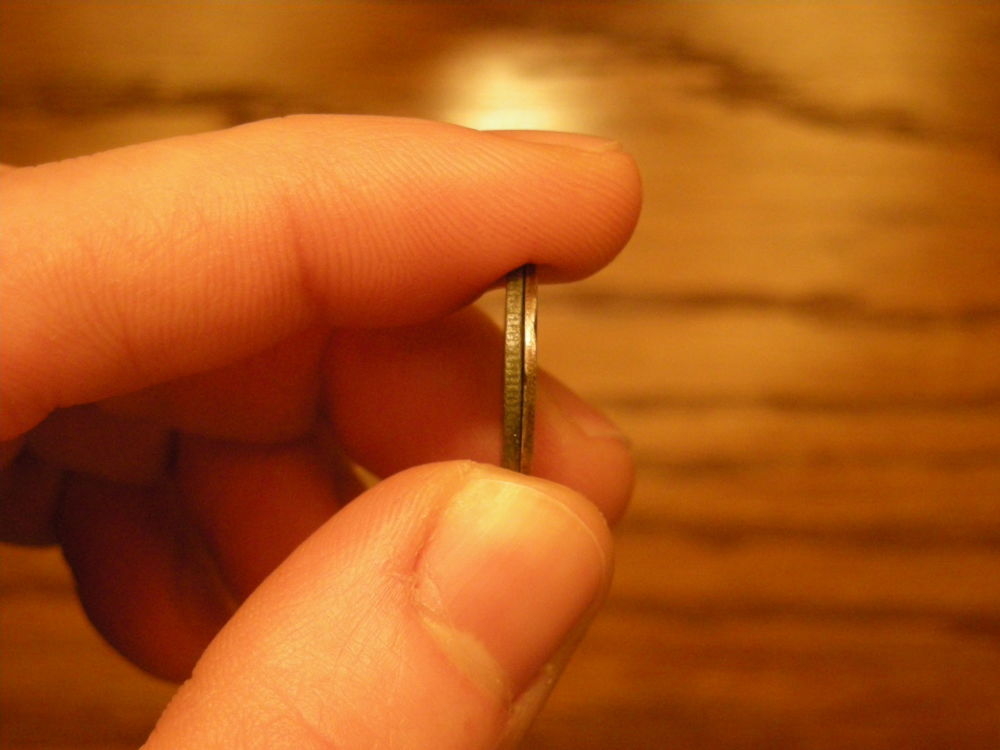
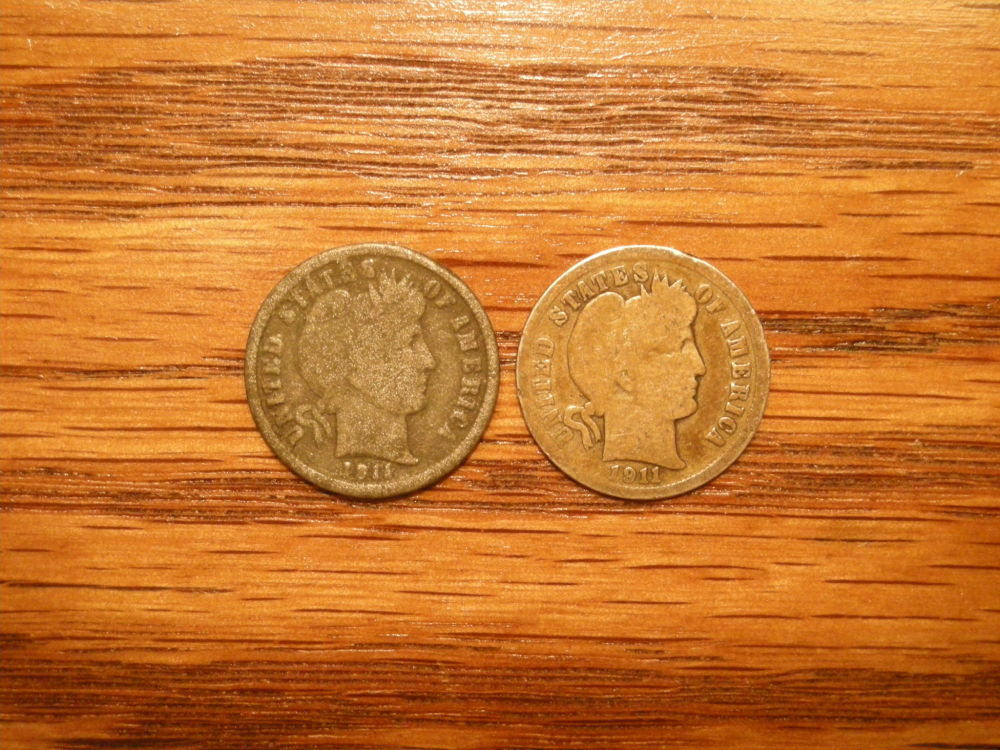
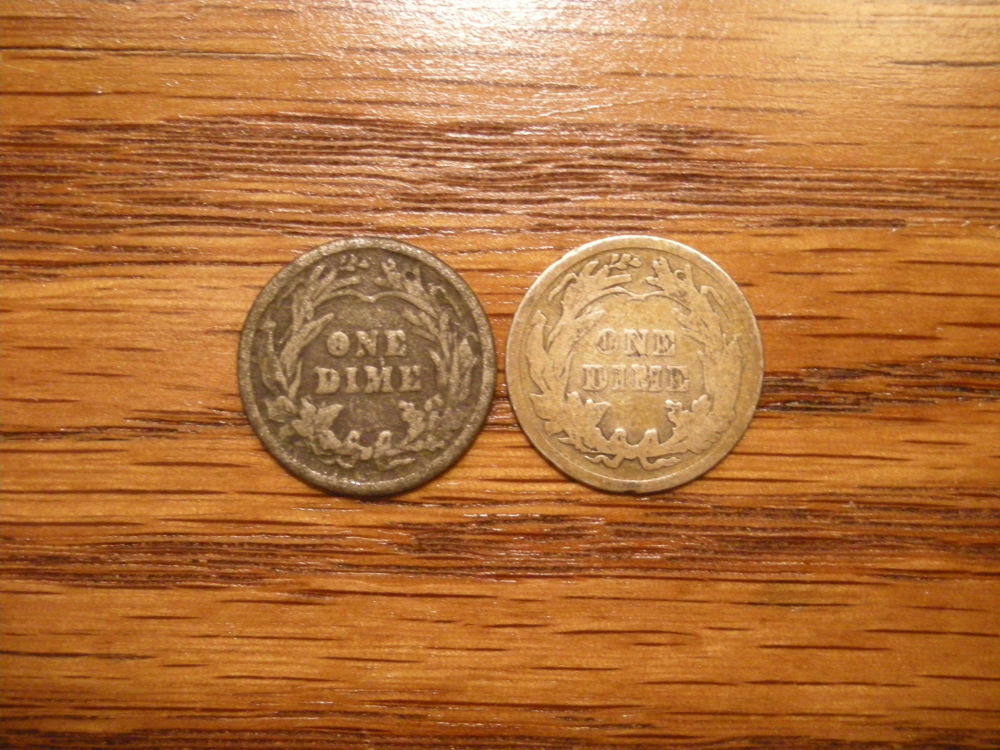
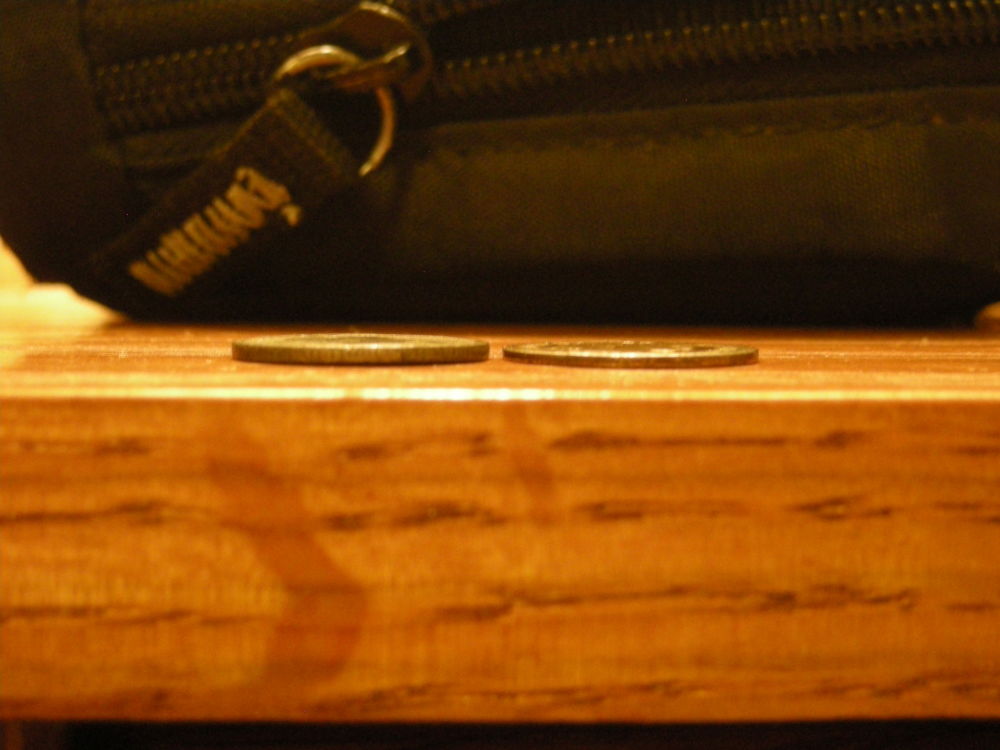
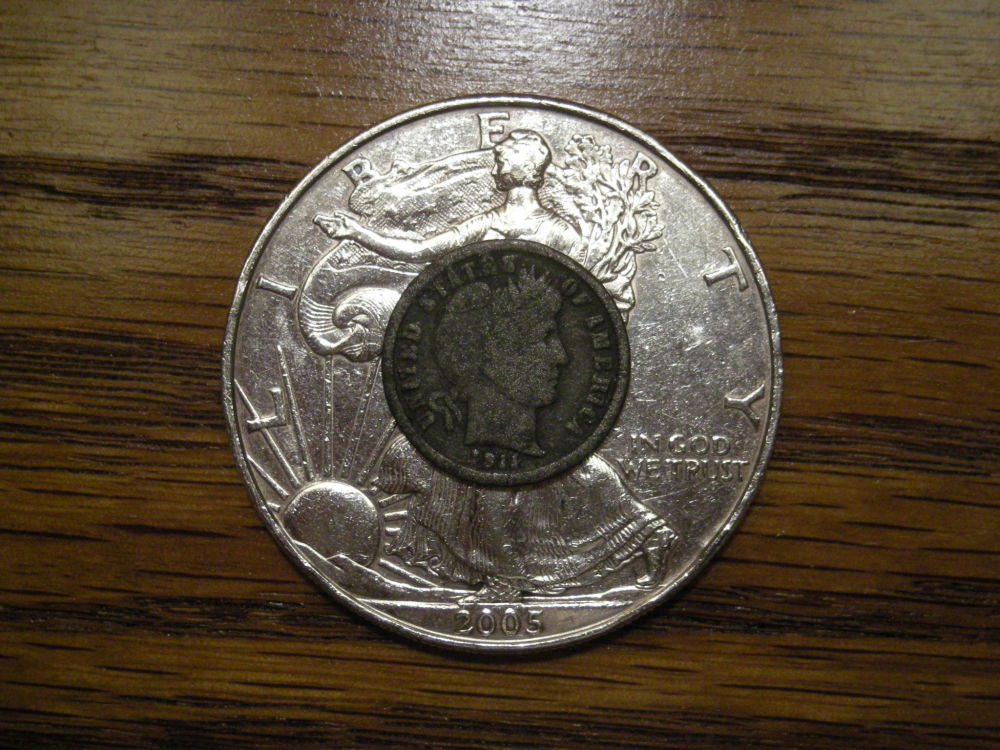
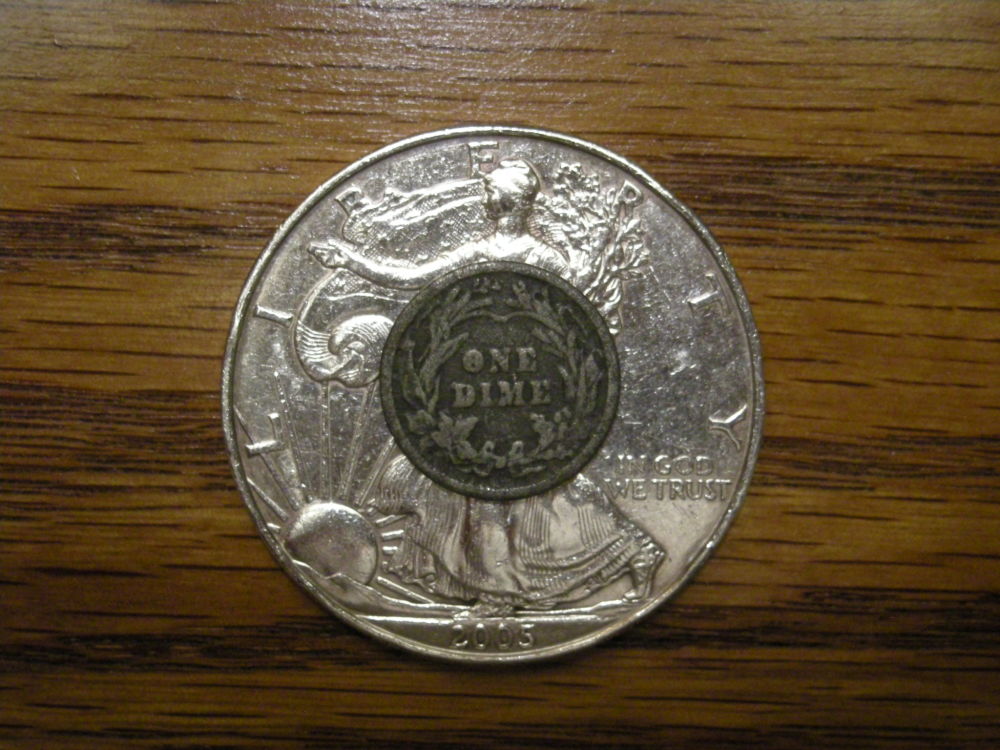
I think there is a fairly good chance it is a contemporary counterfeit. Notice in the side by side images the coin in question is significantly less worn and is thicker than the genuine coin yet is 20% underweight. (Out of curiosity it would be good to know what the well worn genuine coin weighs.)
A specific gravity test would be the clincher.
|
|
Bedrock of the Community
United States
12057 Posts |
Quote:
Depending on the soil acidity and/or alkalinity a 90% silver coin can lay in the ground for centuries with virtually no corrosion. This. I've dug silver in "my own backyard" (chalk/clay) that, except for wear/abrasion, is immediately recognizable as silver while it's still in the hole. I've also dug what I thought was clad on the beach or in the surf zone only to find out that it's really silver that looks like someone stabbed it a thousand times with a small laser beam. Other things affect a dug coin as well: sulfur content, moisture, and aeration, to name a few. Gold and silver often look quite presentable "out of the hole"; copper, on the other hand... Member ANA - EAC - TNA - SSDC - CCT #890 "Most of the things worth doing in the world had been declared impossible before they were done." -- Louis D. Brandeis |
|
Valued Member
United States
165 Posts |
Quote: I'll go with it being a contemporary forgery. I have a similar mushy-detailed French 2 franc brass forgery. It was no doubt sharper looking before it lost its plating. Forgery of small coins was common in France. I think that it was easier to get small coins to pass into circulation. Here's an American example, an 1861 plated dime with the silver partially worn off. https://southcarolina1670.wordpress...-the-effort/ Thanks for looking at it. I definitely thought the "mushiness" was one indication of that, since it doesn't really have the look of a coin that was ever "whole" at some point in its life (as in, no area of the coin appears to have been struck cleanly, nor with any sufficient amount of force). Worn silver coins have a certain "look" to them, but this one seems as if it's always been of rather poor quality. Yes, it likely was. Heck, if it does turn out to be a forgery, my picking it up out of a junk silver box can serve as one more indication of its success in that respect! Granted, it's not the same thing as circulation, but it's pretty close. :) Quote:
I think there is a fairly good chance it is a contemporary counterfeit. Notice in the side by side images the coin in question is significantly less worn and is thicker than the genuine coin yet is 20% underweight. (Out of curiosity it would be good to know what the well worn genuine coin weighs.)
A specific gravity test would be the clincher. Thank you for the assessment. The coin's relative thickness in comparison to its weight was one thing that caught my attention as I was comparing it to the other 1911 dime, which is why I thought a picture of them resting side-by-side might prove useful. In answer to your question, the thinner, genuine 1911 dime weighs 2.23 grams. With regard to a specific gravity test, unfortunately I don't believe I have a beaker or other container with that precise of measurements on its side. Quote:
This.
I've dug silver in "my own backyard" (chalk/clay) that, except for wear/abrasion, is immediately recognizable as silver while it's still in the hole.
I've also dug what I thought was clad on the beach or in the surf zone only to find out that it's really silver that looks like someone stabbed it a thousand times with a small laser beam.
Other things affect a dug coin as well: sulfur content, moisture, and aeration, to name a few.
Gold and silver often look quite presentable "out of the hole"; copper, on the other hand... What initially made me curious about this coin is essentially that: namely, that it isn't at all recognizable as silver (if it is silver). Yes, the coin is worn out and rather pitted, but it doesn't have the look of corroded or tarnished silver. Nor does it sound like silver when it's set on top of other silver dimes. The coin looks more like one of those cheap museum replicas that you can pick up in gift shops, although I doubt it would have been worthwhile for anyone to counterfeit this coin in recent times. Edited by Earendil
01/29/2016 11:00 pm
|
|
Pillar of the Community
United States
3363 Posts |
It looks like lead/zinc/tin color-wise. It might have been made thicker in order to get the base metal weight close to a real dime so that it could work in a vending machine. It might have been put in an acid bath to recover the silver plating which would account for the pitting and bad color.
"Two minutes ago I would have sold my chances for a tired dime." Fred Astaire
Edited by thq
01/30/2016 09:11 am
|
|
Pillar of the Community
United States
1769 Posts |
Probably not worth it? - Send it to me with $20 plus $10 P&H and I will do a XRF (SEM/EDS) on the specimen if you want. The only reason - it intrigues me a bit - its THICKNESS.
Normal charges are $75 minimally plus P&H. Your move ... contact me privately if interested.
JPL
John Lorenzo
Numismatist
United States
|
|
Valued Member
United States
165 Posts |
Quote:
It looks like lead/zinc/tin color-wise. It might have been made thicker in order to get the base metal weight close to a real dime so that it could work in a vending machine. It might have been put in an acid bath to recover the silver plating which would account for the pitting and bad color. Thanks for looking at it. Both the color and texture are quite dissimilar from tarnished and/ or corroded silver, so that's one possibility. And I didn't think of your last two points; thanks! Quote:
Probably not worth it? - Send it to me with $20 plus $10 P&H and I will do a XRF (SEM/EDS) on the specimen if you want. The only reason - it intrigues me a bit - its THICKNESS.
Normal charges are $75 minimally plus P&H. Your move ... contact me privately if interested.
JPL
John Lorenzo
Numismatist
United States Thank you very much for the offer. I am sorry, but I will have to decline for the moment. If I could be sure that the $30 investment would prove beneficial (such as if the coin was valuable as a contemporary counterfeit), I would certainly be happy to take you up on this offer. However, as I only have $1 invested in the dime at the moment, I would like to try and find out more about it before I commit to anything. |
|
Pillar of the Community
United States
1769 Posts |
I agree if we assume:
a = money spent on the dime
b = cost of analysis
c= value knowing the alloy of this early 20th CCC (not Chinese IMO)
a+b > c
IMO
JPL
Edited by colonialjohn
02/01/2016 6:55 pm
|
|
Valued Member
United States
165 Posts |
Quote:
I agree if we assume:
a = money spent on the dime
b = cost of analysis
c= value knowing the alloy of this early 20th CCC (not Chinese IMO)
a+b > c
IMO
JPL Thanks again for your offer. I sent the photos to a Barber coin specialist, and he determined that it's simply a common counterfeit, with a value of $1 or so. So, at this point, I unfortunately do not believe it is "worth it" in a monetary sense to analyze the coin's composition. Of course, given the correct opportunity, it might be interesting to for curiosity's sake. :) |
|
Pillar of the Community
United States
4932 Posts |
Dug silver usually doesn't look this bad.
|
|
Page 2 of 2
|
Replies: 24 / Views: 6,857 |
Page 2 of 2
|






 First Page


 Posted 01/28/2016 8:45 pm


