| Author |
 Replies: 20 / Views: 2,402 Replies: 20 / Views: 2,402 |
Page 2 of 2
|
|
|
|
Bedrock of the Community
United States
10982 Posts |
I'm thinking PR63 with a shot at CAM. Nice looking piece.
|
|
Pillar of the Community
 United States
5828 Posts |
PR-63 CAM, maybe MS-64.... LOOK at those die polishing lines in the shield!
|
|
Pillar of the Community
United States
6370 Posts |
|
|
Pillar of the Community
United States
2843 Posts |
I thought proof as well, say PF64.
Cool broken letters.
|
|
Pillar of the Community
United States
2843 Posts |
|
|
Pillar of the Community
United States
1499 Posts |
My grade would be PR-64. It's a nice coin that might look nicer in person with the golden toning.
|
|
Pillar of the Community
United States
8137 Posts |
|
|
Valued Member
United States
196 Posts |
Are those die scratches on the Obverse in the field in the lower left quadrant of the cross on top of the shield?
|
|
Bedrock of the Community
United States
94367 Posts |
Proof 64 here as well. Very nice.
|
|
Pillar of the Community
United States
4337 Posts |
Quote:
Are those die scratches on the Obverse in the field in the lower left quadrant of the cross on top of the shield? could be but quite possibly a die clash, not sure though. Wish I had it in-hand to inspect. |
|
Bedrock of the Community
 United States
12057 Posts |
Yes, it's a proof issue. The lines inside the shield, and atop it, are incuse die polishing lines. The broken letter effect is due to extensive die polishing and a heavily basined die. Will post grade later tonight. These coins stubbornly refused to be nice and mint correctly. From the series' inception through its termination, the Shield nickel simply would not strike well. Longacre tried a lot of things - switching the die location (anvil for hammer) in a two or three year experiment, removing the rays from the design, and experimenting with strike force and pressure, with little or no real success. In 1870 and going forward the mint began refining the polishing process used on proof dies, resulting in nicer proof strikes with more cameo contrast and less polishing marks, with a much finer grain to the polishing and the abrasive used with the basin wheel/disc. So this coin is from a transition year. Coins in 1871 and later get progressively "cleaner" in Proof, and 1869 and earlier tend to be more like this coin with the artifacts of die preparation clearly visible. The basining was heavy not only to give that mirror eye appeal but also to clean up the issues caused by the striking difficulties, such as die cracks, clash marks, etc. As striking difficulties were worked on, less and less "makeup" had to be done to get acceptable Proofs. Member ANA - EAC - TNA - SSDC - CCT #890 "Most of the things worth doing in the world had been declared impossible before they were done." -- Louis D. Brandeis |
|
Pillar of the Community
United States
5828 Posts |
Very useful info!
Im changing my guess to PR-64 CAM
|
|
Bedrock of the Community
Canada
11922 Posts |
|
|
Bedrock of the Community
United States
12057 Posts |
Good call. Not quite CAM but not too far off. 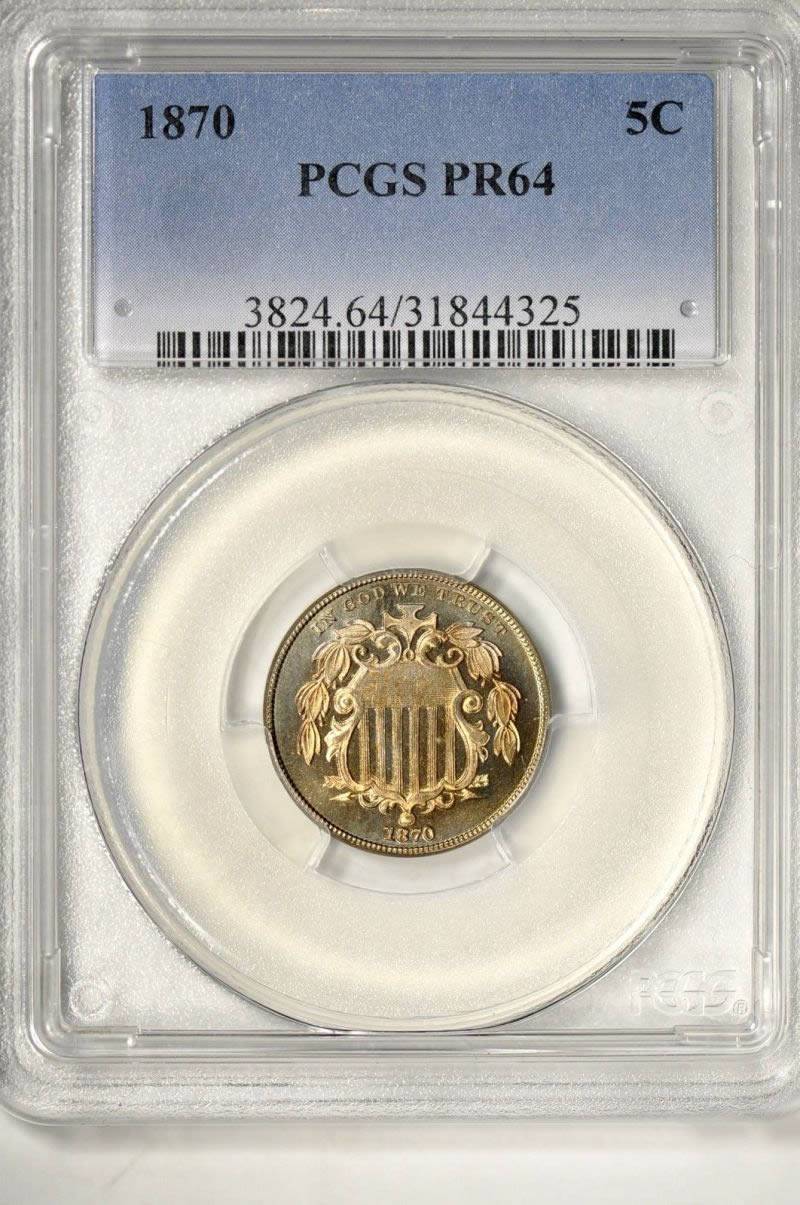 Member ANA - EAC - TNA - SSDC - CCT #890 "Most of the things worth doing in the world had been declared impossible before they were done." -- Louis D. Brandeis |
|
Pillar of the Community
United States
5828 Posts |
Nice  |
|
Page 2 of 2
|
Replies: 20 / Views: 2,402 |
Page 2 of 2
|




 First Page


 Posted 05/12/2016 08:33 am





