| Author |
 Replies: 18 / Views: 3,500 Replies: 18 / Views: 3,500 |
Page 2 of 2
|
|
|
|
New Member
 United States
4 Posts |
Thank you all. I edited my original post to include a picture of the reverse side.
|
|
Pillar of the Community
United States
2752 Posts |
It's a mid-stage counterbrockage. It was generated by a die cap that had a brockage of the obverse design on its reverse face.
Error coin writer and researcher.
|
|
Pillar of the Community
United States
3516 Posts |
Mike, does that generate more premium than a regular brockage?
|
|
Bedrock of the Community
United States
12437 Posts |
The image is in relief and in the proper orientation so that should make it a counterbrockage(struck by a brockage acting as the die).
|
|
Pillar of the Community
United States
2752 Posts |
The value of any brockage or counterbrockage will vary according to its stage, completeness, and clarity. I'd say this counterbrockage would bring between $50 and $75 on ebay. Error coin writer and researcher.
Edited by mikediamond
07/21/2016 3:54 pm
|
|
New Member
United States
4 Posts |
Wow, very interesting indeed. Thank you all for the quick and technical responses. I figured there would be lots of error pennies out there so I'm very surprised to hear it could be worth that much!
|
|
Rest in Peace
United States
4078 Posts |
Quote:I'd say this counterbrockage would bring between $50 and $75 on ebay. Mike, you just made, Quote:
olde_english800 A collector for life.  |
|
Bedrock of the Community
United States
62064 Posts |
I added it to my educational files:  |
|
Bedrock of the Community
 United States
12936 Posts |
Interesting. Does anyone have a mock-up or sketch of a die cap / brockage / counterbrockage in progress/action? It would help me visualize everything that's happening here, and I'm having a hard time wrapping my brain around this whole concept.  I understand to have a die cap you have to have a struck planchet that doesn't get ejected from the press and "sticks to" the die (either hammer or anvil). If it sticks to the hammer die it will have the anvil's die design as a brockage and if it sticks to the anvil die it will have the hammer's die design as a brockage? So then the next planchet gets fed into the press, and when the dies come together, the die with the cap imparts a counterbrockage on the new planchet? This feels like one of those IQ tests where you have to imagine the faces of a deconstructed cube. |
|
Bedrock of the Community
United States
62064 Posts |
Sounds like from your description that you have a die cap stuck on the die and then another planchet is struck and then another one with out being ejected: 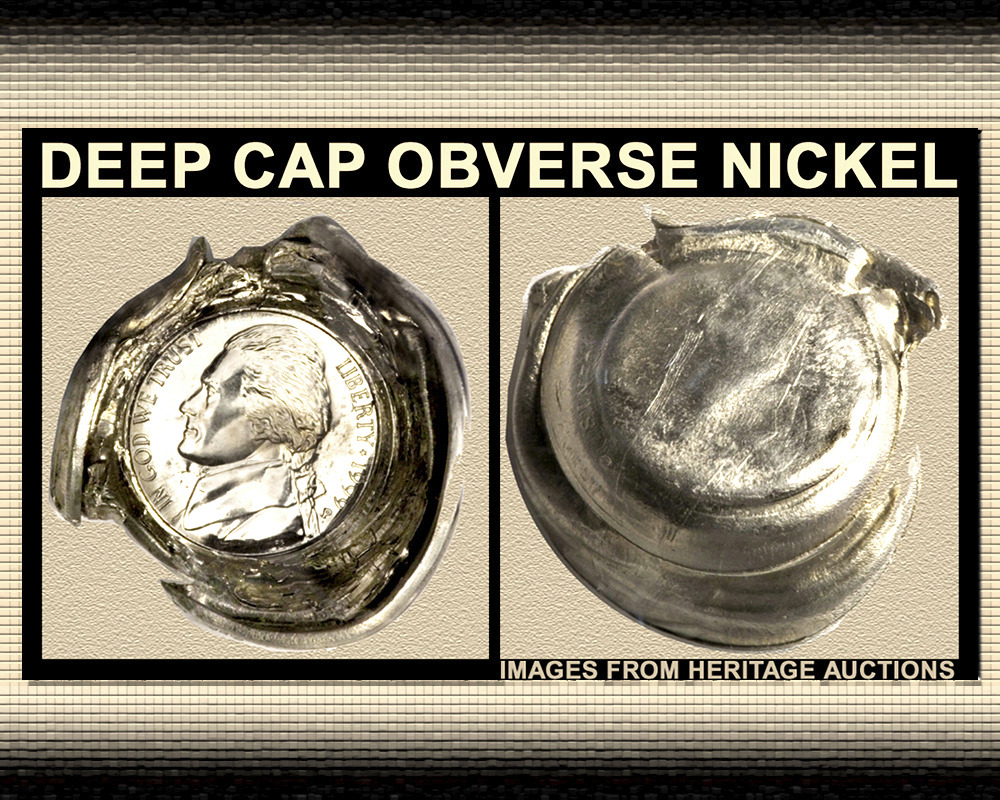 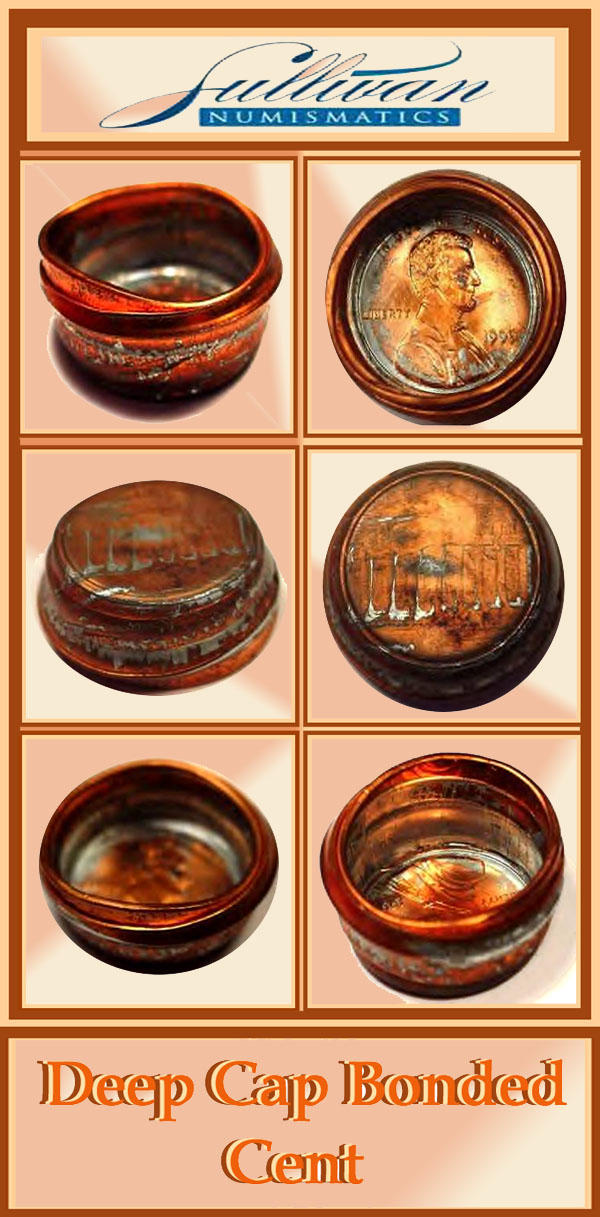 Looks like this die cap was bonded with a few others? 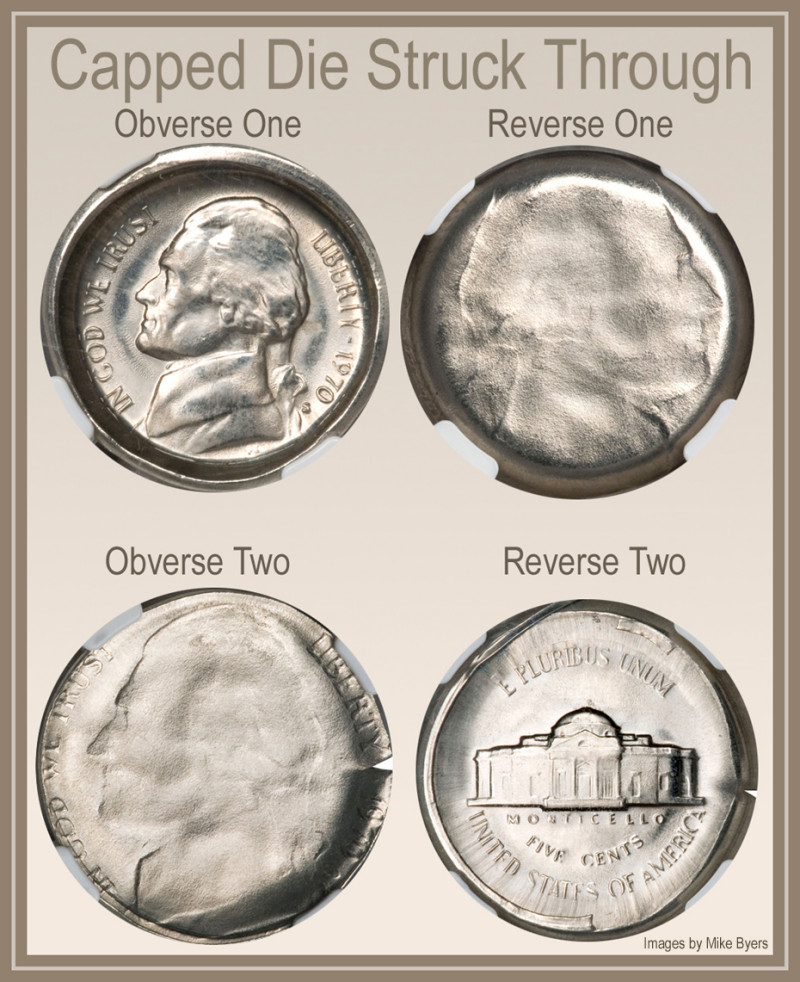 Obverse die cap: 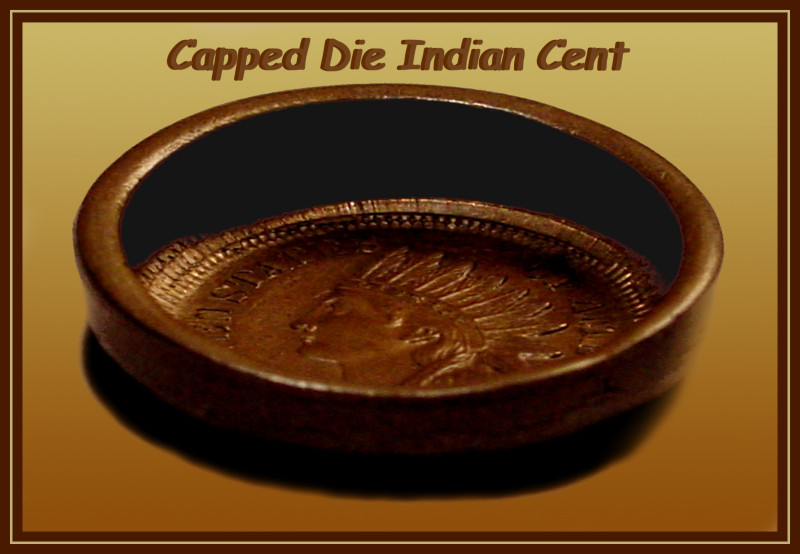 Reverse die cap: 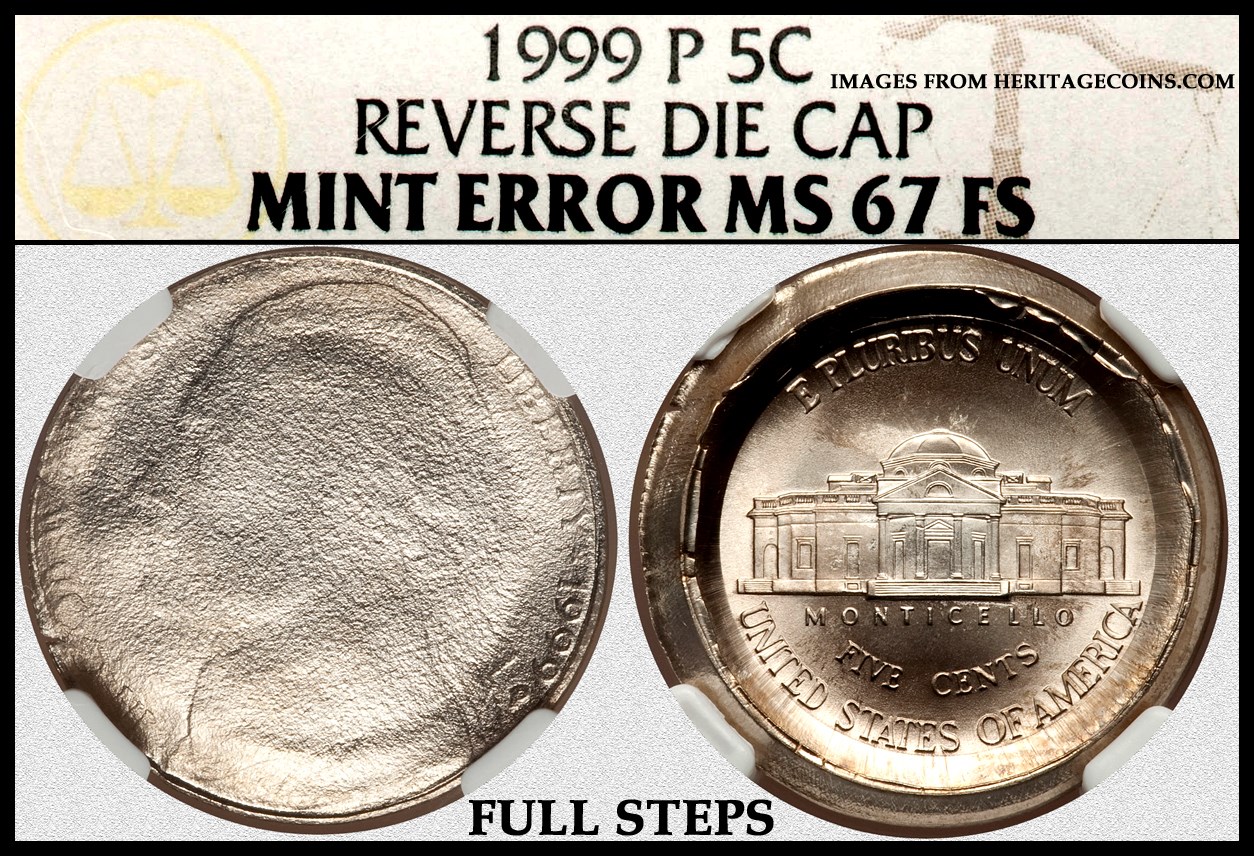 Eventually the die cap will fall off: 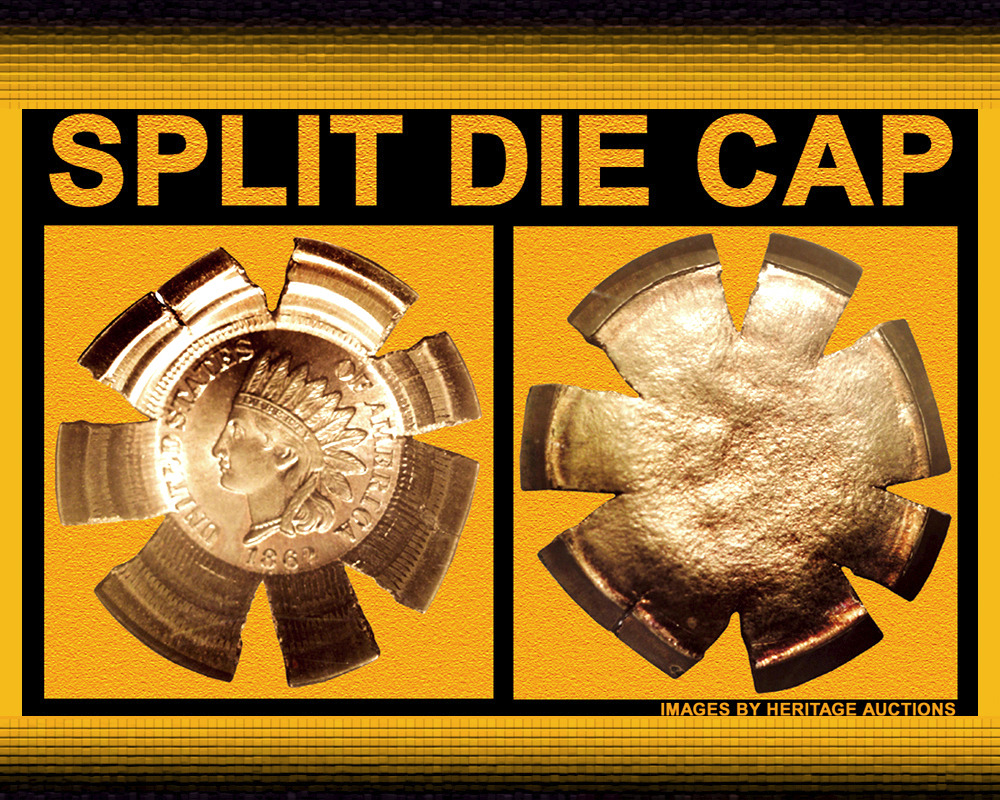 Struck through capped (reverse) hammer die: 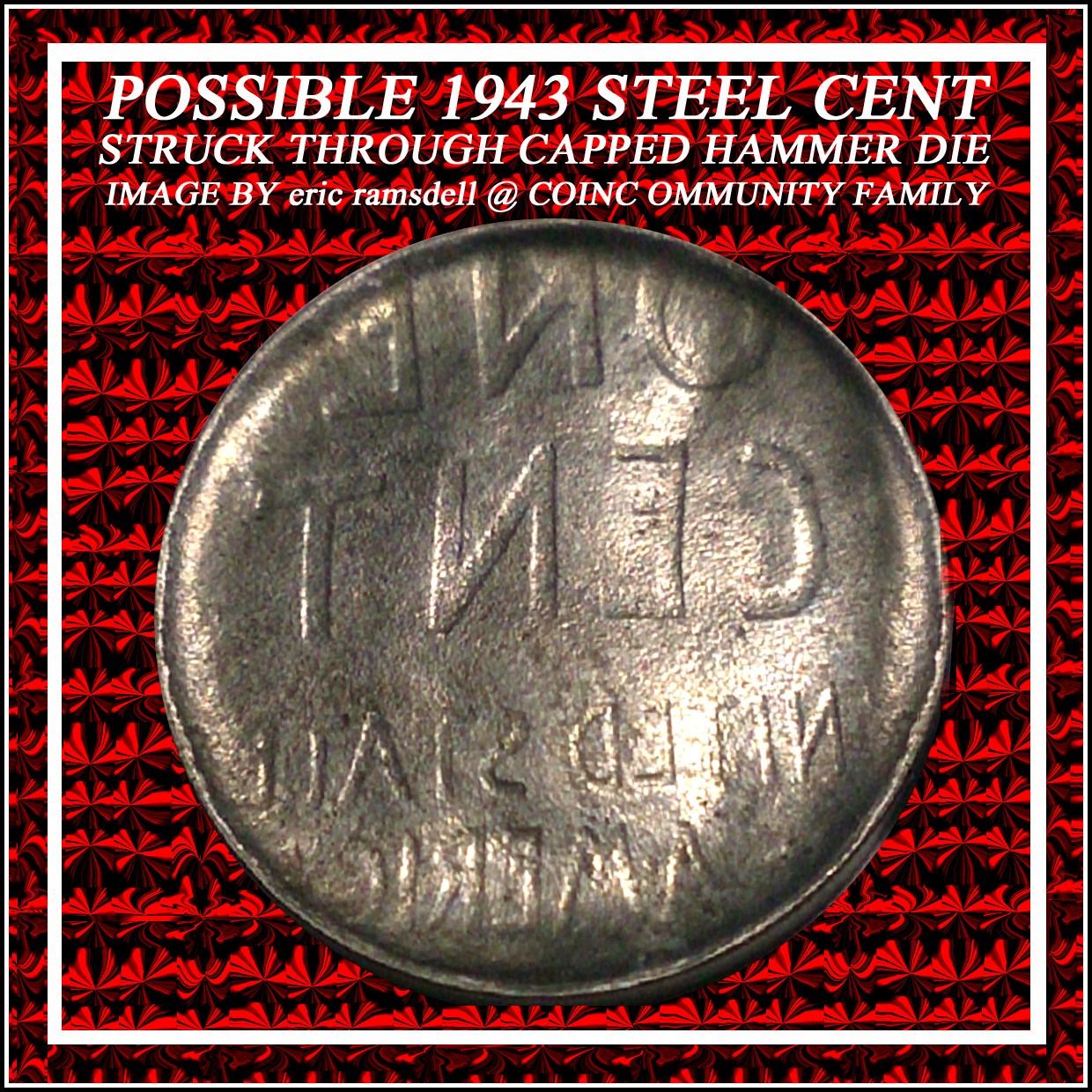 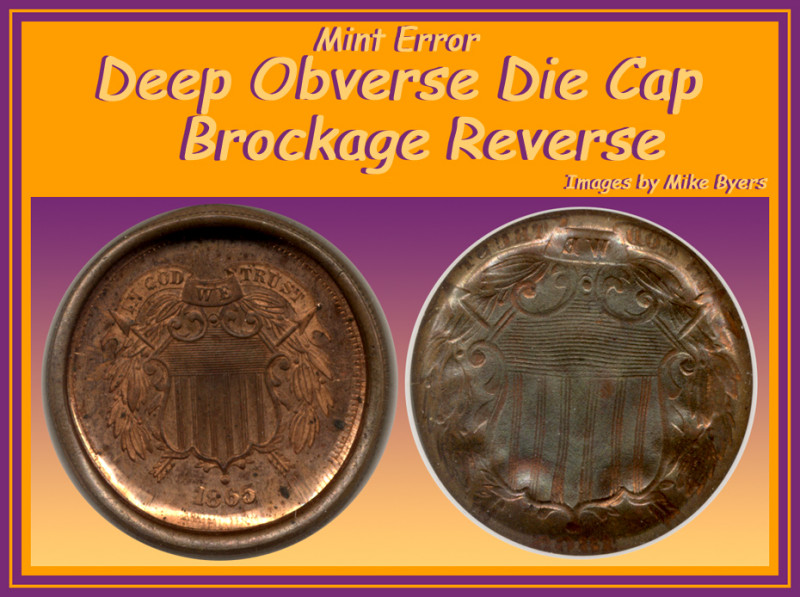 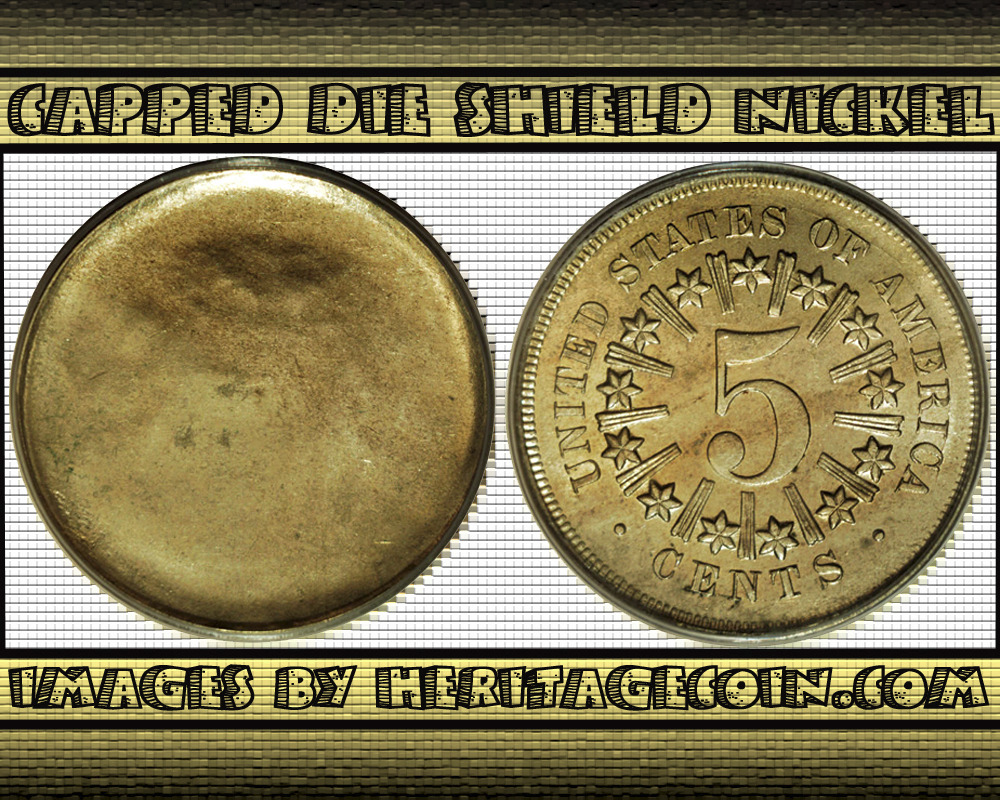 But an actual sequence I don't have. |
|
Bedrock of the Community
United States
12936 Posts |
Wow. Those are amazing.
I will continue to read and attempt to get a better understanding. Thanks for the photos.
|
|
Rest in Peace
United States
18456 Posts |
That sure is amazing Coop ,thank you for all your valuable photos ! |
|
Bedrock of the Community
United States
17884 Posts |
Quote:
Interesting. Does anyone have a mock-up or sketch of a die cap / brockage / counterbrockage in progress/action? It would help me visualize everything that's happening here, and I'm having a hard time wrapping my brain around this whole concept. No pictures but here is a step by step procedure that should represent the process. 1. Planchet is fed into the coining chamber and is struck but does not get ejected. 2. Another planchet is fed in on top of struck coin in coining chamber, is struck, and becomes stuck to the hammer die. This stuck coin now has a brockage for the reverse. 3. First coin is now ejected from the coining chamber. 4. Planchet is fed into the coining chamber and is struck between the reverse die and the brockage capped hammer die. It will show a normal rev and a distorted normally oriented and raised obv image. 5. As more coins are struck the cap on the hammer die spreads carrying away the peripheral design leaving an enlarged distorted center design. After several coins are produced you are getting coins that look like the OP coin, with a normal rev and only an enlarged image of the central design on the obv. Edited by Conder101
07/23/2016 2:25 pm
|
|
Valued Member
United States
403 Posts |
Quote:
3. First coin is now ejected from the coining chamber.
Sounds right. How will this first coin now appear after being struck normally the first time, then through a blank planchet a second time? Are there examples? |
|
Bedrock of the Community
United States
62064 Posts |
I think Mike Diamond mentioned if two coins were in the chamber at the same time, the strike could make the top or lower coin into a die cap.
|
|
Page 2 of 2
|
Replies: 18 / Views: 3,500 |
Page 2 of 2
|




 First Page
 Posted 07/21/2016 3:49 pm





