Thanks commems ..... are you stating that because there was debate about the Olympics program that this led Congress to decide to scrap all plans to approve one of the 1985 programs that were introduced?
If true, these Legislators come across as a bunch of panties in a bunch immature adolescents.
Actually, the debate in Congress was not so much about the coins, but the merchandising of them. Some wanted them to be sold by professional promoters, instead of the USM, which they viewed would increase sales, and maximize profits for the USOC (the beneficiary of the surcharge). The Mint was not then accustomed to selling a high volume of coins to the public.
It is interesting to consider this debate in hindsight, where merchandisers still do purchase a large quantity of certain low-mintage issues for re-sale, and other issues are available to wholesalers for a small discount.
The two commem limit is why the mint turned to striking silver medals in 2003 for the NWF series, which were struct on proof silver dollar planchets. They later turned to striking medals on ASE planchets, like this year's American Liberty medals.
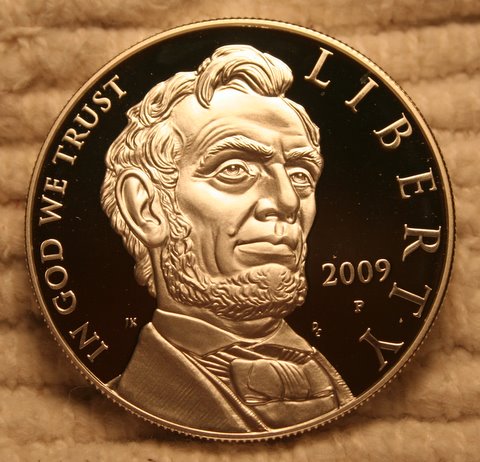
GR58 you have inspired me. I like the look of the Lincoln dollar, if I recall correctly it was offered in a set with the 2009 centennial cents. I think I will put this on my 'must buy' list.
Not sure what "this" refers to, but coins in general are a very risky investment strategy. The modern American commemorative series is at a very low price point right now. Will it go lower still? More important, will it ever bounce back?
Basically, thinking of coins as investments us a mistake.
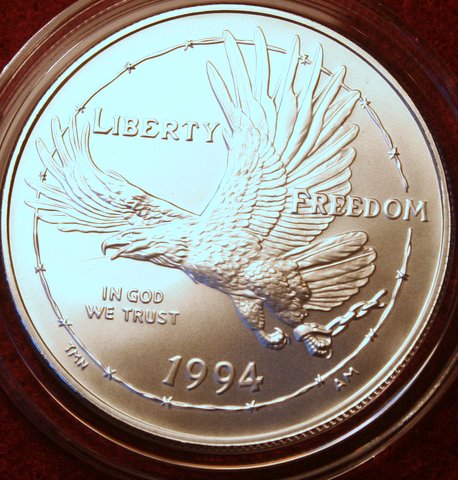
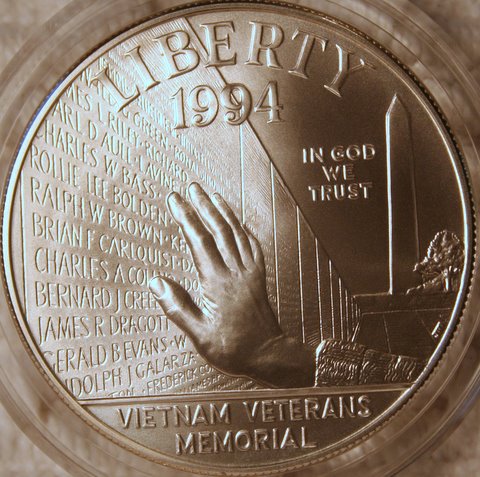
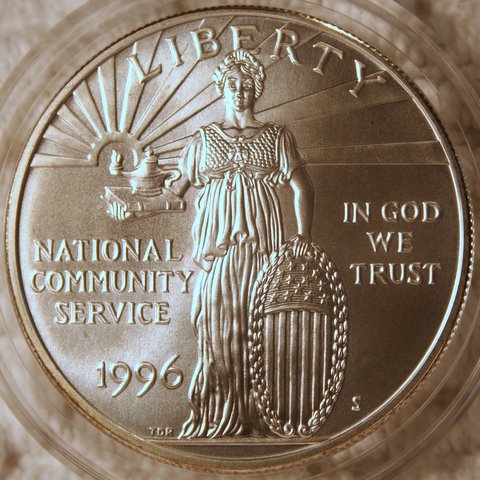
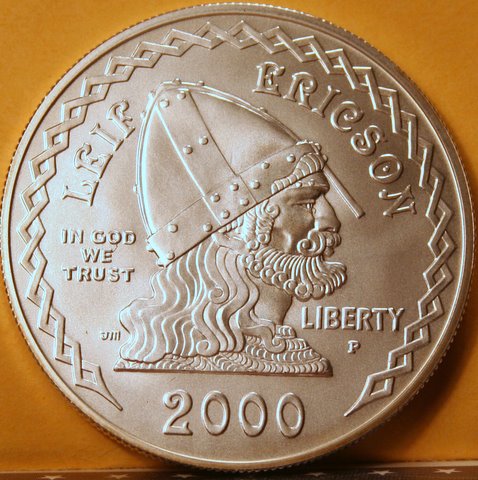
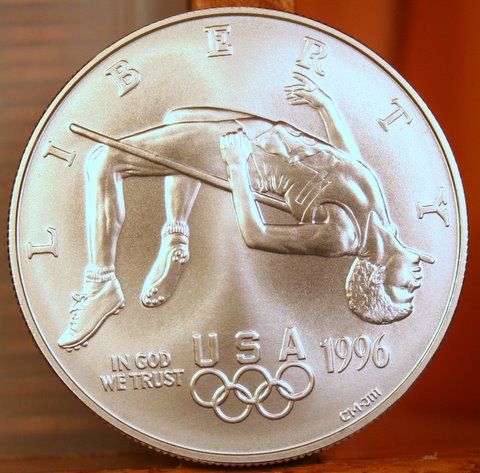
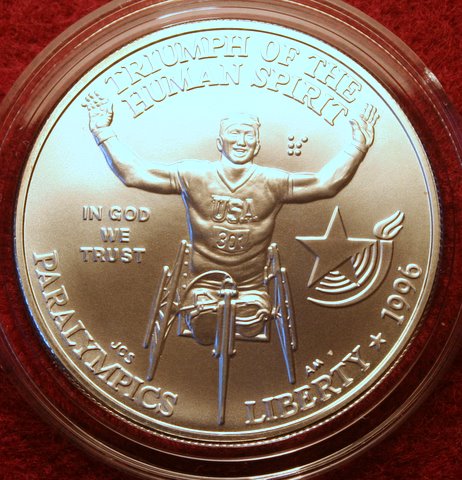
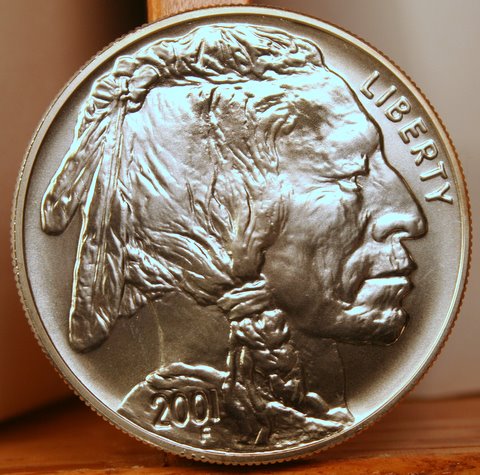
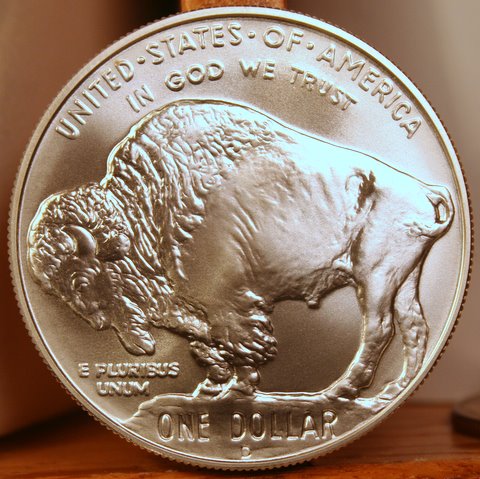
@GR58: Always nice to see images of your modern commemorative silver dollars - thanks for taking the time to share!
@Jolteon: Agree with others that one needs to tread carefully if they are looking to "invest" in coins. The reality is that the vast majority of coins -- circulation or NCLT -- are not good investments. They should be purchased only for the joy of collecting.
The coins that tend to show noticeable market value increases are generally the key coins within a series (only a small percentage of the overall coins in a series) and true numismatic rarities. Most other coins struggle to keep up with annual inflation increases. It's true that some modern coins go up in value soon after their release due to exaggerated hype, but they almost all trend back to less impressive values.
Enjoy the hobby but don't expect more from your coins than they can provide.
Collecting history one coin or medal at a time! (c) commems. All rights reserved.
For these ... some of the very common commemorative dollars can be bought cheaper than Morgan dollars.
---------
Then look at what funds you use. Maybe buy a commemorative dollar .. or Morgan dollar, instead of buying a bottle of Captain Morgan rum. Do that for years and years.
When your much older .. you be more healthy, from not drinking to much rum. And you will have accumulated value in silver dollars.
Quote: The two commem limit is why the mint turned to striking silver medals in 2003 for the NWF series, which were struct on proof silver dollar planchets. They later turned to striking medals on ASE planchets, like this year's American Liberty medals.
I'm sorry, but this is not an accurate statement. Neither the striking of the National Wildlife Refuge silver medals by the US Mint in 2003 nor the medals struck in subsequent years has a direct cause-and-effect connection to the limit placed on US commemorative coins years earlier.
Congress imposed the two-program per year limit for commemorative coins in 1996 via a bill that would become Public Law 104-208 when it was signed by President William Clinton. This bill was specific to commemorative coins.
The Mint has long had the authorization to strike medals without case-by-case Congressional authorization (such authorization dates back to 1873). It is free to collaborate with other Government Agencies and Departments on medal projects; such was the case with the National Wildlife Refuge medals.
The medal route was not chosen, however, because commemorative coins were not an option. As Congress had only authorized one commemorative program for 2003 (the Wright Brothers' First Flight Centennial), a program for the National Wildlife Refuge centennial could have also been considered. No bills calling for a NWR commemorative coin program were introduced, however.
This year's American Liberty medal is not specifically a commemorative medal. While it does celebrate the concept of liberty in America, the medal is part of the Mint's new Liberty-themed gold coin and silver medal series that is expected to become an annual program - it is a thematic or topical series rather than a commemorative series and is not sponsored by a private organization (as all NCLT US commemorative coins are) or a vehicle for fundraising via surcharges (as all NCLT US commemorative coins are).
Collecting history one coin or medal at a time! (c) commems. All rights reserved.
Commems, I stand corrected. I used the wrong words, all I meant to say is exactly what you state so much more eloquently and correctly. I know that the mint can strike medals without specific congressional authorization. I should have simply said that the mint was able to strike the medals because they were not coins and therefore not subject to the limits that were set, and as you stated, without a law being passed the mint took the initiative to strike the NWR medals (I guess those were my first "subscription" orders). I thank you for your expertise and your willingness to share it. Your knowledge enriches us all.
Quote: ...The Mint has long had the authorization to strike medals without case-by-case Congressional authorization (such authorization dates back to 1873). It is free to collaborate with other Government Agencies and Departments on medal projects...
I've been researching special Government medals (sGm) (aka special medals for US Government agencies) produced by the Bureau of the Mint (BOM) for the White House Office (WHO) during the years 1958 through 1962. The WHO is an US Government agency.
Simply put, the WHO functioned in an acquirer role and the BOM functioned in a manufacturer role. The WHO approved the final design, set the mintage, set the delivery date, and paid for the sGms after delivery.
The WHO sGms are private issues from the BOM to the WHO. As such, the BOM has never disclosed general numismatic information relating to these WHO sGm. Interestingly, the sGm still holds an "unacknowledged" status with the BOM (now named the US Mint). US Mint...its been over 5 decades!
Currently, I'm updating my 2015 book relating to these WHO sGm.
The BOM "unacknowledged" status has benefited me with two related books. I established and organized the series. I named the series. I've assigned a commercial name (my business use) and non-commercial name for the series (both to be published in the updated book). I named and assigned a numismatic identifier for each of the 21 medals in the series.
One thing I need to point out. The WHO sGm is a personalized medal produced for use by the President of the United States. The WHO sGm was personally awarded by the President or issued with direction from the President. It truly is a presidential numismatic artifact and not a commemorative medal.
A few documents from my research can be seen in this video.
My identifier 1960 Eisenhower Paris Summit Event Medal, DDE-C2-02, C2=Class 2 obverse, 38.1mm, .900 silver, Reverse #2 Summit Paris 1960 Original mintage: 1,200 Destruction Witnessed (WHO and US Treasury officials): 491 Net surviving population: 709
I like the classic commemoratives due to low mintage and the fact that they have already been around for 50-100 years. The day you can buy equal weight silver modern commemoratives for less that similar bullion coins I will be a buyer. Accumulating silver or gold for the long haul can be lucrative if you can resist selling out when it seems gold and silver prices are going down and will stay down forever. They never do stay down forever and if commodity prices spike you can make a lot of money or you can just hold on as insurance against calamity. Usually, for gold or silver prices to really spike something bad has to happen in the economy. So you sit with pounds of silver waiting for economic collapse. This can be depressing unless you just like silver and gold coins for their own sake. If our economy picks up then I predict gold prices will fall, but silver may do well because it is a manufacturing metal. It has many broad industrial uses.
Disclaimer: While a tremendous amount of effort goes into ensuring the accuracy of the information contained in this site, Coin Community assumes no liability for errors. Copyright 2005 - 2026 Coin Community Family- all rights reserved worldwide. Use of any images or content on this website without prior written permission of Coin Community or the original lender is strictly prohibited. Contact Us | Advertise Here | Privacy Policy / Terms of Use








 First Page


 Posted 09/07/2016 1:11 pm