Coin Community Family of Web Sites Join Thousands of Coin, Bullion, & Money Collectors
Specializing in Modern Numismatics Royal Canadian Mint products, Canadian, Polish, American, and world coins and banknotes. 300,000 items to help build your collection! Coin, Banknote and Medal Collectors's Online Mall Join Thousands of Coin, Bullion, & Money Collectors Royal Estate Auctions - $1 Coin AuctionsVancouvers #1 Coin and Paper Money Dealer


Username:
Password:
Save Password
Forgot your Password?


This page may contain links that result in small commissions to keep this free site up and running.

Welcome Guest! Registering and/or logging in will remove the anchor (bottom) ads. It's Free!

Leper Colony Coinage

To participate in the forum you must log in or register.
First Page  Showing last 15 replies.
Author Previous TopicReplies: 18 / Views: 2,433Next Topic Page 2 of 2
Pillar of the Community
United States
6130 Posts
 Posted 04/05/2017  1:18 pm  Show Profile   Bookmark this reply Add Finn235 to your friends list
The Philippines under the US issued several series of coins for the Culion leper colony. I have a cupronickel Peso I will have to get an image of. They are not cheap, but generally affordable ($25-50 for most).

Japan also issued some leper issues, but I assume they are extremely rare as I have never seen one for sale at any price.
Valued Member
United States
137 Posts
 Posted 04/05/2017  5:33 pm  Show Profile   Bookmark this reply Add twinkinator to your friends list
I have two from Culion Island in the Philippines - 1 peso and 1/2 peso coins from the 1920s. I think they're a really neat conversation piece, and I picked them up for under $15 each from the auction at my local coin club, so I was pretty pleased!
Moderator
Learn More...
Australia
16857 Posts
 Posted 04/05/2017  5:48 pm  Show Profile   Bookmark this reply Add Sap to your friends list
I only have one of the Philippine ones.

Quote:
But, does anyone know if they had any exchange value outside the colonies?

They were only spendable within the colony, and theoretically exchangeable for regular money of that country at a 1:1 ratio, but only indirectly exchangeable. The whole point of making leprosarium coinage was to ensure that "clean" people didn't touch the same money that lepers handled; leprosarium money itself was never supposed to leave the colony. So if a patient in a leper colony wished to buy something from outside, they'd hand over their money to the colony staff - and the colony staff would then go out and buy the items with regular money.
Don't say "infinitely" when you mean "very"; otherwise, you'll have no word left when you want to talk about something really infinite. - C. S. Lewis
Valued Member
Uruguay
217 Posts
 Posted 04/08/2017  8:14 pm  Show Profile   Bookmark this reply Add cara to your friends list
Thank you Sap, what you say makes sense at that time, it was prejudice. Maybe for that, these coins always look cleaned...as Chute72 noted.
Pillar of the Community
United States
1933 Posts
 Posted 10/30/2025  12:56 pm  Show Profile   Bookmark this reply Add mikev50 to your friends list
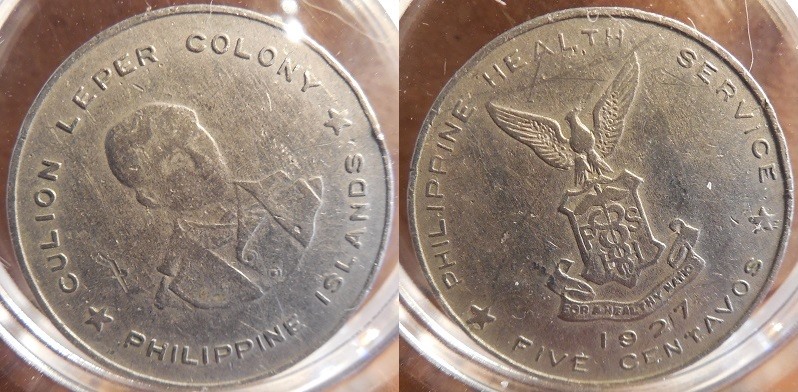
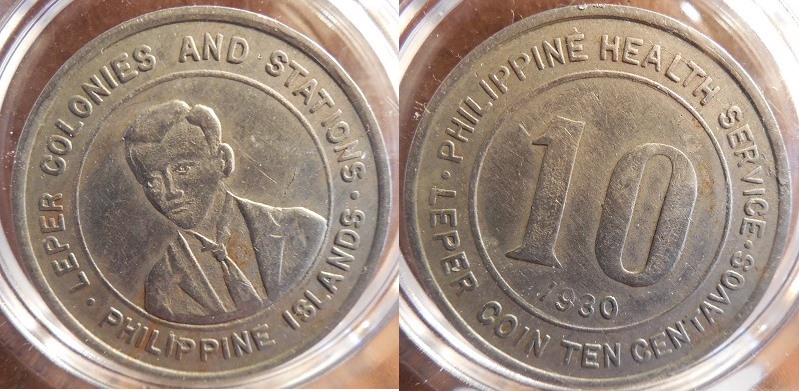
just got these two--my first--interesting--1927(40$)-1930(35$)--
Leper-Colony-Coinage
Edited by mikev50
10/30/2025 1:00 pm
Bedrock of the Community
Learn More...
United States
25531 Posts
 Posted 10/30/2025  1:10 pm  Show Profile   Bookmark this reply Add HondoB to your friends list
Excellent Culion coins, mikev! These are not common coins.
Inordinately fascinated by bits of metal with strange markings and figures
Moderator
Learn More...
United States
189546 Posts
Pillar of the Community
United States
1915 Posts
 Posted 10/30/2025  5:11 pm  Show Profile   Bookmark this reply Add Albert to your friends list
There is an online coin collector group that strives to achieve one from every country.
Their comprehensive checklist has these coins or tokens as one chooses.
Pillar of the Community
Learn More...
United States
7961 Posts
 Posted 11/02/2025  5:51 pm  Show Profile   Bookmark this reply Add tdziemia to your friends list
Interesting topic. Thanks to those who revived it!

Bedrock of the Community
Learn More...
United States
25531 Posts
 Posted 11/02/2025  6:34 pm  Show Profile   Bookmark this reply Add HondoB to your friends list
Here are some of mine from Culion:

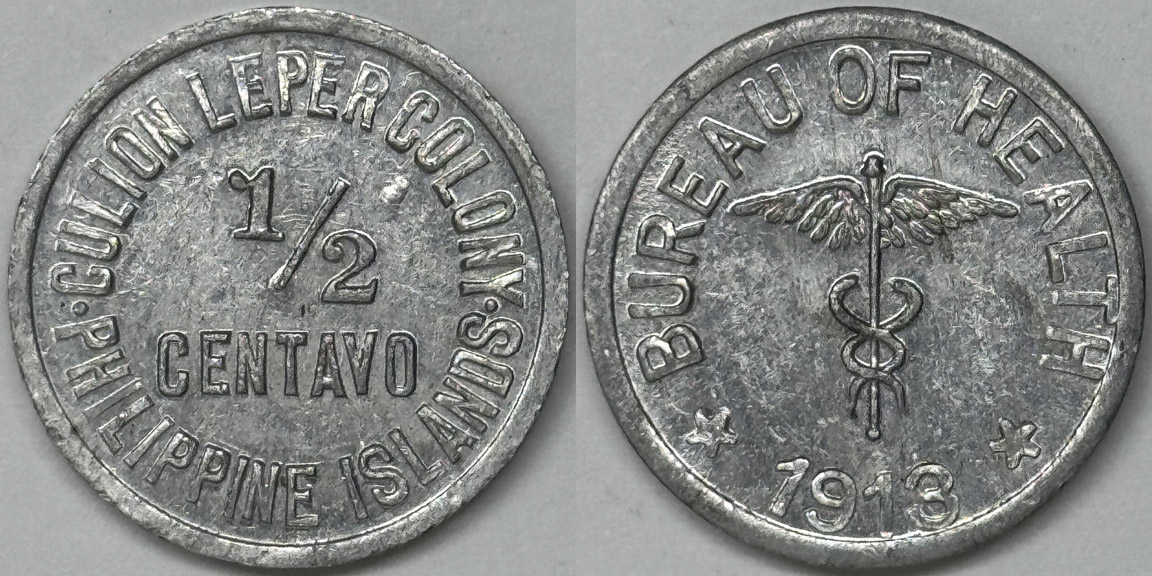
Culion Leper Colony (Philippines) ½ Centavo 1913 - KM#1; 17,000 minted
Leper-Colony-Coinage

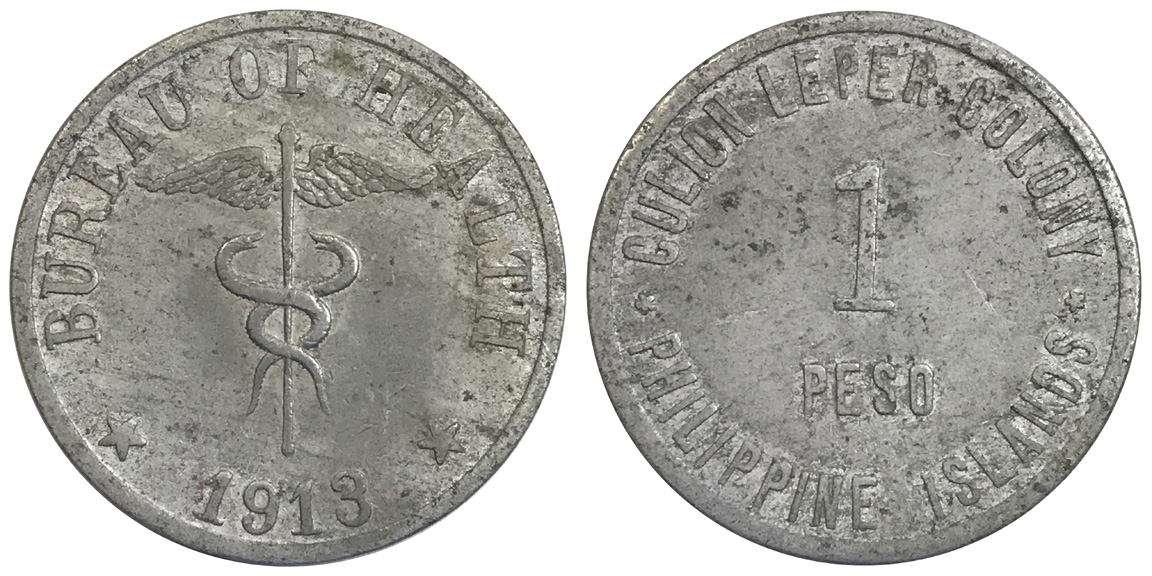
Culion Leper Colony (Philippines) 1 Peso 1913 - 8600 minted
Leper-Colony-Coinage

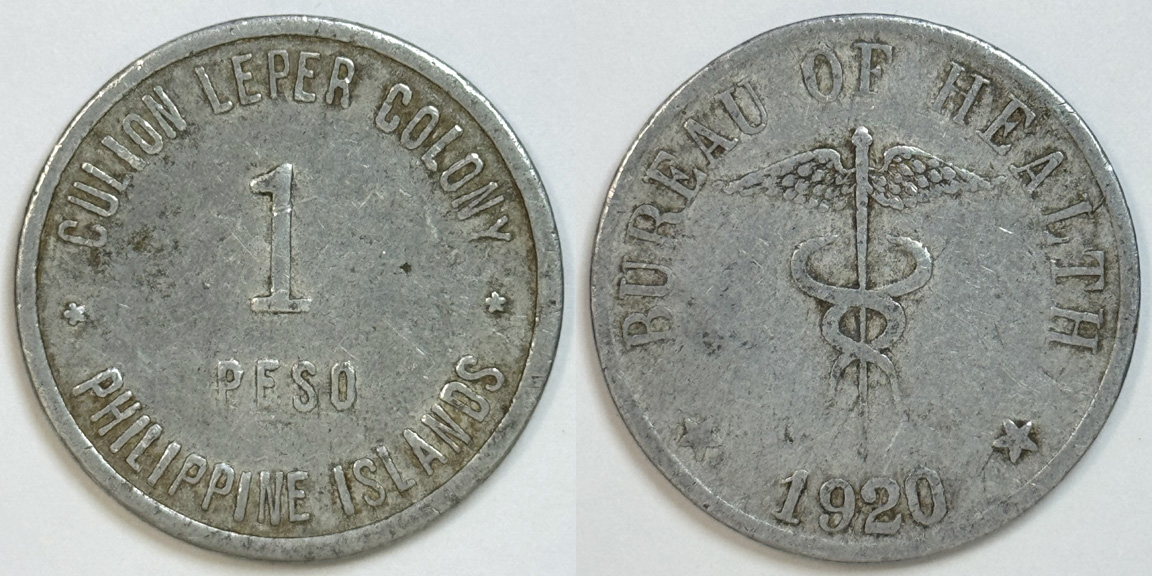
Culion Leper Colony 1 Peso 1920 - 4000 minted
Leper-Colony-Coinage

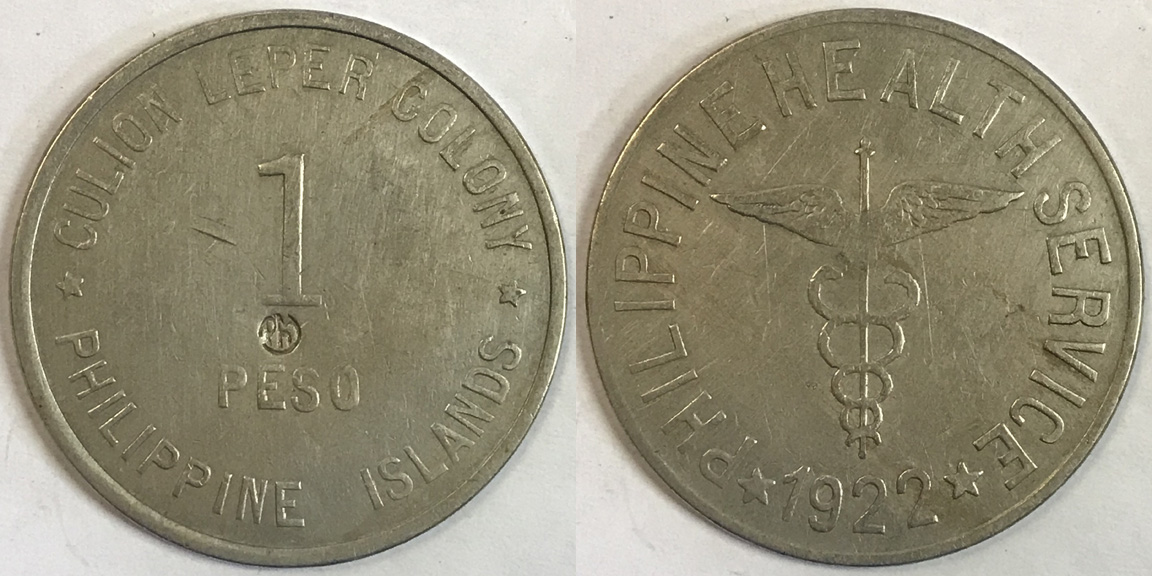
Culion Leper Colony (Philippines) 1 Peso 1922 - 8280 minted
Leper-Colony-Coinage

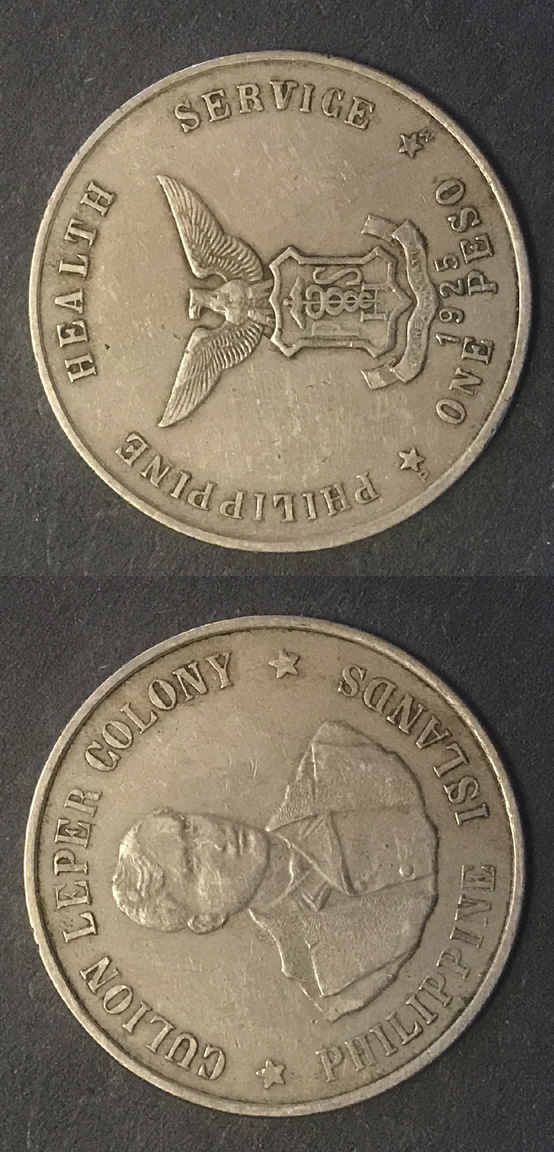
Culion Leper Colony (Philippines) 1 Peso 1925 - 20,000 minted
Leper-Colony-Coinage
Inordinately fascinated by bits of metal with strange markings and figures
Edited by HondoB
11/02/2025 6:35 pm
Moderator
Learn More...
United States
189546 Posts
 Posted 11/03/2025  08:55 am  Show Profile   Bookmark this reply Add jbuck to your friends list

Quote:
Here are some of mine from Culion:
Nice examples!
Bedrock of the Community
United States
74846 Posts
 Posted 11/03/2025  11:31 pm  Show Profile   Bookmark this reply Add Errers and Varietys to your friends list
Nice additions.
Errers and Varietys.
Pillar of the Community
Learn More...
United States
5029 Posts
 Posted 11/04/2025  2:30 pm  Show Profile   Bookmark this reply Add scopru to your friends list
This type coin has always been an interesting collection piece.
Pillar of the Community
United States
1757 Posts
 Posted 11/05/2025  7:41 pm  Show Profile   Bookmark this reply Add colonialjohn to your friends list
Leper colony coinage refers to special money—coins, tokens, or scrip—issued exclusively for use within leper colonies, designed to isolate economic activity and prevent supposed transmission of leprosy through regular currency. Though modern science shows leprosy (Hansen's disease) is not spread by casual contact or objects, fear of contagion led to the creation of these unique monetary systems in the late 19th and early 20th centuries.
Leper colonies, also called lazarettos after Saint Lazarus, were established across Europe, Asia, and the Americas as quarantine centers for those afflicted with leprosy. Within these isolated communities, authorities often issued distinct coinage to prevent patients from handling mainstream currency. The rationale was rooted in stigma rather than medical fact, but the practice became widespread. Coins were typically minted in base metals like copper, nickel, or aluminum, and bore inscriptions or designs identifying them as belonging to a colony. For example, Colombia issued 50 centavo pieces in 1921 specifically for circulation in its leprosaria at Agua de Dios, Cano de Lord, and Contratación.
The Philippines provides one of the most famous examples, with the Culion Leper Colony issuing its own coinage beginning in 1913. These coins were marked with "Culion Leper Colony" and circulated only within the settlement. Similar issues appeared in Panama, Venezuela, Brazil, and Japan, reflecting a global pattern of segregated economies for leprosy patients. In many cases, the coins were produced by national mints but restricted to colony use, reinforcing both the isolation and the stigma of the disease.
Beyond their practical function, leper colony coins are powerful symbols of social exclusion. They illustrate how fear of disease shaped economic policy and reinforced boundaries between the "healthy" and the "afflicted." Patients were denied access to normal currency, effectively cut off from broader society. Yet these coins also represent resilience: within the colonies, they enabled commerce, trade, and a semblance of normal life. Collectors today view them as poignant artifacts of medical history and human endurance.
Numismatically, leper colony coinage is rare and highly sought after. Surviving examples are limited because many were destroyed once colonies closed or once medical authorities recognized that leprosy could not be spread through money. Their designs often feature crosses, national emblems, or simple denominations, but their historical context gives them outsized significance. They are studied not only for their rarity but also for what they reveal about public health policy, stigma, and the intersection of medicine and economics.
In summary, leper colony coinage embodies a unique chapter in monetary and medical history. Born from fear and misunderstanding, these coins served as tools of segregation but now stand as reminders of both the hardships endured by leprosy patients and the resilience of communities forced into isolation. Today, they are valued by historians and collectors alike as tangible evidence of how societies once sought to control disease through currency itself.

Moderator
Learn More...
United States
189546 Posts
Page 2 of 2   Previous TopicReplies: 18 / Views: 2,433Next Topic Page 2 of 2
First Page  Showing last 15 replies.
To participate in the forum you must log in or register.


Disclaimer: While a tremendous amount of effort goes into ensuring the accuracy of the information contained in this site, Coin Community assumes no liability for errors. Copyright 2005 - 2026 Coin Community Family- all rights reserved worldwide. Use of any images or content on this website without prior written permission of Coin Community or the original lender is strictly prohibited.
Contact Us  |  Advertise Here  |  Privacy Policy / Terms of Use

Coin Community Forum © 2005 - 2026 Coin Community Forums
It took 0.44 seconds to rattle this change. Forums