| Author |
 Replies: 23 / Views: 5,345 Replies: 23 / Views: 5,345 |
Page 2 of 2
|
|
|
|
Pillar of the Community
United States
1915 Posts |
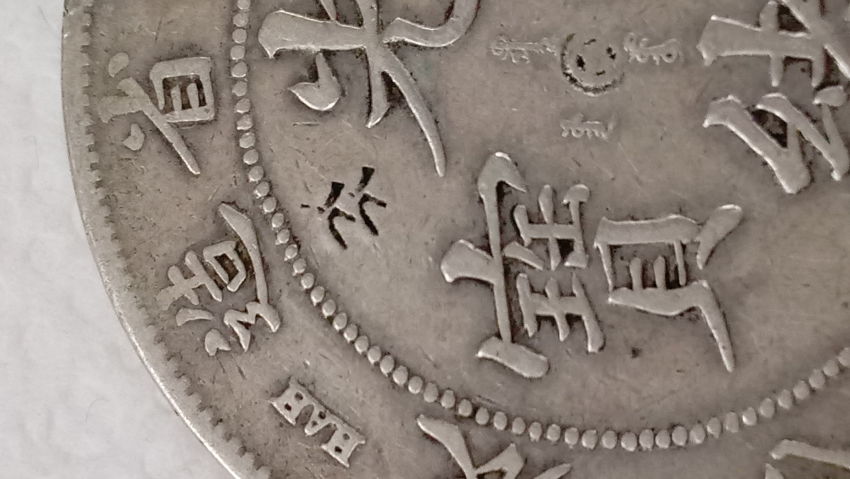
I'd be curious about the very center of the small Manchu characters as well as seeing a better close-up of those characters.
|
|
Pillar of the Community
 United States
1911 Posts |
I can attempt to get a closer pic but I have yet to perfect close in pics unfortunately just got my cheap smartphone camera.
|
|
Pillar of the Community
Sweden
1078 Posts |
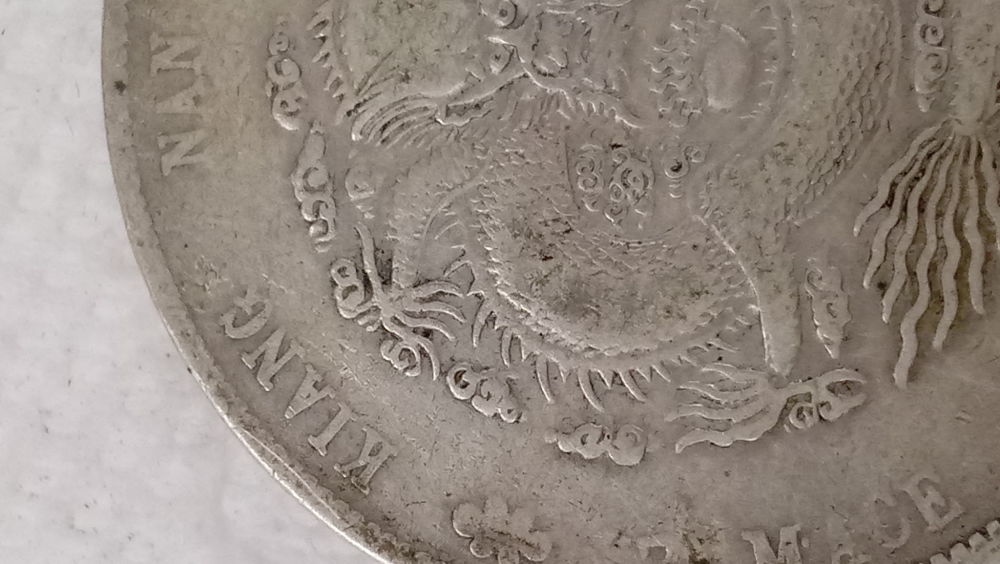
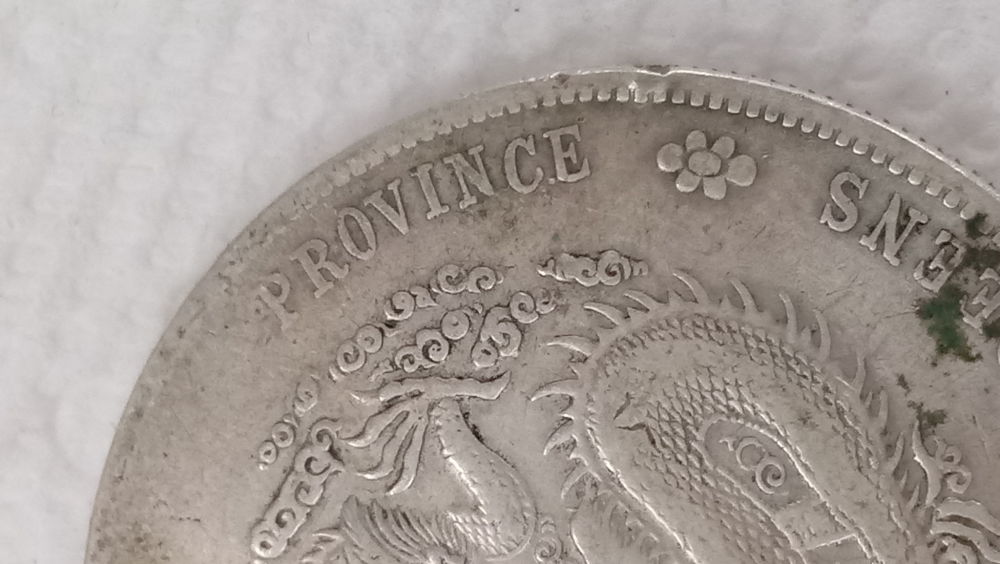
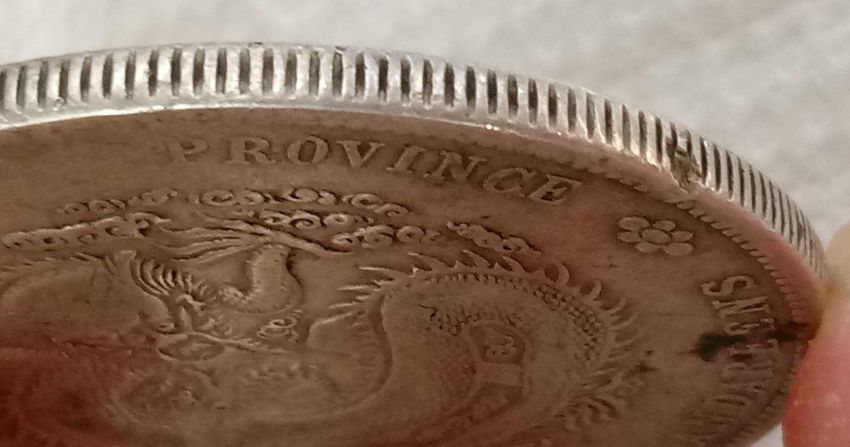
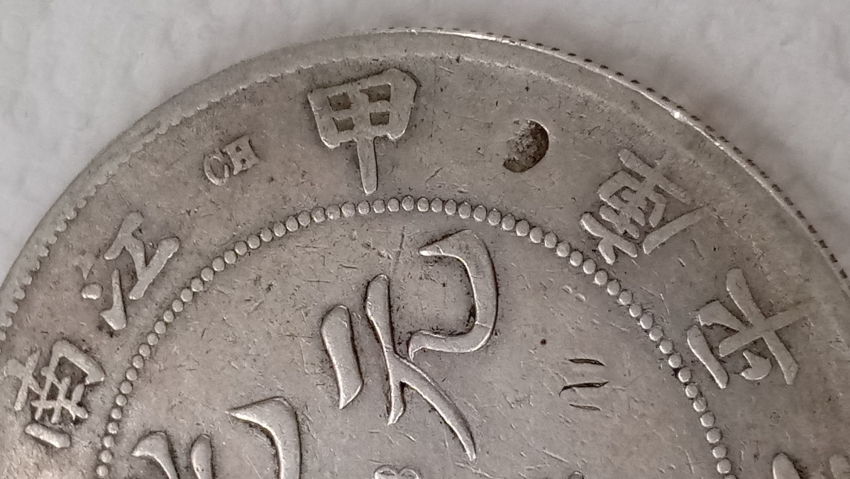
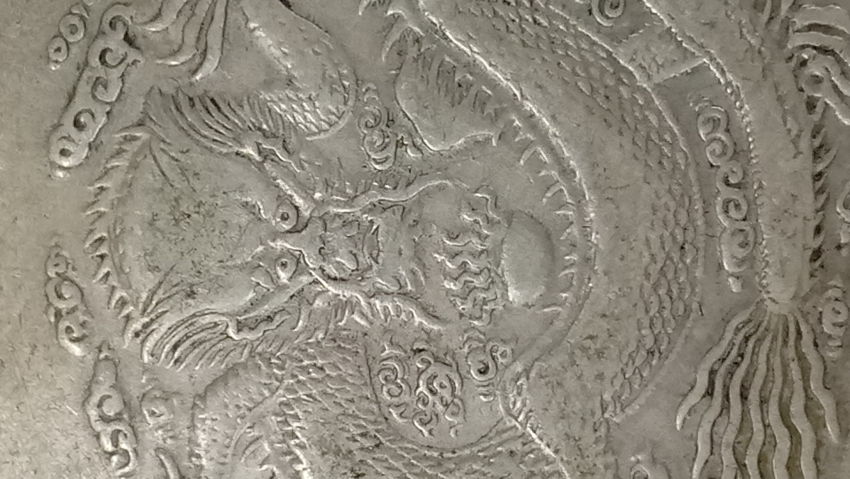
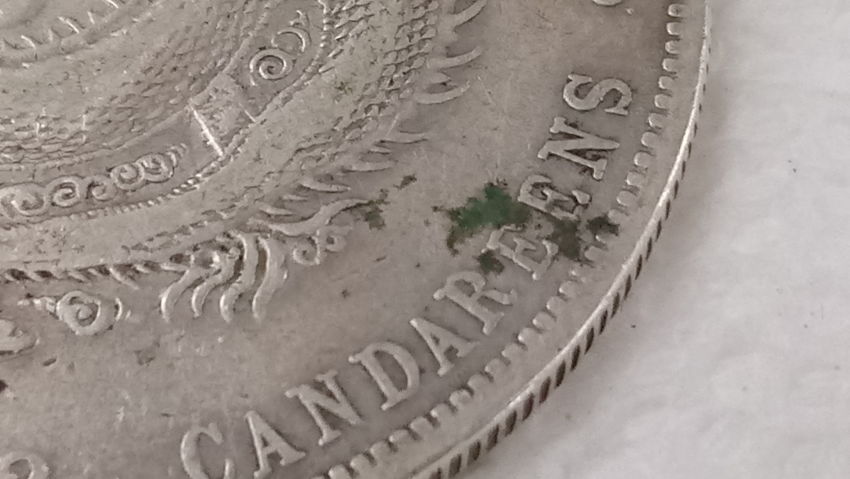
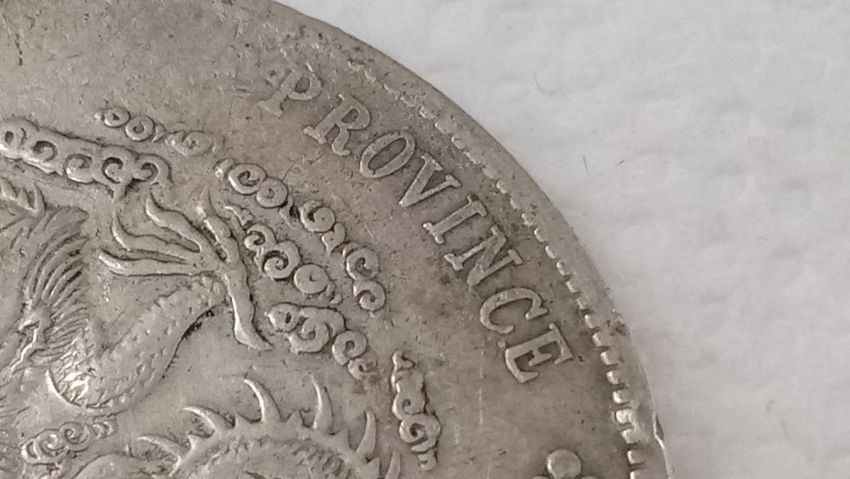
I agree that the denticles do look a bit off and so do the lettering but the colour and wear seems standard for silver. I wonder if not the denticles and lettering were made with lesser quality at that time since I recall having the same "wobbly lettering" on a genuine but smaller Chinese coin from this era (7.2 Candareens). The word I'm primarily looking at is "Province", but other than slightly wobbly placement of the characters, the characters look alike and whole, without obvious casting bubbles.
The weight sounds right to me. Have you tried comparing the ring tone to another silver crown? Not by dropping but a gentle tap just to make a tone to compare with, mostly to confirm the silver.
|
|
Pillar of the Community
United States
1911 Posts |
I did not test the silver sound yet thought of it right after I left lol maybe if it is still there today I can try that with getting more pics.
|
|
Pillar of the Community
Australia
3839 Posts |
The date on this Jiangnan coin is 1904. Quite neat. The technical weight of 7.2 mace should be around 27.2 grams as the weight of 1 mace is around 3.78g. However it was common for the standard silver coin to weigh around 26.7 grams. In provinces where silver was more expensive to procure, Jilin Province in particular - they are known to shave off weight so it was common to see coins as low as 26.2 to 26.5 grams. Those coins were removed from circulation as it was deemed to be underweight / not fulled back by proper silver content. The weight is definitely on the lower side. I have a heavily damaged piece and it still came at 26.7 grams. However Jiangnan coins were also known to be on the slightly underweight side. At first glance, it looks positive however the chopmarks unfortunately do hurt the value. I guess if it's offered at a reasonable price and you really want a Chinese crown, it wouldn't hurt. They are quite pricey these days. It still doesn't hurt to be on the cautious side as counterfeits are known. 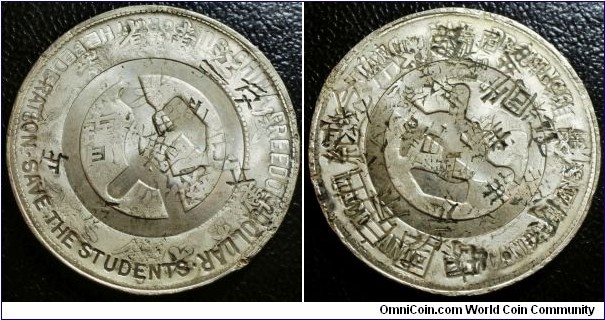 Yes I know it's so heavily damaged - you can't quite tell what it is. But it's a Jiangnan coin dated 1898... |
|
Pillar of the Community
United States
1911 Posts |
Well from what I have seen of this coin (and have budgeted for my world crown collection) seems to be around $200-300 for one of these... he was going to sell it to me for $50 due to some rim damage and it's wear. I have gotten a number of crown sized coins from my lcs for quite cheap so luckily they like me. Thanks for the input everybody!
|
|
Pillar of the Community
United States
1911 Posts |
If I had the option to send this coin in to determine if genuine to a 3rd party grading, should I? I will see if we could do that and I would pay for it and if it is good I will take it. Looking at NGC prices seems this coin would be worth if genuine but also the condition is a little less than optimal.
|
|
Pillar of the Community
United States
1915 Posts |
Some grading companies have a lower cost service without grading- they just confirm if the coin is genuine or not. A ring tone can be misleading- just like the magnet test can be misleading. Since the coin is obviously not so nice, why not try a micro-spot of bleach in a not-so-great looking place? It will make a black spot if silver. And you will know if it's not silver if it doesn't make a black spot. But then you may not want to have a black spot on your coin. I do this in some test cases where a small blotch doesn't matter.
|
|
Pillar of the Community
United States
1911 Posts |
Wouldn't bleach only show that a coin could be at least silver plated?
|
|
Pillar of the Community
United States
1915 Posts |
Yes but yours sure doesn't look plated based on the pictures. I'm still curious about the center. It looks like an unexpected added mark or symbol that I don't find among my references. Getting better pics and a N-52 neodymium magnet could be very useful in this case as well as others that may come up as you acquire more coins. I have a standard array of sizes all suspended in front of me now as I view the monitor on the desk. It' the first or second thing I do when checking for coin silver. A large coin, if good silver will push the magnet away. Naturally if it grabs we know what that is. But if it does nothing (has no reaction at all) then that can indicate white metal or "pot metal" or some other combo which cannot be good coin silver. Actually I found an exception to this test and that is Sterling Silver and some other silver coins from Sinkiang. That should not be the case here. I have good and bad Kiangnan dollars and they behave as I described. A ring test is something that I have also learned can be misleading. If you search online for methods to test for coin silver at home you can find a variety of useful chats or videos.
|
|
Pillar of the Community
United States
1911 Posts |
Yeah I have been meaning to buy some neodymium magnets and found they have some at a freight shop nearby. Basically things I would want to try are ring test, weight, and magnet but other than that (and looking at pictures of real coins, which isn't the best way with this coin since it appears with these types of coins subtle differences could still be ok) all that is left is putting acid stuff on it and see what happens (which I would rather not do). Thanks for all your help! I guess the only other thing is some other threads members were able to tell from the design or lettering if something was not genuine or not but haven't really heard anything about that yet so it must at least somewhat look ok. I will try and get better pics though.
|
|
Pillar of the Community
United States
1915 Posts |
Keep in mind when you get opinions coming in about characters and lettering that there are a lot of these coins that were made varying in style. There may be 10 or so varieties having differences in some places or another. So you cannot simply say one is good or bad by comparing it to one particular coin. The ice melt test can be done if you have no magnet and I've seen that demonstrated. It's not fool-proof (hardly anything is). But if it melts ice as fast as silver or as slow as typical Chinese fake dollars, that can be a good clue. Take a large copper-nickel crown and a known silver crown and drop a small piece of ice on them and see how fast silver melts compared to the other. Then do the same with your Kiangnan coin.
|
|
Pillar of the Community
United States
1911 Posts |
|
|
Pillar of the Community
United States
1915 Posts |
Use a microphone and sound recorder to save a file of each pitch. A suspect coin can ring at a higher or lower pitch that can be compared when you play back both files. The better pics are welcome and it's looking more and more like a fake. Those central Manchu characters don't look right and especially with that added item in the middle of the 4 characters. Take a look online at images of the Manchu words for Kuang Hsu.
|
|
Pillar of the Community
778 Posts |
|
|
Page 2 of 2
|
Replies: 23 / Views: 5,345 |
Page 2 of 2
|







 First Page

 Posted 04/17/2017 11:24 pm