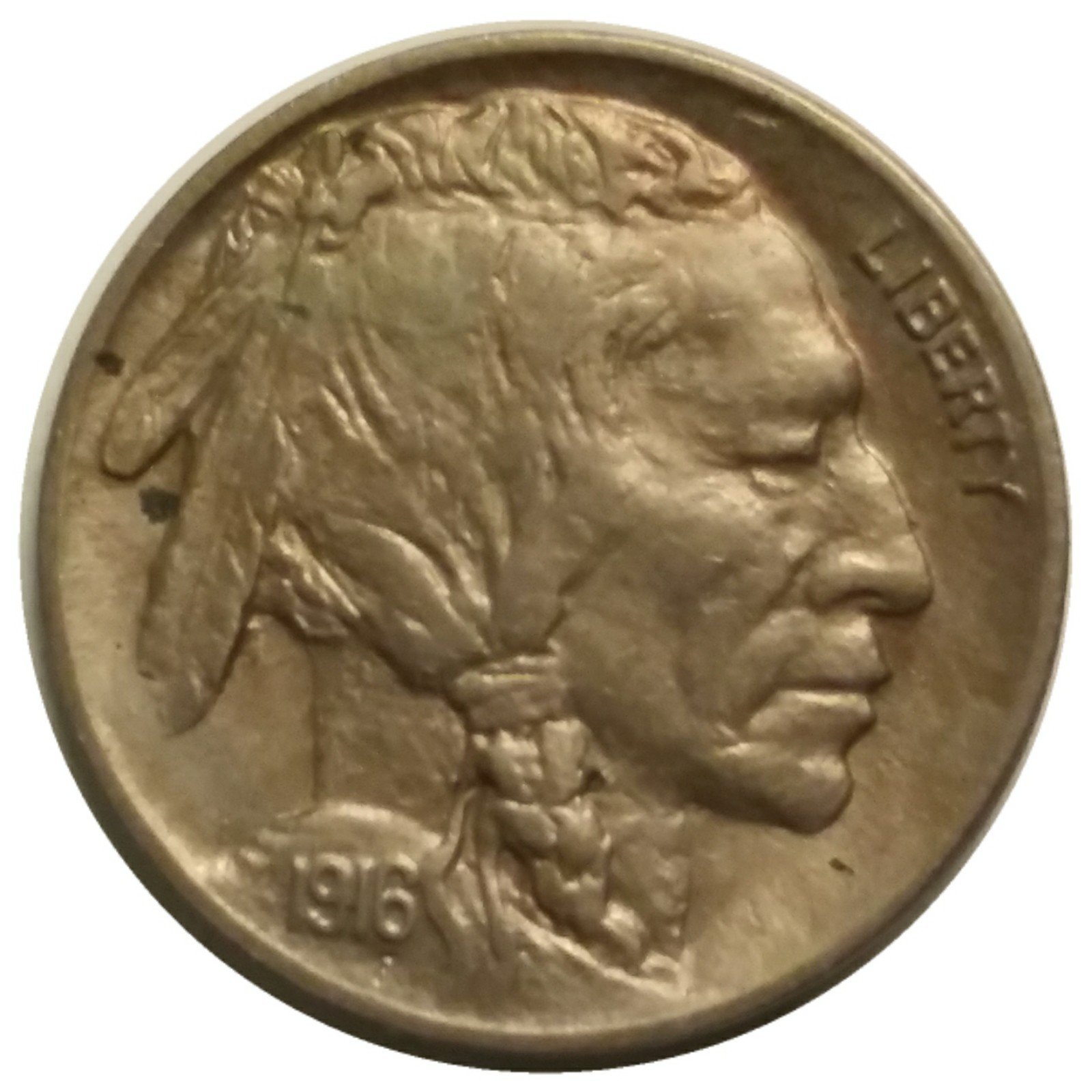
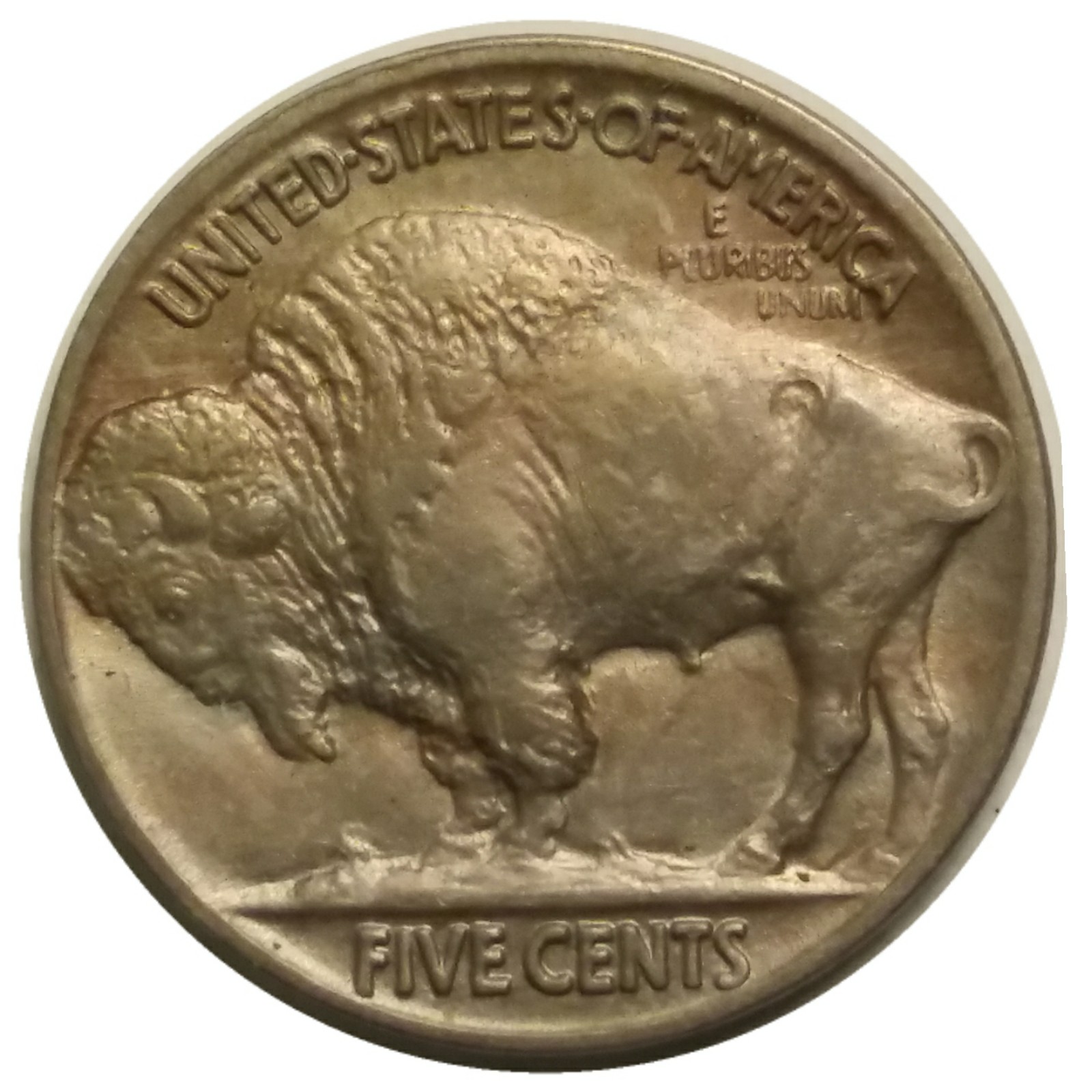
This one won't make a true two-feather designation, but it is a 2 1/2 feather.
History matters here. The Buff is a perfect storm of striking difficulties: hard metal, small surface area, cluttered design, high relief, and new design causing mint unfamiliarity with striking characteristics. (This is the same dynamic that causes the incredible number of die varieties for the 1999-date circulating commemorative quarters.) The Buff designs were modified constantly to try to overcome the problems, without success. The 1916 is the first year of the bolder LIBERTY, partly redesigned to withstand the right-rear-leg clash better.
There are at least five known die pairs in 1916 that generated two-feather coins, and the 1916 is the most common two-feather date. (Over half of the 64 date-mint-design combos are currently known to have two-feather or 2 1/2 feather varieties.) Your coin is one of those five die pairs, but an earlier die state, which likely is harder to find than the eventual two-feather version from this die pair.
Note the Indian's "hairy neck" (this is the clash with the buffalo's back) and the heavy abrasion marks on the neck.
Grading die abrasion variety Buffs is a beast (pun intended). Remember, the apparent weakness in design is due to the very events that make the coin collectible. Also remember the common clash areas: Indian's chin with EPU, buffalo's right rear leg with LIBERTY, ground with the Indian's hairline, second feather with the buffalo's horn and head, and the buffalo's back with the Indian's neck. Weakness in these areas on an abrasion coin will almost always be the result of overly enthusiastic die polishing.
@panzaldi called it. The areas separate from the clash polishing are sharp. Note the sharp rachis and calamus on the second feather, date, complete and sharp ribbons, buffalo's tail, of AMERICA, and FIVE CENTS.
I have this one on the EF/AU bubble, yet another example of an "AU slider" (what eventually will become an EF-48 pinpoint). IMHO, it's an ANACS AU-50 and PCGS EF-45.
I have it as a possible details coin, however. On magnification, the obverse spots appear to be corrosion. If this is more than superficial discoloration, it will be detailed. Ditto for the edge crud, which also looks like the aftermath of an old cleaning or longterm storage in an acidic environment.
In any event, a fascinating and collectible coin.
EDIT: At $27, you stole this one. Walkoff home run, my friend.
Edited by fortcollins
01/25/2020 1:01 pm







 First Page


 Posted 01/24/2020 7:52 pm





 here I am again looking like a clown. love beating my head against the wall on these. here's what I see. decent obv strike as the feathers are sharply struck. all the details in the hair above the braid are there. the braid clasp has almost full separation and there is minor rub on the cheek and nose areas. the two spots to the left could be an issue depending on what they are but I'm ignoring here.


 ...well at least until the next one comes along.