| Author |
 Replies: 17 / Views: 3,606 Replies: 17 / Views: 3,606 |
Page 2 of 2
|
|
|
|
Bedrock of the Community
Australia
21792 Posts |
It must be remembered that toning, in this case not so attractive, is really just a mild form of corrosion, and if bad enough, will affect the surface to cause localized damage. Same with verdigris pitting on bronze coins. My guess is that NGC may have considered that localized toning was borderline bad enough on both coins to raise a 'details' designation, one lucky enough to escape that designation, one not so lucky. I have an otherwise MS-62 (Indian .925 silver rupee) in my collection with obvious corrosion pitting bad enough for it not to be graded at all. Very little premium above silver value only. Essentially, a form of PMD. |
|
Pillar of the Community
 United States
591 Posts |
I had forgotten that I did notice the second coin (1916-S) had been listed by another seller back in October, and this current seller had re-photographed it. The pics look a little different (there's a slim chance you might like these pics a tad better T-BOP): https://www.ebay.com/itm/1916-S-Mer...047675.l2557So yeah, I'm curious if NGC or PCGS would likely consider the toning on the 1916-S to be "environmental damage". If we could see the 1937-D a little better, perhaps we could see any pitting. Just to clarify sel_69l, the 1916-S is a raw coin. |
|
Valued Member
Canada
235 Posts |
Simply, the "splatter" toning has entered the field; removing it will pit the surface. For the '16-S: that's dippable-it's all surface junk
|
|
Bedrock of the Community
United States
10065 Posts |
Without the pieces in hand to see them, its not likely we can know for sure. We cannot see the coins in 3D to know if the first one's spots are just on the surface or not. Do those spots, when the coin is in hand, hide small pock marks on the surface? We do not know.
Zooming on on the first one's OBV, the pic is not totally in focus, but it looks like there are some small pock marks at least on the rim with some of the black.
Its easy to guess and say its not real damage, but comparing pics instead of coins makes it difficult.
How much squash could a Sasquatch squash if a Sasquatch would squash squash? Download and read: Grading the graders Costly TPG ineptitude and No FG Kennedy halveshttps://ln5.sync.com/dl/7ca91bdd0/w...i3b-rbj9fir2 |
|
Valued Member
Canada
235 Posts |
"Without the pieces in hand to see them, its not likely we can know for sure. We cannot see the coins in 3D to know if the first one's spots are just on the surface or not. Do those spots, when the coin is in hand, hide small pock marks on the surface? We do not know."
Yeah, but NGC did have the coin "in hand". I'll take their word for it for ED. The '16-S: I've seen many original-skin coins such as this one, so I'm comfortable that it will "all come off".
Edited by whatdowehavehere
01/08/2021 8:56 pm
|
|
Pillar of the Community
United States
1005 Posts |
Also consider the original intention of third party grading, is to only certify coins that would be market acceptable for the grade. Even if the surfaces here are intact and just afflicted by ugly toning patterns, someone buying a NGC Mercury dime at the grade sight unseen would surely be disappointed, so this is likely why they gave it details |
|
Pillar of the Community
United States
591 Posts |
Quote:
Simply, the "splatter" toning has entered the field; removing it will pit the surface. For the '16-S: that's dippable-it's all surface junk How/why is the 1916-S "splatter" toning evidently not the same as on the 1937-D? By the way, dipping will also destroy originality. Doesn't the 1916-S toning speak to this coin having gone through "something" during its existence, not simply plucked from changed and placed in a completely sealed environment for the last 100 years, or worse dipped at some point. Why do you suggest that removing toning on one coin will pit the surface, but on the other coin it will be fine? How can one tell this just from looking at the surface? I asked the seller of the 1937-D if he could tell any reason why they detailed it: "It looks to have some sort of raised substance on the right half of the coin" Edited by one_fine_dime
01/09/2021 08:29 am
|
|
Bedrock of the Community
United States
20753 Posts |
In either one if mine I'd simply dip to get rid of toning. If my coin, I do with what I want.
|
|
Bedrock of the Community
Australia
21792 Posts |
Pragmatic and reasonable.
|
|
Rest in Peace
United States
18456 Posts |
I would never dip a circulated coin unless it was junk silver .  |
|
Pillar of the Community
United States
1769 Posts |
|
|
Pillar of the Community
 United States
6883 Posts |
|
|
Pillar of the Community
United States
1769 Posts |
ONE FINE DIME - before I conserve a coin I look at the toning or corrosion areas to see using profesional judgment to remove these areas or leave alone using a stereo microscope with mag power up to 40X based on its depth of penetration into the surface of the coin, token or medal.
JPL
Edited by colonialjohn
01/11/2021 1:24 pm
|
|
Pillar of the Community
United States
1769 Posts |
Sei 691 is correct. Go to You Tube PCGS grading videos. See their CLEAN segment and environmental damage videos. Its a jusdgemnt call ... does the degree of toning on coin A detract its desirability to coin B without toning (i.e., clean fields). Some toning is attractive, some - not attractive and of course - there is ARTIFICIAL. Being fair has nothing to do with it and ownership always adds 5-10 points to any coin ... <VVBG>.
JPL
|
|
Pillar of the Community
United States
591 Posts |
Thanks for these recent comments. What do folks think about this coin, which I currently own, and was considering sending to PCGS at some point. Do you think it will straight grade - there is significant toning on the reverse, but I think this should likely make XF45 otherwise? 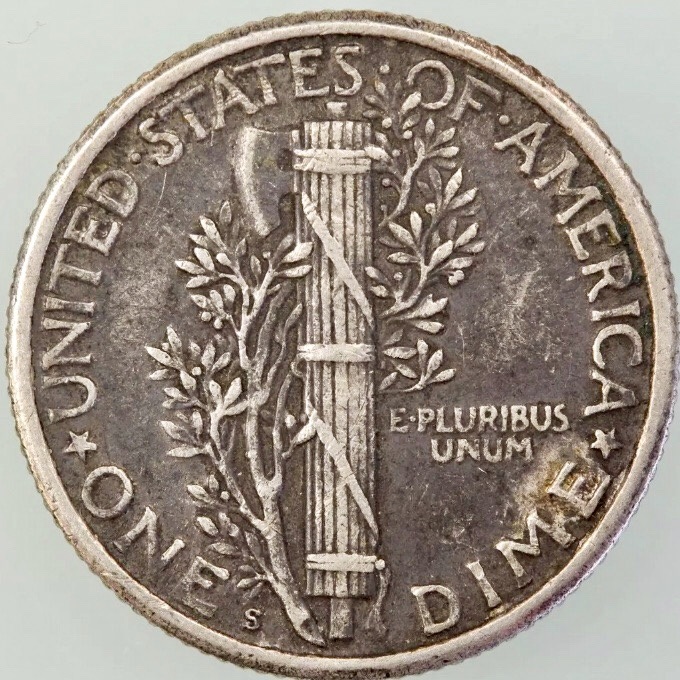 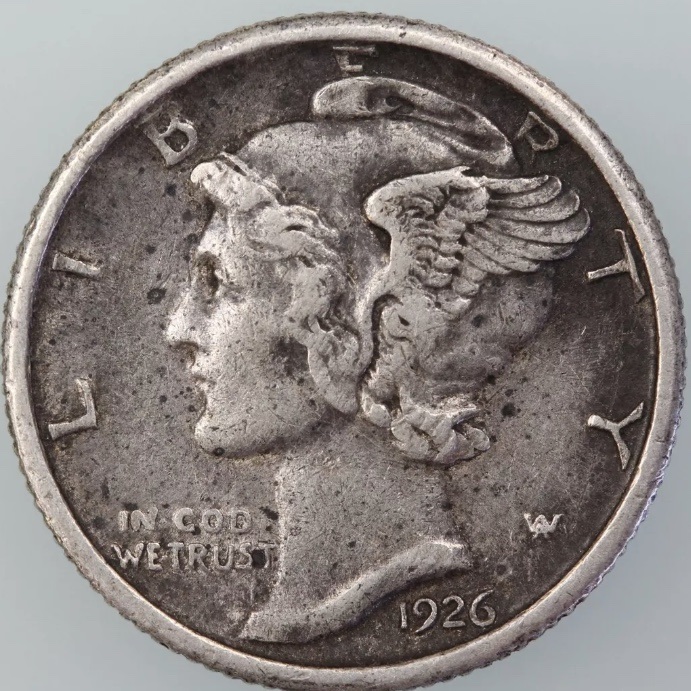 |
|
Page 2 of 2
|
Replies: 17 / Views: 3,606 |
Page 2 of 2
|








 First Page


 Posted 01/08/2021 7:43 pm


