| Author |
 Replies: 19 / Views: 3,051 Replies: 19 / Views: 3,051 |
Page 2 of 2
|
|
|
|
Pillar of the Community
Australia
3841 Posts |
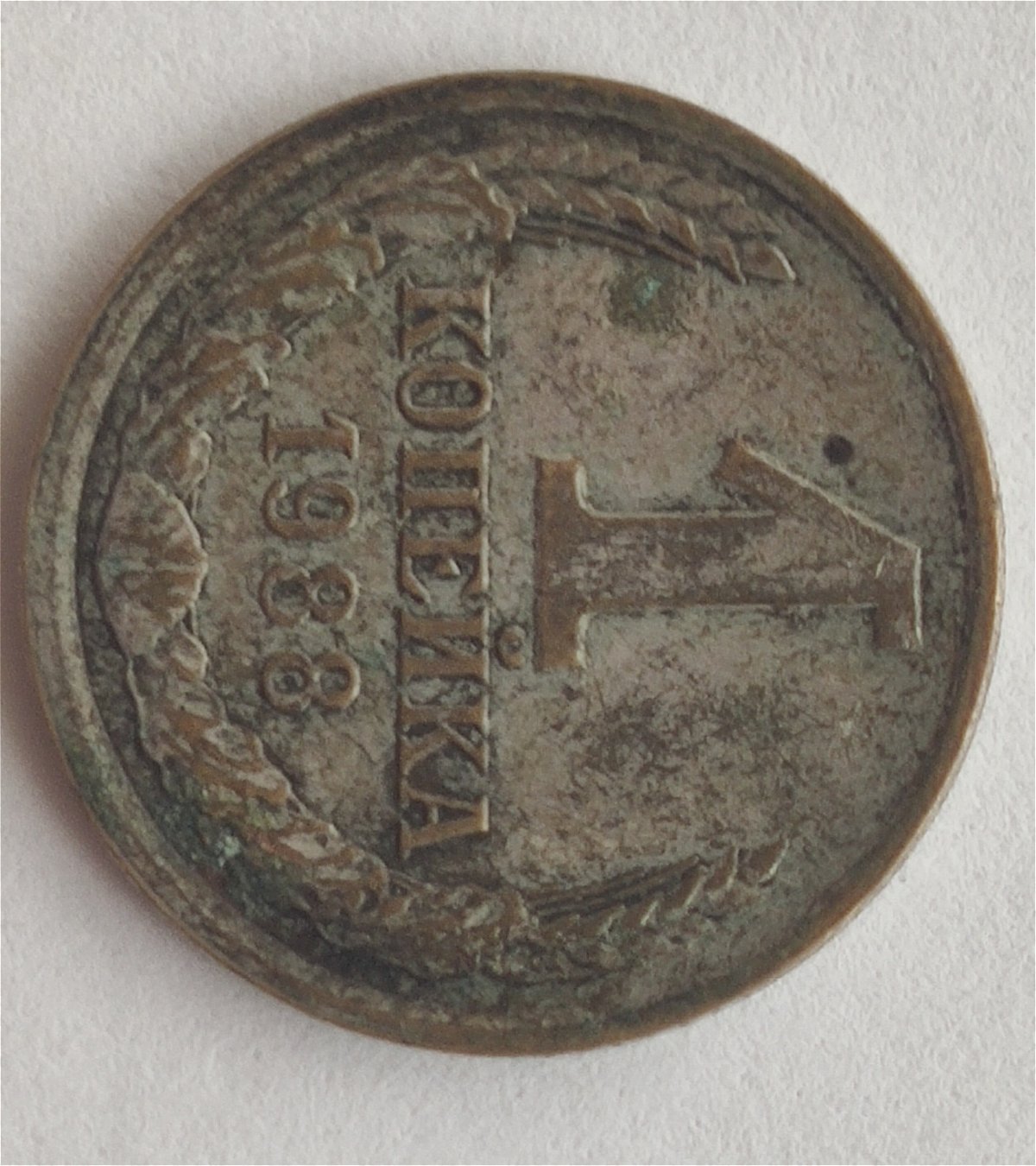
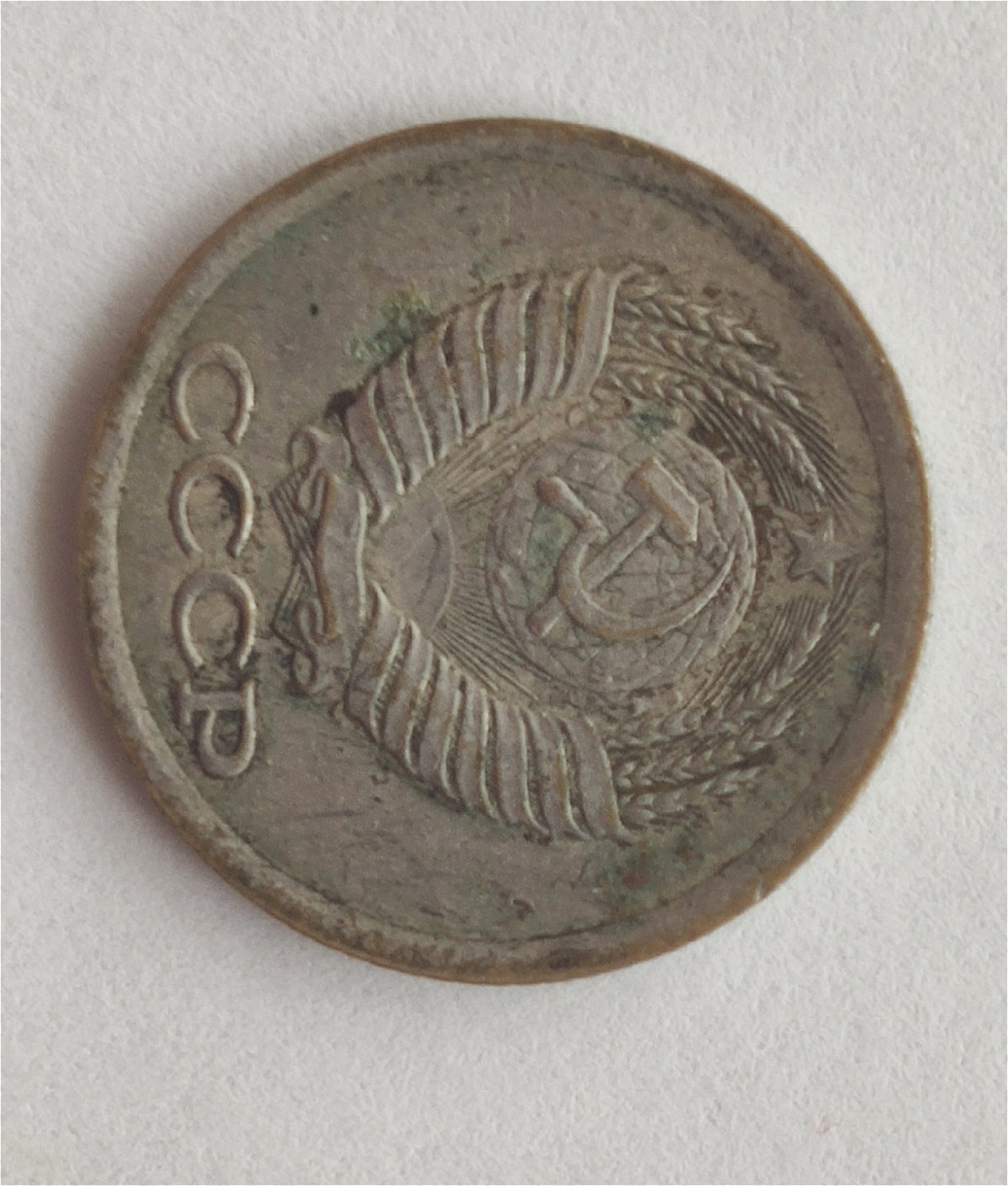
I believe it's just toned.
Quality control was quite poor back then.
|
|
New Member
 Ukraine
5 Posts |
Jbuck, thanks for the transfer)
Gxseries, I didn't even think about it, thanks!
|
|
New Member
Ukraine
5 Posts |
|
|
Pillar of the Community
Canada
2786 Posts |
looks like environmental damage (toning) to me
|
|
Pillar of the Community
 United States
8062 Posts |
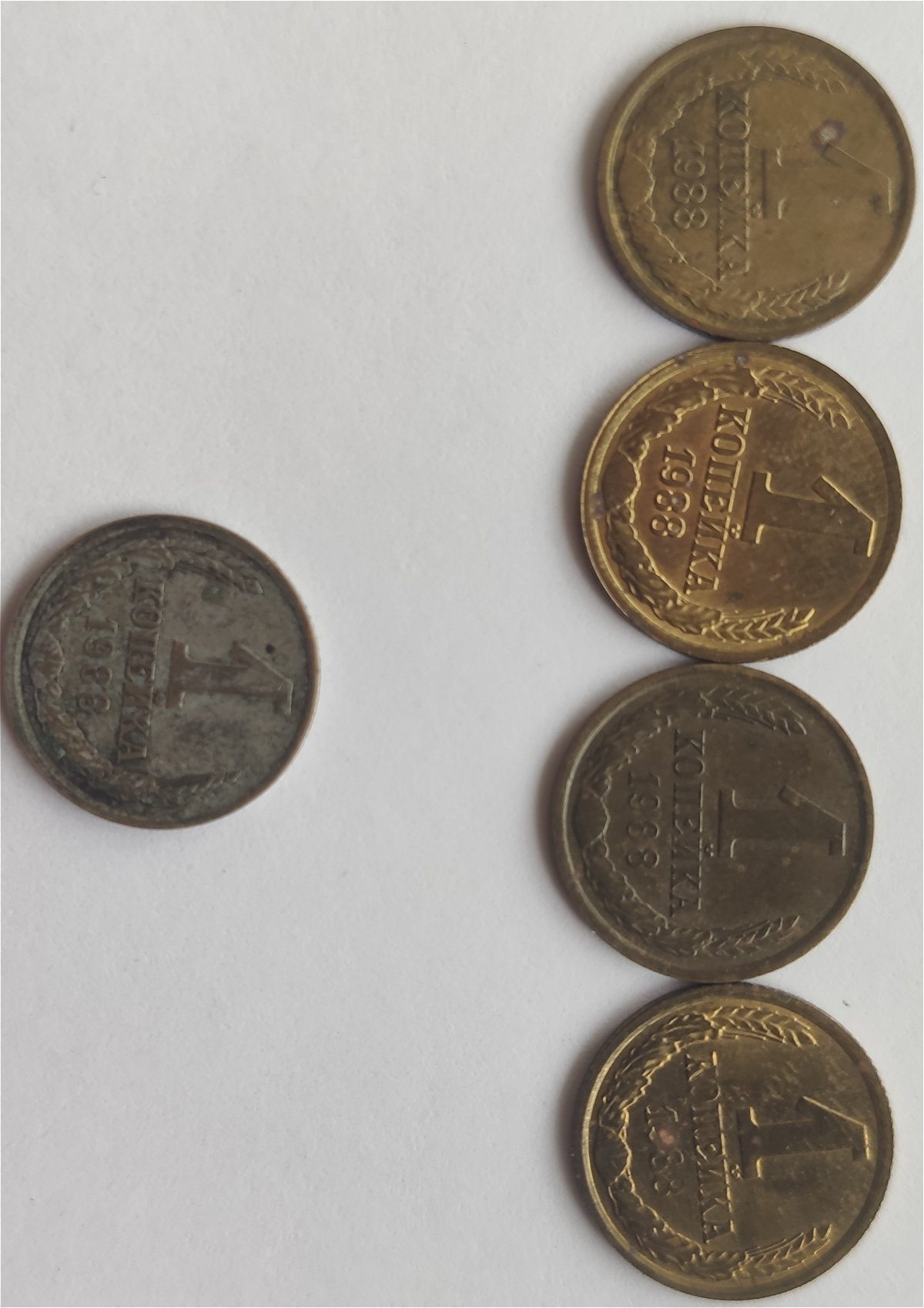
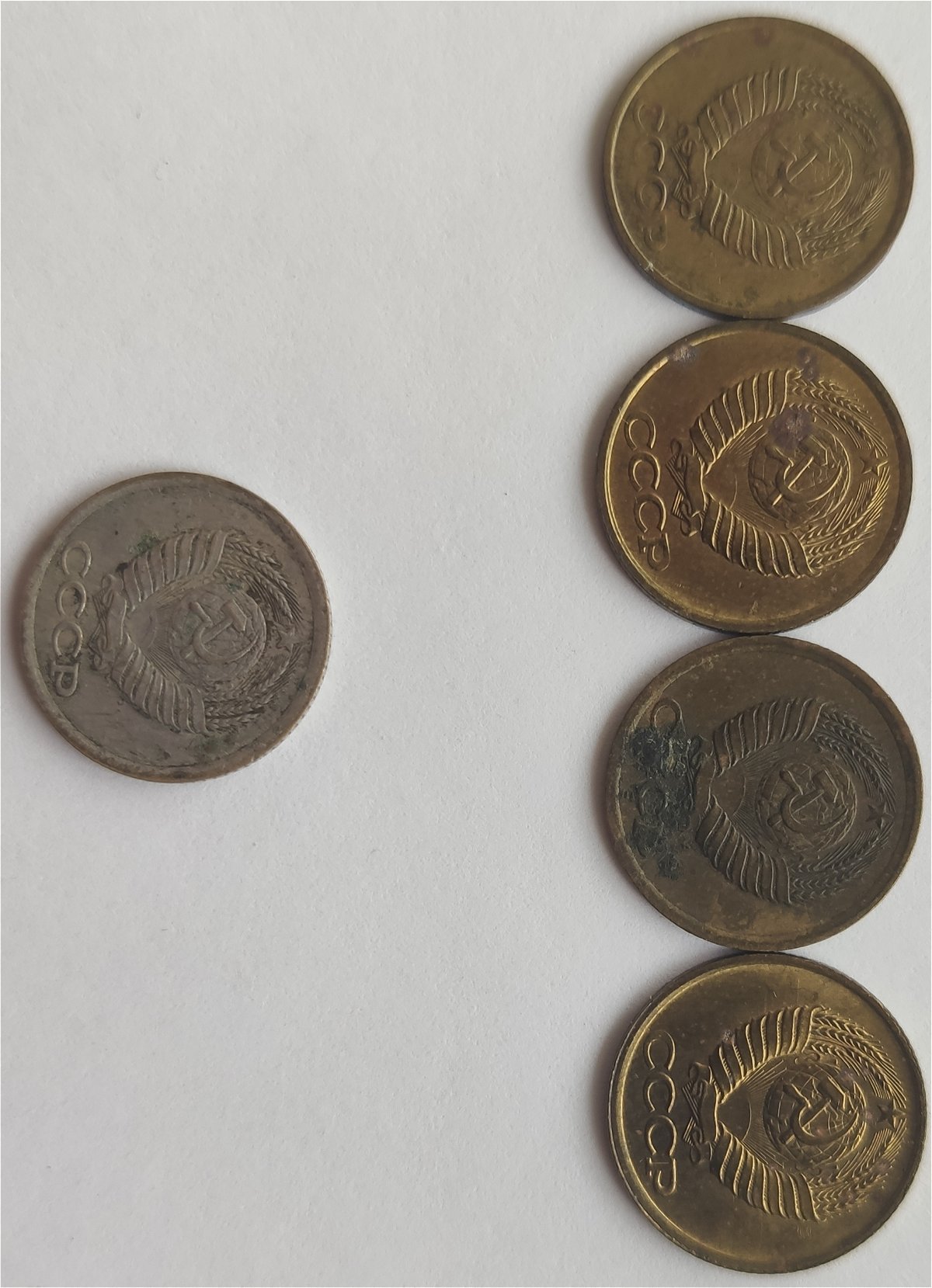
Looks like a different composition to me. But that could only be confirmed with analysis.
Also, it looks slightly smaller in diameter to me than the brass coins, but that could just be the photography angle.
|
|
New Member
Ukraine
5 Posts |
Wade, Tdziemia, most likely toning, I will sort out the rest of the collection and then I will bring the coin for analysis.
Thanks)
|
|
Valued Member
404 Posts |
@gxseries, you are actually completely wrong (amazing, from someone who is a self-proclaimed 'expert' on Soviet coinage). Quality control was actually quite good in the Soviet Union, which is why major errors on Soviet coinage are relatively scarce, especially considering the quantities minted. Mint workers were well taken care of, and the environment was highly monitored as Soviet coinage was supposed to play on the international stage.
This is environmental damage causing a leeching of certain minerals from the alloy to the surface of the coin.
Edited by norantyki
02/21/2021 1:53 pm
|
|
Moderator
 Australia
17008 Posts |
Given that the gray colour is wearing away on the high points, with the brass underneath showing through, I would assume the coin has been painted or plated - exactly how, why or with what, is impossible to tell (though XRF analysis might indicate the "with what").
Don't say "infinitely" when you mean "very"; otherwise, you'll have no word left when you want to talk about something really infinite. - C. S. Lewis
|
|
Pillar of the Community
Australia
3841 Posts |
Norantyki - you are living under a big rock. Perhaps reading more online would help broaden your knowledge instead of trolling. The zinc component in the Soviet coins has a tendency to cause ugly looking spots and this is more obvious when the alloys are not properly mixed. Early Soviet mint sets are of poor quality and the cellophone were made of brittle material. These only improved around early 1970s. The hard plastic cases didn't fare much better - early examples were found to be corroded. This only improved in the 1980s. Errors were quite commonly found however they have vanished in the last ten years. Here are some quality issue examples. 1967 commemorative 50 kopek in mint set with lovely finger print  1962 3 kopek UNC with zinc rot spot  1975 1 kopek with ugly looking corrosion 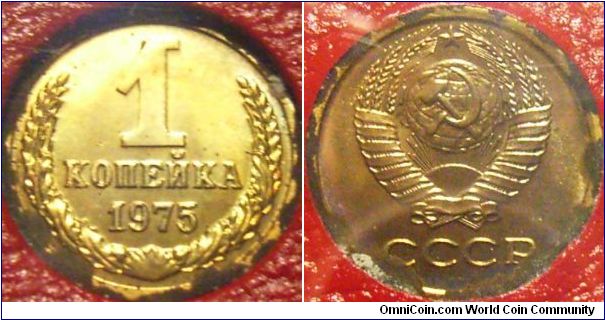 1975 20 kopek with similar issue 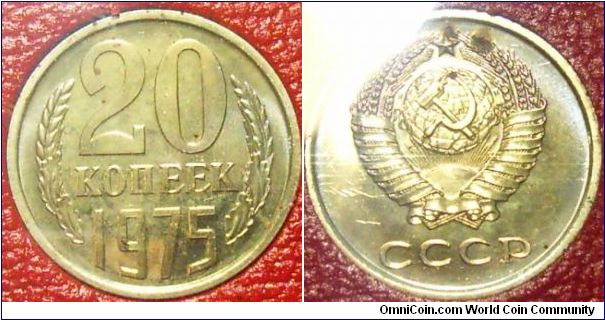 1961 5 kopek off center 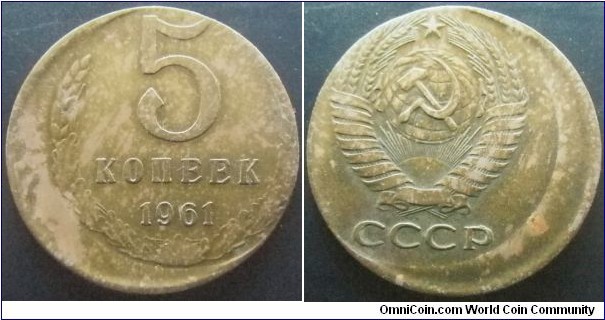 1988 15 kopek clip error - found in some junk lot 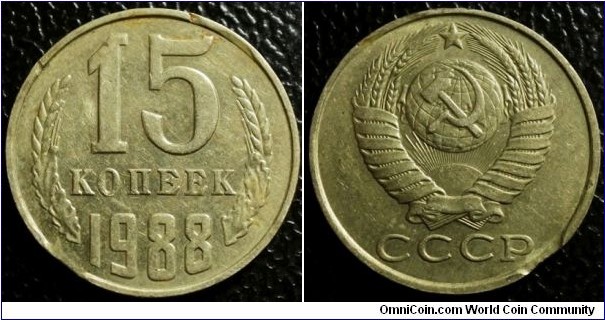 1991 20 kopek double clip 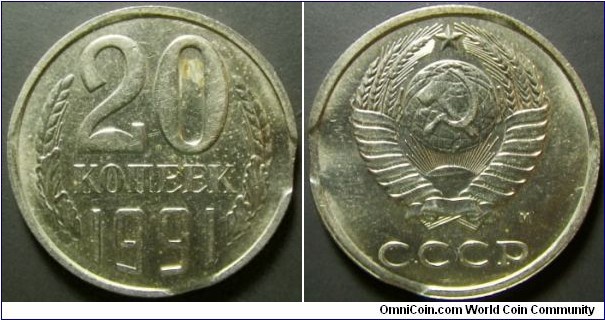 1991 5 ruble off center core 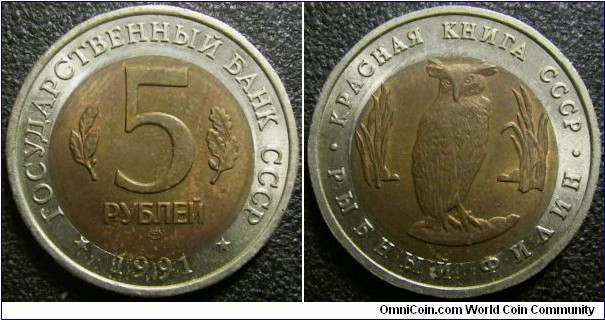 There were a lot of spectacular errors that were sold more than 10 years ago but I kept missing out on them. They rarely appear in the market these days. |
|
Valued Member
404 Posts |
@gxseries - not properly understanding the long-term properties of plastics and quality control are two separate things. What is more is that many of the coins you posted bear environmental, post-mint damage, which has absolutely nothing to do with QC at the mint. Please do yourself a favor and buy yourself a copy of Rylov's work detailing the operations of the Leningrad mint in the 1970s-80s. Any mint produces errors, but errors on soviet coins are 'relatively rare considering numbers produced.' As an FYI, the last coin in your response, although bearing CCCP, was issued after the collapse of the Soviet union, and under very different circumstances, the same ones that produced the lot discussed here (albeit these are far more extreme, they represent the distinct shift in mint management): http://goccf.com/t/333663OPs coin is suffering from what is described as the 'Shredding and Sludge' phenomenon detailed in this article (although the use of a specific ammonia is the catalyst for the article, this type of leaching phenomenon can happen under a wide range of conditions depending on the alloy) - https://www.sciencedirect.com/scien...389420318318Good to see that you still aren't above name calling though. You precipitated the harshness of my responses by slandering me publicly, for which you appear to have suffered no repercussion - that is wrong, just as you are in this instance. Edited by norantyki
02/22/2021 04:56 am
|
|
Pillar of the Community
Australia
3841 Posts |
You can keep trolling. Others can judge and make their opinions. In short summary: - Fingerprints can be found on coins in mint sets. Good quality assurance? - Zinc rot is a genuine issue. This issue is more noticeable in Soviet coins issued after 1961 due to the introduction of zinc in alloy. - Soviet mint errors are supposedly 'relatively rare' yet quite a fair number are affordable for a cup of coffee or dinner. See ebay recently sold prices for instance clipped error. on other hand, try to look for sold prices of error coins from neighboring countries such as China where billions of coins were struck. Doesn't sound 'relatively rare'. - Regardless of what excuses are made for plastic or alloy technology, mint sets are supposed to be the pride of any mint so that an average joe could obtain one and have a piece of it. - Instead many of the early Soviet mint sets were marketed through Mezhnumizmatika and sold overseas at a higher price thus many of the earlier mint sets were not available to the general Soviet public. - Despite the high price, the quality was just not there. Took from 1962 to late 1970s before a proper archive quality was found. That's at least 15 years. Acceptable? Would be hard pressed to find other countries that took that long to find a solution. That doesn't sound like quality assurance. I rest my case. To go back to the original topic - weight of a normal kopek is around 1.0g. Some proper numbers are needed before any further discussion. |
|
Valued Member
404 Posts |
@gxseries - how is soberly presenting facts, with citation trolling? Granted, fingerprints are an issue, which occur on modern mint products of many countries today - I never made the claim that Leningrad or Moscow were 100% perfect. You keep returning to minor varieties that again, all mints accidentally produce - the proportion of these to be found in Soviet coinage is relatively small, say in relation to say, that of the USA. I don't see any cheap errors of any particular consequence (ie, more than a grazed rim clip, or some sort of PMD, which you inexplicably seem to believe are QC issues, or errors) from the period before the chaos of the meltdown of the Soviet Union having been sold recently on ebay, or any major auction house for that matter. The issue of plastics is not a QC issue, but rather an oversight - and its exceedingly easy to find countries that struggled with similar issues, notoriously Spain and Belgium, whose PVC soft holders mean that today, virtually all sets suffer some issue or another. Generally, many mints didn't even think about the composition of their packaging, as the effects only became known years later. As for the OP coin, I have explained, as per above, how certain components of the alloy can leach out and deposit themselves on the surface of the coin. I am not saying that I am necessarily correct, but this is a process that I have seen many times, and is so far the most plausible in this case. Weight variance here will be so minor as to likely not reveal much if anything. Rather than name-calling and blustering, perhaps you can sit back and learn. Again, you started this by slandering me in another thread (something which I do not take at all lightly), and I still expect an apology. Edited by norantyki
02/22/2021 07:55 am
|
|
Valued Member
Lithuania
73 Posts |
@OP - your coin looks like suffered from environmental damage but there is a very small chance of wrong planchet. Weighting the coin would give you an answer. BTW I never heard that there would be 1 kopecks coins minted using 10 kopecks planchet found previously dated 1988.
@gxseries - I'm with norantyki. Errors in Soviet mints were extremely rare and thus are extremely expensive. Some mules were pretty common like using 20 kopecks obverse die on 3 kopecks coins and vice versa but it was done with purpose to save on new dies and basically didn't affect the appearance of coinage. Poor plastic used for mint sets as well as finger prints shows only lack of attention to collectors expectations but has nothing in common with mint QA.
|
|
Valued Member
404 Posts |
@Ezhik_Lt - thank you for chiming in... Rylov outlines at lest 4 lines of QC at Leningrad, and although there likely was the occasional malpki and berlinki break, and the usual 'friday phenomenon,' those who study the coinage of the Soviet Union know that the mint generally operated to a good standard - gxseries owns many coins, but apparently doesn't know much about them... my take is that printed books are better than youtube videos, or random google searches in terms of the acquisition of knowledge.
|
|
Pillar of the Community
Australia
3841 Posts |
Ezhik: clipped / planchet flaws are as cheap as 5 dollars each. Rotated die errors for less than 50 dollars. Many mules can be obtained under 100 dollars. This is a bargain compared to many Asian error coins that I have been hunting for years.
As far as I am concerned, you cannot divorce mint set packaging from coins. That's the equivalent of buying a new car just to find out there are component issues and saying there is no QA issue with the manufacturer. It does affect the mint reputation regardless. It did take 15+ years to resolve afterall.
|
|
Page 2 of 2
|
Replies: 19 / Views: 3,051 |
Page 2 of 2
|







 First Page
 Posted 02/17/2021 10:57 am