| Author |
 Replies: 25 / Views: 2,533 Replies: 25 / Views: 2,533 |
Page 2 of 2
|
|
|
|
Bedrock of the Community
Canada
21947 Posts |
silviosi
It is not a Struck Through. A Struck Through would not have a raised area.
|
|
Bedrock of the Community
United States
94367 Posts |
Hey. we love stuff like this!
|
|
Pillar of the Community
Canada
6244 Posts |
Thanks Jimmy. I made an hypotheses not an constant. I thinking that an before this struck was some coins struck on iron wire which will let marks on the die face and then struck this-one. Thanks to clarify me on this, it is not my expertise. I was thinking of some tests we do 'it on this direction and all the dies after 4 to 5 strikes has the mark of wire on the surface and the edges crack and detach. Was just an idea and an probability theorem.
@Coin Me too I like to see and analyze different opinions and reflections. Good stuff to learn from or remember.
Edited by silviosi
03/10/2022 7:05 pm
|
|
Valued Member
 United States
172 Posts |
The side view did catch my eye since it almost looks like a different piece of metal is jammed into the coin. Is there a chance it's a retained strike through wire with the wire still lodged into the metal? I know it's not ultra common but it has definitely happened to other coins. Here's one example: http://goccf.com/t/64166 |
|
Pillar of the Community
Canada
6244 Posts |
@CRH nice reflection, thanks for link. Hope we come to an conclusion.
|
|
Moderator
 United States
34568 Posts |
I'm a little late to the discussion, but this looks to me like copper added to a cent after minting. Maybe copper brazing wire?
@crh, can you please post the weight? Thx.
"If you climb a good tree, you get a push."
-----Ghanaian proverb
"The danger we all now face is distinguishing between what is authentic and what is performed."
-----King Adz
|
|
Pillar of the Community
United States
587 Posts |
I was about to say, "Why did you draw an arrow on the picture"?  |
|
Pillar of the Community
Canada
6244 Posts |
Very good point from Spence and also the weight (sorry I forgot complete, maybe the age and some begin of Alzheimer)
|
|
Moderator
United States
109001 Posts |
Quote:
I was about to say, "Why did you draw an arrow on the picture"? I thouyght the same thing at first. until the scratch went through the middle of the 'A'.. |
|
Valued Member
United States
172 Posts |
Thanks for continuing to dig into this coin, I definitely appreciate it! The coin weighs 3.09 grams.
|
|
Moderator
United States
34568 Posts |
Ok good to know the weight. It seems pretty much right where it should be. I was hoping that it would come in a little heavy as that could help confirm my theory. With that said, I still feel like this was done after the coin left the mint.
I guess if you really wanted to dig into this, you could befriend a materials science professor at your local college and have them put your coin in a scanning electron microscope. Using energy dispersive spectroscopy you could get a non-destructive elemental breakdown for this raised feature to compare against a spot on the native planchet. If you do decide to go this route, it would be fascinating for you to tell us what you found.
"If you climb a good tree, you get a push."
-----Ghanaian proverb
"The danger we all now face is distinguishing between what is authentic and what is performed."
-----King Adz
|
|
Valued Member
United States
172 Posts |
I love the scanning electron microscope idea. I would have a lot of fun if I had any type of access to one of those. Theoretically, if I did find out it was composed of a different metal it would still leave one of the biggest questions which is when it actually occurred. Does anyone know how the grading services determine if something like this is a retained strike through versus something that was pressed into the coin post-mint? It's something I've always been curious about but this is the first time that I've had a relevant coin to ask about. My guess was always that pressing something like this into a coin post-mint would likely create some type of bulge/distortion on the other side of the coin whereas a genuine retained strike through or really any strike through would display no distortion on the side opposite the strike through. Anyone have insight on how retained strike throughs are usually verified as authentic?
|
|
Pillar of the Community
Canada
6244 Posts |
I just read. @Spence, the SEM-EDX will be the best option. The problem with, it is only few locations has, and are use primary for health care. In my lab I have one witch is rented at 100% by agencies for forensic purpose. But I thing an EDS or an good XRF dial rotating will show very well also if the company who perform the test has the right soft. @CRH Do not expect any TPG will perform complex tests. They will just go fast and not all are well training. The VSS is good for varieties and if you specify something they will go deeper, do not expect miracles. The ANACS IMO is the only one who certify if you wrote your input. NGC and PCGS you can forgot, they start to be just marketing, power market. Contact CPP (it is moderator) on this forum. Year ago we has an discussion about XRF and I thing him has now one. Edited by silviosi
03/10/2022 10:53 pm
|
|
Moderator
United States
56855 Posts |
PMD of some sort. John1 
|
|
Bedrock of the Community
United States
62064 Posts |
Looks like something glued to the surface. 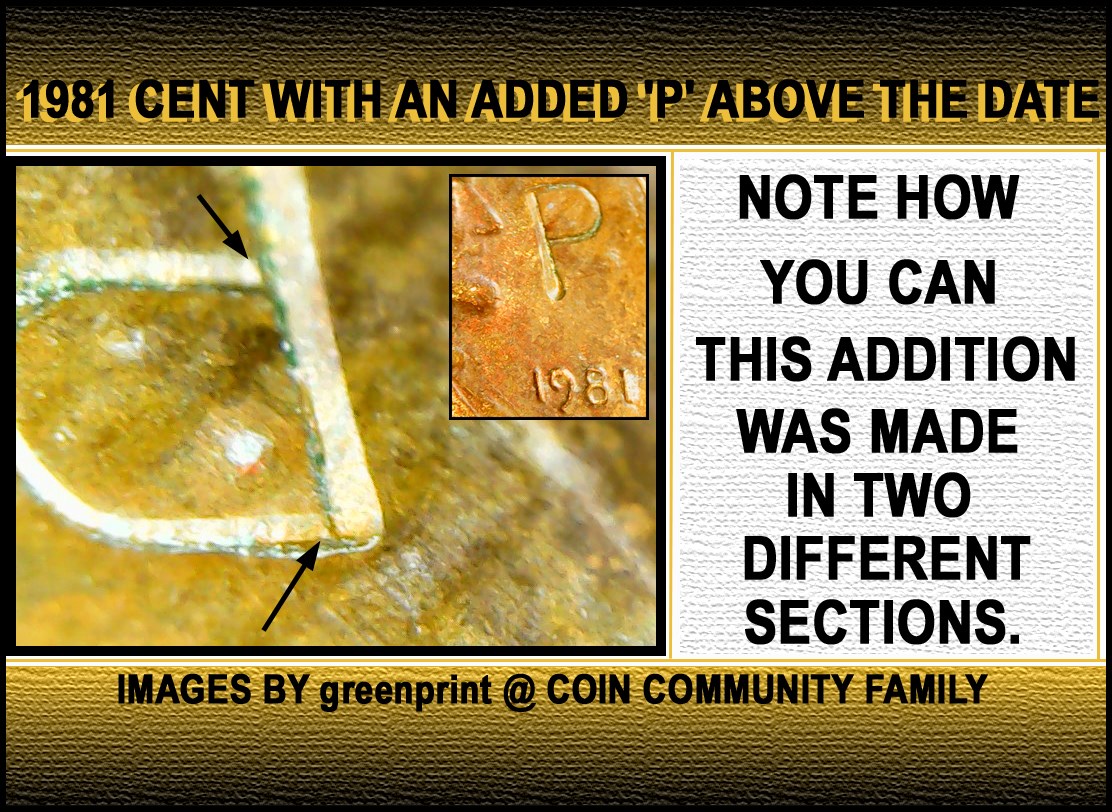 The rim area may have flattened because of circulation damage, thus making that area on the rim incuse. So it is above the surface, then something was added to the coin and the coin will be heavier than normal. But if the affected area show a trench with edges rising above, then it would be like a strong scratch. 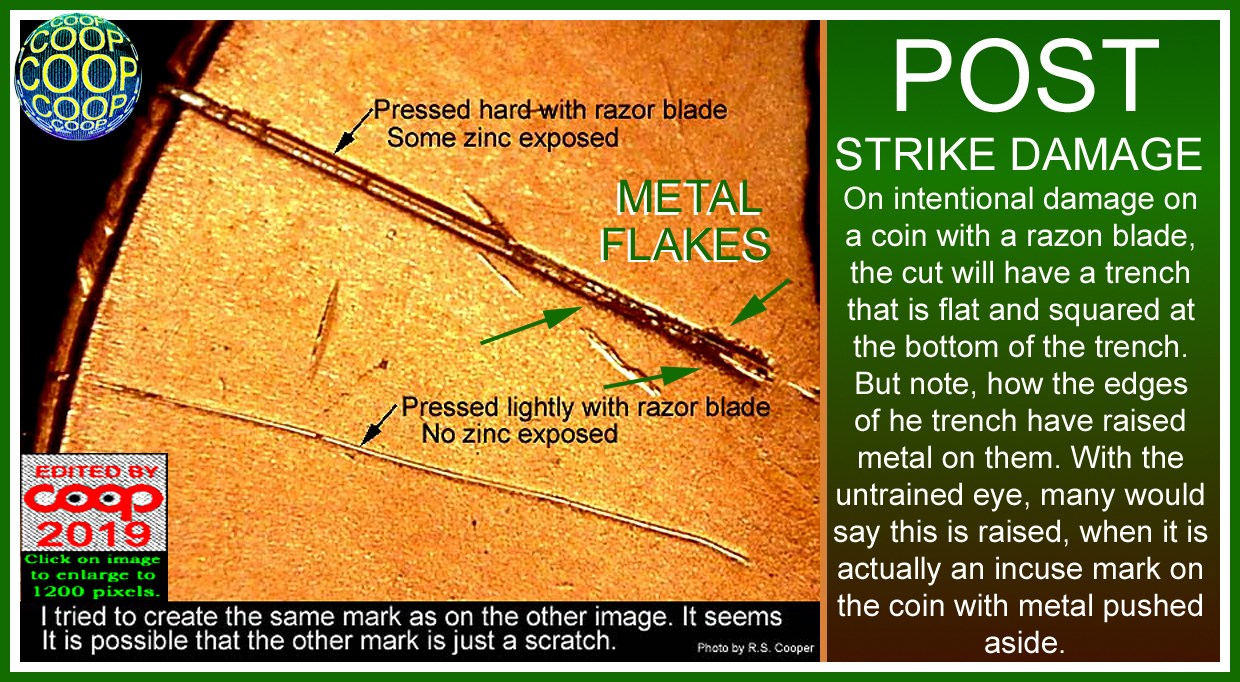 The weight in this case will be close to normal. Edited by coop
03/11/2022 10:56 am
|
|
Page 2 of 2
|
Replies: 25 / Views: 2,533 |
Page 2 of 2
|




 First Page


 Posted 03/10/2022 6:53 pm





