| Author |
 Replies: 23 / Views: 3,107 Replies: 23 / Views: 3,107 |
Page 2 of 2
|
|
|
|
Valued Member
 United States
493 Posts |
papeldog, yes on the leaf clash at IE and right of the E in DEI. Here is a shot of the D in a later die state without the 'struck through' issue. Also, a shot of the reverse from the same die pair, different coin. What do you think, Struck Through Grease or terminal die state? 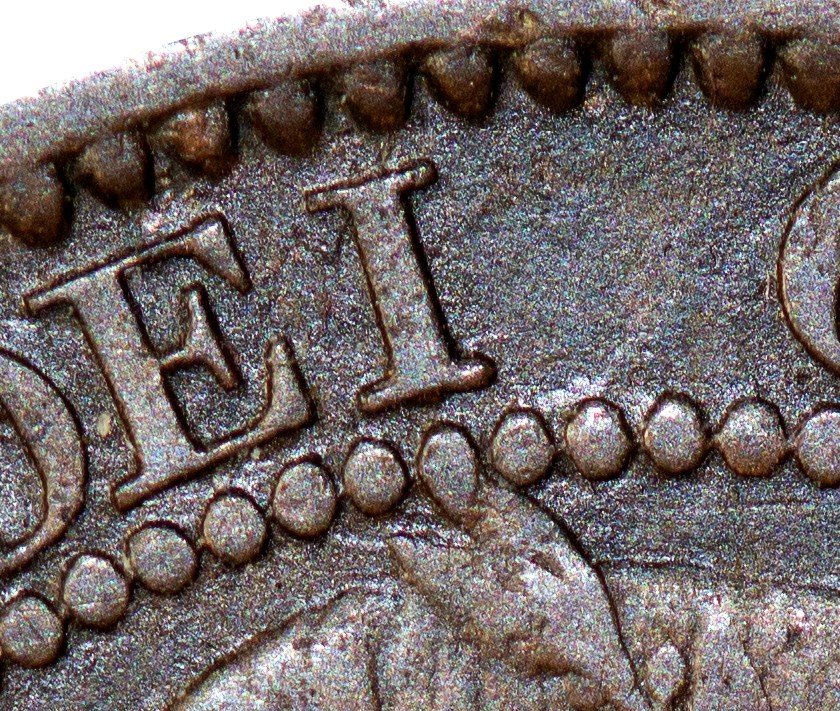 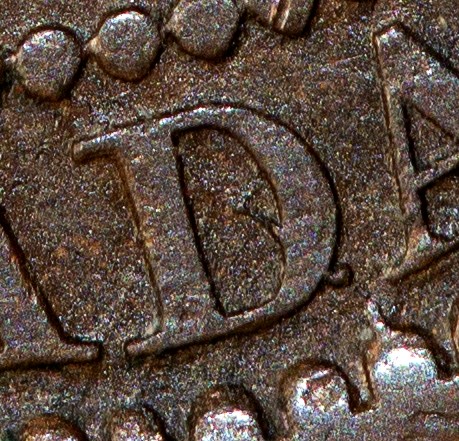 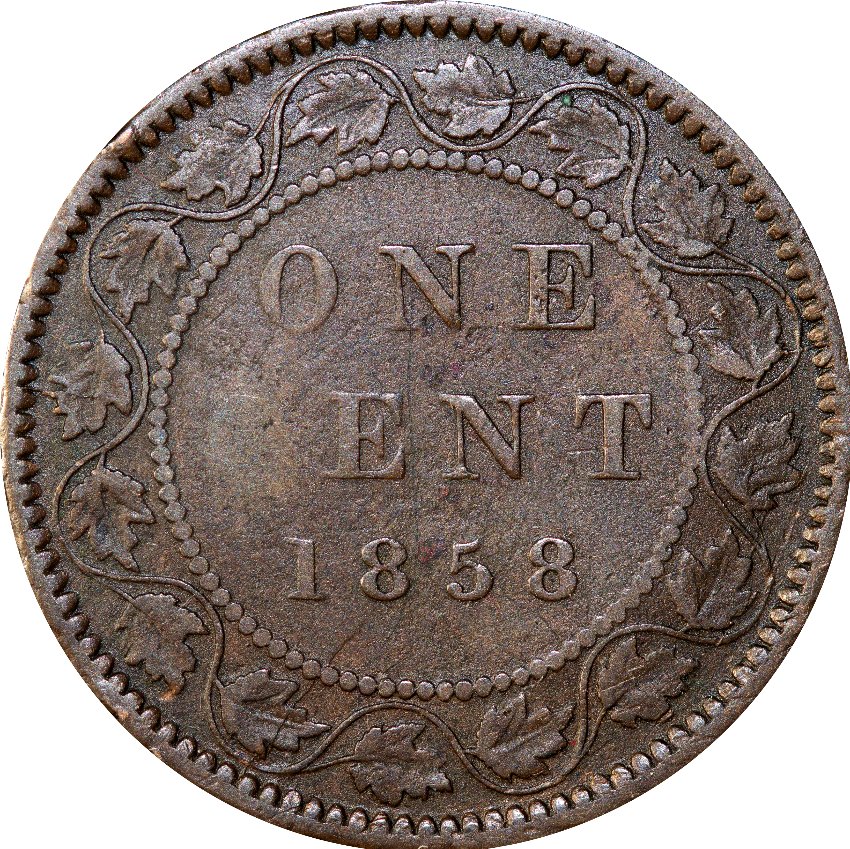 Edited by dan-in-crystal-lake
04/27/2022 1:07 pm
|
|
Pillar of the Community
 Canada
5644 Posts |
I'd say grease. The ONE is affected as well.
|
|
Valued Member
United States
493 Posts |
okie, it's hard to tell from a photograph to be sure, but I think you are correct.
Having the coin in hand is certainly a benefit, but the question is not an easy one to answer.
The die looks to be in a state of collapse, but the cracking indicates a die state that is not as progressed as one documented by Rob Turner in his book 'The 1858 Cents of Provencial Canada'. This die has a bit further to go yet I think before it's terminal.
Okie, as you well know, collecting any given year by die and by die state can be an interesting study. Some of dies continued to hang on after significant cracking while others failed in spectacular fashion.
The obverse die that fourmack posted in this thread has what looks like a terminal crack at the C in VICTORIA yet it continued to produce coins for another couple of pairs of reverses before it finally gave up the ghost or was retired.
A challenging way to collect a given year is by variety and die state. You never know when you are done!
|
|
Pillar of the Community
Canada
1268 Posts |
HI Dan, here's another one that has some weakness in the same area as yours as you can see it includes the "O" in ONE and the serif on the "E" in CENT as well as the "C" in CENT. I'm leaning towards a die collapse, die clogs generally don't migrate to other letters and I don't think they would allow a clog to progress to this state. The collapse may have started between the "C" in CENT and the "O" in ONE later progressing downward through the "C". Just an opinion but away I hope this die state can aid you. Cheers, Bill 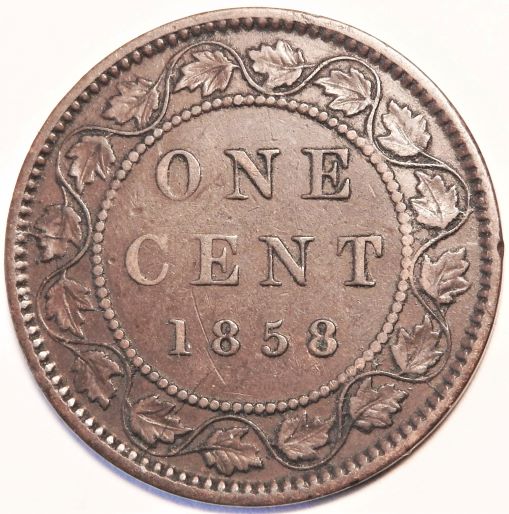 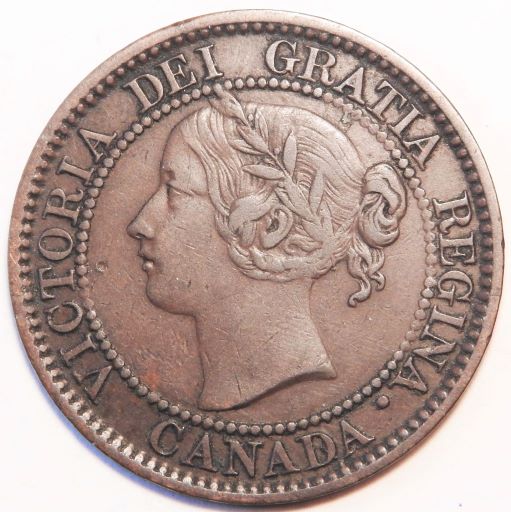 |
|
Valued Member
United States
493 Posts |
Hounddog Bill,
Interesting, All of this from pictures is difficult to say the least. It looks to me like the die cracking on your coin is a bit more progressed then mine, but not by much. The reverses are very similar, particularly in the weakness of strike of the beads L3-7 and L10-14.
Although I didn't post a full obverse, the one you posted has exactly the same bead weakness under GRATIA, REGINA and the CT in VICTORIA.
I have a couple more of this pair in much earlier die states that don't show any weakness in the beads whatsoever. Could well be we are looking at the end state of each die.
I wonder if anyone else has a late stage crack progression for this pair they would be willing to put up?
Edited by dan-in-crystal-lake
04/30/2022 10:20 am
|
|
Pillar of the Community
Canada
1928 Posts |
Dan + Bill I think this one is the same but the beginning of the die state maybe its just slightly fading obverse and reverse see what you think. Edit: this is the one with die crack at the A in Regina Pictures 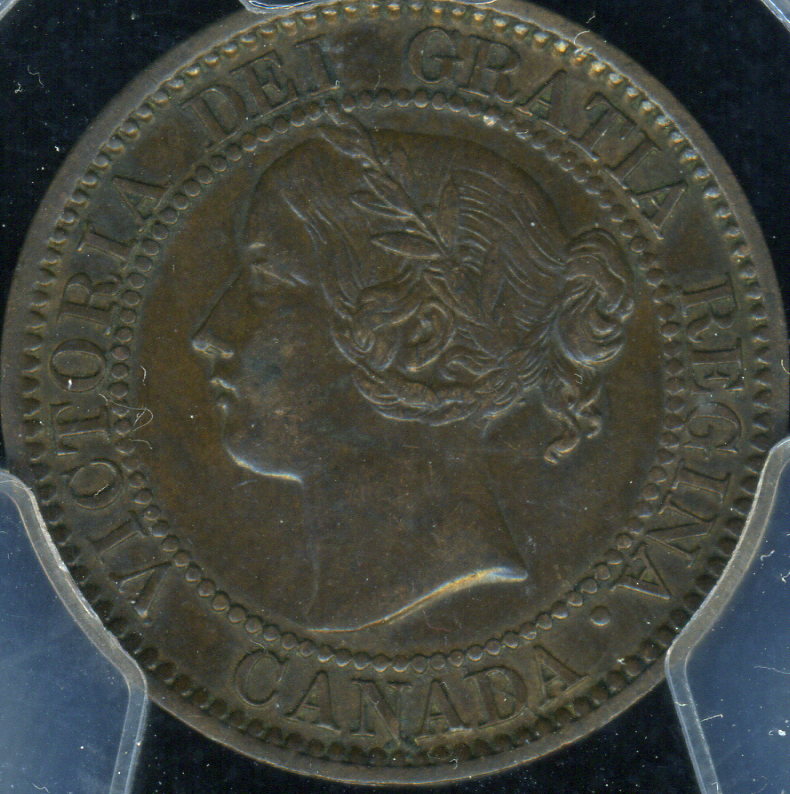 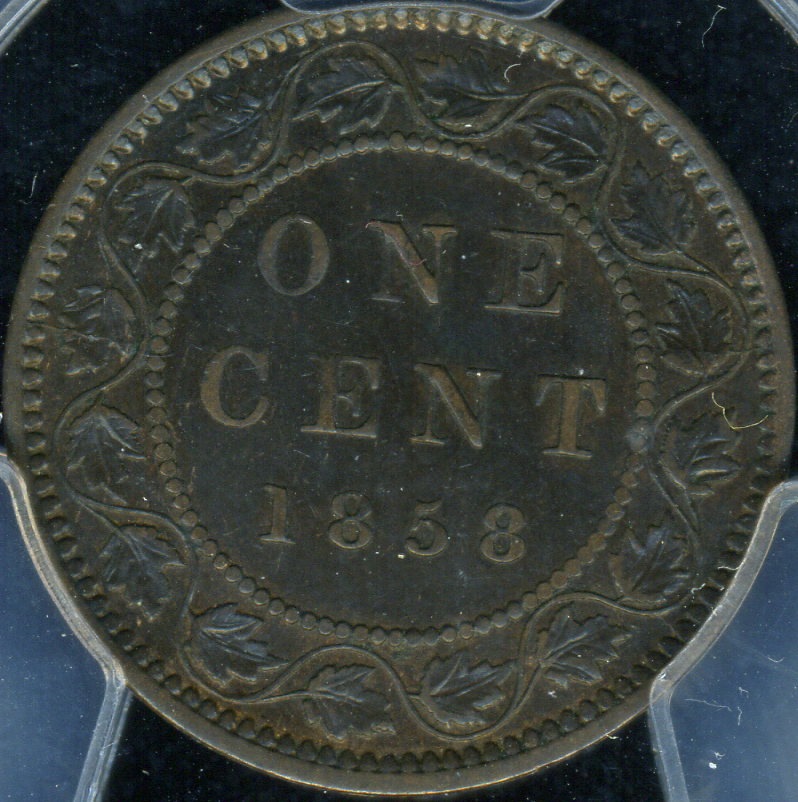 Edited by papeldog
04/30/2022 10:48 am
|
|
Valued Member
United States
493 Posts |
papledog, I agree with your 'not quite as far along' assessment. The die chip at the D in CANADA hasn't progressed much yet and the large crack into the field from L10 to the 8 and around the E is not well defined if it's present. The beads are stronger on both sides of the coin. This is similar to a couple I have in earlier die states.
Nice coin btw!
|
|
Pillar of the Community
United States
1372 Posts |
http://www.victoriancent.com2011 & 2025 Fred Bowman Literary Award, 2025 Guy Potter Literary Award, 2022 Paul Fiocca Award, & 2020 J. Douglas Ferguson Award. Life Member of RCNA.
|
|
Valued Member
United States
493 Posts |
bosox, thank for posting that one, the clashes are tremendous!!
I think these are good examples of what a fresh clash looks like on both sides of your coin and then how clashes can fade with repeated striking of coins.
One of the fun aspects of clashes for me is the fact that they are not persistent over time. Up until the dies clash the coins don't exhibit one, then there is one, then it might fade over time after repeated coin strikes, maybe not, and they can be hard to find on worn coins. Fun to collect to be sure if you know where to look and for what.
.
|
|
Pillar of the Community
United States
1372 Posts |
http://www.victoriancent.com2011 & 2025 Fred Bowman Literary Award, 2025 Guy Potter Literary Award, 2022 Paul Fiocca Award, & 2020 J. Douglas Ferguson Award. Life Member of RCNA.
Edited by bosox
05/02/2022 02:24 am
|
|
Pillar of the Community
Canada
5644 Posts |
Your coins are always a knockout, Rob.
|
|
Pillar of the Community
Canada
1268 Posts |
Agree beautiful coins  I can't see why that last one didn't graded higher, it's gorgeous!!! Thanks for sharing. Cheers, Bill |
|
Pillar of the Community
United States
1372 Posts |
Thanks. There is an MS-64 RB out there in a PCGS holder from the same OA2/RA3 die pair, but not labeled as a full vine. It sold in an auction a few years ago. My MS-63RB I posted above was the better coin of the two, so I passed on it. Here it is. It is a later die state. https://coins.ha.com/itm/canada/wor...bnail-071515http://www.victoriancent.com2011 & 2025 Fred Bowman Literary Award, 2025 Guy Potter Literary Award, 2022 Paul Fiocca Award, & 2020 J. Douglas Ferguson Award. Life Member of RCNA.
Edited by bosox
05/02/2022 4:54 pm
|
|
Pillar of the Community
Canada
1928 Posts |
I agree I like the 63 better than the 64 for eye appeal
|
|
Valued Member
United States
493 Posts |
The 64 very clearly shows the extensive cracking on the reverse. It's a bit further along than the weak coin I wondered if it was grease or terminal.
Thanks for posting that one. I agree with papledog, the 63 has much better eye appeal for sure.
|
|
Page 2 of 2
|
Replies: 23 / Views: 3,107 |
Page 2 of 2
|







 First Page

 Posted 04/27/2022 1:53 pm





