| Author |
 Replies: 17 / Views: 2,168 Replies: 17 / Views: 2,168 |
Page 2 of 2
|
|
|
|
Moderator
 United States
34564 Posts |
I agree with above but would emphasize that this is not a Cud. The glue and string became attached to this coin after it was struck n "If you climb a good tree, you get a push."
-----Ghanaian proverb
"The danger we all now face is distinguishing between what is authentic and what is performed."
-----King Adz
|
|
Bedrock of the Community
United States
19639 Posts |
Agree with the above--not a Cud as defined in the numismatic world. Do soak the coin in pure acetone. |
|
Valued Member
 United States
98 Posts |
100% yes. I agree it is not a Cud, just used that as a way to describe how the substance is spread on the coin. If after strike, how does thread get under the rim on each side yet be over and across the edge? I'm starting to think it has something to do with however they polish, or add a finish to the coins, if it were a liquid solution applied, with a sting around the rim holding it in til it dries, then pull string to remove or something...idk |
|
Pillar of the Community
United States
1677 Posts |
They don't polish or finish coins, once they are struck and ejected from the dies they are done. The thread, or whatever it is, just appears to be under or in the glue.
Edited by lcutler
05/08/2022 08:58 am
|
|
Bedrock of the Community
United States
94367 Posts |
Agree, acetone soak is the next step.
|
|
Pillar of the Community
United States
669 Posts |
My guess is that someone wanted to put the quarter into a coin slot to make a purchase and then extract the coin by pulling it out by the string. Talk about a cheap thief!
|
|
Pillar of the Community
United States
639 Posts |
Likely post mint damage. Probably a kid put it in glue.
|
|
Pillar of the Community
United States
3207 Posts |
with some glue anyone can make as mauy of these as they like
|
|
Bedrock of the Community
United States
62064 Posts |
When you can see through it, it is not a Cud. It is Elmer's glue. When you can't see through it, question of Cud maybe another type of glue or the real deal. Just need to look at the opposite wide of the coin when you can't see through to see if there is weakness on the other side: 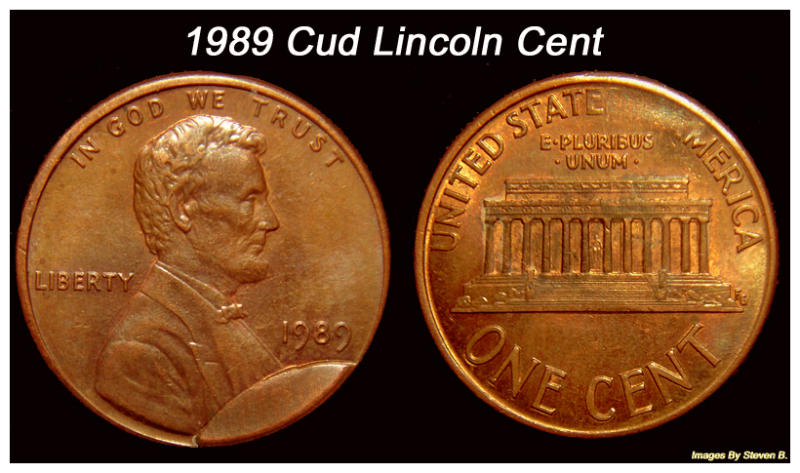 The void on the one side the die, will not make other die strike up the design on that area. |
|
Moderator
United States
108341 Posts |
Oh yeah, that sure looks like glue to me.. as stated an acetone soak should remove it.
|
|
Pillar of the Community
Canada
6244 Posts |
Could be glue or some transparent resin
|
|
Valued Member
United States
98 Posts |
My apologies to all for the use of the word " Cud" in the topic title. Once again, I used it only as a descriptive tool, not a numismatic designation. I had hoped that a by using a familiar term it would help those who read it to better visualize as I describe to the best of my ability what I see on the coin since I know that I struggle with photo quality issues. Thank all who replied, I will retain the coin in its current state for now though, since possibilities offered cannot clarify to me why on the reverse only substance-covered areas are lustrous and shiny, while the uncovered areas are dull flat grey. |
|
Valued Member
United States
98 Posts |
To clarify, I am not disagreeing with any responses, and appreciate all who take the time to read and/or respond! I only mean that with multiple related factors involved as described, until I have a plausible cause which would explain each related factor involved to some degree, then using acetone or in any way removing the substance would feel like destroying an obvious minting error since there is no other place that any piece of thread could have gotten embedded under the rim other than the Mint that I know of. I can remain unsure of the exact details.
|
|
Pillar of the Community
United States
2189 Posts |
Quote:
why on the reverse only substance-covered areas are lustrous and shiny, while the uncovered areas are dull flat grey. Because the glue has prevented oxygen & moisture (environment) from oxidizing/toning that area at the same rate as the rest of the coin. Spend it or keep it. either way it's still worth a Quarter |
|
Moderator
United States
108341 Posts |
Quote:
since possibilities offered cannot clarify to me why on the reverse only substance-covered areas are lustrous and shiny, while the uncovered areas are dull flat grey. Ok, lets try this: Take a nice piece of wood - Oak, Maple, or Pine - sand it down so it is nice and smooth, looks and feels good, huh? but the wood grain still looks flat and not too sharp. Now add a nice coating of wax, or lacquer, or varnish and apply a few coats to the sanded wood and let it dry - Looks great now. The grain pops out at you and is nice and shiny when compared to the rest of the untreated wood. (same principal here. The glue is smoothing over the imperfect surface of the coin and working as a 'lens' of sorts to enhance the design underneath. Edited by Dearborn
05/10/2022 08:48 am
|
|
Page 2 of 2
|
Replies: 17 / Views: 2,168 |
Page 2 of 2
|





 First Page


 Posted 05/08/2022 08:03 am





