| Author |
 Replies: 20 / Views: 2,025 Replies: 20 / Views: 2,025 |
Page 2 of 2
|
|
|
|
Moderator
 United States
56855 Posts |
Not an RPM. John1  |
|
Bedrock of the Community
United States
10635 Posts |
From these photos, it appears to be a split plating issues. That would lead to the zinc blister which will lead to zinc rot. Spend it while you still can as there is no stopping it's destruction.  |
|
Bedrock of the Community
United States
62064 Posts |
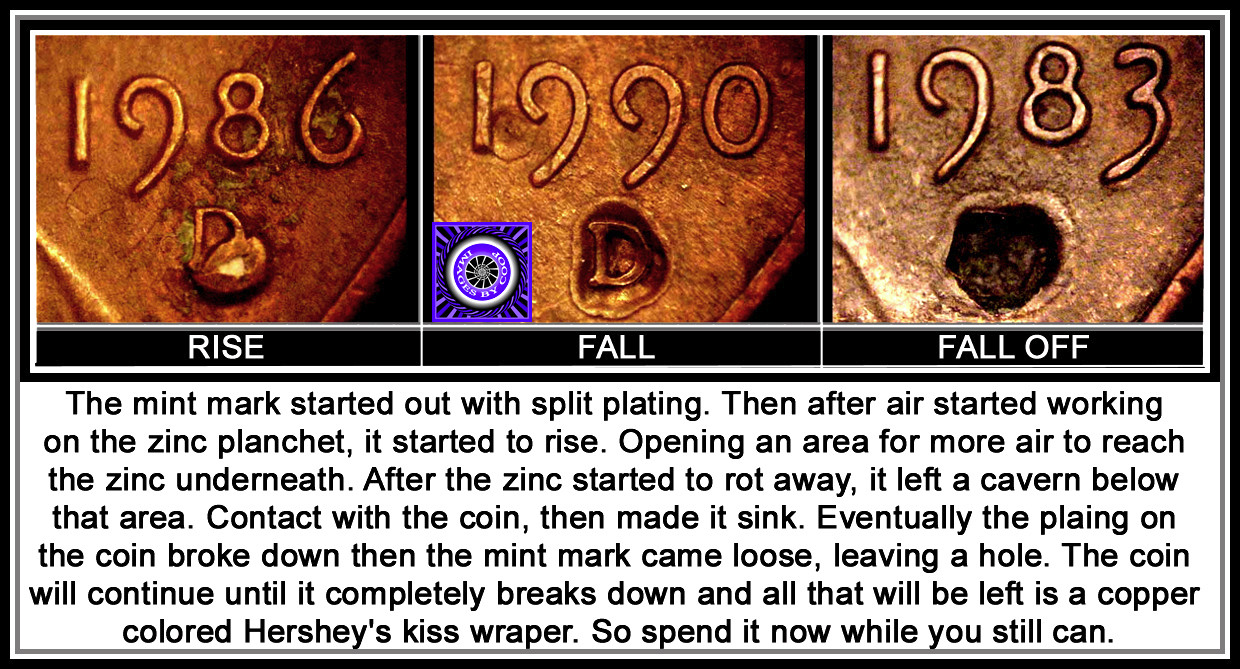 Once the plating is split, the zinc is exposed and oxygen starts the zinc rot process. Spender. (The countdown has already started with this coin) So when buying a real RPM, watch out for the split plating that can also happen on RPMs. 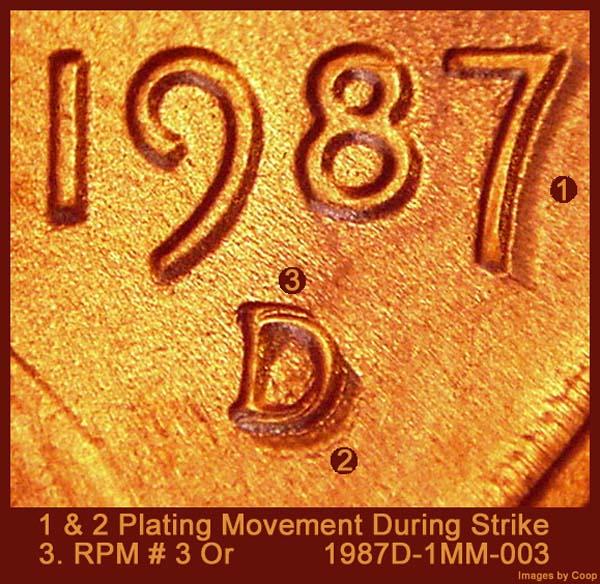 The countdown is already started on the RPM with split plating. (So don't buy these when you see them for sale anywhere) 37 |
|
Pillar of the Community
United States
7174 Posts |
 rot. |
|
Bedrock of the Community
United States
19643 Posts |
The split plating rot pox. Love numismatics!
|
|
Valued Member
 United States
56 Posts |
Wow, I was clearly wrong, lol. It's funny though, I ever thought I'd find a diseased penny. How long does it take for the "Rot" to completely break it down? Reason I ask, is it would be interesting to document the process.
|
|
Bedrock of the Community
United States
10635 Posts |
Usually the rotting process doesn't take too long. Lots of. Zinc rot in various stages are easily found . The one thing for certain is once started, there is no stopping it. |
|
Bedrock of the Community
United States
62064 Posts |
If acid touches the zinc it accelerates the rot process and the coin dissolves.
|
|
Pillar of the Community
United States
7174 Posts |
I think that all zincolns that circulate will eventually rot to nothing.
|
|
Moderator
United States
108378 Posts |
|
|
Valued Member
United States
56 Posts |
The first pic I posted had me convinced there was a D under the D mintmark but I've also never heard of Zinc Rot. Thank you guys for clearing that up for me.
P.S. lol, that first pic had me going!
|
|
Valued Member
United States
56 Posts |
The mintmark anomaly on my 1987 D cent was called Zinc Rot but I found this pic of a 1951 D cent on the LCR site but they say it's an OMM. It looks a lot like my 1987 D cent mintmark so I'm wondering how to tell the difference between Zinc Rot and OMM? 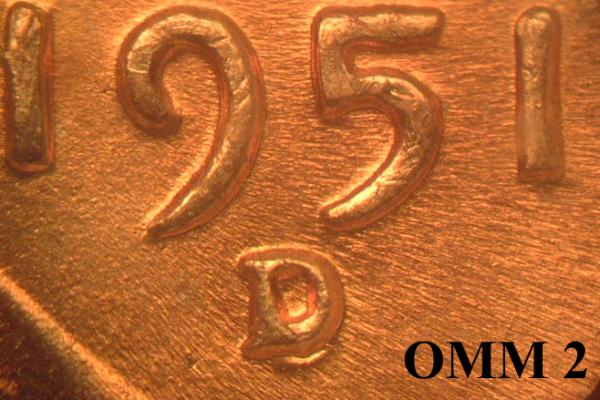 |
|
Moderator
United States
34564 Posts |
Well to start, cents in 1951 were made from copper rather than zinc with a copper plating.
"If you climb a good tree, you get a push."
-----Ghanaian proverb
"The danger we all now face is distinguishing between what is authentic and what is performed."
-----King Adz
|
|
New Member
United States
27 Posts |
in fairly new to coin collecting I was sure it was an sunder the d at first but zinc rot is good to know about...thanks for the lesson
|
|
Moderator
Australia
17009 Posts |
(a) Solid bronze won't corrode in the same way as copper-plated-zinc. Without a plating, there's nothing for a bubble to form beneath. Also note on your coin, the white powder all around the mintmark, indicating corrosion is happening there. No such corrosion spot on the 1951.
(b) Know your series. Specifically in the case of repunched mintmark varieties, know when "repunched mintmarks" are technically possible, and when they aren't. Back in 1951, coin dies were still being sent out un-mintmarked, and the mintmark had to be added by hand.This created variabliity in mintmark location, as well as opportunity for errors/varieties in doubling of the mintmark. In 1989, they stopped doing this and added the mintmark as part fo the design of the master dies, so 1989 is the last possible year for a "repunched mintmark" variety. If you see a 1 cent coin dated 1990 or later and it kinda looks like a repunched mintmark, it 100% definitely isn't. Obviously in your case for your 1987 coin, this doesn't help, but it will help for future examples.
(c) Examine the coin in its entirety. There's a reason why we keep asking people to "post pictures of your entire coin, front and back, rather than just a closeup of the alleged error". That's because if a coin shows corrosion spots in other places, then it's highly likely that the entire coin has been subjected to a hostile environment causing corrosion, so any other weird "errors" manifesting on it are likely to be caused by that same corrosive environment. Your coin shows green discolouration all over it.
Don't say "infinitely" when you mean "very"; otherwise, you'll have no word left when you want to talk about something really infinite. - C. S. Lewis
|
|
Page 2 of 2
|
Replies: 20 / Views: 2,025 |
Page 2 of 2
|







 First Page


 Posted 10/27/2022 07:15 am





