| Author |
 Replies: 37 / Views: 2,971 Replies: 37 / Views: 2,971 |
Page 3 of 3
|
|
|
|
Pillar of the Community
United States
3535 Posts |
Very Interesting. Sorry that's all I got for this one  I've never seen anything like this. |
|
Pillar of the Community
United States
592 Posts |
Not a low pressure strike because the reeds look strong and the rims are well developed. Mike Diamond wrote an article for Coin World about the Mankiller quarter with the obverse Cud and reverse die crack: Of note, he had this to say: Quote:For his examination of the first error quarter dollar Clark located, Diamond said, "Lucky collector. These coins have been selling on ebay for more than $300. These images represent the earliest die stage I've seen. The early stages seem to have been Struck Through Grease or maybe they were weakly struck. "It's hard to say which without a shot of the edge. The well-struck area within the Retained Cud suggests it's grease, since Retained Cuds are often less well struck than the surrounding area." Here are two recent examples of the error that sold on ebay: Notice that these two error coins show many of the same features as the OP's coin. Specifically, these two examples show the same device effacement at the rim as well as some of the same reverse effacement of devices. Notice how the WIL is strong but the MA (of Wilma) is very weak on all three coins. Likewise, the KI of Killer is weak, while the first L is strong and the second L and E are weak. There are many more similar weak spots as well. Did all these coins come for the same set of dies? Is it possible this is an early die state of the error coin before the Cud formed? Edited by HGK3
03/09/2023 3:02 pm
|
|
Bedrock of the Community
United States
19639 Posts |
Numismatic forensics at a top-shelf level.
|
|
Pillar of the Community
Canada
6244 Posts |
@ HGK3: I Know this study from Mike. The question it is and Retained Cud will affect the middle of the coin? and only one side middle?, which it is the case here. Do we have to ask Mike to look at this coin? Edited by silviosi
03/09/2023 3:15 pm
|
|
Pillar of the Community
United States
592 Posts |
Sil, Are you saying that it's PMD that affects the middle of one side of all three coins? Is the sample with the obverse Cud and the same device effacement on both side PMD for the flattening but a genuine Cud? What about the sample with both the die crack on the reverse and the obverse Cud? Did someone find that obvious error coin and then intentionally flatten the devices on both sides? |
|
Pillar of the Community
Canada
6244 Posts |
@ HGK3: Quote:
What about the sample with both the die crack on the reverse and the obverse cud? I know the tests. I have no idea if they implanted my next quote because in 2021 I finish the contracts (personal states). I think you know the study of 2020. In 2020 we see that will happened if the Dies will not be change metallic or hardiness. Quote:
Alternative Seamless/CoCirculate
Denominations Testing Status/Readiness for
Implementation
80/20 Seamless 5¢, 10¢, and 25¢ Full First Article qualifications of
Mint production and current
supplier capability complete with
external validation by three coin
acceptor manufacturers (CAMs).
Fully ready for implementation
pending legislative authority. 2020 tests and analysis The question for me is how can come out of the testing production. I will receive an original Die very soon and I will perform some tests. If I can still help I will do and not help scammers. PS if you want full report, not the testing I will send you. Edited by silviosi
03/09/2023 4:46 pm
|
|
Valued Member
United States
366 Posts |
When comparing thickness like you posted here, angle and alignment is very important. If the lens and coins are off at all either horizontal or vertical or left or right front to back one coin with look thicker. Plane of view, learned that in mechanical drawing class. Try for a straight and level picture.
|
|
Pillar of the Community
United States
592 Posts |
Sil, I mean this as respectfully as possible: I have no idea what you're referring to. Your original response to the OP's coin was: Quote:
This is IMHO an hand made simulation of an error after Mint Strike. My question is simple - are all three coins with substantially similar markings (the OP's coin and the two ebay coins I linked to) PMD? |
|
Valued Member
United States
366 Posts |
What is the diameter of each coin?
|
|
Pillar of the Community
Canada
6244 Posts |
@ HGK3
Yes. From same location. PM me to can give the material testing and follow the origins of the coins.
PS. I have one and tests are as the metal tests.
Edited by silviosi
03/09/2023 5:56 pm
|
|
Valued Member
United States
426 Posts |
As HGK3 showed us those ebay listings of the Retained Cud and bilevel die crack the characteristics are similar on the coin not to the extreme ofc and that's due to grease. OPs coin is a grease strike plan and simple. As it relating to the retianed Cud and die break reverse two separate dies. It does seem the mint had an issue with grease bc we've seen a lot of grease strike thrus like this on the man killers. Months before. Here is a retainer Cud with a bi facial grease strike similar to OPs quarter ofc no Retained Cud but this is just to give an example to show that ops coin is legit a mint error. 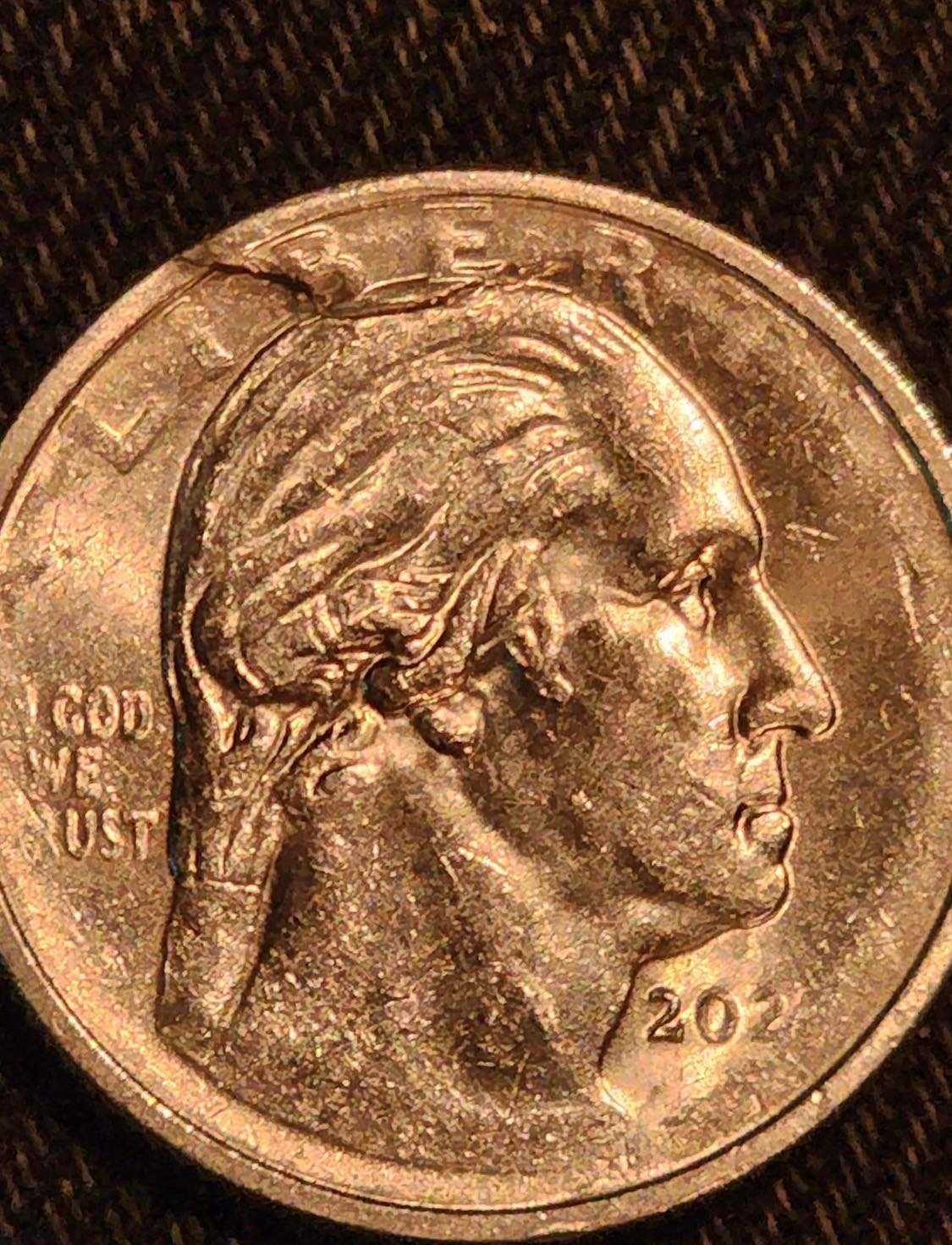 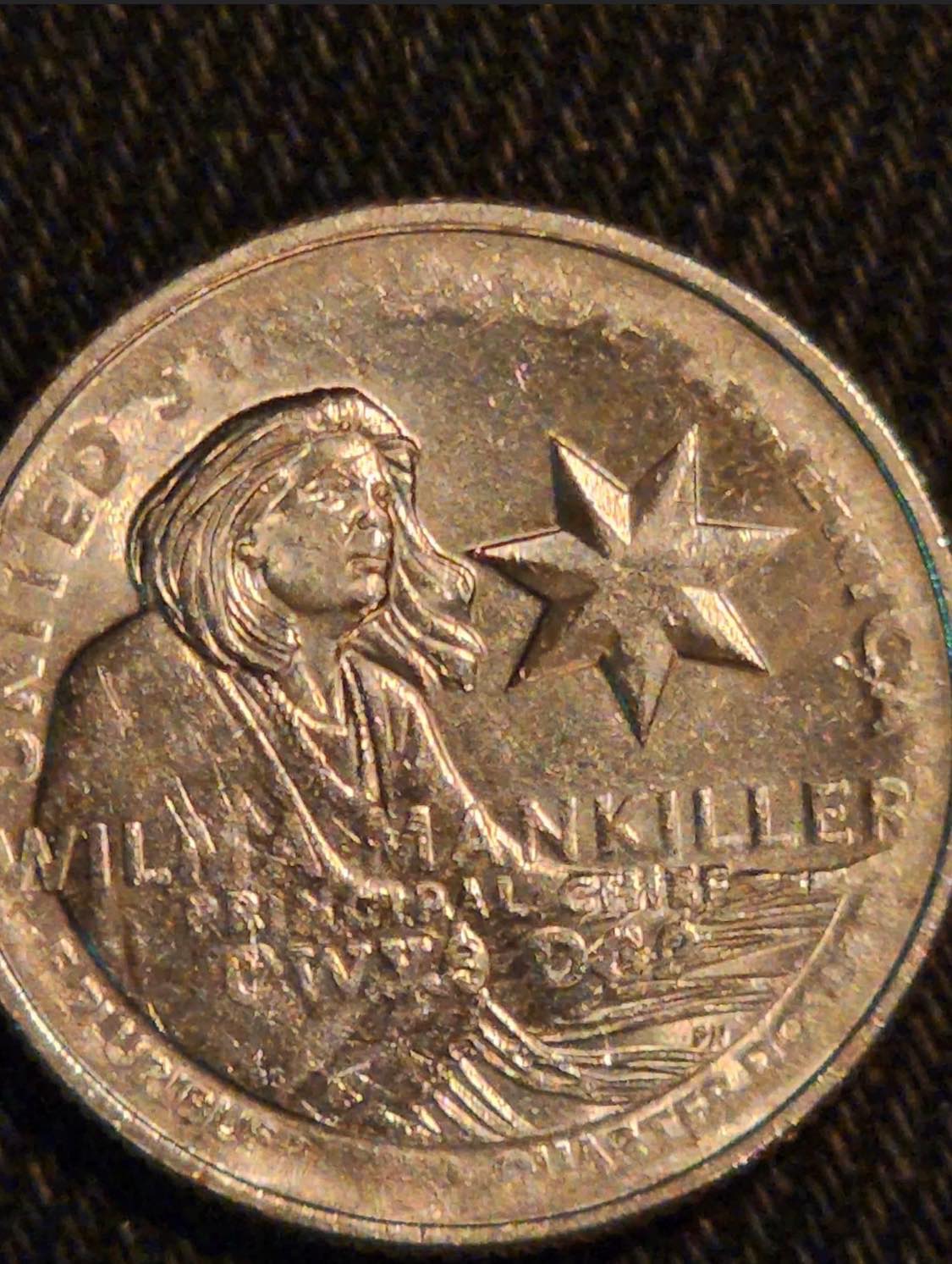 And below is just the Retained Cud no grease strike 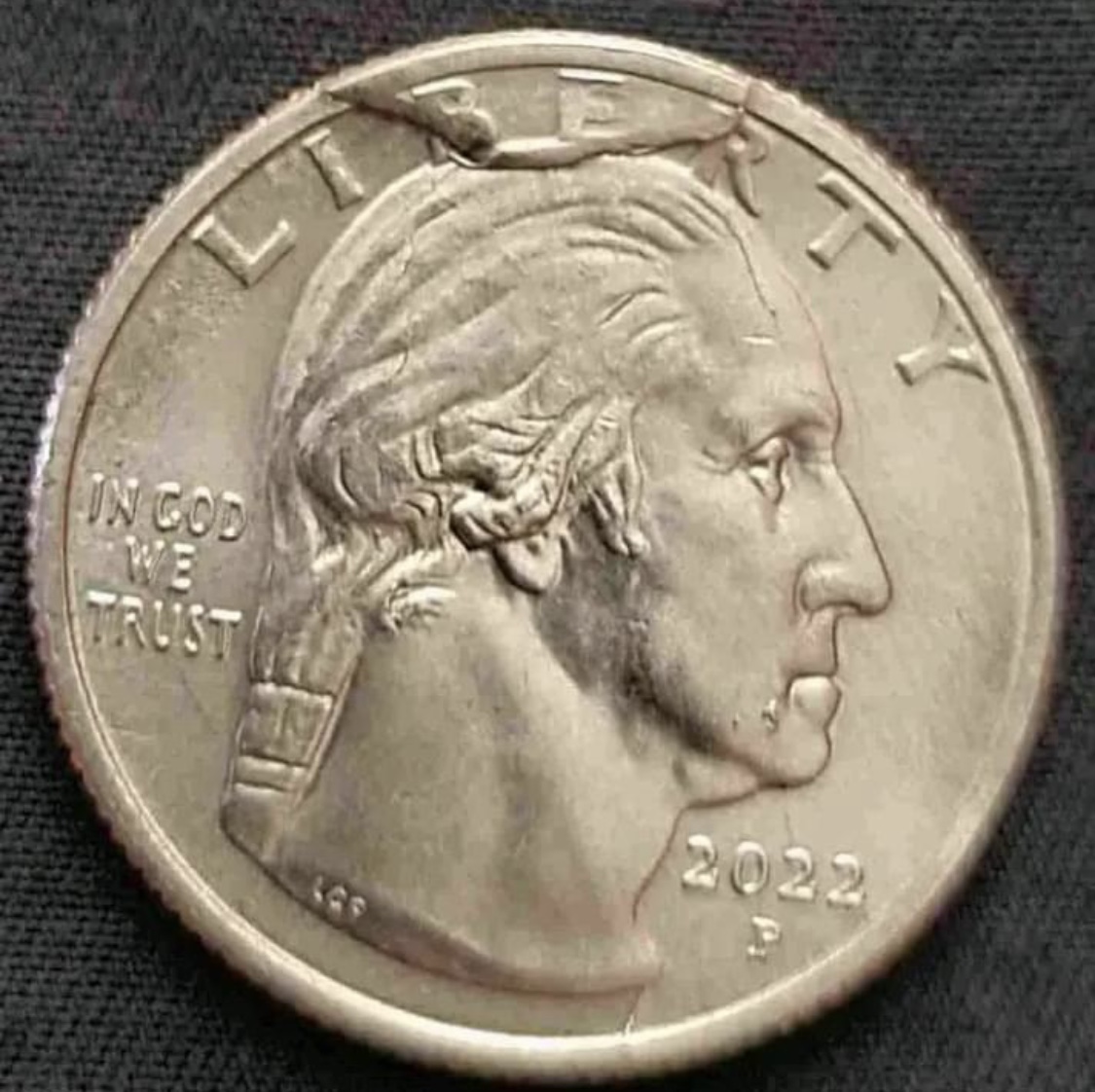 NEXT Edited by gorham_collector
03/09/2023 8:48 pm
|
|
Pillar of the Community
United States
911 Posts |
|
|
Pillar of the Community
United States
2752 Posts |
As others have said, the OP's quarter was struck through "grease" on both faces. You would need a common die marker to connect this coin to the Mankiller quarter with retained obverse Cud and (later) the reverse bi-level die crack. Error coin writer and researcher.
|
|
New Member
 United States
35 Posts |
Got back yesterday from vacation and I was able to weigh the quarters on my brother-in-laws digital food scale while we were there. It can weigh in both ounces or grams, both quarters are exactly the same weight at 5.6 grams. I looked this up and that is very close to what they are suppose to be. Thanks for the input from a week or so ago, any other ideas on why the edges are so weak?
|
|
New Member
United States
35 Posts |
So I take it from the comments it is likely a grease strike through, so these are not that rare then?
|
|
Page 3 of 3
|
Replies: 37 / Views: 2,971 |
Page 3 of 3
|








 First Page
 Previous Page


 Posted 03/09/2023 3:00 pm


