Coin Community Family of Web Sites Join Thousands of Coin, Bullion, & Money Collectors
Royal Estate Auctions - $1 Coin AuctionsVancouvers #1 Coin and Paper Money Dealer Join Thousands of Coin, Bullion, & Money Collectors 300,000 items to help build your collection! Specializing in Modern Numismatics Coin, Banknote and Medal Collectors's Online Mall Royal Canadian Mint products, Canadian, Polish, American, and world coins and banknotes.


Username:
Password:
Save Password
Forgot your Password?


This page may contain links that result in small commissions to keep this free site up and running.

Welcome Guest! Registering and/or logging in will remove the anchor (bottom) ads. It's Free!

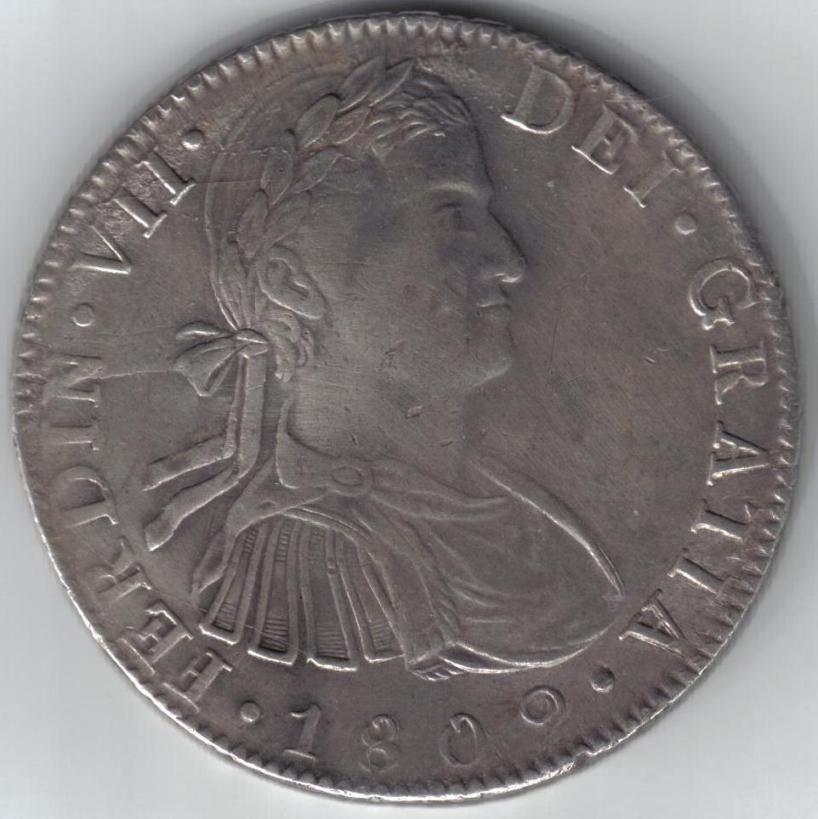
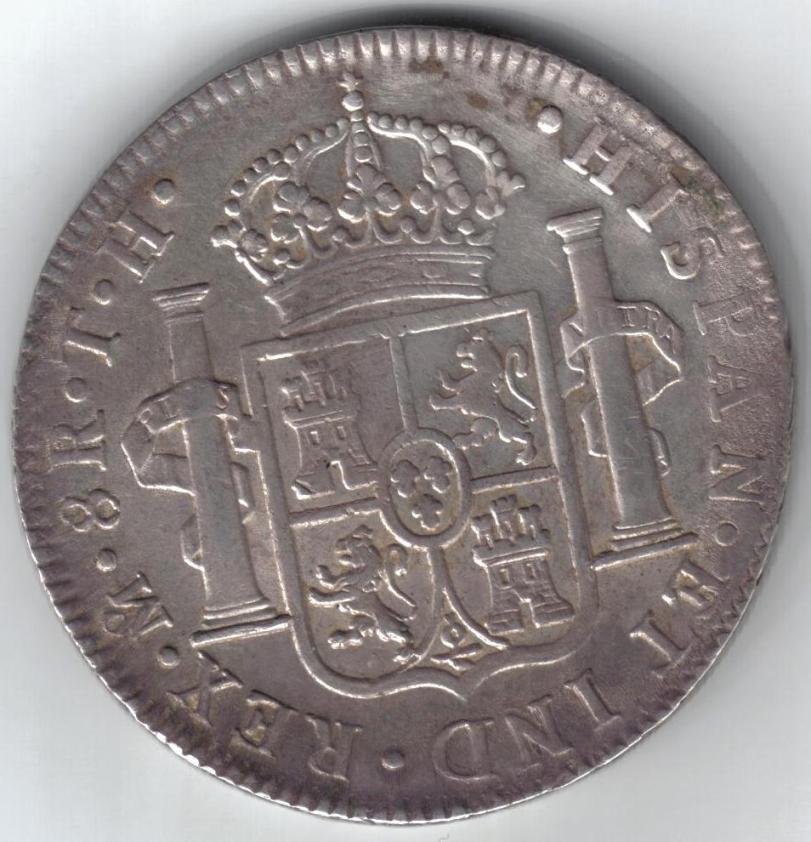
1809 Mexico City 8 Reale - Need Help Authenticating

To participate in the forum you must log in or register.
First Page Previous Page  Showing last 15 replies.
Author Previous TopicReplies: 37 / Views: 8,782Next Topic Page 3 of 3
Pillar of the Community
United States
1801 Posts
 Posted 05/15/2010  5:24 pm  Show Profile   Bookmark this reply Add jfransch to your friends list
I was at a coin show 34 yrs ago and saw a complete set of Mexico Pillar Dollars 1732-1771 displayed and was just awestruck. Fortunately for me, one of the best dealers in Spanish Colonial Coins is a good friend of mine so I had good guidance and access to a lot of great coins. I have been fooled a few times by fakes and altered assayer coins but on the whole it has been an incredible experience. I am very lucky that my son shares the interest and we have had many "coin and history" related adventures including bringing up Spanish silver from a 1715 Spanish shipwreck. It is the history that keeps me interested.
Pillar of the Community
United States
3499 Posts
 Posted 05/15/2010  5:55 pm  Show Profile   Bookmark this reply Add Archraz to your friends list
swamperbob- Awesome analysis! I can definitively see why you would be suspicious. Regarding "displaced die fractures," are these fairly commonly seen on 8s? I am just wondering since I have an 1809 M that seems to have one as well. It is on the obverse right through the "N" in "Ferdin." I am 99.9% positive that my coin is real since it is of the proper weight and the edges are perfect (though it has had a really harsh cleaning sometime in the past).


1809-Mexico-City-8-Reale---Need-Help-Authenticating

1809-Mexico-City-8-Reale---Need-Help-Authenticating
Valued Member
United States
74 Posts
 Posted 05/15/2010  7:38 pm  Show Profile   Bookmark this reply Add Rayhaldo to your friends list
I will take a picture of the numeral 8 as best as I can and post it as well as send a picture to you swamperbob for further analysis. Swamperbob, when do you believe this coin was made? If it is a counterfeit does it have any value? I am not able to do a SG - any idea how I can get this done? Thanks for the in depth analysis - even if it is a forgery it is a very interesting coin and I would not mind have a sample of a forgery in my collection. Guess I will have to obtain a genuine 1809 Mo TH!
Valued Member
Philippines
386 Posts
 Posted 05/15/2010  9:27 pm  Show Profile   Bookmark this reply Add Pandesalapi to your friends list

Quote:
swamperbob- Awesome analysis!

I can't say anything more...I'm speechless.
Jransch collection of 8 reales, I think is Gigantic in magnitude.
Archraz - nice Ferdin too.
I'm just curious of Rayhaldo's 8 reales, if it has a thick planchet as seen with the proportion of its design edges and has an exact diameter of 40mm as mentioned, it should weigh way above 27grams. In other words, if the coin is thicker than normal, its diameter should be lessen resulting to a re-edging. And this is to compensate the target measurement of its 27grams weight.
What is scary is, if reyhaldos' coin is a forgery, it is a beautiful counterfeit. However I wonder how many fake coins do I really have?
Pillar of the Community
United States
1801 Posts
 Posted 05/15/2010  9:38 pm  Show Profile   Bookmark this reply Add jfransch to your friends list
Interesting comments Swamperbob. I have found die fractures and die breaks to be very common on Bust 8s, especially Ferd VII variety. I also commonly find what appears to be rust damage on the dies showing up as raised lines and spots, usually towards the outside perimeter of the coins among the lettering on the legends (like among the VII on Archraz's 1809) and very prevalent on coins with noticeable re-engraving on the legends. Mexico City is hot and humid and my guess is that rust was a serious problem at the mint.
As for the edge on the original post coin, it appears to me the coin is not too thick but rather that the edge design "wobbled" up and down the edge, no where does it look centered. Perhaps the planchet was warped (or had a slight "lip" from adjustment filing)prior to strike? I have seen many coins with what appears to be adjustment marks on the edges where the edge detail is not centered so I believe adjustment filing was done to the edges prior to edging the blank, just my humble opinion, it would be the easiest place to file and would be less noticeable than adjusting the face of the coin. I have no reference that says it was done that way but also no reference that says it was never done that way. However that said, I have never seen the circle in the square design so clearly on a colonial 8. I have seen what look like mushy circle and rectangles which I always assumed were just wear or to the coin or worn edge dies. The jury is still out on this coin.
Pillar of the Community
United States
5362 Posts
 Posted 05/15/2010  11:37 pm  Show Profile   Bookmark this reply Add swamperbob to your friends list
Yes, the jury is still out.

But to comment further on the edge.

1. The wobble is seen on many colonial edges in cases where there was no retaining lip on the edge mill dies. Peru and Bolivia did use edge dies that wobbled extensively. But I have been led to believe by people who have examined the original dies and equipment in the mint at Mexico City that they did use a retainer. At least on the examples of edge dies that remain. It only makes sense that to edge without pop outs that a retainer lip had to be used. That I realize is hearsay but it is what I have been going on for many years and it simply makes sense. Did they ever use dies with no retainer lip - possibly but it would have slowed production rates.

2. Regarding the thickness of the coin. If you look at the edge pictures taken of the coin - at the point of overlap BOTH edge designs are visible side by side on the edge. They do not wrap around from the edge to the faces and they are not distorted to half height. If they did run onto the faces (an edge applied at an angle of say 30 or 40 degrees) they would be visible (in part) when looking at the faces of the coin - they would also be distorted by the strike - far more than I see.

However, new pictures taken at exact right angles to the edge and at the center of the lap could help to answer this question.

A displaced die fracture is often the way a real die fails. So the fact that there is a displaced die fracture here is not BY ITSELF a condemnation of the coin. But to see a displaced die fracture BEFORE there is significant die wear (flow lines caused by wear) is not as common. That would only happen in the rare case of a weak die that went to pieces very shortly after entering production. It does happen but not that often. When a die wears out and fatigues it tends to wear out all over. The features get spongy and details tend to wear off. Often the edge features like letters distort and start to blend into the edge dentils. The edge dentils erode and almost disappear. I don't see that here. The die looks far newer than that. If the rust specs still show from the die being stored and especially if the non radial brush lines from cleaning off the rust with a wire brush still show - this is a NEW die - so then the question becomes why is there a terminal state die fracture on a new die?

My concern is that soft dies crack quickly. Dental plastic casts used as dies fracture very quickly say after 5 or 6 strikes. But they are cheaply made do not damage the original coin and they produce a high quality field which only needs minor abrasive brushing to cover the inevitable surface blemishes in the die face. My concern is that a plastic die mimics what I see here. It is a plausible alternative explanation for the rust and cleaning lines and it is often seen with "soft" cracks and displacement fractures.

Die breaks are VERY common as is rust on the dies. Those who commented were correct. But just because it could happen you have to look at was it likely to happen - and was it likely that all these factors happened to combine here.

The shape of the edge figures is to me a very critical issue. The correct edge is always referred to as a circle and rectangle. But here it is a square containing a circle - rectangle - square containing a circle. For me that is simply the WRONG EDGE DESIGN. It may have been used but I have no proof it was. It would require a different punch. But think of how easy a forger could make that die. The edges of the figure are side to side saw cuts leaving a square of metal which you then drill out. Result a circle in a square - no need to make the circular punch to prepare the die.

The circle in the square pattern is well known to me I have numerous examples of COUNTERFEIT coins underweight and/or debased silver that use just this design.

I guess you have to be my head to understand my method. I do not usually diagnose on one fact. Sometimes it is possible - for instance a 21 gram 8R. But in most cases when commenting on a photograph, it is usually a combination of different factors that while each is possible in isolation they are rare in combination - which causes me to lean diagnose a coin as a counterfeit.

So just to recap a bit.

1. There are die lumps that could be rust or evidence of a plastic mold.
2. There are die scratches that could be from die brushing with a steel brush to remove surface rust or they could be caused by recent harsh cleaning or they could cover up a transfer impression.
3. There is a terminal die break which may have occurred on a new die or it could be a typical failure of a soft die.
4. There is the wrong edge design that "might" have been used or it could be a forgers shortcut method of creating the edge die.

So in this case, 1 and 2 are as likely to occur together as not. But they are far less likely when combined with 3 and the combination with 4 is a potential KILLER.

The likelihood of these 4 factors occurring on one and the same REAL coin is remote.

I have not addressed the other concerns like length of overlap - priority of overlap or specific gravity.

If the owner of this coin would like to have the SG tested I would agree to do it just to have the opportunity to see the coin in person. A picture may be worth a thousand words but a coin in hand is worth a million.

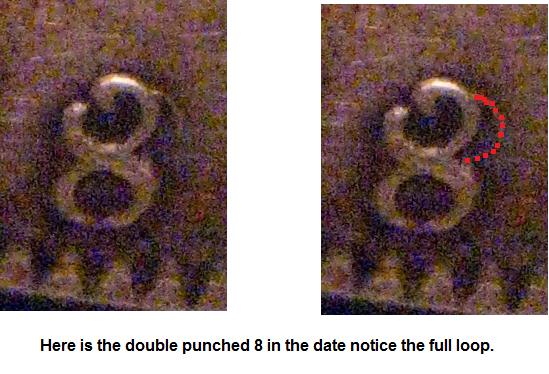
I checked the pictures on this post and decided to add a picture of the repunched? digit in the date. It is another suspicious element to add to the mix.


1809-Mexico-City-8-Reale---Need-Help-Authenticating

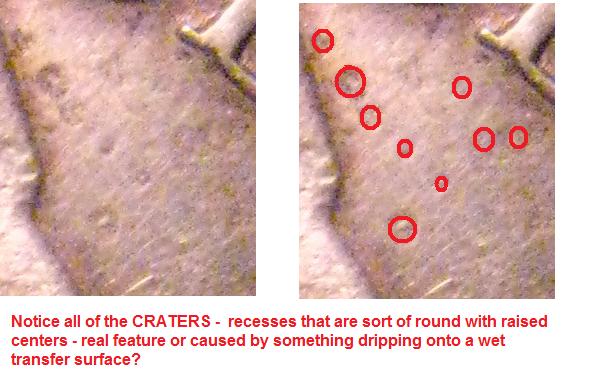
While copying the date picture I noticed another odd item that should be addressed. A series of depressions between the King's head and the DEI which have raised centers. To me they look like something dropped onto a wet transfer surface that corroded it in part.


1809-Mexico-City-8-Reale---Need-Help-Authenticating

Rayhaldo - let me know if you want an in person inspection and SG.
Valued Member
United States
74 Posts
 Posted 05/16/2010  01:14 am  Show Profile   Bookmark this reply Add Rayhaldo to your friends list
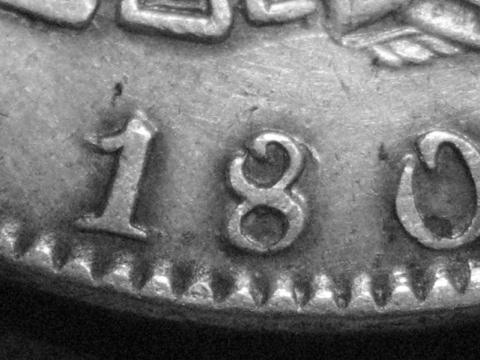
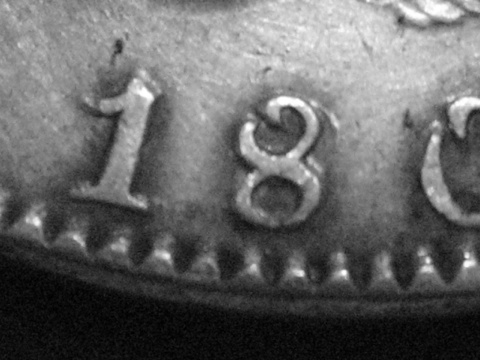
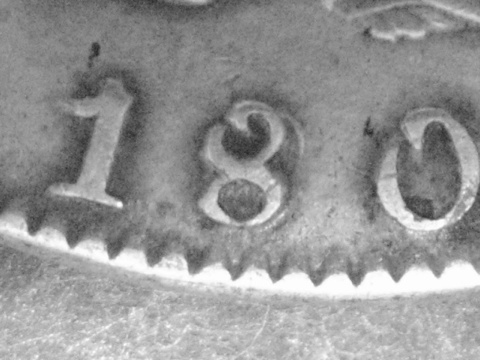
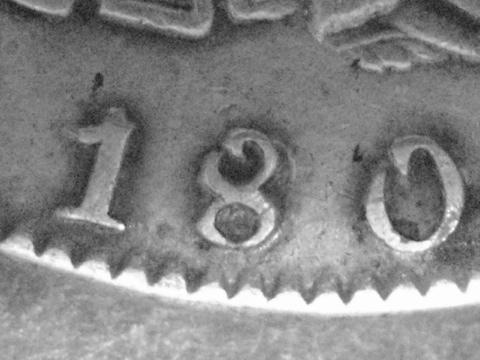
I would be delighted for you to inspect the coin and determine the SG. The amount of information that is being posted for everyone on the forum I believe will be invaluable in helping others to determine the authenticity of these coins in the future. I have a few more pictures of the 8 in the date that help to show the other suspicious element.

You can also see in these pictures a raised area to the upper right of the lower loop.


1809-Mexico-City-8-Reale---Need-Help-Authenticating

1809-Mexico-City-8-Reale---Need-Help-Authenticating

1809-Mexico-City-8-Reale---Need-Help-Authenticating

1809-Mexico-City-8-Reale---Need-Help-Authenticating
Edited by Rayhaldo
05/16/2010 01:15 am
Pillar of the Community
United States
5362 Posts
 Posted 05/20/2010  4:25 pm  Show Profile   Bookmark this reply Add swamperbob to your friends list
The 1809 8 Reale in question is now in my possession for analysis.

In person things are usually clearer than in pictures. However, in this case, having the coin here adds to the puzzle.

The coin has a perfect SG of 10.304. It weighs 26.895 grams also essentially perfect for the level of wear. The two edge overlaps are opposite one another and they are "approximately" the same length. In this case, precision is impossible because the edge dies ran off the side of the coin just at the overlap.

The coin is struck and it was edged PRIOR to the strike. The dies were very heavily fractured. The displacement die break is actually a double fracture which has displaced to TWO different levels.

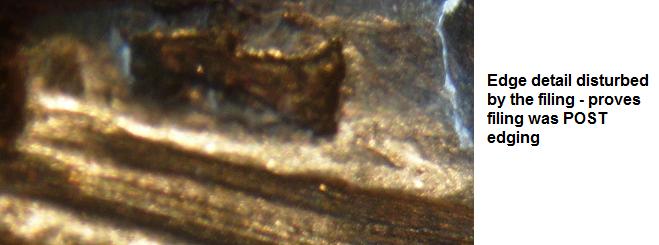
The large scratches observed on the edge were made AFTER the coin was edged. That means they were not adjustment marks because the weight adjustment was done when the blank was in a raw state right after being punched.

The edging pattern does waver side to side suggesting there was no retainer lip on the edging die bar.

The die surfaces are VERY poor - there are numerous raised lumps and incuse lumps on the coin surface. The die work shows numerous indications of doubling. Not Strike Doubling but double imaging on the die itself. This appears to be the result of whatever method was used to manufacture the die. Some, like the 8 in the date, look like individual double punching while most look like transfer doubling in a soft "plastic" matrix.

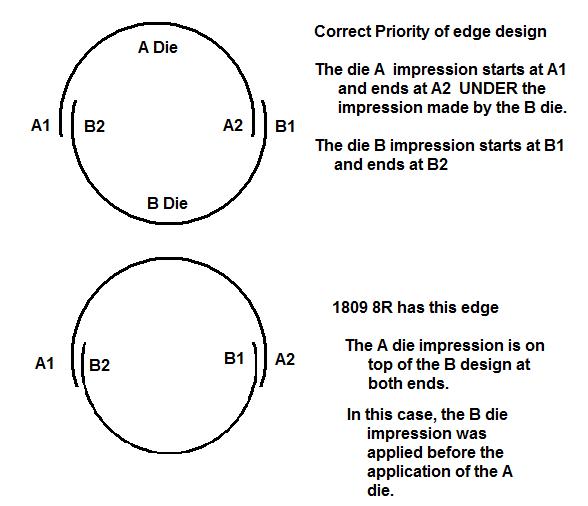
Most of this portion of the analysis is a bit subjective and every feature has a corresponding "original" explanation. However, I did find one thing which points to a forgery which has NO explanation in the way an original was made. That is the edge design priority.

In previous posts, I have discussed how these coins were made on parallel die flat bar edging mills. This puts both sides on at the same time and results in laps that are opposite one another.

But here if you look at both ends of the image the priority of placement is wrong. A sketch may be better to explain.

1809-Mexico-City-8-Reale---Need-Help-Authenticating

I will take pictures of the details of the coin and post them later tonight if I can get them on my PC.

My verdict is COUNTERFEIT but VERY well executed in correct assay silver.
Pillar of the Community
United States
3499 Posts
 Posted 05/20/2010  5:38 pm  Show Profile   Bookmark this reply Add Archraz to your friends list

Quote:
My verdict is COUNTERFEIT but VERY well executed in correct assay silver.


WOW, that is amazing! Do you think that it is contemporary or a very good modern attempt? If it is the latter, we may all be in trouble in the near future.

Valued Member
United States
74 Posts
 Posted 05/20/2010  8:48 pm  Show Profile   Bookmark this reply Add Rayhaldo to your friends list
Wow! That is a great analysis - thank you Swamperbob.

Per another of your posts see below:

"Once a forgery is detected - the next step is to determine if it is junk or not. The Sheffield Plate Birmingham counterfeits for example are far rarer than originals and they bring high prices. The 1890's silver forgeries are treated as ORIGINALS by most dealers since they can't distinguish the type."

Can you comment on the value of this coin? It did fool my local coin shop expert who has been in the business for a very long time.
Edited by Rayhaldo
05/20/2010 10:21 pm
Pillar of the Community
United States
1801 Posts
 Posted 05/20/2010  10:30 pm  Show Profile   Bookmark this reply Add jfransch to your friends list
Very interesting that the edge designs are one inside the other. I am going to have to go back into my SDB and get mine back out and check for that, I have never noticed that before. I am also interested in how you determined that the edge filing marks are post edging, I have several portrait 8s with edges like that and have never really determined "before or after". I would enjoy you sharing the characteristics and I will share what shows on mine.
Pillar of the Community
United States
5362 Posts
 Posted 05/20/2010  11:13 pm  Show Profile   Bookmark this reply Add swamperbob to your friends list
Before addressing the second half of the question about age, I thought I should try to show some of the details.

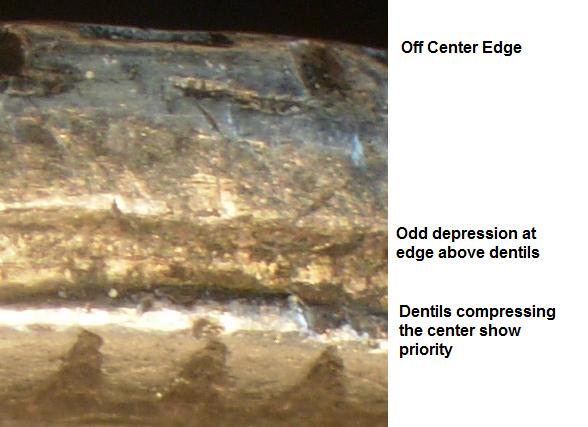
This is a picture of a section of the edge that really bothers me. There is a deep groove located at one side of the blank which is inappropriate. The blanks were cut from rolled ingots with what amounts to a cookie cutter. This blank was weighed and then edged. How this grove fits into that process is beyond me. It was part of the blanking process but why?

It does however prove conclusively that the coin faces were struck AFTER the edge design was applied.

1809-Mexico-City-8-Reale---Need-Help-Authenticating

The following shows the edge design where the edge filing occurred. As you can see the rectangle was disturbed by the cutting. Also if you notice the detail within the file mark itself shows ONE single cutting stroke not a back and forth filing motion. To me it looks a bit more like a saw was used as opposed to a hand file. The groves made are quite deep - much deeper than most face adjustment marks.

1809-Mexico-City-8-Reale---Need-Help-Authenticating

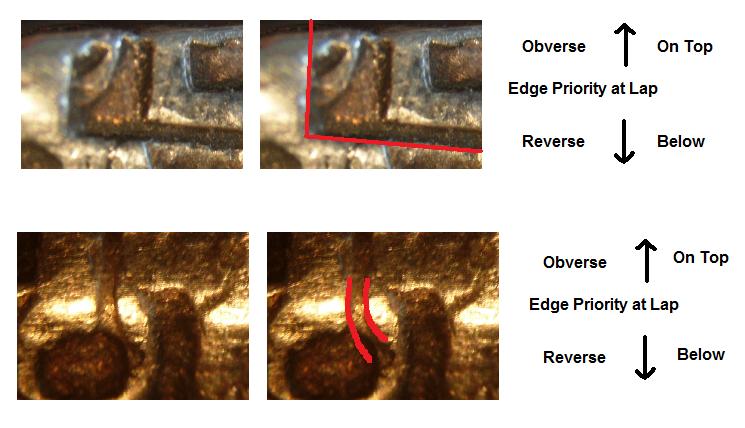
The next is the edge overlaps. The top of the picture is the face side (King's portrait) of the coin in both cases. In both instances the edge applied nearest the top side is cut OVER the other edge.

This error in priority proves that it was not edged on a standard flat bar mill. Both ends of the same half of the edge should never be on top or underneath. You should always find the OPPOSITE of what you start with. Simple physics when you roll a disc between two flat bar dies.
1809-Mexico-City-8-Reale---Need-Help-Authenticating

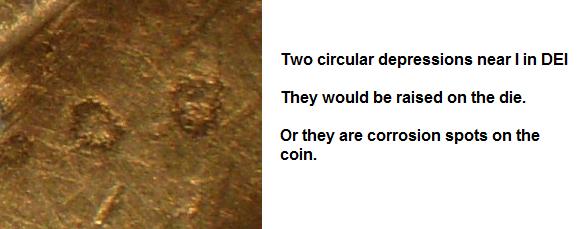
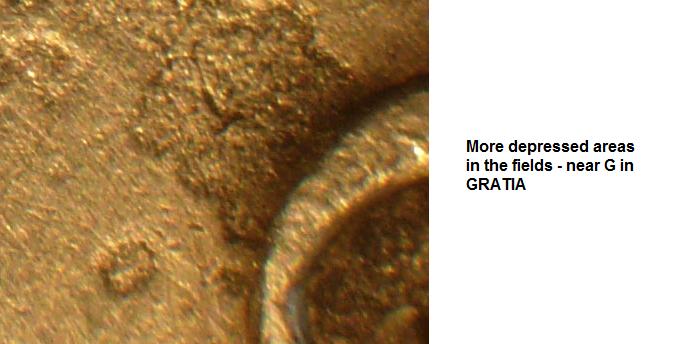
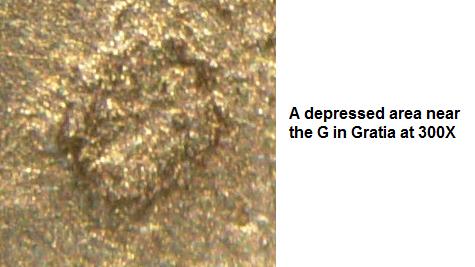
In my earlier post I spoke about the depressions that are seen in many locations on the fields of the coin. These depressions all indicate RAISED die features because they are depressions in the field. Die rust leaves LUMPS in the fields of the coin not depressions. The only natural explanation for these features that I can think of is corrosion of the coin itself. But there is no solid evidence for corrosion in fact in many spots die (mint) luster clearly is present. As a die feature, the most likely reason is a bubble on the die surface which burst before hardening of the molded die - if this is true - then we would be dealing with a MODERN forgery.

These two are near the I id DEI.
1809-Mexico-City-8-Reale---Need-Help-Authenticating

There are two more and a depressed area near the G in Gratia.
1809-Mexico-City-8-Reale---Need-Help-Authenticating

Here is lower of the depressions near the G at 300X.
1809-Mexico-City-8-Reale---Need-Help-Authenticating

I am not convinced as to exactly what these are but they are very often seen on modern Chinese forgeries. There are several dozen similar features on the coin in many areas.

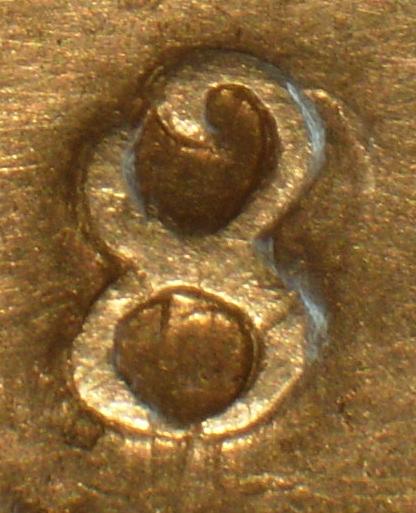
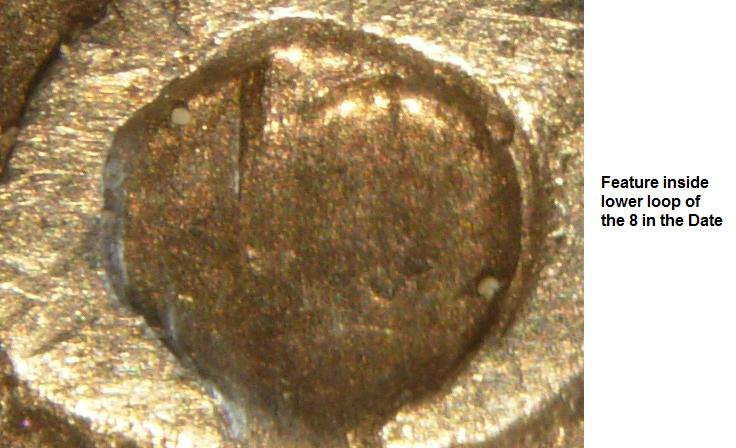
Next a closer look at the 8 in the date. There is a distinct second impression of a loop to the right of the top loop in the 8. But if you notice there is in addition, something inside the lower loop. What that is is less certain but something is there.
1809-Mexico-City-8-Reale---Need-Help-Authenticating

To get a better look I went up in size. The original of this picture fills more than 4 ful screens on my PC but I reduced it to fit here.
1809-Mexico-City-8-Reale---Need-Help-Authenticating

If you notice there is a shelf on the inner edge of the right side of the loop - looks like Strike Doubling. However, I think it is a die feature not a strike feature because it occurs in many places but is not uniform (displaced or rotational) as you see on strike doubled coins. I believe it was created during the transfer step while the forgers made the dies.

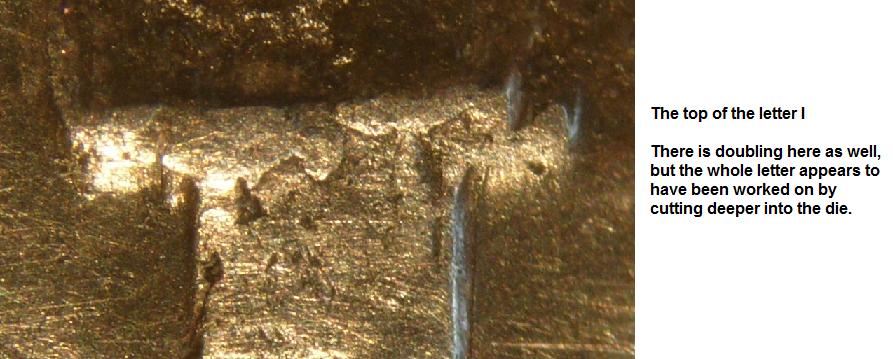
Next look at the top of the letter I. There is not only doubling but some "recutting" deepening of the die itself.
1809-Mexico-City-8-Reale---Need-Help-Authenticating

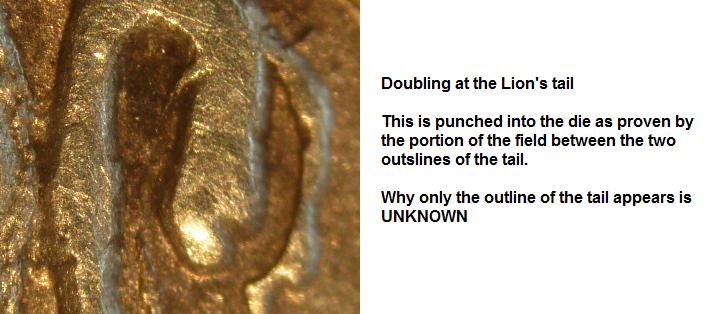
Here is an enlargement of the tail of the lion in the lower quadrant of the shield. The tail is clearly double cut on the die but only in OUTLINE. How can you do that with a punch?
1809-Mexico-City-8-Reale---Need-Help-Authenticating

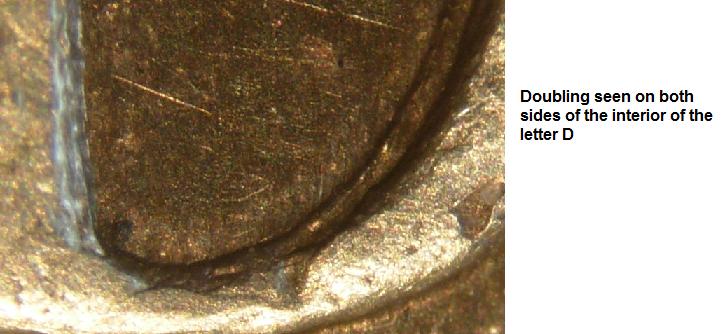
Here is another problem in a letter D - doubling on both sides of the inner loop. The left side the upright looks tripled but the right lower portion has a single thin outline. This is similar to the arcs on the crown shown earlier and on many individual letters. It is not simple Strike Doubling something happened on the die that created ghost images. The 8 in the date may have been intentional to add value but why the others.


1809-Mexico-City-8-Reale---Need-Help-Authenticating

The entire crown is rough and doubled or tripled in many elements. The following is the cross on the crown.
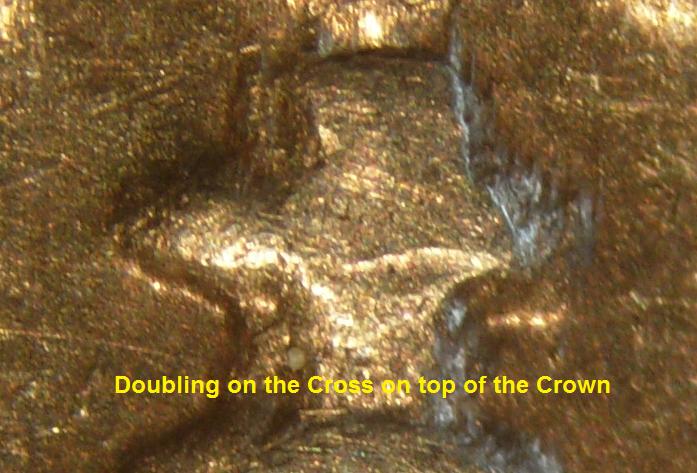
1809-Mexico-City-8-Reale---Need-Help-Authenticating

I have tried looking at this a wear doubling as well but it is not the type of ghosting seen on heavily worn dies but in this case die wear is minimal and die state is too early for wear doubling.

So my present conclusion as to age is MODERN. The coin is silver so it has an intrinsic value of 0.78 ounces of silver and in addition I add $15 for the fact it is a Modern forgery (new to me) - so I would peg the value at $30 to $35.

That said the circle in the square edge pattern seen here is often seen on coins I classify as Boston Forgeries. Those were created between the late 1880's and roughly 1933 when China demonetized the " Bustman" dollar. The Boston forgeries are valued on a par with a very common original $35 to $40.

Pillar of the Community
United States
2335 Posts
 Posted 05/21/2010  08:43 am  Show Profile   Bookmark this reply Add trdhrdr007 to your friends list
I'm always fascinated by these threads even though I'm not a collector(yet). It's very interesting to follow the thought pattern that goes into analyzing & identifying these coins.


Quote:
That said the circle in the square edge pattern seen here is often seen on coins I classify as Boston Forgeries. Those were created between the late 1880's and roughly 1933 when China demonetized the " Bustman" dollar. The Boston forgeries are valued on a par with a very common original $35 to $40.


I'm curious as to the possibility that this is a copy, either deliberate or not, of a Boston forgery.
Pillar of the Community
United States
5362 Posts
 Posted 05/21/2010  09:44 am  Show Profile   Bookmark this reply Add swamperbob to your friends list
Some final comments.

I have looked at many Boston type forgeries over the past 20 or 30 years and I am amazed how close to perfect some are. That is why many dealers simply treat them as real and are done with it. I have never been able to determine how many manufacturers were involved but there were apparently several, because many different techniques were involved in making the dies - some better than others. Often final diagnosis comes down to how the edge was applied.

Edge priority is only one diagnostic that can be used for the class. Another, discussed on this forum, is the diagonal slashes (grip marks?) on half of the edge. A third type has a single overlap. A fourth less often seen type has a deeply cut terminus on the edging design. That could be what we are seeing here.

To elaborate - we all know that a pair of dies in direct opposition will have effects that appear on both sides of a coin simultaneously - think about what happens opposite a large rim Cud. There is a loss of detail. Opposite a clip there is a loss of detail in the collar details. That is how we prove an error coin is real and not a fake. So it should be obvious that the pressure applied to one side equals the pressure applied to the other side. If one side is weak the opposite is also weak and if one side is SHARP and DEEPLY STRUCK the other side should also be the same.

That is precisely what we DO NOT HAVE IN THIS CASE.

Here is the picture of the ends of the two overlaps again.

1809-Mexico-City-8-Reale---Need-Help-Authenticating

So I was just thinking how could one end of the edging design be cut so deeply and sharply and the opposite end be so weak? Those two points are opposite one another in a two die edge mill. The only reason is that they were not made in opposition to one another by dies on two sides of the coin. They were made by ONE die that applied the design in two distinct operations.

I have now studied this 1809 for a total of about 3 hours using various levels of magnification. I would prefer to think (hope) this is not a recent Chinese product. The more I study it - the more it resembles one of the Boston type forgeries. Specifically a well executed transfer die.

I hope that is the case. If this is a new Chinese forgery - we are all in trouble. How can the hobby spread and how can REAL 8Rs retain their value if it takes hours of effort to pick out the near perfect fakes.

In either case, the value is about the same. But ultimately this could mean that all 8Rs real or modern could sink in value to the same level.

trdhrdr007
You raise an interesting possibility - could the forgers have used a Boston Forgery as an example to copy? Possibly, but I wonder how we could ever test that belief?
Edited by swamperbob
05/21/2010 10:02 am
Valued Member
United States
74 Posts
 Posted 05/21/2010  1:06 pm  Show Profile   Bookmark this reply Add Rayhaldo to your friends list
Once again - thank you from me and anyone who reads this thread because you could not get a better education on what to look for on 8 Reales.

Even though there are forgeries out there, these coins are beautiful objects steeped with history that make collecting them an enjoyable endeavor to pursue.

I enjoy using my 10X loop to scan the coins until my eyes get tired.

Swamperbob, we all have benefited from your knowledge and research and greatly appreciate the value you bring to the forum.
Page 3 of 3   Previous TopicReplies: 37 / Views: 8,782Next Topic Page 3 of 3
First Page Previous Page  Showing last 15 replies.
To participate in the forum you must log in or register.


Disclaimer: While a tremendous amount of effort goes into ensuring the accuracy of the information contained in this site, Coin Community assumes no liability for errors. Copyright 2005 - 2026 Coin Community Family- all rights reserved worldwide. Use of any images or content on this website without prior written permission of Coin Community or the original lender is strictly prohibited.
Contact Us  |  Advertise Here  |  Privacy Policy / Terms of Use

Coin Community Forum © 2005 - 2026 Coin Community Forums
It took 0.55 seconds to rattle this change. Forums