| Author |
 Replies: 19 / Views: 2,138 Replies: 19 / Views: 2,138 |
|
Pillar of the Community
United States
1499 Posts |
Here is the first early quarter eagle I was able to add to my collection. Among the three denominations of early gold coins ($2.50, $5 and $10, the quarter eagles are the scarcest as a group. There are many tough dates, and the five types for type collectors range from hard to almost impossible. This Capped Bust, Heraldic Eagle type is actually among the easier type coins to find for the denomination. I'll be back with more information later. 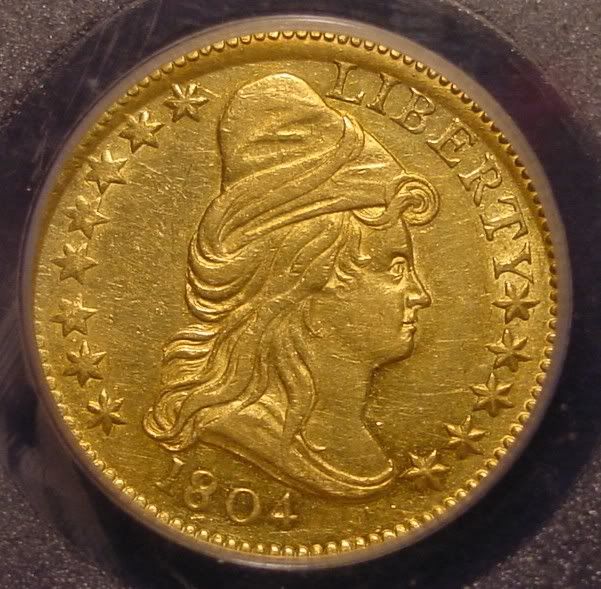 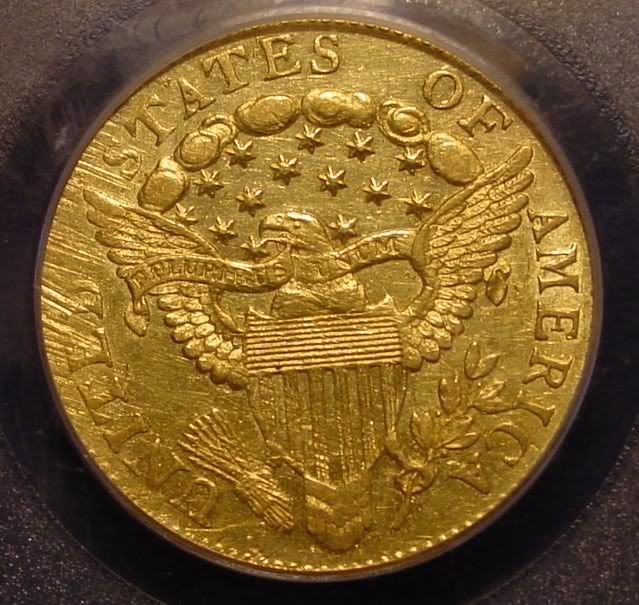 |
|
|
|
Pillar of the Community
United States
6370 Posts |
|
|
Bedrock of the Community
United States
37154 Posts |
|
|
Pillar of the Community
Canada
5293 Posts |
Are those file marks between "United" and "States"?
|
|
Valued Member
146 Posts |
Coin has AU 55-58 amount of rub but it is very beat-up so AU-50. Those file marks are called adjustment marks and were on the planchet before it was struck. I'll bet it is in a TPGS AU-58 slab.
|
|
Rest in Peace
United States
4078 Posts |
Amazing coin, Thanks for sharing.
|
|
Bedrock of the Community
United States
94367 Posts |
AU-55 at least. Just super.
|
|
Rest in Peace
United States
17900 Posts |
Hopefully there was no bump down for the reverse adjustment marks. I'd give it a nice strong 55.
|
|
Bedrock of the Community
 United States
18924 Posts |
AU55. really cool coin. were the file marks done before the coins left the mint? was it done to bring the amount of gold to a certain weight or did someone do this to capture small amounts of gold off them? maybe a little enlightenment for us gold neophytes may be in order
|
|
Bedrock of the Community
United States
10982 Posts |
I'm going with AU50 based on the light obverse hairlines and the reverse eye appeal being hurt a touch by the adjustment marks. A 53 grade would be no surprise though.
|
|
Valued Member
United States
431 Posts |
|
|
Pillar of the Community
United States
4963 Posts |
Quote:
was it done to bring the amount of gold to a certain weight or did someone do this to capture small amounts of gold off them? maybe a little enlightenment for us gold neophytes may be in order The former is correct. Nice coin! Edited by Numisma
03/31/2016 8:51 pm
|
|
Pillar of the Community
United States
8137 Posts |
|
|
Bedrock of the Community
Canada
11922 Posts |
|
|
Bedrock of the Community
United States
12057 Posts |
I have no experience grading gold coins (especially not ones that probably cost more than my house) but I would rate it 4.8/5 on the  Scale. Member ANA - EAC - TNA - SSDC - CCT #890 "Most of the things worth doing in the world had been declared impossible before they were done." -- Louis D. Brandeis |
|
Pillar of the Community
 United States
1499 Posts |
This coin is in a PCGS AU-50 green label holder, and that grade is accurate. The "scratches" on the left side of the reverse are adjustment marks. They do not lower the technical grade, but if they are in the wrong place, like straight across the obverse portrait, adjustment marks can make the coin harder or a lot harder to sell, and probably will lower the price regardless of the assigned grade. Adjustment marks do not lower the technical grade because they were a part of the minting process which was done inside the mint.
Over my years as a collect, a very large majority of the 1804 $2.50 gold coins I have seen had adjustment marks. They are so often seen on that date, that they virtually come with the territory.
What are adjustment marks? Back at the first mint, it was important that the coin blanks (planchets) had the exact legal weight. Planchets that were too light had to be thrown in to the melting pot and remade. A few exceptions are found with early Flowing Hair dollars that had plugs pushed in to them to bring up the weight. When such coins are found today they bring premium prices. I am not aware of any other denominations that had such plugs added to them.
When the planchets were too heavy they were adjusted with a file raked accross until they were down to the legal weight. Who did the adjusting? They were women employed at the mint to do that tedious work all day long, 12 hours a day. They wore leather aprons into which they pushed to scraps which were subsequently dumped into the melt pot. For this work these women were paid 65 cents a day. They were the lowest paid workers at the first mint, even lower than the young boys, who had the title of "boy" in the mint's payroll.
Edited by billjones
04/01/2016 3:17 pm
|
| |
Replies: 19 / Views: 2,138 |







 Posted 03/31/2016 09:45 am





