Almost every US commemorative coin has, at its core, two fundamental purposes: 1) Commemorate a person, place, thing or event, and 2) Raise money for one or more organizations involved with the person, place, thing or event being commemorated. With the exception of the few circulating commemorative coins that have been issued, this is the
modus operandi for US commemorative coins.
In 1966, the US Congress had the opportunity to accomplish something very meaningful with coins the US Treasury already had on hand. I speak of the bags of Morgan and Peace silver dollars that ultimately were sold to collectors via the General Services Administration (GSA) sales/auctions.
On March 1, 1966, John William Wright Patman (D-TX), a long-standing member of the House of Representatives (he served 24 consecutive terms in the US Congress between 1929 and 1977), introduced a bill that authorized the Secretary of the Treasury "to sell at face value to the American Cancer Society and the American Heart Association, Inc . the standard silver dollars held in the Treasury." (There was approximately three million such coins.)
The idea of the bill was that the US Government would sell the coins to the organizations at their face value of $1.00, and then the organizations would sell them to collectors at a price more in line with then-current market value and would then use the net proceeds in the "continuing fight against cancer and heart disease, two of our major health problems." Each organization was to be allowed to purchase up to half of the available inventory, and was to be responsible for all costs associated with the "moving, shipment, protection,and insurance of the silver dollars" (i.e., moving from Treasury vaults to each respective health organization's designated facility).
The idea for the proposed use of the Treasury's silver dollars originated with, and was developed by, Mrs. Oharles W. (Mary Love) Bailey, of Austin, Texas . Mrs. Bailey was a Director of the American Cancer Society (ACS), Texas Division, a member of the National Crusade Committee of the National Board of the American Cancer Society and had associations with the American Heart Association (AHA).
The ACS and the AHA each passed a Resolution that supported and endorsed Representative Patman's bill and urged its approval. Each began by quoting US President Lyndon Baines Johnson from his speech when he convened the President's Commission on Heart Disease, Cancer, and Stroke:
"Unless we do better, two-thirds of all Americans now living will suffer or die from cancer, heart disease or stroke. I expect you to do something about it."
Patman's bill quickly gained traction in Congress and was the subject of more than 20 companion bills introduced in the House and Senate. Unfortunately, after being introduced and referred to their respective Committee on Banking and Currency, the various House and Senate bills stalled and were not reported or considered further. Such lack of action on clearly popular proposals suggests that the Treasury Department was not a supporter of the health organizations proposal.
Patman tried again in 1967, re-introducing his bill immediately following President Johnson's announcement of the general public appointees to the Joint Commission on Coinage (May 1, 1967). The 23-member Commission was comprised of individuals from the Federal Executive Branch (3), members of Congress (12; 6 from each chamber) and the private sector (8). It was tasked with monitoring the implementation progress on coinage changes called for in the Coinage Act of 1965 (e.g., introduction of clad dimes, quarters and half dollars) and consulting on coinage issues facing the US. Representative Patman hoped the Commission would lend its support to his proposal and thereby help him push it through Congress.
The Joint Commission on Coinage was established via Title III of the Coinage Act of 1965. Included within its list of responsibilities was the consideration of "renewed minting of the silver dollar." The Act also stated that the Commission "shall, from time to time, give its advice and recommendations with respect to these matters to the President, the Secretary of the Treasury, and the Congress."
I think that with the legislated task of considering the need/feasibility of returning to the striking of silver dollars, came a hesitancy within the Commission, Congress and the Treasury Department to decide the fate of the silver dollars in inventory before the issue was more fully considered. While it's a near certainty that the existing coins would not have been released into general circulation (their intrinsic silver value exceeded $1.00), it was possible that a smaller dollar coin of a lesser fineness could have been decided upon and the existing coins melted with their silver used for the new coins or a sales model that generated net income for the Government could have been developed (GSA sales/auctions!).
While the coins in question were certainly not by-the-book commemorative pieces, the context of their sale per Patman's bill would have created a commemoration of the legacy of the ACS and AHA and the work each had done in fighting to reduce the causes of a significant number of deaths each year in America (and the world). IMO, the bill would have created a meaningful use for funds derived from the sale of the Treasury's silver dollars without depriving collectors the chance of owning one or more of the coins and would have had more impact on society vs. the deposits made in the US Treasury from the proceeds from the GSA sales/auctions.
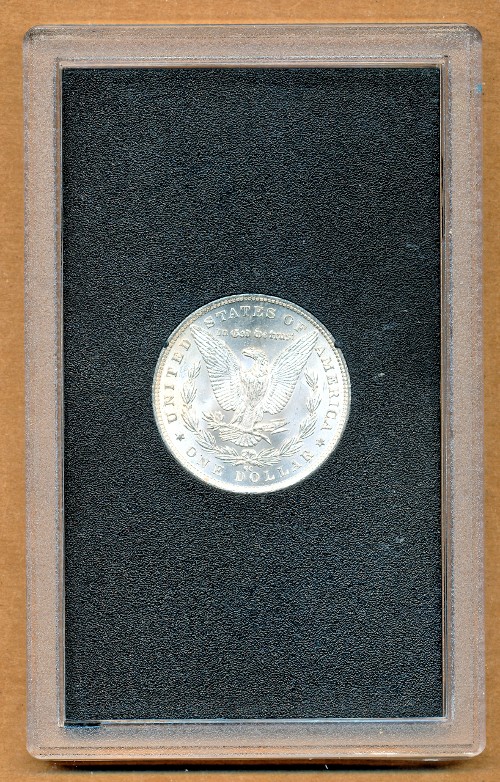
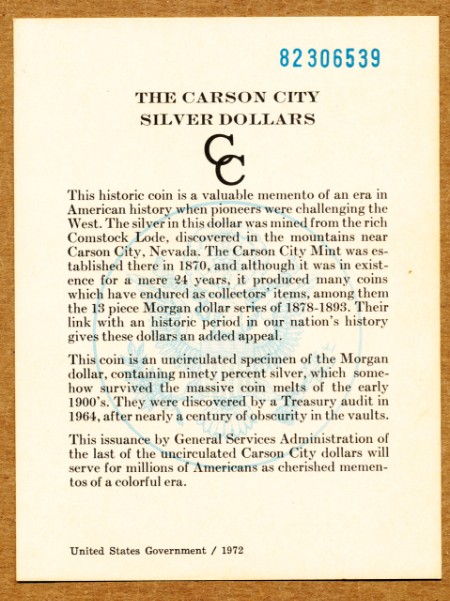
Here's my GSA Morgan with its original packaging:
1883-CC Morgan Dollar - GSA Holder - Obverse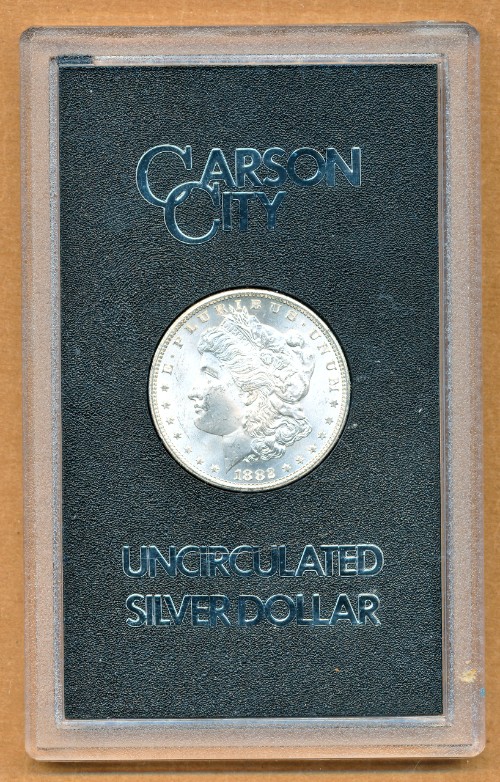 1883-CC Morgan Dollar - GSA Holder - Reverse
 1883-CC Morgan Dollar - GSA Holder - Insert Card
 1883-CC Morgan Dollar - GSA Holder - Outer Box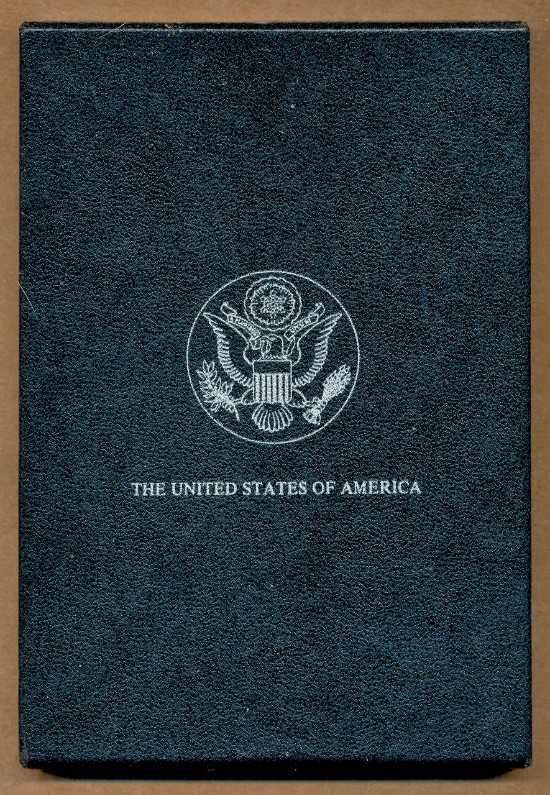
For more of my topics on commemorative coins and medals, including more What If? stories, see:
Commems Collection.







 Posted 02/11/2023 10:44 pm





