Coop,
Your
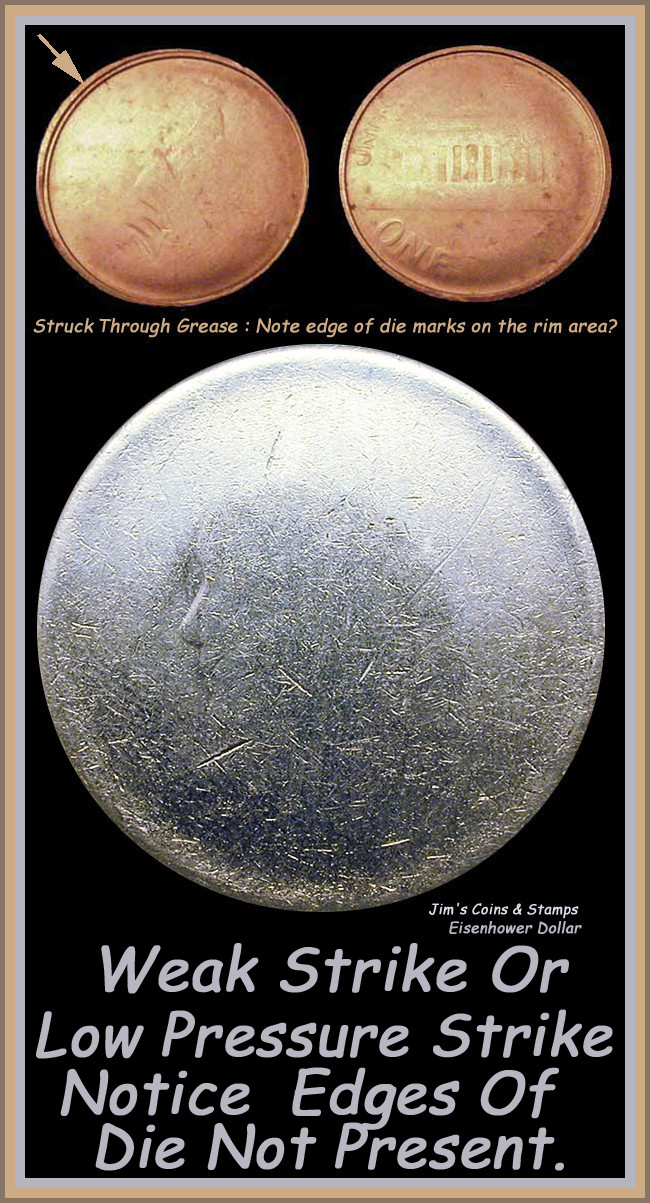
Ike dollar is virtually a planchet. When a strike is this weak nothing
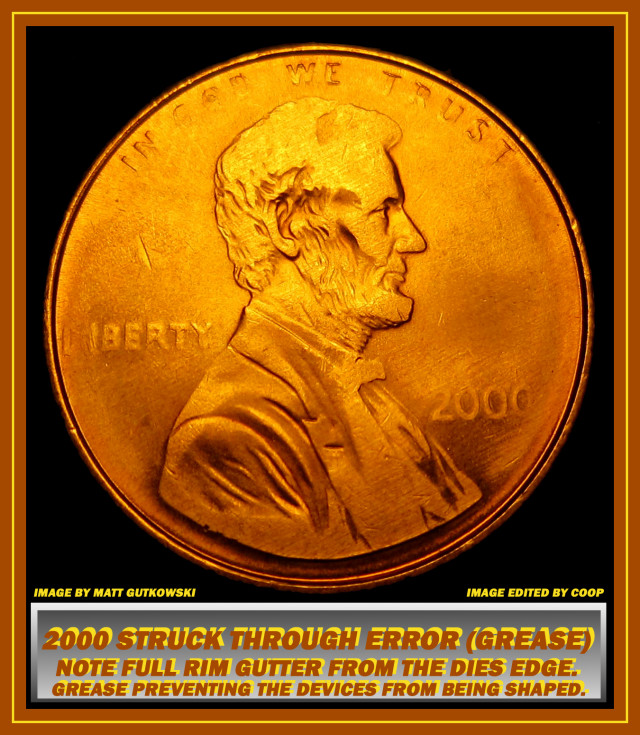
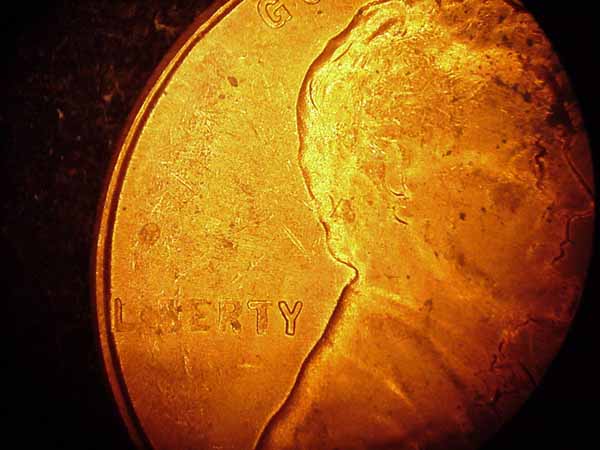
fills to any degree. This is normal for a very-low-pressure-strike. On the other hand, your 2000 cent strikes shows planchet striations unaffected by grease or the strike, diagnostic of a weak strike.
I don't know what "edge of die marks" are. All I can say is that grease die strikes will also have a full rims the majority of the time.
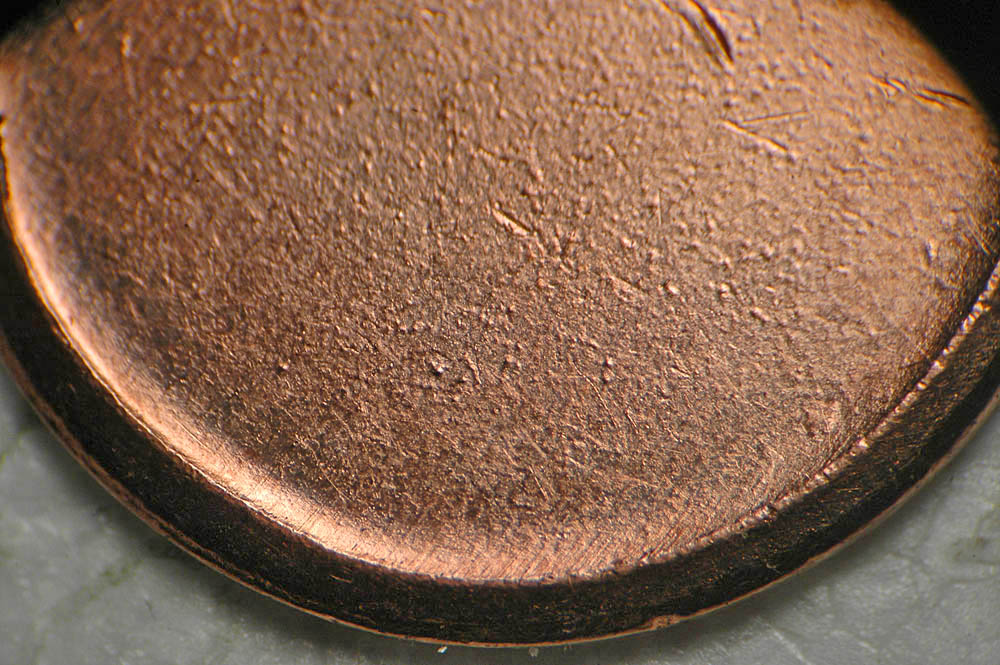
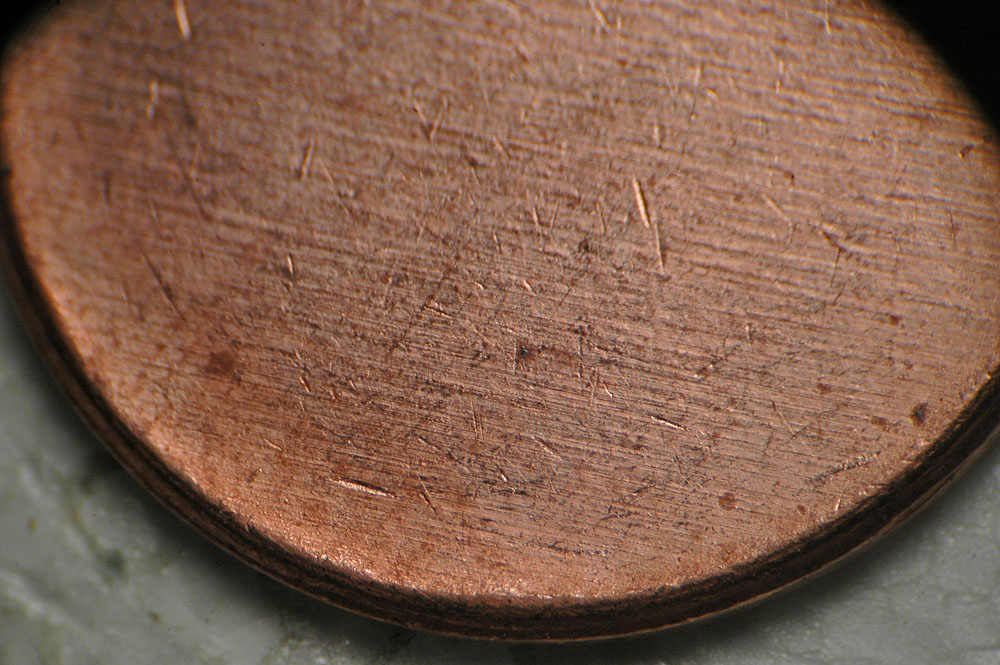
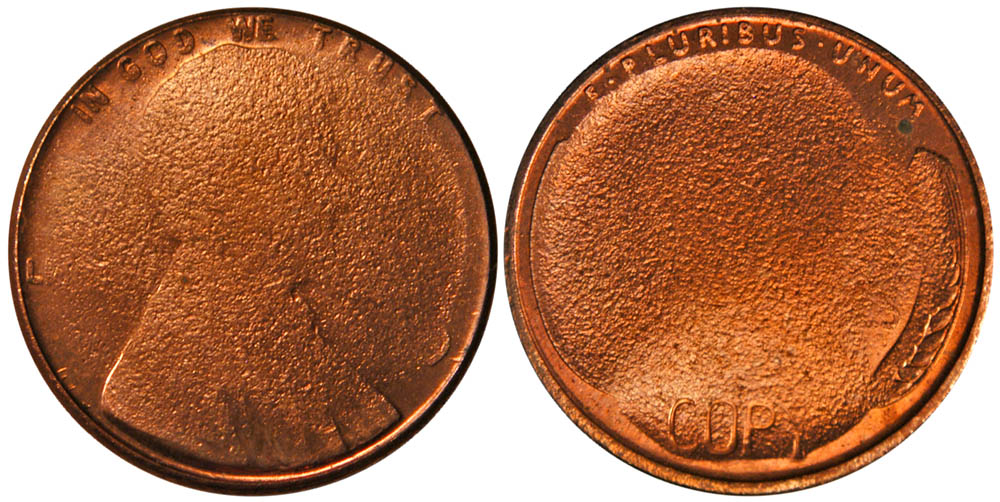
Below is a Die Adjustment Piece that came out of Global Mint. It is one of four that were necessary to inch the dies to the proper shut height to strike these reproductions. All four were saved for me and sent with a note saying what they were. All have full rims including this one -- the weakest of the four. The texture of the unstruck areas is the way Global burnished their planchets -- the pebbly type of surface you see on proof planchets. You'll see that the surface of the planchet is unaffected by the strike and the rims are full.
In reference to another coin of a similar nature that was a weak strike, Timothy Grat, tool and die maker, press operator all rolled up into one ball of wax, who has worked for the Gallery Mint, Moffatt & Co, Sunshine Minting and now the Intaglio Mint said:
"In the way of technical explanation, there is a very fine line in terms of pressure required for a full strike. The image shows a coin that is just shy of presenting itself as a full strike. The material flow of the planchet in a collar strike goes radially outward until heading
back toward the center when constricted by the coining collar. So, while this piece has clearly expanded to the collar, it has not gotten a good enough "squeeze" to
fill the main
devices. As to the nature of why the bust begins to
fill in almost an embossment fashion; that would require a more academic approach than I have taken, to metal working principles. In the shop it is just understood that it does happen and designs and dies are prepared accordingly."
So this Mint techs explanation is that the metal flows outward to the rims and then heads
back. As such the rims get
filled first especially when the upset of the planchet is high. On the other hand I do realize that some rims that are wide or due to other design factors may be ragged -- a problem I've had with some of my dies when the strike is just not quite there.
A few days ago I took delivery of about 500 silver rounds that I was forewarned, at the time of shipping, were going to be a bit week on some due them not wanting to break my dies due to their age (the ones in question were about 20 years old -- not too old in my opinion). I did get some
back with weakness of strike on the high points but the rims were full. This is a battle I've been having with Mints forever as I prefer to break a die than strike an inferior product.






 to the Community!


 Posted 05/20/2015 3:27 pm