| Author |
 Replies: 63 / Views: 8,029 Replies: 63 / Views: 8,029 |
|
Valued Member
United States
61 Posts |
It is missing the "I" in god we trust and The "L" from liberty they seem to be very faint? you can tell they were not rubbed. here is a picture? can anyone help and let me know what I might have? 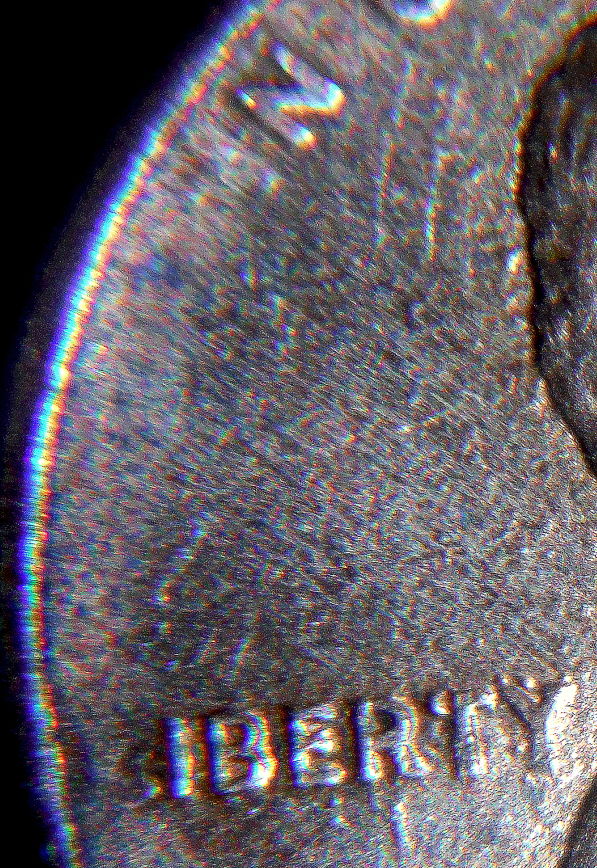 Here is my coin 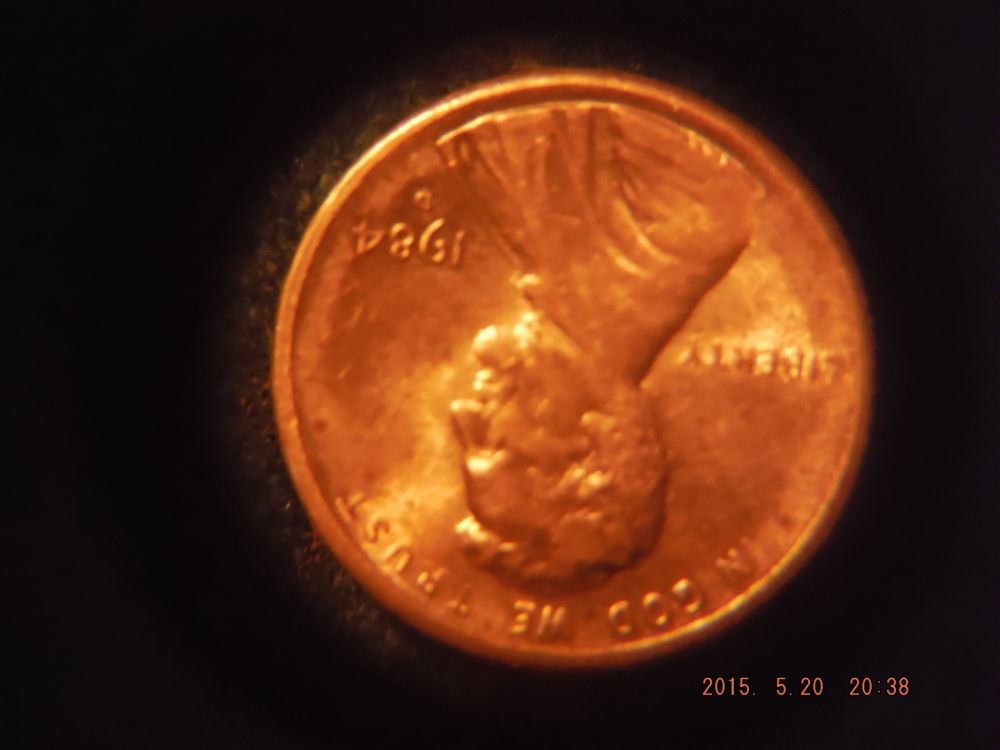 Edited by icolt45
05/21/2015 12:00 am
|
|
|
|
Moderator
 United States
195821 Posts |
 to the Community! I moved your welcome post to the appropriate forum for the proper attention.  Here is the tutorial for uploading Photos. |
|
Bedrock of the Community
United States
62064 Posts |
Kind of like this? 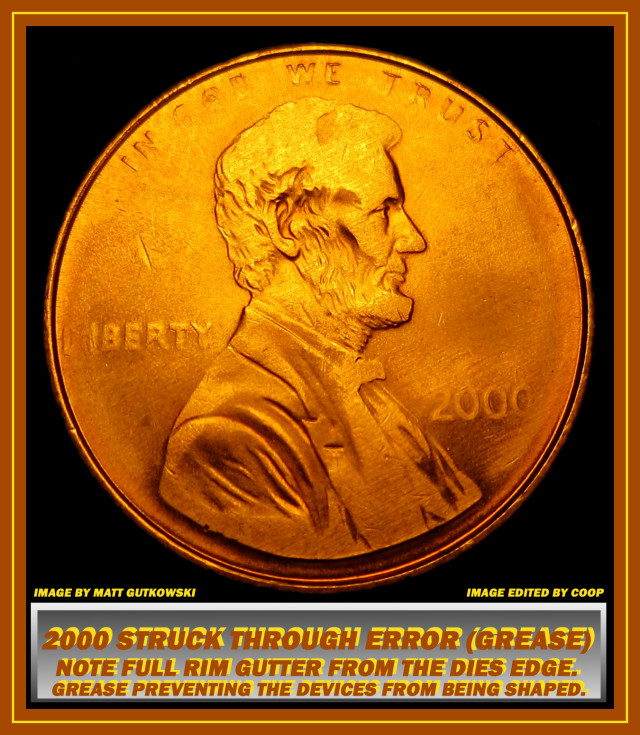 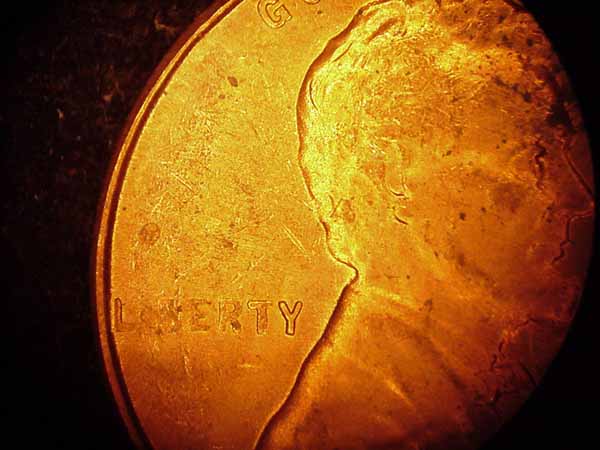 If so it is a struck through error. (grease) |
|
Moderator
United States
56855 Posts |
to CCF. We do need pics. Could be Grease Filled Dies or coin counting/wrapping machine damage. John1  |
|
Pillar of the Community
United States
1781 Posts |
Coop, The 2000 Lincoln Cent you are showing is a Weak Strike, not a Strike-Thru. Well struck up rims are normal when planchets have a heavy upset. See the images below. Also, notice the planchet striations. These are typical of plated and unplated zinc cent planchets (I have a couple rolls of unplated blanks and have sold hundreds of sets with both blanks and planchets). The coin you show exhibits those striations on all the flat unstruck areas of the coin and are a key diagnostic of a weak strike. These striations are often seen on Lincoln cents at Lincoln's shoulder and on the reverse "STATES OF" due to poor metal flow into those areas of dies. The flatness of strike is another key indicator. Grease has a tendency to create a more rounded textured effect as seen on the coin at the bottom. Here is a cent planchet with a heavy upset pulled from a bag of 1985-D cents: 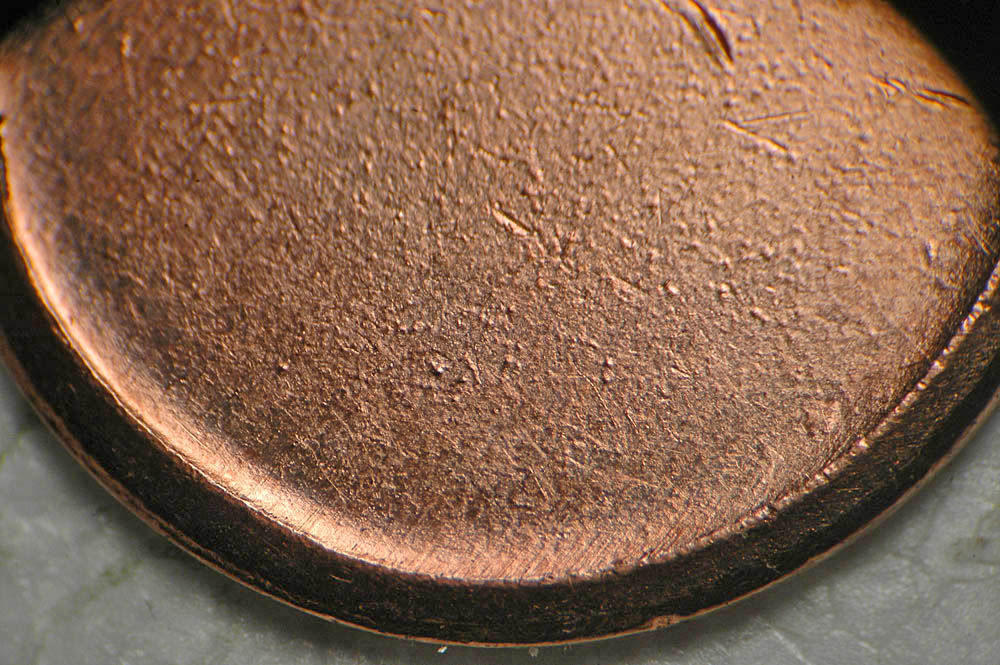 Here is another with a very light upset pulled from the same bag: 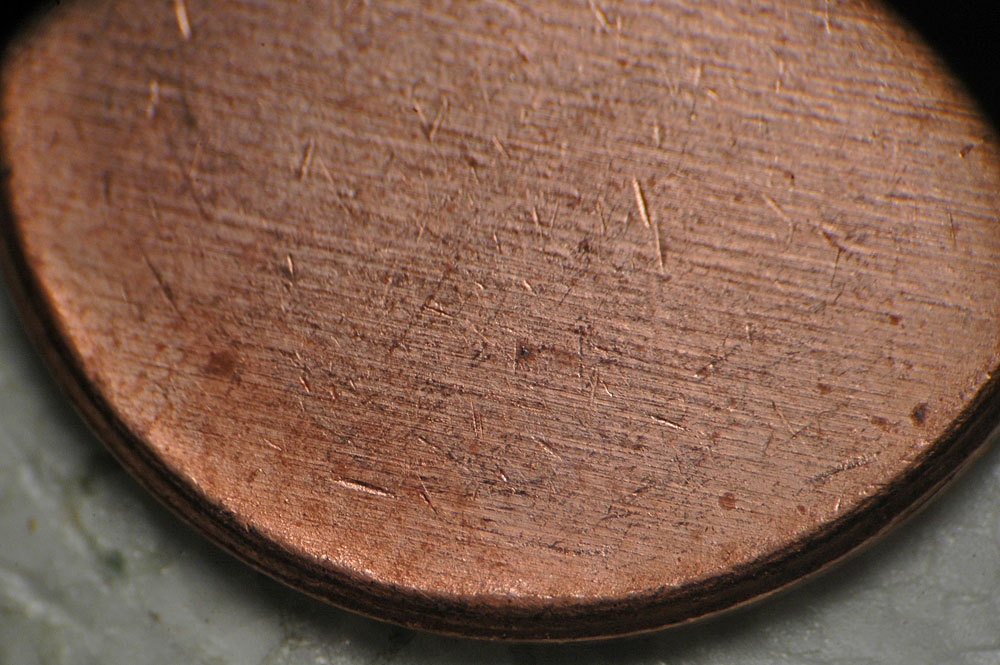 Side note: Click Image to see all the plating blisters (not a part of this discussion). Grease has a tendency to create a more rounded textured effect:  Above coin submitted to me at the Michigan State Numismatic Society Convention Fall 2013 by Greg_Bogucki. Edited by koinpro
05/20/2015 7:38 pm
|
|
Valued Member
 United States
61 Posts |
So what is a coin like this worth?
|
|
Bedrock of the Community
United States
62064 Posts |
Ken I have to disagree with you on the 2000 cent I posted. A Struck Through Grease leaves the rims fully formed. A weak strike leaves the rims weak. 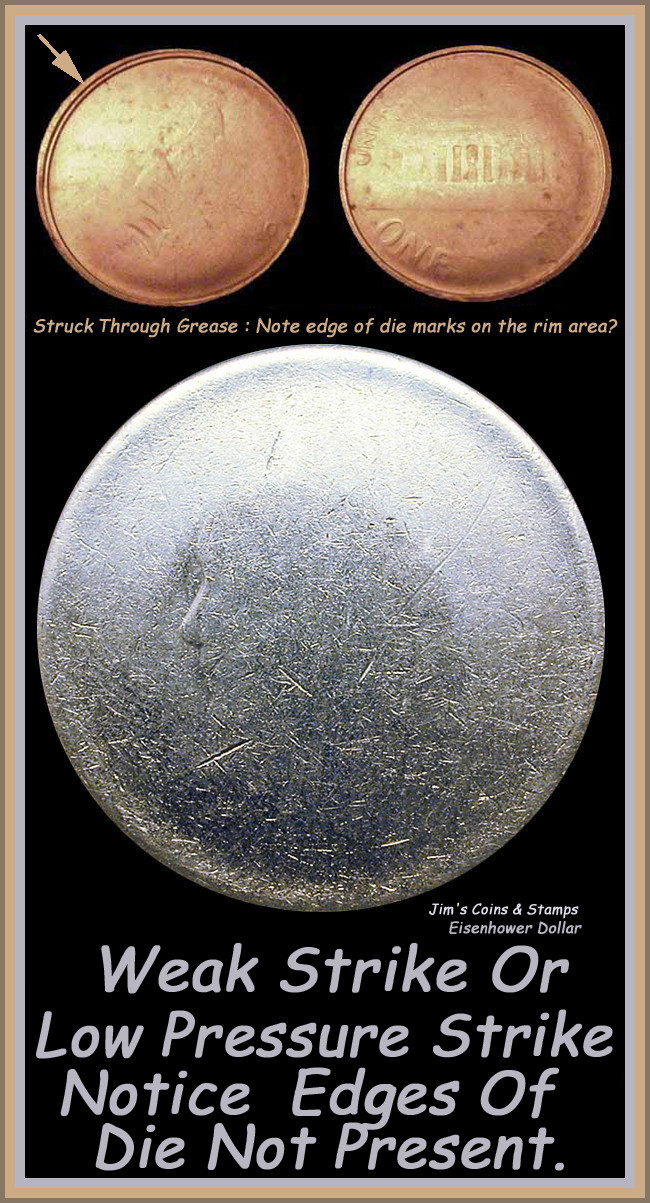 |
|
Moderator
United States
56855 Posts |
In general ,which would be worth more..grease filled die or weak strike? John1 |
|
Bedrock of the Community
United States
62064 Posts |
I feel the trial/weak/low pressure strikes would be more collectable. Depending on how affected the weakness is on the rims of the coin. I did a search on ebay and saw over 200+ listed there, but nothing of real value. |
|
Moderator
United States
56855 Posts |
I'm sure most of those are mislabeled as greasers,don't you think? John1 |
|
Bedrock of the Community
United States
62064 Posts |
I just did a quick search. What I was looking for was weakness on the rims. I saw nothing like that on all of them. But I dn't check them to see what was going on with them.
|
|
Pillar of the Community
United States
1781 Posts |
Coop, Your Ike dollar is virtually a planchet. When a strike is this weak nothing fills to any degree. This is normal for a very-low-pressure-strike. On the other hand, your 2000 cent strikes shows planchet striations unaffected by grease or the strike, diagnostic of a weak strike. I don't know what "edge of die marks" are. All I can say is that grease die strikes will also have a full rims the majority of the time. Below is a Die Adjustment Piece that came out of Global Mint. It is one of four that were necessary to inch the dies to the proper shut height to strike these reproductions. All four were saved for me and sent with a note saying what they were. All have full rims including this one -- the weakest of the four. The texture of the unstruck areas is the way Global burnished their planchets -- the pebbly type of surface you see on proof planchets. You'll see that the surface of the planchet is unaffected by the strike and the rims are full. 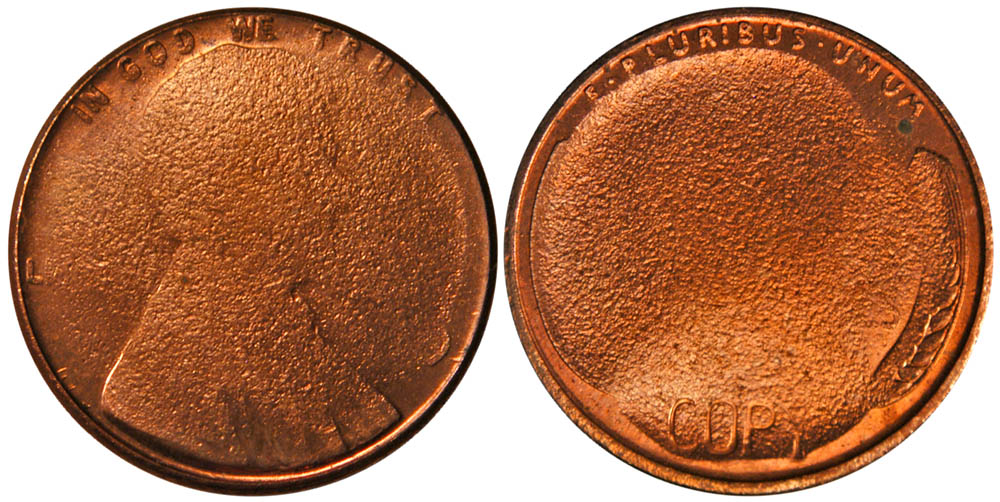 In reference to another coin of a similar nature that was a weak strike, Timothy Grat, tool and die maker, press operator all rolled up into one ball of wax, who has worked for the Gallery Mint, Moffatt & Co, Sunshine Minting and now the Intaglio Mint said: "In the way of technical explanation, there is a very fine line in terms of pressure required for a full strike. The image shows a coin that is just shy of presenting itself as a full strike. The material flow of the planchet in a collar strike goes radially outward until heading back toward the center when constricted by the coining collar. So, while this piece has clearly expanded to the collar, it has not gotten a good enough "squeeze" to fill the main devices. As to the nature of why the bust begins to fill in almost an embossment fashion; that would require a more academic approach than I have taken, to metal working principles. In the shop it is just understood that it does happen and designs and dies are prepared accordingly." So this Mint techs explanation is that the metal flows outward to the rims and then heads back. As such the rims get filled first especially when the upset of the planchet is high. On the other hand I do realize that some rims that are wide or due to other design factors may be ragged -- a problem I've had with some of my dies when the strike is just not quite there. A few days ago I took delivery of about 500 silver rounds that I was forewarned, at the time of shipping, were going to be a bit week on some due them not wanting to break my dies due to their age (the ones in question were about 20 years old -- not too old in my opinion). I did get some back with weakness of strike on the high points but the rims were full. This is a battle I've been having with Mints forever as I prefer to break a die than strike an inferior product. Edited by koinpro
05/21/2015 8:45 pm
|
|
Pillar of the Community
United States
2752 Posts |
Coop's 2000 cent is most definitely a grease strike. The strong design rim and inconsistent pattern of weakness is diagnostic. In copper-plated zinc cents the most common form of grease (die fill) is smooth and imparts no texture of its own. Instead it preserves the streaky surface of the planchet.
Error coin writer and researcher.
Edited by mikediamond
05/21/2015 9:16 pm
|
|
Pillar of the Community
United States
4809 Posts |
Interesting discussion. I have a 2000 Greaser and had a 2000 weak strike. I gave away the 2000 weak strike to a fellow member here as a Greaser. I'll have to inform him of this development.  Cool stuff gentlemen!! |
|
Pillar of the Community
United States
2752 Posts |
A weakly struck cent will show poor development of the design rim, consequent persistence of the planchet's proto-rim, and a trapezoidal edge left over from upsetting. A grease strike (like Coop's 2000 cent) will show a strong design rim, a flat, vertical edge, and sharp junction between design rim and edge.
Error coin writer and researcher.
|
|
Pillar of the Community
United States
5964 Posts |
You get all that, icolt45? You have a Greaser with very little value. |
| |
Replies: 63 / Views: 8,029 |







 Posted 05/20/2015 3:27 pm





