| Author |
 Replies: 19 / Views: 8,717 Replies: 19 / Views: 8,717 |
|
New Member
United States
25 Posts |
the entire coin is the color of an old Wheat penny,much darker than the pictures,also note the lines covering the obverse,they are not at all noticeable when the coin is in hand.Also,there are no traces of silver tone anywhere on the coin.Is this an error,damage or what? Thank you all in advance for sharing your expertise.  
|
|
|
|
Pillar of the Community
United States
4132 Posts |
You'll need to have much bigger pictures, but it's probably just corroded.
|
|
New Member
 United States
25 Posts |
here are some bigger pics,sorry I'm still new at this 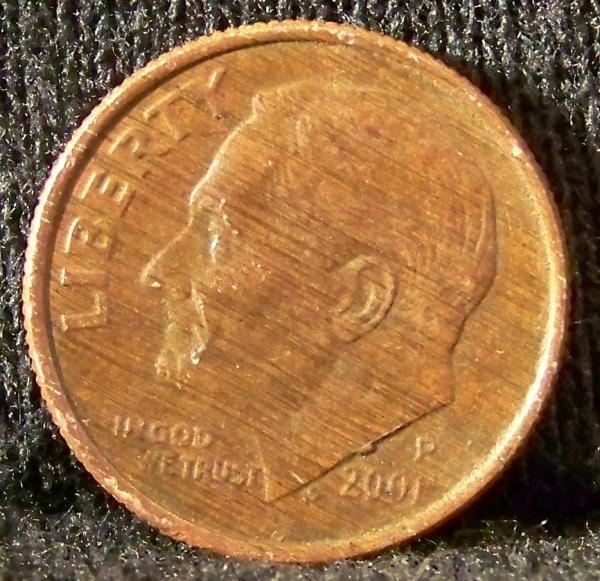 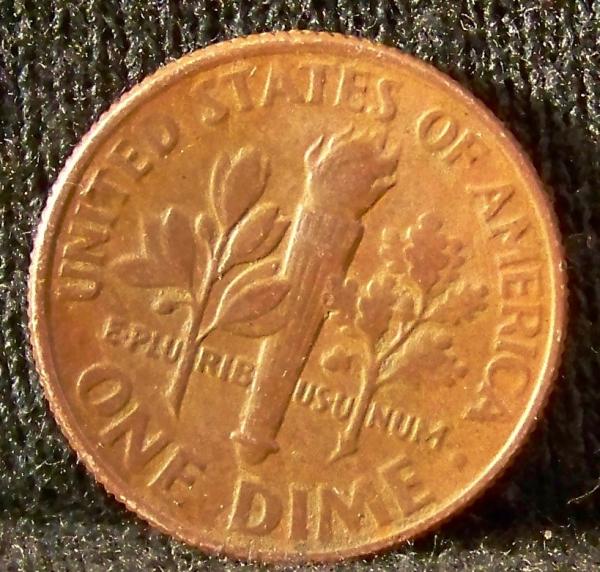 |
|
Bedrock of the Community
United States
12437 Posts |
Pictures are ok but an accurate weight will tell us alot more about it.
|
|
New Member
United States
25 Posts |
|
|
New Member
United States
25 Posts |
as I said you cannot see the lines when held in hand,it looks like a perfectly normal dime other than the color
|
|
Pillar of the Community
United States
5895 Posts |
Normal weight of a clad dime is 2.27 grams, this is within tolerance of wear. It looks like it got brushed with lacquer.
|
|
New Member
United States
25 Posts |
Macmercury,i thought about that possibility when I first enlarged the picture and noticed the lines,but if that were the case,wouldn't there also be similar lines on the reverse? Also I tried to nick the rim with a pocket knfe and no other color came through just a very slightly brighter copper color.Thanks to everyone for the replies so far,please keep them coming!
|
|
Bedrock of the Community
United States
12437 Posts |
With that weight, there is zero chance it is missing both clad layers. I have a dime missing the reverse clad and it weighs 1.9 grams so a copper core would only weigh about 1.5 grams. Edit: Most likely cause for the color is environmental exposure, which can sometimes give clad coinage a copperish color. I suspect the lines are attributable to the rollers used to set the metal stock to the proper thickness, more frequently seen on copper LMCs but also sometimes seen on clad coinage too. https://goccf.com/t/84211Oops, I missed the part where you cut the surface, that should rule out environmental exposure as that would expose the CuNi cladding. Edited by biokemist6
10/13/2011 12:15 am
|
|
Pillar of the Community
United States
2661 Posts |
I am 99% sure that it is a metal detecting find or has at least spent a couple of years in the dirt. I have pulled coins from the ground that were in a red clay type soil before that looked just like this.
|
|
Pillar of the Community
United States
2752 Posts |
The streaky surface is often indicative of a genuine error. It's most likely that this is an improper annealing error. However, since you detect no nickel-colored metal beneath the surface, it may be more than that. It may be a true off-metal error. There are rare circumstances in which you can get a pure copper dime of normal (or nearly normal) weight. If the two clad strips run out in the bonding mill, the end of the strip, composed of pure copper, will be rolled to full thickness. It could also be an "orphan" off-metal error.
Error coin writer and researcher.
|
|
New Member
United States
25 Posts |
I just want to point out the areas aroung the eyebrow,the mark on the nose and jusy below the corner of the mouth,these are areas of raised metal,i believe they are called Cuds? I should have mentioned these sooner but it seems everytime I look at this thing I find something new.Thanks to all who have responded so far,your willingness to share your knowledge is greatly appreciated. |
|
New Member
United States
25 Posts |
UPDATE:I was able to look at the coin with a lighted microscope,the area on the rim that I previously scratched does show a silvery tone under the copper color.I guess I couldn't pick it up with a regular jewelers loupe because of lighting,and the fact that the coin is so dark in color-much darker than the pictures posted here.
|
|
Pillar of the Community
United States
2596 Posts |
This dime looks like it was struck on a split planchet.
|
|
Pillar of the Community
United States
4132 Posts |
The raised areas you talk about are die chips or cracks. A Cud is a large break in the die that contacts the rim (part of the die has chipped away from the edge in that case). That sort of die damage around the nose and eyebrow is exceedingly common on Roosevelt dimes. |
|
Pillar of the Community
1028 Posts |
Wow, every single poster seems to have a different opinion on what this might be. It's not an off-metal error. I personally think it is just extreme environmental exposure, although those lines on the obverse are usually from the mint, I don't believe it's considered an error though.
|
| |
Replies: 19 / Views: 8,717 |






 Posted 10/12/2011 11:41 am





