| Author |
 Replies: 12 / Views: 5,572 Replies: 12 / Views: 5,572 |
|
|
Pillar of the Community
Canada
1984 Posts |
Well, the recent post about lacquer removal inspired me to try it out. I have a number of lacquered cents and I was curious to see how they would turn out. Following the advice of SPP and others, I acquired acetone, distilled water and a pair of jewellers tongs to do the job. I selected two coins to test, a 1940 cent and a 1946 cent. Both were red, showed heavy lacquer, but had some scratches so I wasn't risking much. Here are the before pictures and the materials set up to do the job (I actually did it outside to ensure I didn't breathe in the acetone). I left the coins in the acetone for maybe two minutes, which was perhaps too long, and then took them out and rinsed them in the distilled water. 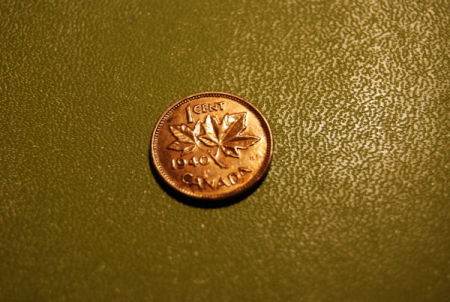 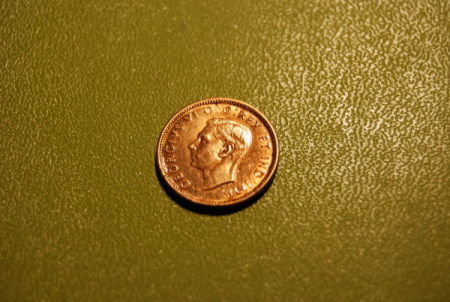 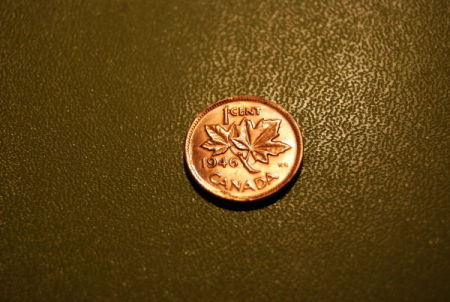 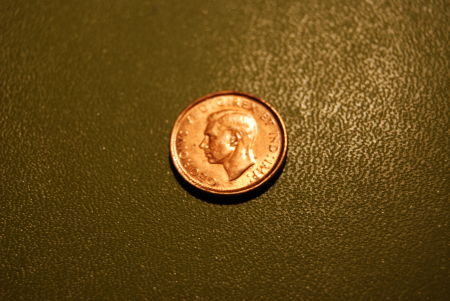 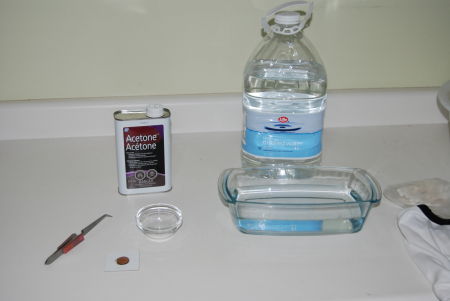 Edited by Smallcentguy
11/02/2011 8:19 pm
|
|
|
|
Pillar of the Community
 Canada
1984 Posts |
So here are the results.... The 1940 looks better in hand than in the photo. The coin is quite shiny. Perhaps it was polished before it was lacqured or perhaps it just had shiny fields to start. The 1946 has a much stronger glow and eye appeal. It does seem a little mottled though. It may have been mottled before it was lacquered. Maybe the acetone impacted it. Anyway, there is an example tried by a novice. Verdict for me: I have a couple of nice lacqured cents and I don't expect to try removing the lacquer on them any time soon....... 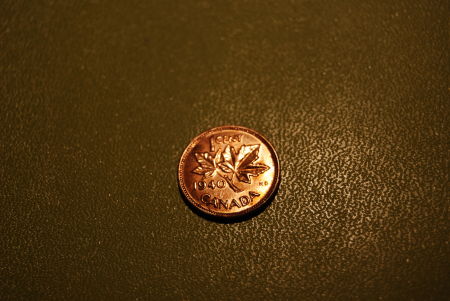 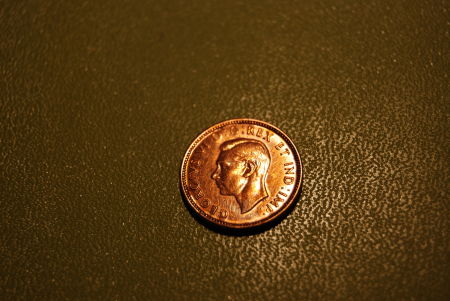 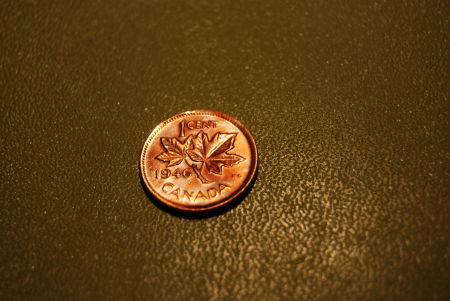 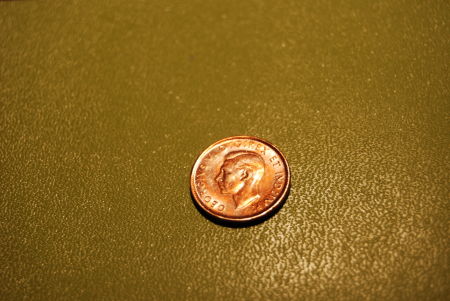 Edited by Smallcentguy
11/02/2011 8:21 pm
|
|
Moderator
 Canada
10473 Posts |
If your coins are less than 90% red (red by ICCS standards, but red-brown by PCGS standards), then it will be hardly worth removing the lacquer from lower grade business strikes. Also, George VI cents during the war years are tricky at the best of times. I have been most successful removing lacquer from large cents (particularly Edward VII strikes), small George V cents and George VI specimen strikes. Two minutes was probably one minute too long (except for nastily thick lacquer), while I do immerse the coins, I also use the tongs to "swish" the coin around in the acetone, much like you would with a silver dip, allowing "cleaner" solvent to wash away the acetone with the dissolved lacquer. Other methods involve using an eye-dropper to drop beads of acetone on a near-vertical surface, essentially washing the lacquer off the coin, but you have to be careful of how rapidly acetone evaporates. No one said this was easy...
"Discovery follows discovery, each both raising and answering questions, each ending a long search, and each providing the new instruments for a new search." -- J. Robert OppenheimerContent of this post is licensed under a Creative Commons Attribution-NonCommercial 3.0 Unported License. See: http://creativecommons.org/licenses...0/deed.en_USMy eBay store
|
|
Pillar of the Community
United States
9807 Posts |
I use a very similar technique on lower grade US 2¢ pieces mostly to remove PVC residue and other verdigris on the surface. I have not run across laquuered coins yet, but know it was a common way of preserving coins in the early 19th century - well it was better than the PVC hlders turned out to be!
You've done a good job in rescuing these examples. They certainly appear much nicer now.
"Buy the Book Before You Buy the Coin" - Aaron R. Feldman - "And read it" - Me 2013! ANA Life Member #3288 in good standing since 1981, ANS, Early American Coppers Member (EAC), Colonial Coin Collectors Club member (C4), Conder Token Collector Club member (CTCC), Civil War Token Society (CWTS) member, Liberty Seated Collectors Club (LSCC) & Numismatic Bibliomania Society member (NBS), USMex, Member in good standing, 2¢ variety collector. See my want page: http://goccf.com/t/140440 |
|
Pillar of the Community
Canada
1984 Posts |
I will try a few more experiments though I am out of old junky lacquered cents. I will lacquer up a few new ones to play with. But the thought of trying this out on a valuable coin is a little intimidating. Is there any harm in dipping for 5 to 10 seconds, then washing and assessing where you are at on the lacquer?
|
|
Pillar of the Community
 Canada
9902 Posts |
Thanks for sharing
Keep us posted on the results of further experiments
|
|
Valued Member
Canada
74 Posts |
Thanks for sharing your experience with us! Definitely interesting.
|
|
Pillar of the Community
Canada
1984 Posts |
Well, I am back at it today. First candidate is a 1942 cent. I have previously shown this to ICCS and they rejected it given my criteria (which was MS63+) but I am not so sure. The lacquer includes quite a bit of dust etc and it is ard to see what is really going on. Here is before.... note the thick lacquer in the coreners of the leaves. Unfortunately my obverse before picture was no good. 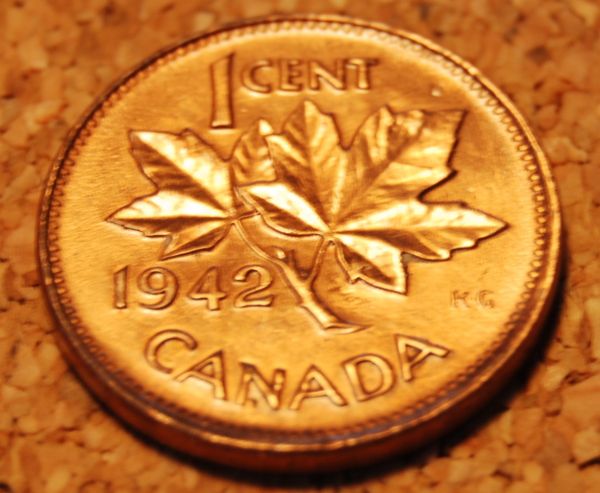 |
|
Pillar of the Community
Canada
1984 Posts |
Well, here is the after... This time I am delighted. No mottling, much better looking coin. I immersed for 5 or 10 seconds at a time repeatedly. Note I still have some lacquer in the corners of the leaves. Any views on whether I should keep going? I am not sure which is worse....the tiny residue of laquer or the risk of discolouration. The coin is really nice other then the mark on the cheek. Any views on grade....I am thinking this would make MS63, which it did not pre lacquer removal.... 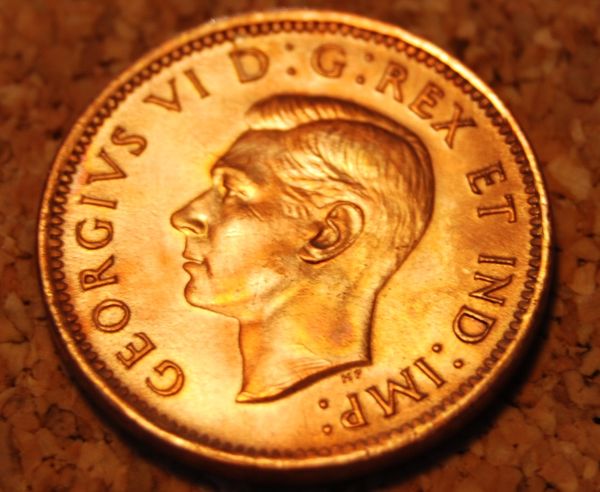 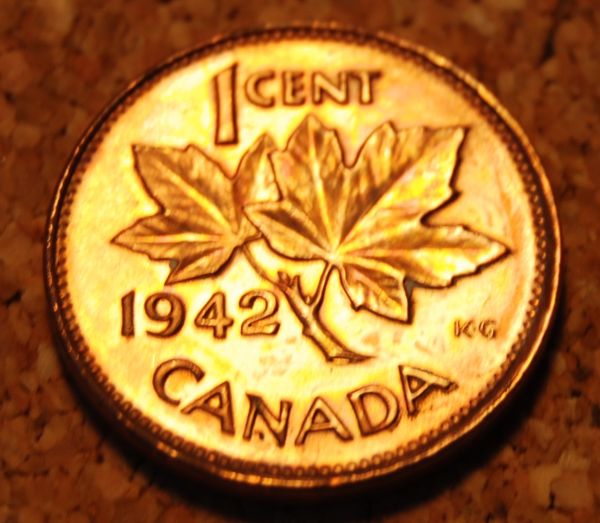 Edited by Smallcentguy
11/06/2011 1:23 pm
|
|
Pillar of the Community
Canada
9902 Posts |
I say keep going!In for a penny in for a pound.
The lacquer in the corners is quite distracting,but a mottled appearance might be even more so.
Easy to say,it's not my coin.
|
|
Valued Member
Canada
475 Posts |
Coin restoration is tricky to say the least! Lacquer removal with acetone is tricky at best! Often times it is NOT lacquer but another coating of something else. Best advice leave alone if it is a coin of anything of value!
|
|
Moderator
Canada
10473 Posts |
Try using a hawthorn for the buildup in the corner of the leaf. It might just flake out. I think your coin now (without it in hand) would be a candidate for MS-64. Nice strong colour for a 1942.
"Discovery follows discovery, each both raising and answering questions, each ending a long search, and each providing the new instruments for a new search." -- J. Robert OppenheimerContent of this post is licensed under a Creative Commons Attribution-NonCommercial 3.0 Unported License. See: http://creativecommons.org/licenses...0/deed.en_USMy eBay store
|
|
Pillar of the Community
Canada
1984 Posts |
I will have to get my hands on a hawthorne. I also did a 1941 today, which was similarly rejected by ICCS with the lacquer build up, and I think it may turn out to be MS65....!
|
| |
Replies: 12 / Views: 5,572 |
|










 Posted 11/02/2011 10:01 pm


