| Author |
 Replies: 13 / Views: 1,698 Replies: 13 / Views: 1,698 |
|
|
Valued Member
Canada
182 Posts |
|
|
|
|
Moderator
 United States
56855 Posts |
Looks like it was acid dipped to me. John1  |
|
Pillar of the Community
Canada
695 Posts |
I've seen rippled doubling like that described as wire-wheel damage, i.e., a form of PMD. |
|
Moderator
Canada
10473 Posts |
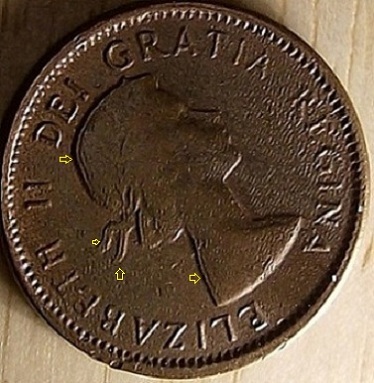
Is it just the lighting, or is there pronounced doubling on the obverse?
"Discovery follows discovery, each both raising and answering questions, each ending a long search, and each providing the new instruments for a new search." -- J. Robert OppenheimerContent of this post is licensed under a Creative Commons Attribution-NonCommercial 3.0 Unported License. See: http://creativecommons.org/licenses...0/deed.en_USMy eBay store
|
|
Valued Member
 Canada
182 Posts |
It's a Definite........... doubbling.........
|
|
Moderator
Canada
10473 Posts |
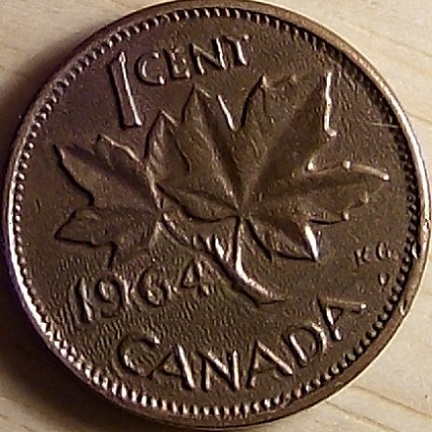
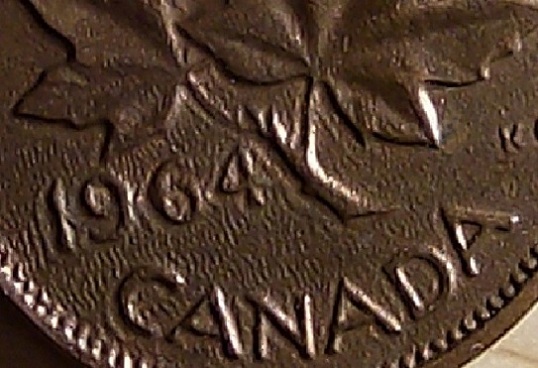
Your coin is a head scratcher for me...  Look at the date, and CANADA, and the maple leaf stem. Are those doubled elements to the west of each of those features raised? "Discovery follows discovery, each both raising and answering questions, each ending a long search, and each providing the new instruments for a new search." -- J. Robert OppenheimerContent of this post is licensed under a Creative Commons Attribution-NonCommercial 3.0 Unported License. See: http://creativecommons.org/licenses...0/deed.en_USMy eBay store
Edited by SPP-Ottawa
12/18/2011 7:51 pm
|
|
Pillar of the Community
Canada
1733 Posts |
That's not acid damage imo. The problem is I don't know what it is, just what it isn't.
|
|
Valued Member
Canada
241 Posts |
Hi there. I was checking around and found a thread from some time ago. The coins discussed are U.S. coppers with some similarities to the '64 penny posted here. It's an interesting set of comments and examples. http://www.coincommunity.com/forum/...PIC_ID=68438 |
|
Valued Member
Canada
182 Posts |
Head scratcher for sure.....yes all around doubbling ......imo... not acid dipped.....but what do I know..........
|
|
Pillar of the Community
Canada
1166 Posts |
I have a cent (U.S.) that has the same effect. It was determined to be acid dipped which may or may not be accurate but regardless, it was PMD and not a mint error:    |
|
Pillar of the Community
Canada
2430 Posts |
Good Eye SPP!
The date and CANADA does look like it was struck twice.
Edited by darryldarryl
12/19/2011 09:32 am
|
|
Pillar of the Community
Canada
1733 Posts |
Well, looking like it was struck twice also does happen when the coins are corroded in acid. When an annealed planchet is struck the metal does not flow with uniform density, some parts are slightly more dense than others and in the case of coins it's always the space under the features with the most variation being in the fields. That's why I think it's so easy to see die clashes in the fields for hanging devices on small cents. The devices are more more "spongy" on top where the metal was forced to flow cold.
As acid attacks the devices it works faster on the fields and top surfaces of the devices leaving the denser layer under the devices slightly less affected. This gives the impression it was struck twice because you've thinned the features on top and the fields beside the denser metal. You can try this for yourself with an aggressive acid.
Where I'm puzzled is by the rippling, because being the kind of destructive guy I am I've tossed cents into more than one highly corrosive acid bath and not had that rippling effect. Someone in the one of the threads that was linked suggested it was from melting level heat and I don't find it to be a great leap to think that the alloy would sag under it's own weight when heated to melting.
So I still don't know. I don't think it was acid, or at least not just acid but that rippling is very cool and it doesn't seem to follow any pattern when the obverse and reverse are compared. As I write out this paragraph I'm ruminating that maybe I'm wrong and that a milder acid over a longer period of time would give that effect? Or some combination I haven't used?
So, even after speculating I remain ignorant and admit it.
|
|
Valued Member
Canada
241 Posts |
I've been thinking about how the rippling might have been created. I've seen similar examples, and all are pennies.
Perhaps this sounds far fetched, but I think it's a plausible solution. I'm guessing it is some foreign matter/liquid that was dried with forced air. I'm thinking how that rippling resembles water running up the car windshield while driving at highway speeds. The doubling effects are the voids created between the higher portions of the coin and the forced air. Could it be a combination of forced air and super-heating the coin itself?
Call me crazy, but I think I'm right!
Edited by staircase
12/26/2011 10:53 pm
|
|
Pillar of the Community
United States
1758 Posts |
|
| |
Replies: 13 / Views: 1,698 |
|








 Posted 12/18/2011 12:09 pm





