| Author |
 Replies: 8 / Views: 1,745 Replies: 8 / Views: 1,745 |
|
|
Formerly nancyc
Australia
5385 Posts |
I would appreciate opinions on what has happened to this coin. Part of me says PMD by a very skilled metal worker, but then I can't think how it would have been done, but I have no experience in metal work, so I'm hoping there are some metal workers here who can shed some light on it. Halfpenny 1947 4 Views 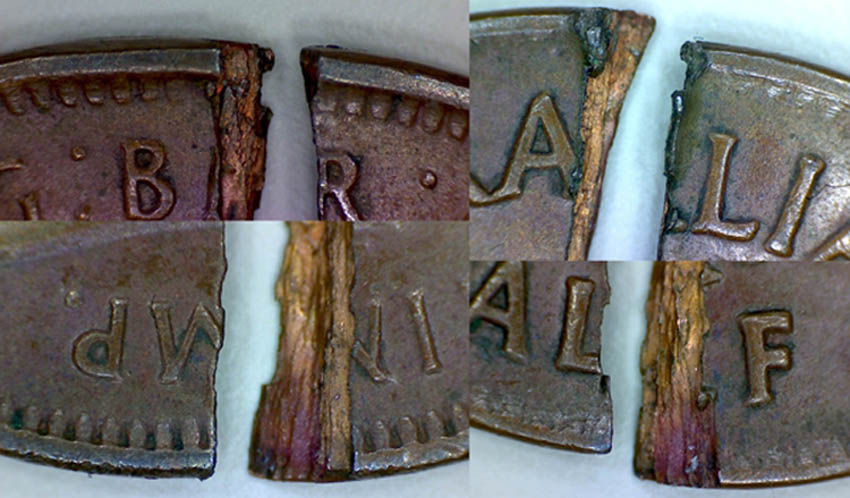 Halfpenny 1947 Cracked in two 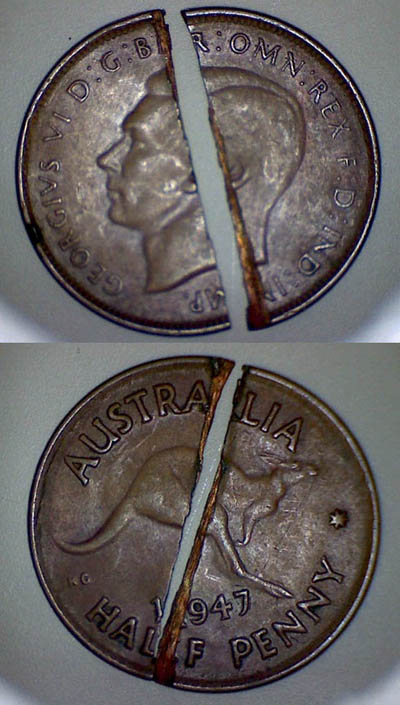 Halfpenny 1947 Obv Rev Duo 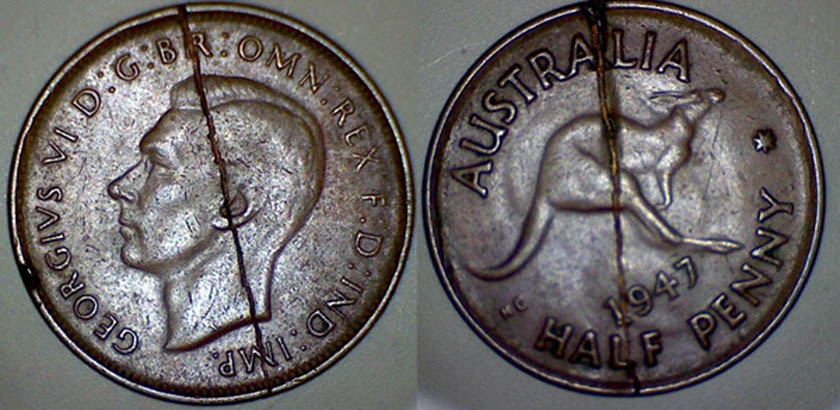 Halfpenny 1947 Top Bottom and Edge Views 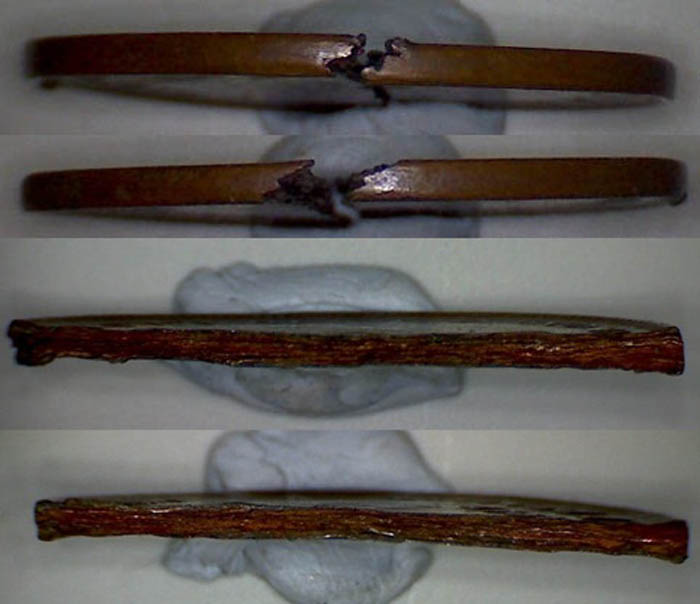 The coin is quite flat, no bends at all.  life is a mystery to be lived not a problem to be solved
|
|
|
|
Pillar of the Community
1119 Posts |
clean snap, no indication of it being bent back and forwards.
the top right pic almost looks a little like burnt metal, the red could also be from heat?
but I would go for metal fatigue.
|
|
Pillar of the Community
Australia
1005 Posts |
I wonder if the burnt part was part of the cause for the coin to be broken, or if someone was trying to repair the coin after it was broken?
|
|
Pillar of the Community
Australia
1005 Posts |
I have a theory on how it has happened, which I have tried emailing to you.
|
|
Pillar of the Community
Australia
762 Posts |
someone wanted change from a quarter penny  |
|
Pillar of the Community
1119 Posts |
could also of been a streak of copper oxide (? not sure if right name) that didnt mix properly and was poured into the batch this coin came from, that would also create a weak spot/streak allowing it to break
|
|
Pillar of the Community
Australia
7096 Posts |
I know what has happened. IT'S BUGGERED |
|
Pillar of the Community
Australia
1005 Posts |
Hi Nancy, I have seen a thread titled "Post up your Broken Coins here" on another forum that I think you belong to, and I think your coin looks similar (although more severely flawed) to some pictured in that thread. I have also reconsidered my PMD theory for a couple of reasons. 1. I think the shape of the break through the metal might be wrong. I think that a break would occur through the thinest part of the coin (ie at 90 degrees to the surface of the coin), while the break in your coin runs slightly across the thickness of the coin, meaning there would be more metal, and it would be stronger in that section than if the break was simply straight across the thickness of the coin. 2. Again I am not sure, but I think the exposed part of the break would look less rough. I will have to try out my PMD theory one day, but I dont have access to what would be needed, so its likely to be a long time. |
|
Pillar of the Community
1119 Posts |
another thought, in the milling process the rolls of metal do have an ending, if that end appears before the end of the roll, they could of joined another section to it ( hammered together maybe I dont know) to make the full length, if thats the case then the broken coin could be taken from that piece?
|
| |
Replies: 8 / Views: 1,745 |
|







 Posted 12/26/2011 8:26 pm





