| Author |
 Replies: 10 / Views: 3,850 Replies: 10 / Views: 3,850 |
|
|
New Member
United States
23 Posts |
|
|
|
|
Moderator
 United States
56855 Posts |
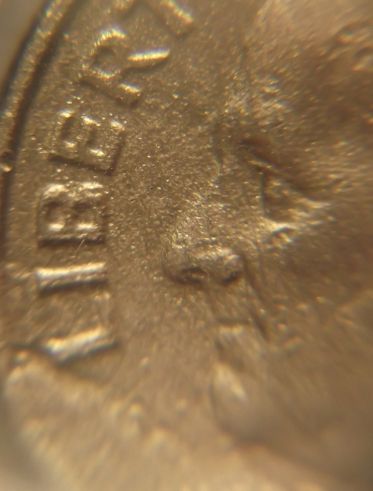
Looks like acid damage. John1  |
|
Bedrock of the Community
United States
62064 Posts |
Is there reeding on the edge? Is the coin a layer planchet. It looks like a cast dime?
|
|
New Member
 United States
23 Posts |
I will get pictures of the rim up later but after comparing it to a normal 2004 P dime, the reeding on the coin in question is there but diagonal where the reeding on the normal dime is straight. From what I have found, I think this means that coop is right, a cast dime? I'm not sure what a layer planchet means so I am not sure about that.
|
|
Moderator
United States
56855 Posts |
Why would anyone bother casting a copy of a very common dime. It must take a lot of time and effort. John1 |
|
Pillar of the Community
United States
1151 Posts |
But look at the Henning Nickels, he made cast copies of common nickels.
|
|
Bedrock of the Community
United States
62064 Posts |
Probably an expermental piece to see if casting coins is possible? Try a drop test on a table and see if the ring sound is the same?
|
|
New Member
United States
23 Posts |
I tried the drop test and to me they both sound the same. I forgot to mention in my first post but the dime weighs 2.22 grams which I believe is fairly close to what it's supposed to be. Here are some pictures of the rim of the dime compared to a normal dime. The coin in question is on the left. 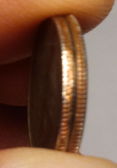 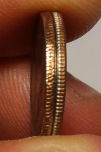 |
|
Rest in Peace
United States
9104 Posts |
 , chubbs! Looks like acid to me, plus other PMD. |
|
Bedrock of the Community
United States
62064 Posts |
Looks like acid to me. The clad layer is there, so it is a real coin.
|
|
New Member
United States
23 Posts |
Thanks a lot guys, I appreciate the input!
|
| |
Replies: 10 / Views: 3,850 |
|







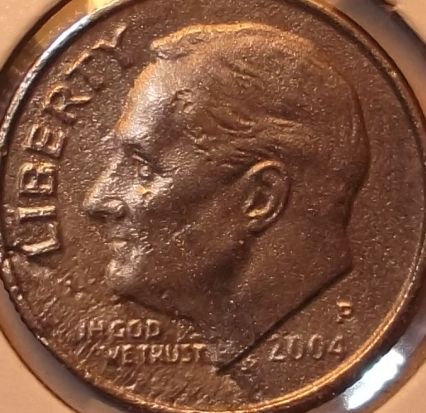
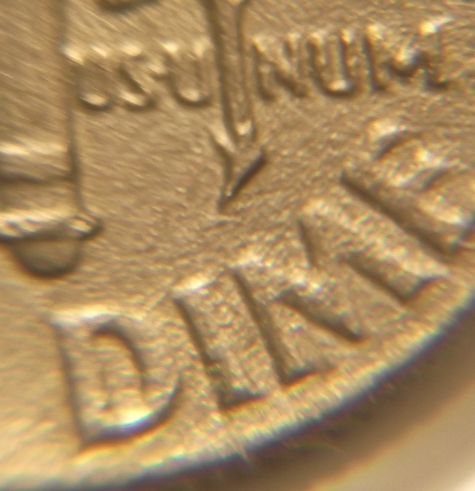


 Posted 02/29/2012 9:30 pm


