Quote:
What I'd like to know is, have they really gotten that good at counterfeiting that they can make the metal so similar without any precious metal content...
I hate to break it to you, but for silver coins, the answer is "yes". The Chinese have known how to do
that for centuries. They invented cupronickel a couple of millennia before the West discovered how to make it. It's probably part of the reason why, as a culture, they never seemed to have trusted silver as a form of official money.
Quote:
...and what can I look for that would be a dead giveaway? In other words, if I happen to see some coins in a similar situation, is there a test I can perform that would quickly confirm silver content?
Unfortunately, it's gotten to the point where you have to assume that any coins acquired "at a booth" - at a flea market, street festival or similar such place - are non-genuine non-silver non-coins, and pay accordingly. Here on the forum, we've got the luxury of several hours spare to sit here with reference books and look up websites, trying to identify and verify your coins. Strolling the bustling marketplace with hagglers and hawkers on all sides, you're not going to have that luxury. Unless you can get your hands on a
portable XRF analyser, which cost about as much to buy as a new car, there's no simple test you can do on-the-spot to definitively prove their metal content.
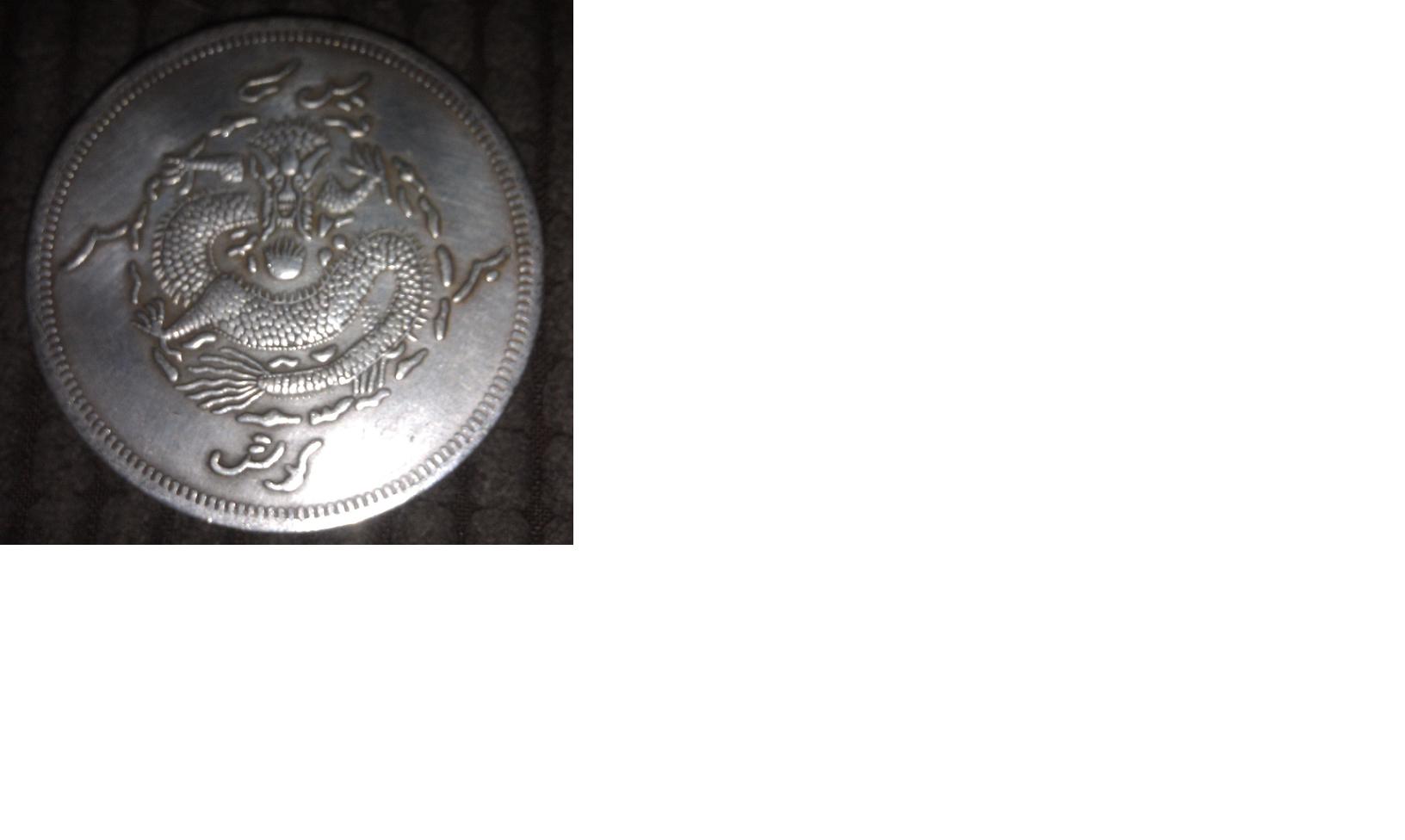
The only other test I can recommend is the photo test. I don't know why, but many these Chinese base-metal fakes often look very good in hand but, when you take their picture, turn up greenish-yellow coloured. It seems to be a case where "the camera doesn't lie" actually holds true. I can't verify for sure that it'll work every time (for your photos above, only coin #1 is definitively failing the photo test) but it's all I can offer you.
Apart from that, if you're going to try to but silver coins "on the cheap", all I can recommend is that you become very familiar with what the genuine coins look like. For the specific problems these coins have:
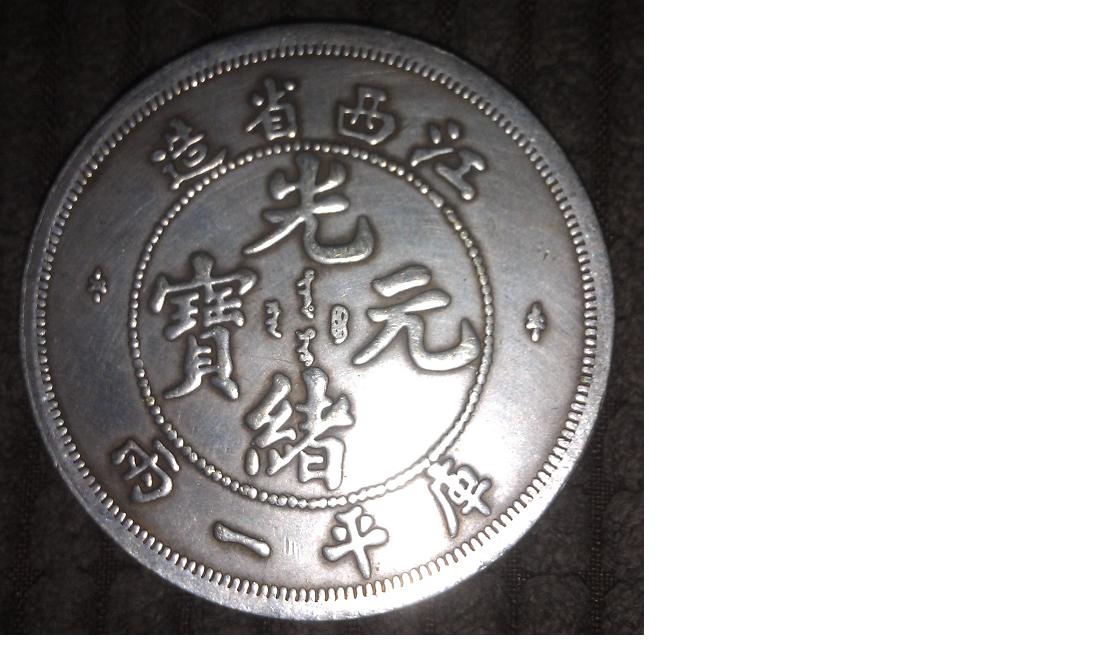
#1: This reverse ("dragon" side), with the Arabic script at the four compass-points, was only used on the Muslim-majority province of Sinkiang (now spelled Xinjiang); I believe the Arabic translates to "Kashgar mint". However, genuine dollar-sized 1 tael coins from Sinkiang Province look completely different on the obverse:
here's an example. The obverse on your coin actually says (in Chinese) "Kiangsi Province" (now spelled Jiangxi), which is in itself a problem since the mint in Kiangsi province never actually made any silver coins, at all. So this coin is a "fantasy mule", with the two sides claiming to be two different coins struck at two different mints at opposite ends of the Empire.
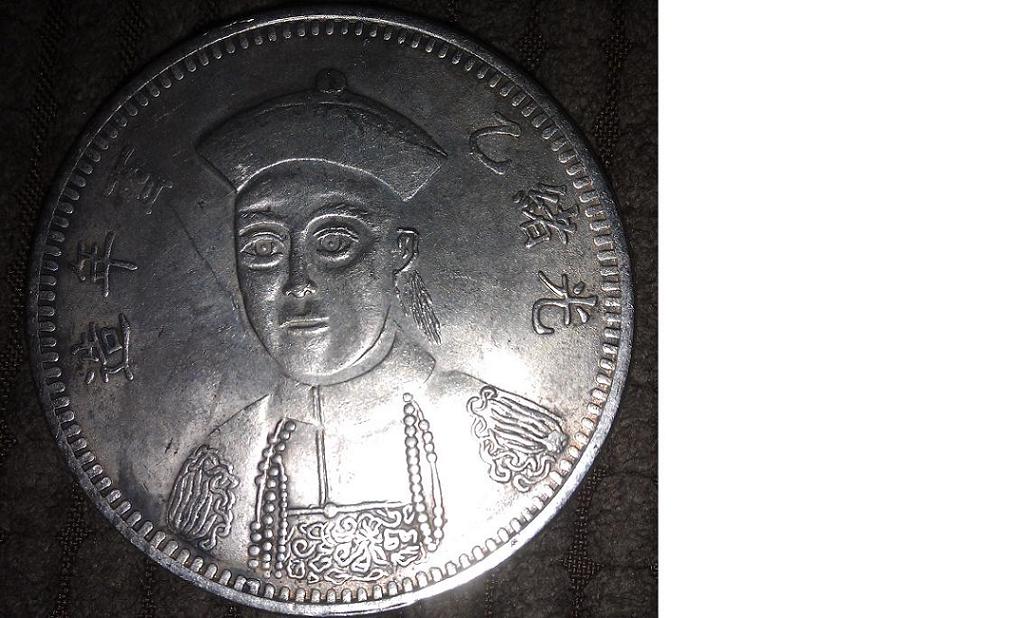
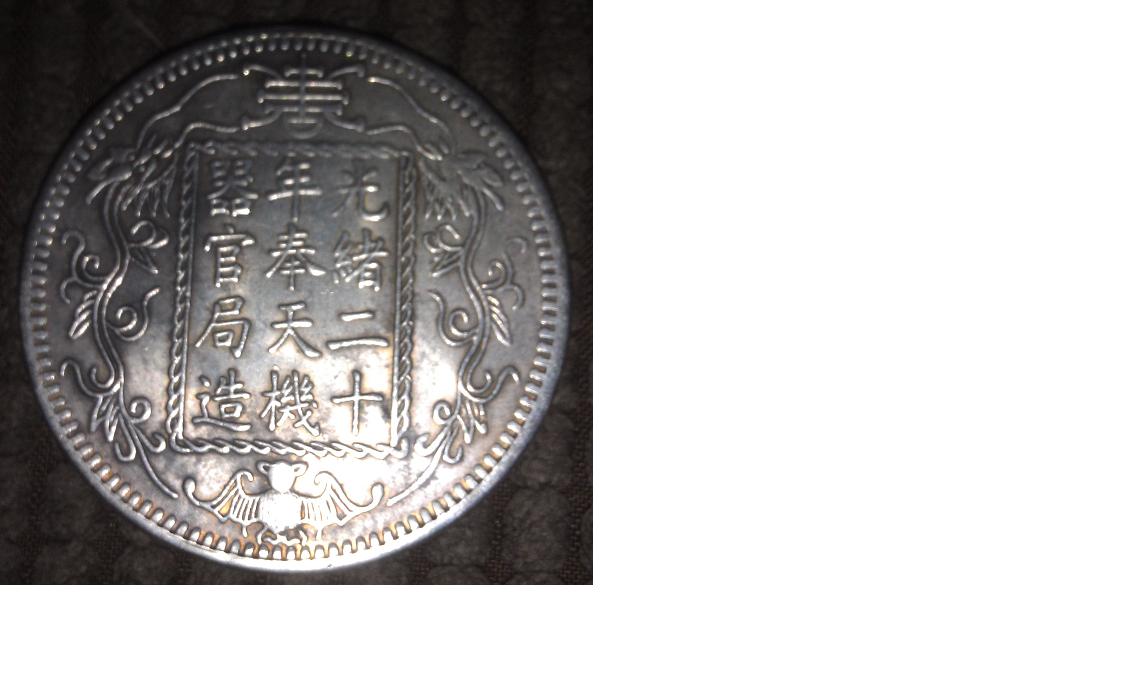
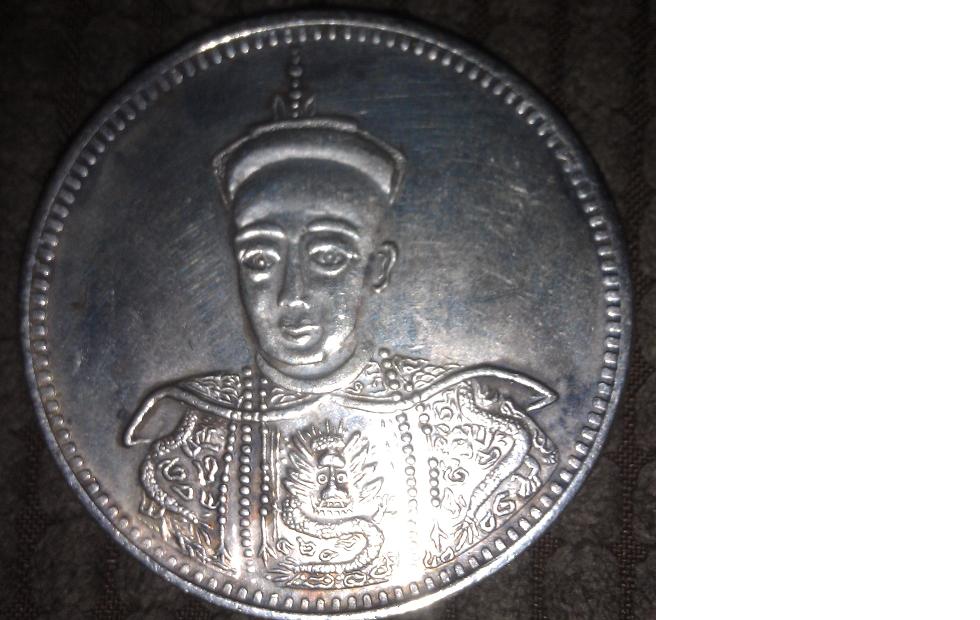
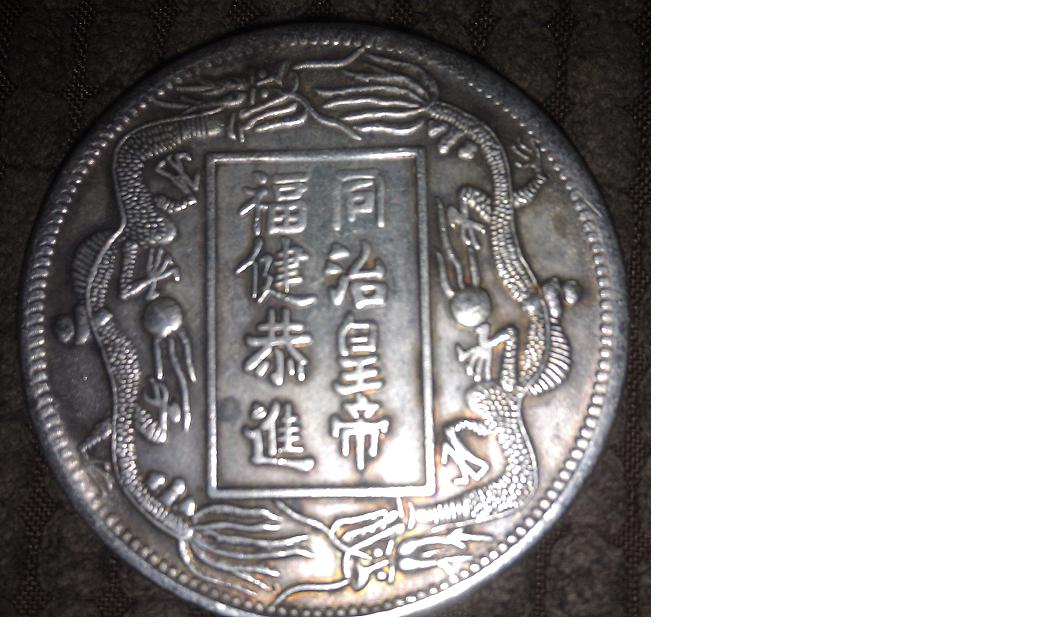
#2 and #3: the obverses are fantasies - no Chinese dollars ever bear a facing portrait of an emperor; his likeness would have been considered too sacred to be touched by commoners on coinage (note that this doesn't ban portraits from Chinese coins completely; the Republic period dollars often have portraits on them). The reverses appear to be based on the extremely scarce early mace/tael coinage, such as
this example from Jilin mint.
I should also point out that genuine old Chinese coins are extremely popular right now, in mainland China, Taiwan, Japan, and the West. They're simply not likely to be sitting around unnoticed in junk boxes selling for melt or under melt.
Don't say "infinitely" when you mean "very"; otherwise, you'll have no word left when you want to talk about something really infinite. - C. S. Lewis










 Posted 03/14/2012 02:37 am


