| Author |
 Replies: 5,703 / Views: 531,548 Replies: 5,703 / Views: 531,548 |
|
|
|
Pillar of the Community
United States
4637 Posts |
Quote:
Is this a mule by chance? how do you tell?
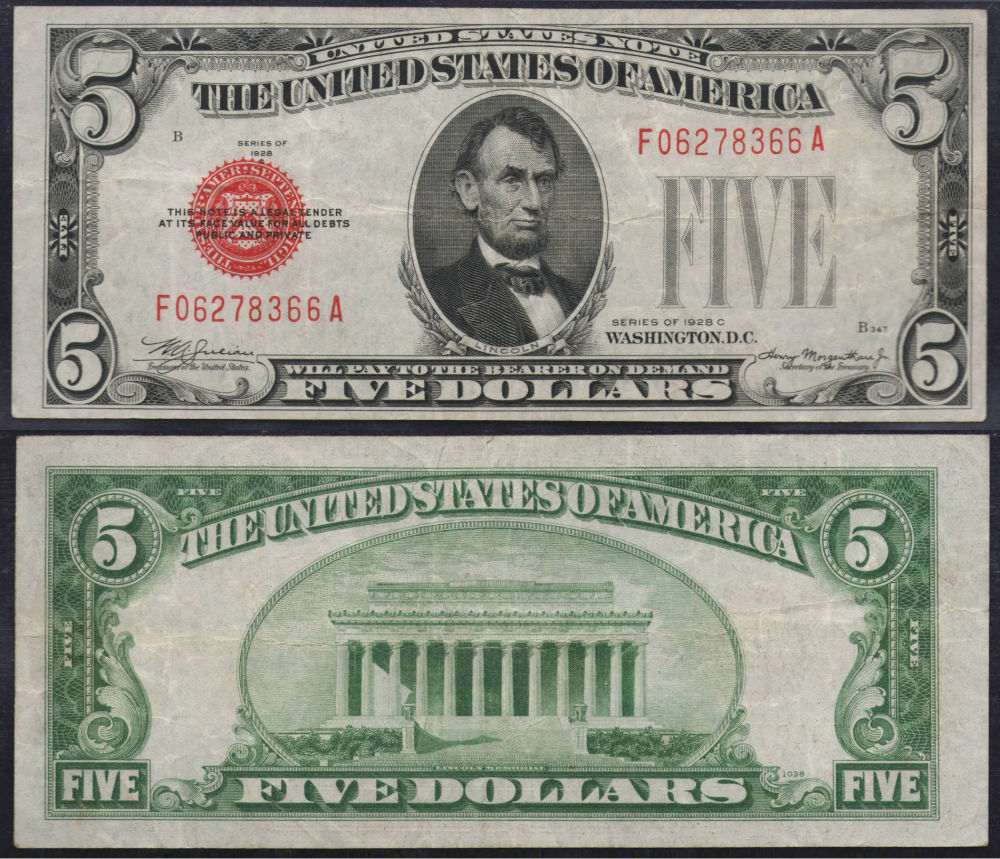
I'm pretty sure yours is a Mule. The way you tell is the back plate location. The series 1922 $20 Gold Certificate Mules have the back plate number on the upper left hand side below the word UNITED. Non-Mules have the back plate number on the upper right hand side below the word AMERICA. Beautiful 1934A Kansas City $100 Mr.Frog, and nice $5 WheatBack (too bad about that tape), and although the 1922 $20 Gold Cert is maybe a VF, it has great margins and retains much of the orange color on the back. Edited by SteveInTampa
08/19/2016 3:57 pm
|
|
Bedrock of the Community
United States
94367 Posts |
Flick - A mule is a note with a micro size check number on one side and a macro size on the other side (hence the term "mule", which is a cross between a horse and a donkey). For small size notes, these varieties occurred during the change from Series 1934 notes (micro numbers) to 1934-A (macro numbers) - the older plates were not retired prematurely and were often paired with the newer macro plates to create "mules". It is not necessary to compare the sizes today; researchers have determined the cut-off points on all check numbers for all series. These can be found in the "Standard Guide to Small-Size US Paper Money" by Schwartz and Lindquist, a very affordable book. For large size notes, Steve is correct a usual - it is the location of the check numbers that is the quick way to identify mules, unlike with small notes, where the position remained the same but the size changed. Clear?   Edited by Coinfrog
08/20/2016 5:19 pm
|
|
Valued Member
United States
55 Posts |
Awesome. Thanks for all the info SteveInTampa and Coinfrog! I still have a lot to learn. I'll definitely look into that book.
|
|
Pillar of the Community
United States
2858 Posts |
A very rare Treasury signature combo on this 1882 $5 Value Back. (Fr. 575b) This bank originally had 'German' in its title and was then changed to something more patriotic during the WWI era, thus giving it a (possibly unique) Friedberg number only used for this bank. As many have noticed my notes are quite circulated, but some are nearly impossible to find. So you have to sacrifice condition for rarity sometimes.  |
|
Bedrock of the Community
United States
94367 Posts |
Wheat - Great story! This was the same reason that the royal family of Great Britain changed their house name from "Saxe-Coburg-Gotha" to "Windsor" in 1917. Bad handle during those times.
|
|
Bedrock of the Community
United States
94367 Posts |
tech - You've been busy! Nice notes, especially the Wide/Narrow pair at that price.  |
|
Pillar of the Community
United States
1285 Posts |
Quote:
tech - You've been busy! Nice notes, especially the Wide/Narrow pair at that price. Coinfrog, yep busy for sure; gotta get the deals when you can as they are seldom. |
|
Valued Member
United States
55 Posts |
|
|
Bedrock of the Community
 United States
12915 Posts |
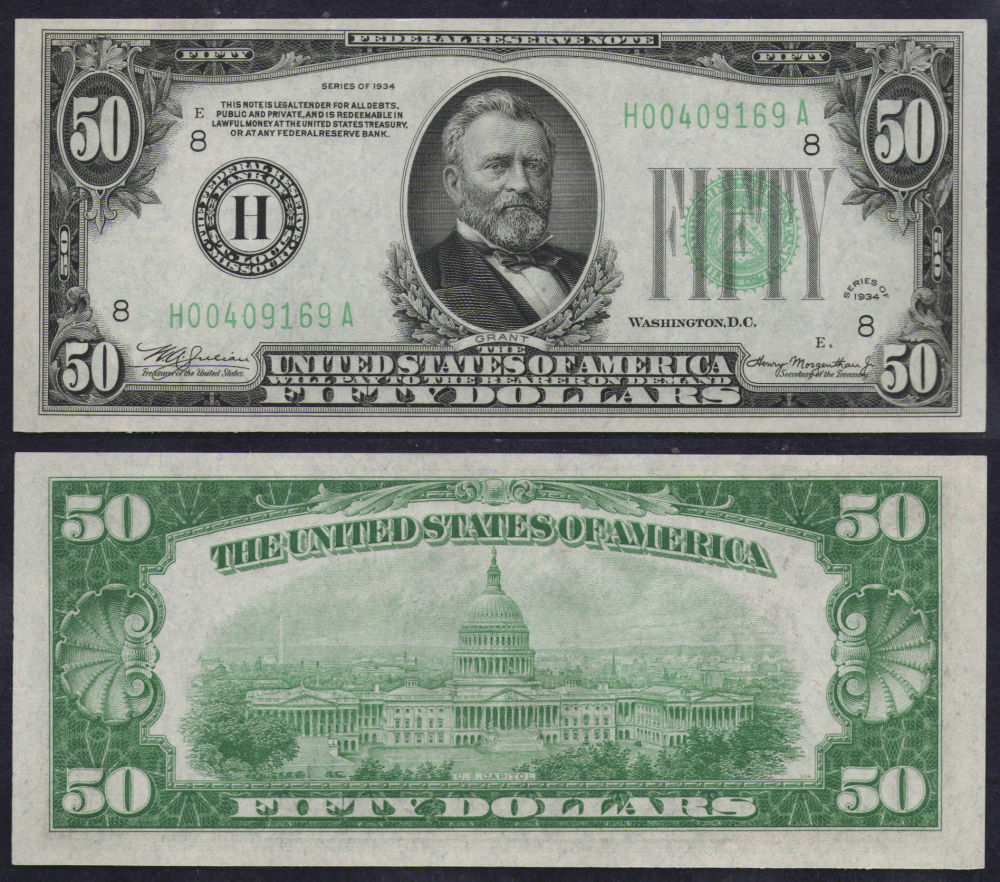
Oooooh, nice notes, Flick! Really like that Grant!  |
|
Bedrock of the Community
United States
94367 Posts |
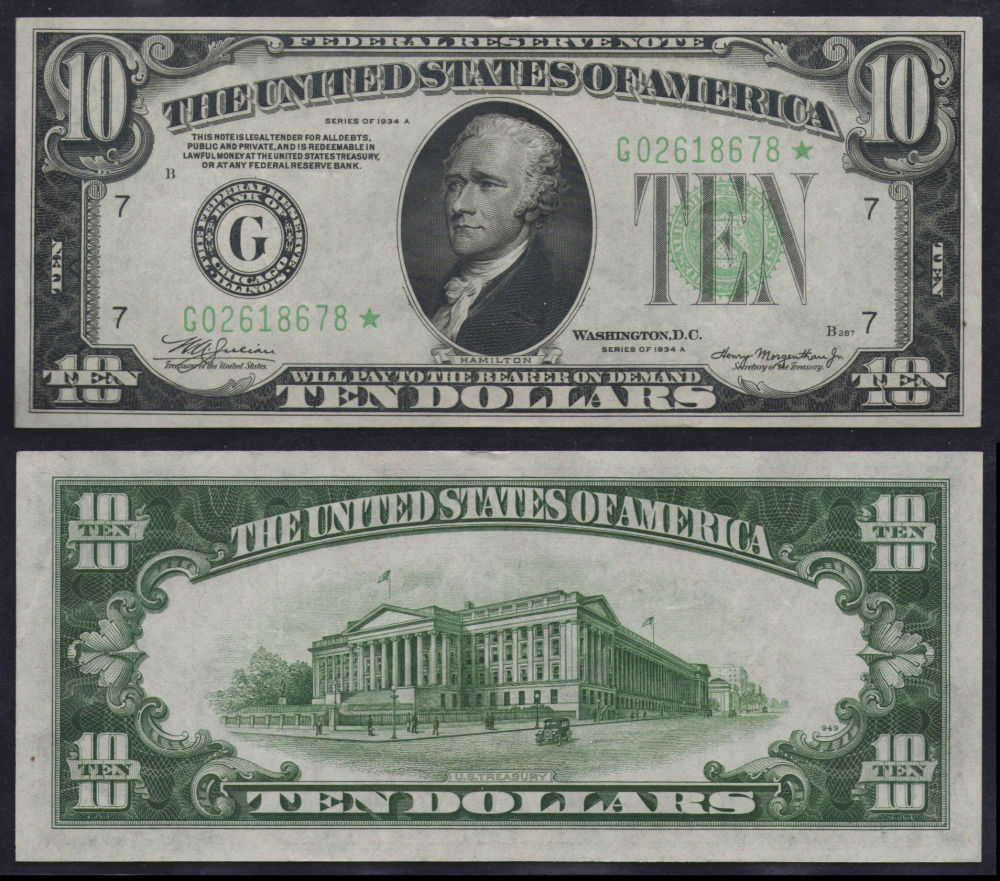
Nice notes! That $10 star is a beauty.
|
|
Valued Member
United States
55 Posts |
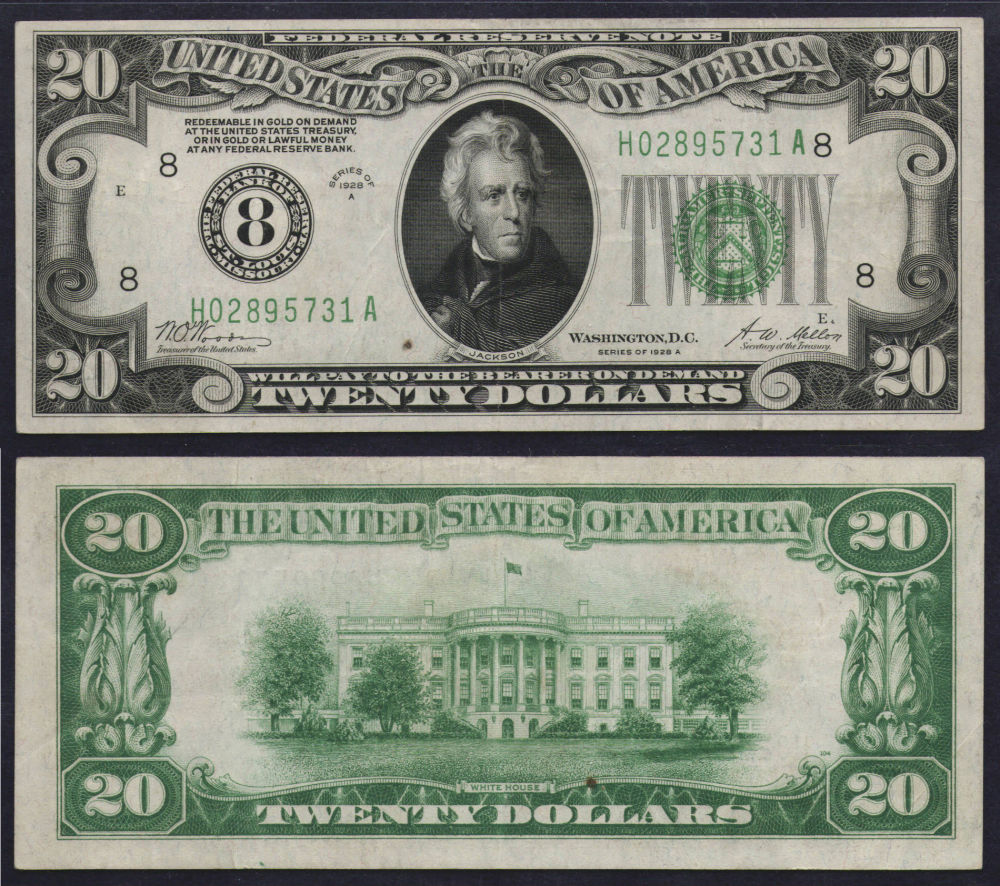
Thanks CelticKnot and Coinfrog! I'm pretty happy with this group and I feel like I got a good deal on them. Can't wait to get more!
|
|
Bedrock of the Community
United States
94367 Posts |
Flick - Quick quiz: Would you say your $10 '34-A star is a mule or not?
|
|
Valued Member
United States
55 Posts |
It looks like the plate numbers on both sides are the same larger (macro) size so that means it isn't. right?
|
|
Bedrock of the Community
United States
94367 Posts |
Flick - well done, grasshopper! tech - nice pickup. |
|
Bedrock of the Community
United States
94367 Posts |
Picked this up recently. It is hardly rare or even scarce, but the price was right so I grabbed it. Notable as being from the very first block of the "new" Series 1917 $1 USNs (Teehee/Burke sigs) and probably printed in 1917. This long-lived design, first adopted in 1869, was finally retired shortly thereafter in 1922, but not before a five-year production run of about one BILLION notes! Next to the (beyond) abundant $1 1923 SC, this is the most commonly-available large size note. 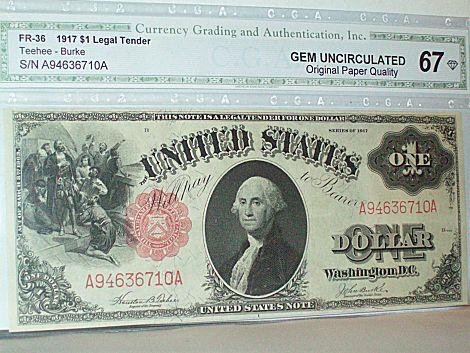 Edited by Coinfrog
08/22/2016 5:39 pm
|
| |
Replies: 5,703 / Views: 531,548 |








 First Page
 Previous Page


 Posted 08/19/2016 5:44 pm