| Author |
 Replies: 10 / Views: 3,320 Replies: 10 / Views: 3,320 |
|
|
Pillar of the Community
United States
2224 Posts |
|
|
|
|
Moderator
 United States
56855 Posts |
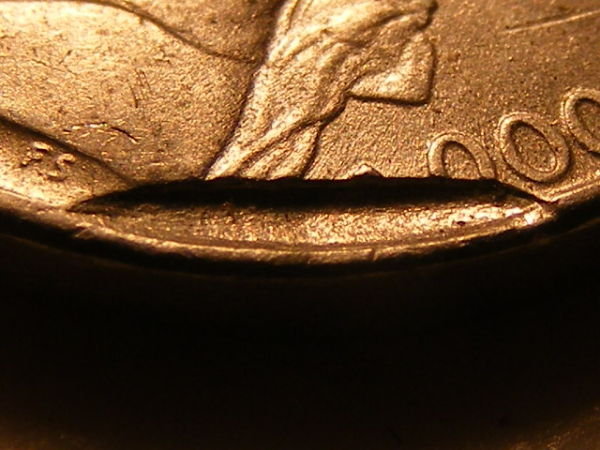
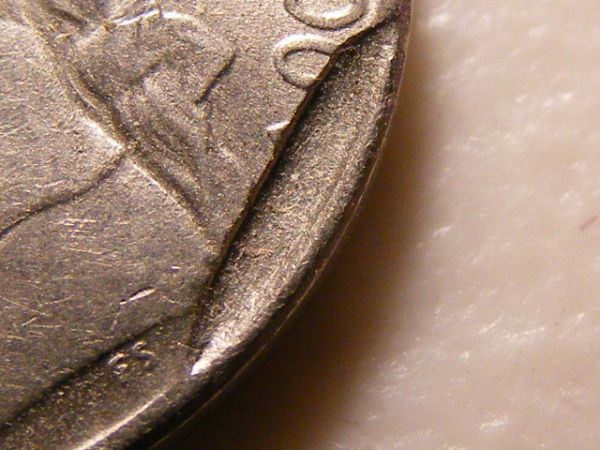
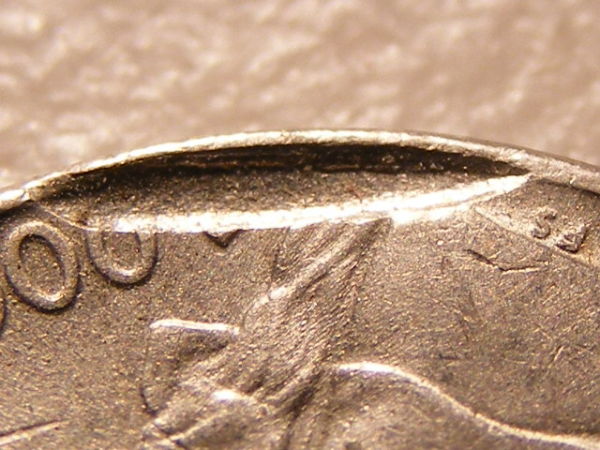
Neat. Looks like a 2000-D. Maybe it is a major die dent? John1  |
|
Bedrock of the Community
United States
12437 Posts |
I believe that it is an indent strike, caused when two planchets are struck while overlapping each other. The other coin would be 95% OC on the obverse and uniface on the reverse.
|
|
Pillar of the Community
United States
4132 Posts |
Looks to be an indent strike - struck through another planchet that was overlapping it slightly.
|
|
Pillar of the Community
 United States
2224 Posts |
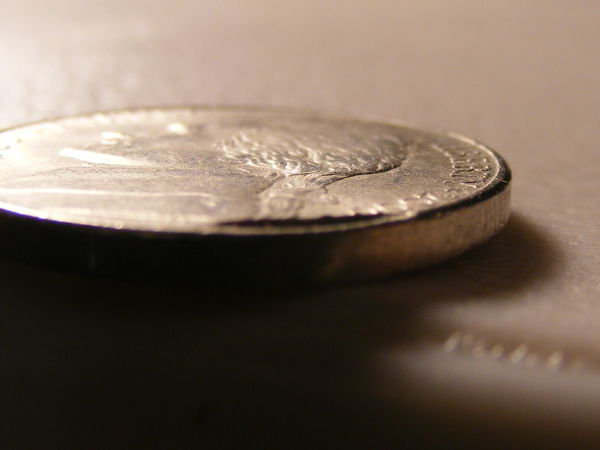
Thanks! I thought of the indent strike, but wouldn't that have flattened the rim? The rim is almost totally intact (tried to show that with the pics).
|
|
Pillar of the Community
United States
4132 Posts |
I'm not 100% sure why, but the rim is always like that on indent strikes I've seen, to varying degrees. I think it's a combination of the fact that the rim is upset (and therefore work-hardened) before it's struck, and because of the pressure provided by the collar. Also, devices are partially formed even through a strike-through (depending on the thickness), and since the rim is the highest relief part of the coin, it's formed even though it's getting struck through something as thick as a planchet.
|
|
Pillar of the Community
United States
2224 Posts |
I hadn't thought about the collar protecting it; that makes sense. Thanks Captain!
|
|
Bedrock of the Community
United States
62064 Posts |
A reverse image might help?
|
|
Pillar of the Community
United States
2224 Posts |
Just took a real quick pic of the reverse; it couldn't be more normal. 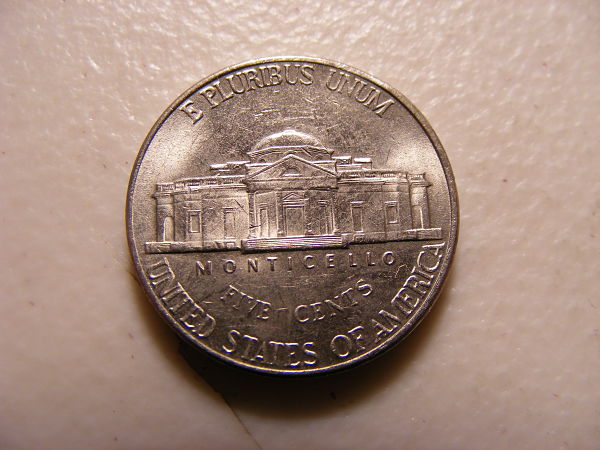 |
|
Pillar of the Community
967 Posts |
It looks like the collar would protect the rim.
|
|
Valued Member
United States
63 Posts |
Great educational post. Very interesting find, and explanation.
Tom
|
| |
Replies: 10 / Views: 3,320 |
|












 Posted 03/30/2012 5:59 pm


