| Author |
 Replies: 9 / Views: 3,656 Replies: 9 / Views: 3,656 |
|
|
Pillar of the Community
United States
3552 Posts |
Hello, I realize that this coin is in terrible condition but wanted to first determine exactly what this date appears to be. I know that the 1799(normal date) and the 1799(9 over 8) command a very significant $ premium. Is this coin too destroyed to determine anything? Please ID this coin and give me a suggested price it might bring on ebay. Thanks, mdpmedia 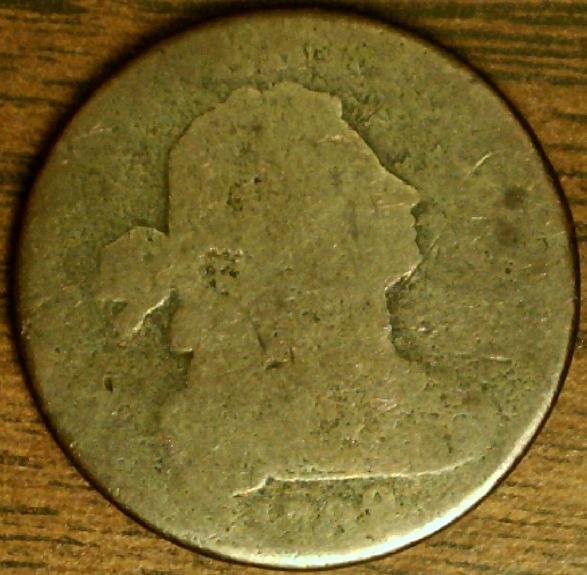 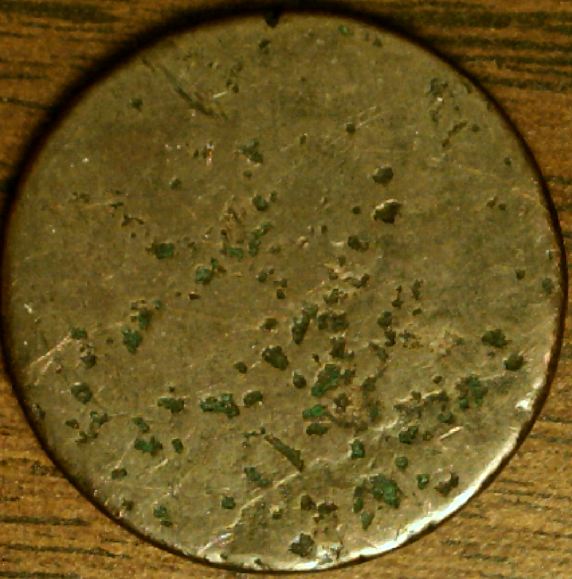 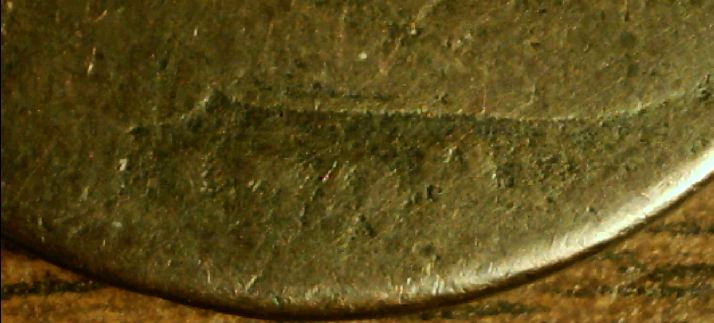 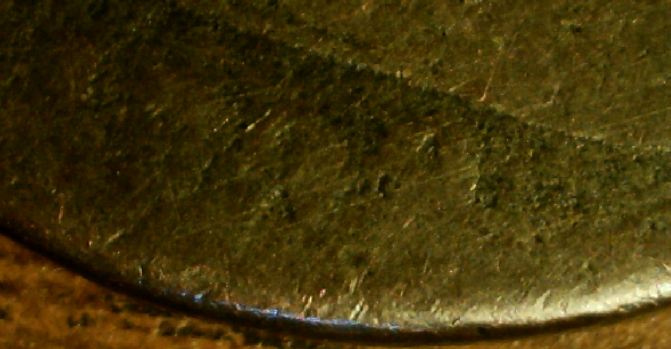 |
|
|
|
Moderator
 United States
16697 Posts |
I'm not going to say it's a 1799 for sure but, I would say it has a very good chance on it being a 1799. It has a severely pitted reverse with verdigris. If this was my coin, I would send it to ANACS. The last numeral looks correct for a 9. My advice, send it in first, then an ebay price will be determined. swcoin.ecrater.com
Edited by vermontensium
03/31/2012 04:20 am
|
|
Bedrock of the Community
United States
17884 Posts |
I'm curious if you rotated the coin any when you flipped it over to show the rev. I'm trying to determine if the reverse is correctly oriented straight up and down or if it has been rotated slightly clockwise. I strongly suspect but at the moment can't prove that it is a 1798 S-186.
|
|
Pillar of the Community
 United States
3552 Posts |
I did review the initial reverse photo already posted and determined that indeed it was incorrectly over-rotated clockwise a few degrees. As opposed to taking another photo I simply rotated this photo digitally counterclockwise and inserted a black horizontal two headed arrow line to serve as the baseline. This black line has a tangential blue/white arrow pointing out the area of the coin that is in contact with the horizontal baseline. Are you suggesting that this coin now displays the faint characteristics of a die crack extending from the 90 degrees point to the 180 degrees point? If this is the case, would it still be worth the money to have it graded? Thanks, mdpmedia 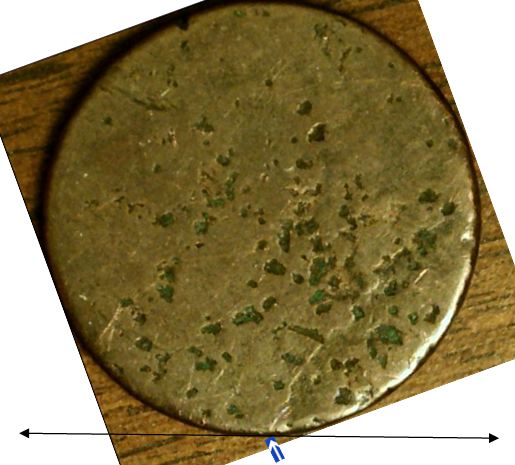 |
|
Pillar of the Community
United States
3552 Posts |
As a another follow-up question did any of the 1799 large cents have any die cracks positioned similar to what is 'possibly' being shown in this photo? Because of the degree of damage on the reverse of this coin I would have never thought of even trying to differentiate a die crack within this kaleidoscope of mess.  |
|
Bedrock of the Community
United States
17884 Posts |
OK that is what I needed to see. 1798 S-186 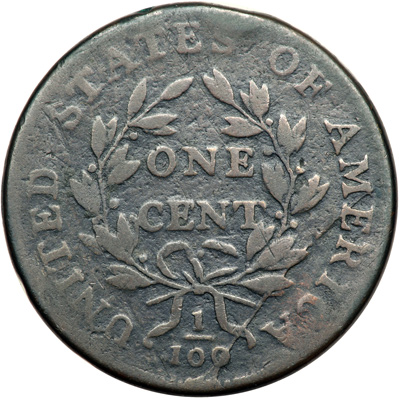 Believe it or not this IS the same reverse as that used on 1799/8 S-188. But it was used on the 1799 first before the reverse die cracked. Oddly no 1799 is known with the crack, but no S-186 is known without it. And no it is not worth getting graded. Edited by Conder101
04/03/2012 7:01 pm
|
|
Moderator
United States
16697 Posts |
Awesome  swcoin.ecrater.com
|
|
Pillar of the Community
United States
3552 Posts |
I am relatively new to this area of die cracks and errors: an extremely interesting subtopic of general coin collecting... Where can someone new like me find an overall summary (with verbiage and applicable illustrative photos) of the type of drilling down details (S-186, 188 etc.) used in this case, for example, to apply to all other US coins? I also would like to know this answer for foreign (non-US) coins. This topic has been a fantastic learning experience for me. These types of discovery processes are somewhat parallel in theory to looking for buried treasure but without encountering any dirt. The real similarity between the two is found in the mounting suspense that one feels while waiting to finally discover what has actually been identified. As always I appreciate the input from everyone in deciphering this coin's identity. mdpmedia |
|
Rest in Peace
1988 Posts |
mdpmedia..Maybe 1788 or 1789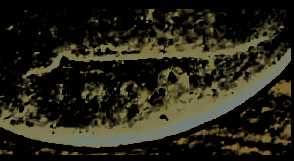
|
|
Bedrock of the Community
United States
12437 Posts |
wert, those dates are impossible since the US Mint did not strike its first coins until 1793 and the Draped Bust design was not used until 1796. Conder correctly identified the date of 1798 based upon the Sheldon diagnostics. Quote:Where can someone new like me find an overall summary (with verbiage and applicable illustrative photos) of the type of drilling down details (S-186, 188 etc.) used in this case, for example, to apply to all other US coins? The Sheldon nomenclature only applies to early date Large Cents, other denominations will have their own reference book. http://www.wizardcoinsupply.com/pro...-whimsy.html
|
| |
Replies: 9 / Views: 3,656 |
|








 Posted 03/31/2012 1:32 pm


