| Author |
 Replies: 436 / Views: 33,666 Replies: 436 / Views: 33,666 |
|
|
|
Pillar of the Community
United States
4253 Posts |
The Emperor Gaius Aurelius Valerius Diocletianus (A.D. 284-305) put an end to the disastrous phase of Roman history known as the "Military Anarchy" or the "Imperial Crisis" (235-284). He established an obvious military despotism and was responsible for laying the groundwork for the second phase of the Roman Empire, which is known variously as the "Dominate," the "Tetrarchy," the "Later Roman Empire," or the "Byzantine Empire." His reforms ensured the continuity of the Roman Empire in the east for more than a thousand years. Diocletian sought his fortune in the army. He showed himself to be a shrewd, able, and ambitious individual. He is first attested as "Duke of Moesia" (an area on the banks of the lower Danube River), with responsibility for border defense. He was a prudent and methodical officer, a seeker of victory rather than glory. 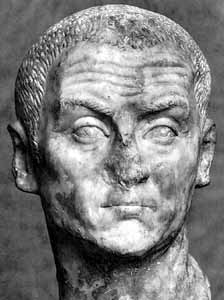 |
|
Pillar of the Community
 3352 Posts |
jwharper & ValiantKnight => I really appreciate your daily inputs (they're absolutely awesome) ... thanks "everybody"
Today's simple rookie-stevex6 questions:
1) so yesterday, echizento told me/us that the "XXI" means 20 parts copper and 1 part silver ... but what does the fourth letter/sign represent? (yesterday's Maximian coin had "XXI E" ... and today's coin has "XXI r")
2) the "eagle" is another regularly appearing guest-star on these Roman coins ... does the eagle have any "ancient meaning" or is it merely an obviously cool bird?
|
|
Pillar of the Community
United States
1549 Posts |
In this case it means the third workshop at that mint produced the coin. Later it became more regular to indicate the mint city name but in the 3rd century we see many that only show the shop. I do have a page: http://www.forumancientcoins.com/do...fficina.htmlIt is important to recognize that the rules were not always the same from one mint to another or from one time period to another at the same mint. Don't say this is strange until you explain why the US went so long not marking the P mintmark on coins but later decided they should or why denominations are marked Five Cents, One Dime and Quarter Dollar. Consistency is not a big thing at mints then or now. Edited by dougsmit
04/04/2012 10:08 am
|
|
Pillar of the Community
United States
1549 Posts |
Eagles appear on Roman coins for the same reason they do on US coins. National Bird. Zeus and his Roman counterpart Jupiter had an eagle as his bird (Minerva - owl, Juno - peacock) so the eagle would also remind people of the biggest god. BTW: That is a very nice Diocletian coin of a reverse that you don't see every day. Be glad to have it! |
|
Pillar of the Community
3352 Posts |
dougsmit => absolutely fascinating ... thanks for the link to your page .... wow, apparently I asked the correct guy the correct question! => outstanding work! Oh and yes => I love this coin of mine (the guy that I bought it from mentioned that the reverse was "rare", but at the time I merely figured that he was trying to make his coin sound even better than it was, so I was thrilled when you also verified that the reverse is quite rare!)  ... and super-cool comments regarding their personal birds ... hey, but were birds the only "mascots" that were used, or were there other mascots/symbols used (example => mammals, snakes, etc?) ... or maybe I should stop getting excited and stop asking too many questions? (it's only day "4" outta "30"!) => thanks again |
|
Pillar of the Community
United States
4253 Posts |
|
|
Pillar of the Community
3352 Posts |
wow, this is absolutely amazing ... => apparently, all I have do is randomly ask for something and then the next thing I know one of you dudes has the answer right at your finger-tips! ... man, it's kinda like finding the Genie in the lamp! hmmmmm, what should I ask for next? (geeesh, I hope I haven't already used-up all of my wishes!?)  |
|
Valued Member
United States
422 Posts |
My Roman and Greek knowledge is limited Steve, but I like Biblical's. Got any?
|
|
Pillar of the Community
3352 Posts |
Ummm, well I guess answering you with "Gee, I'm not too sure?" makes me look even less knowledgeable than I currently look, eh?  but here goes => "Gee, I'm not too sure?"I guess I'll have to go do some research on Biblicals ... |
|
Pillar of the Community
3352 Posts |
oxos => brutal ... at times I actually make myself laugh out loud because I have so little knowledge regarding ancient coins ... so please do not reach through the computer screen and ring-my-neck for my following statements ...
Biblical coins, by stevx6: ... ummm? ...
For whatever reason, I don't have any coins called "Judaea Capta" coins ... from what I have tried to piece-together, this must be in and around 70 AD + 25 years or so, correct? (during Vespasian's and his two son's era ... Titus and Domitian)
Also, I don't have any Byzantine coins ... again, I really have no idea what I'm sayying, so hopefully somebody will step-up and save my arse? ... it seems like the Byzantine era started around 498 AD? ... if so, then no, I do not have any of these coins ...
"There" => I have randomly tried to research Biblical coins, but have only come-up with "Judaea & Byzantine" coins, whcih are certainly "not" from the same time periods .... so maybe you or somebody could give me a better description of "Biblical" coins?
thanks
=> wow, this is interesting and fun for me and probably awkward and irritating for all of you that already know the answers ... like watching a baby-deer take his first few steps!
|
|
Pillar of the Community
United States
4253 Posts |
Quote:
like watching a baby-deer take his first few steps More like a raccoon discovering beer for the first time. I do believe biblical coins would refer to coins of the Empire when it had influence over Judea and coins of Judea. The last Jewish revolt was crushed by the Romans around 135 AD. So I would presume biblical coins would mean coins from this era of Roman and Jewish history. |
|
Valued Member
United States
422 Posts |
Well I'm no expert on biblical's trust me, as I got into the field only a few months ago. But like lot's of things I do I do to the extreme. So I have been researching, reading many books on the subject to get a good idea about them. Also collecting Roman's has helped as they were for the most part overlapping with Judean coins minted by the governer's of the Jewish people, such as Herodian Dynasty which started around 43 BCE, with Antipater, followed by Herod the great and continued until the time of Agrippa II around 96 CE. But in between all those there were many Roman governors including Coponius, Marcus Ambibulus, Valerius Gratus and of course everyone knows Pontius Pilate. Also, throw in the mix the Caesars in the first century Augustus, Tiberius, Caligula, Claudius and Nero, all mentioned in the Bible in one way or the other. So yes, you have at least a couple of 'biblical's' because of your Nero and Claudius I remember in earlier posts.
Finally (but not conclusively) you have your Jewish wars with the Roman's, especially Vespesian and Titus who destroyed the Jewish temple and flattened Jerusalem. Followed by a couple more revolts ending with the Bar Kokhba Revolt in 135 CE, that so angered the Romans under Hadrian, that they made Judea desolate and changed the name to Palestina to disassociate the Jews from their land.
So, I bet you have a least a couple 'biblical's' in your collection Steve and didn't know it.
|
|
Pillar of the Community
3352 Posts |
Quote:
More like a raccoon discovering beer for the first time. ... good one  oxos => thanks for your clarification (ummm, I think I'll give myself 3-outta-10 for part marks) |
|
Pillar of the Community
3352 Posts |
DAY #5 => COIN#26PROBUSANTONINIANUS 276-282 AD Obverse: IMP C PROBVS P F AVG. Radiate, cuirassed bust right CONCORD MILIT. Reverse: Concordia standing left, holding two ensigns, AXXI in exergue NOTE => I have attached two photos of the obverse and of the reverse ... "before" being released from the plastic-prison and "after" I broke it out of its holder (I apologize for my grainy photography ... the coin looks far better in-hand) 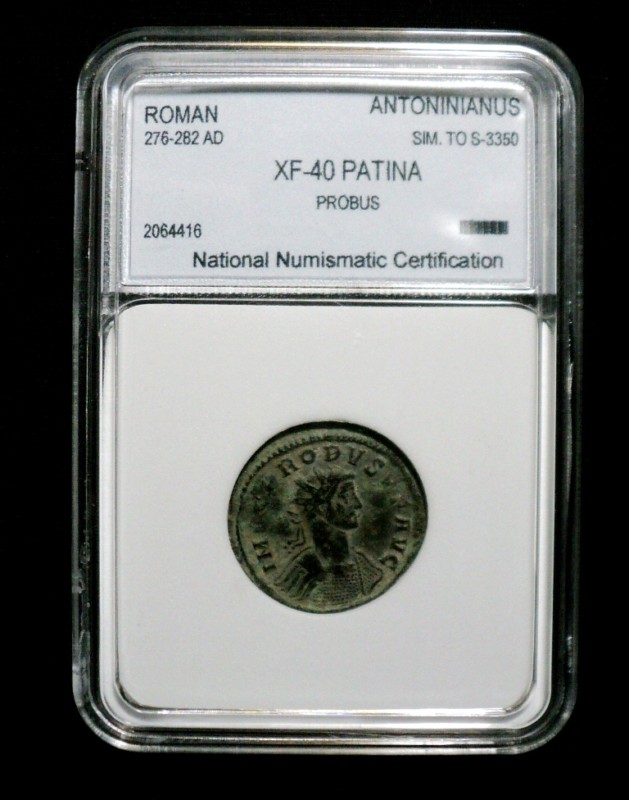 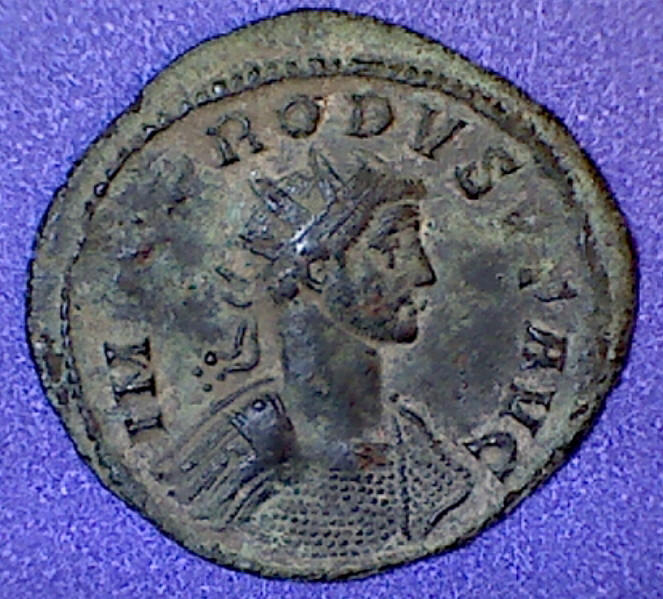 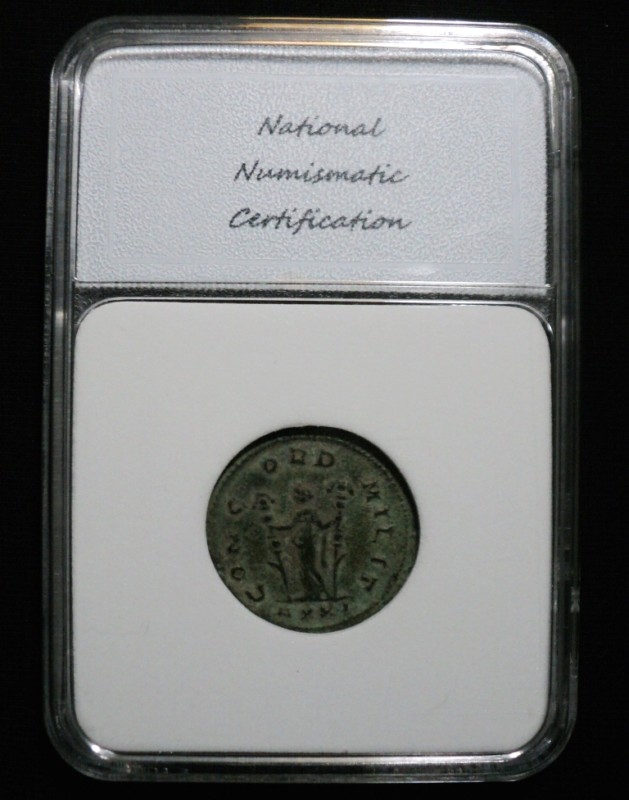 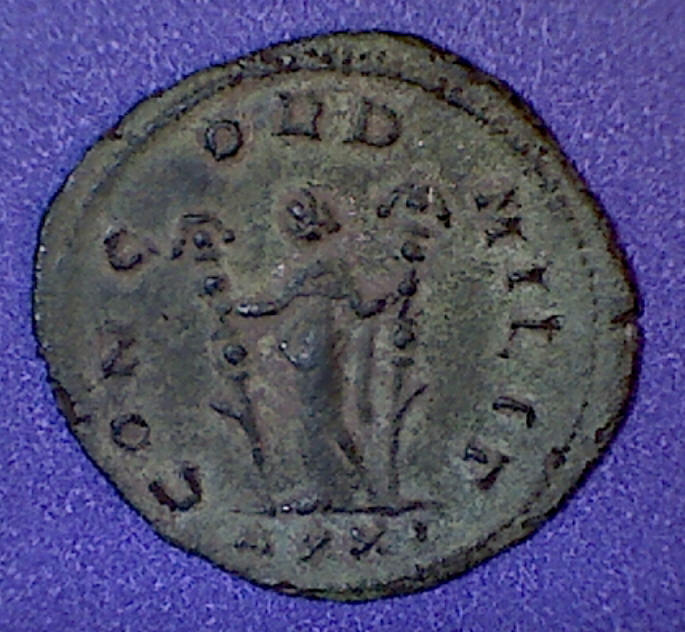 => as always, please comment on my coin and/or comment on Probus and what was happening during this time-period ... thanks guys! => as always, please comment on my coin and/or comment on Probus and what was happening during this time-period ... thanks guys!
|
|
Pillar of the Community
United States
4253 Posts |
 M. Aurelius Probus was most likely born in Sirmium in 232 A.D. It is difficult to reconstruct Probus' career before he became emperor because of the unreliable nature of the account in the Historia Augusta, but it is certainly possible that he was a tribune under Valerian. All that can be said with any reliability is that he served in the military and was on Aurelian's staff during his Eastern campaigns. There is a certain amount of confusion in the sources about him because of the fact that he has often been confused with a certain Tenagino Probus, who served as prefect in Egypt under Claudius II Gothicus. After the murder of Aurelian, the Senate chose Tacitus, who took up the burdens of state and headed with the army to the East. The Eruli had overrun Pontus, Galatia, Cappadocia and finally Cilicia, where Tacitus, with help from his half-brother Florianus, defeated them. Tacitus, however, either died of an illness or was killed by his own troops; he was succeeded by Florianus. In the meantime, Probus, who had been declared Emperor by his own troops in mid-276, prepared to meet Florianus, who was marching from the Bosporus, having broken off his victorious engagement against the Eruli. Florianus was acknowledged in Rome and was supported by Gaul, Spain, Britain, and Italy; Probus was supported by Syria, Phoenicia, Palestine and Egypt. The two fought a desultory campaign near Tarsus. With a much smaller force, Probus decided his best strategy would be to avoid a pitched battle and let the heat overcome the troops of Florianus. The latter, having reigned barely two months, was murdered by his own troops. Probus became sole Emperor, possibly by August 276. |
| |
Replies: 436 / Views: 33,666 |








 First Page
 Previous Page


 Posted 04/04/2012 09:25 am


