| Author |
 Replies: 54 / Views: 17,616 Replies: 54 / Views: 17,616 |
|
|
|
Pillar of the Community
United States
5362 Posts |
wonghinghi Henry - the coins have arrived. In person, I can see exactly what you mean about these coins appearing to be counterfeit. Based on just a very preliminary review, I quickly came to the conclusion that you and the others you consulted were right about the two Peruvians. That of course makes me wrong in the belief that they were real. It is far easier to spot a counterfeit (especially an early one) in a photograph than it is to confirm absolutely that a coin is GENUINE just from pictures. This is the problem when dealing only with pictures - and that problem is why counterfeits can be quite successful on ebay. Over the 13 years, while I have been bidding on ebay, I have likely missed many "Modern" forgeries identical to these because not all of them present clues in pictures alone. But when you look at surfaces under a binocular microscope a whole new world of very fine detail appears. That is what happens here. I continued my analysis with a high powered binocular microscope, and the forgery becomes clearly apparent. All three coins display clear characteristics of having been created from a transfer image of some sort. The 1791 8 Reales is an early transfer copy with an absolutely horrendous edge design application. That is essentially what I believed from the photographs. The two Peruvian coins themselves, appear to be struck from a very fine grained transfer medium. The more worn of the 2 Peruvians is less conclusive because it has been chemically and abrasively cleaned. But both show rather similar problems. There are raised nearly round features on the dies that are copies of damage on the host coins that were copied. Damage that occurs to a coin after it is struck causes lines that run across (over or through) striations that were caused by die wear and metal flow. When the die wear (on a microscopic level) travels through "apparent post strike damage" you have an impossible situation for a REAL coin. I observe that precise situation on all three coins. Individually there are other solid clues for forgery that may be able to be photographed. I will charge my camera battery and see if I can capture in a picture what I am seeing. Regarding the two Peruvians, Henry I was wondering if they would be for sale as well? They do indicate a level of modern forgery technique that is EXCELLENT and potentially very dangerous. As you can see, from following this thread - I would have been fooled by pictures alone.
|
|
Valued Member
United States
80 Posts |
Mathieu and Swamperbob.
Thanks for the clarification. I now see what you are talking about. The earlier lima mintmarks were different and thanks to the two photos I can see that indeed they were from different dies. Many thanks, So much to learn!!
Mike
|
|
Pillar of the Community
Hong Kong
1270 Posts |
I think Riddell book is right (at least) for the Peruvian 8R 1828 (quoted by realeswatcher and swarmperbob respectively in the last post). I show my collection of the 1828 as follows: it is 41mm, 25.33 gram, bought from ebay (Aspencoins)about 2-4 years ago at US36.55. By ring test (hitting sound heard), it seems to be a low silver coin so I don't feel odd if its silver content is as low as 510. (Correct me if I mis-understand what is called the ring test) 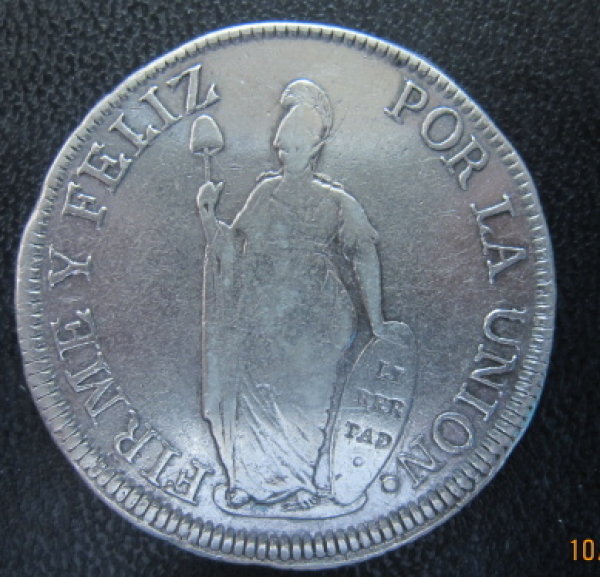 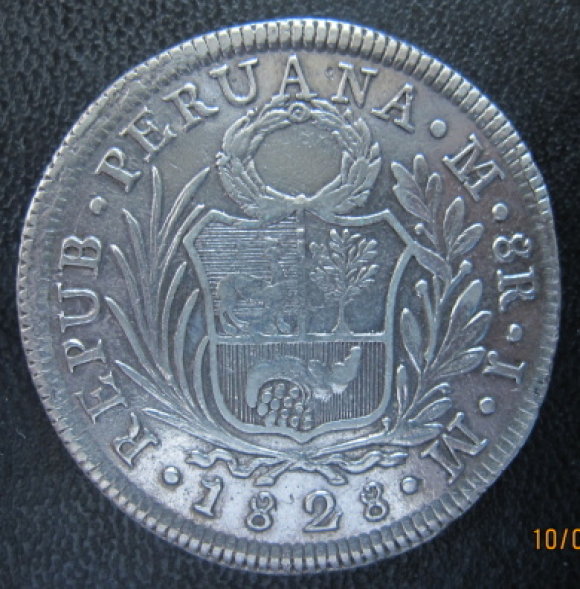  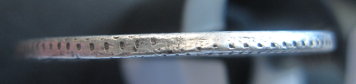 Who can also tell me the name of the Riddell book, I want to have a copy! |
|
Pillar of the Community
Hong Kong
1270 Posts |
Hello MathieuMa, I have also a 1837 North-Peru 8R but not certified. I supposed it is a counterfeit but later found it is not because the strike is not as crude as other Peruvian coins. Anyone can judge this piece is fake or not. I show it to you for comparison. Also bought in ebay but the price is forgotten. It is 27.49 grams, 40mm. Same hitting sound with my 1836 North-Peru 8R. The most suspected irregularity is the weight is too high. Can you tell me the weight of your piece of the same year? Henry 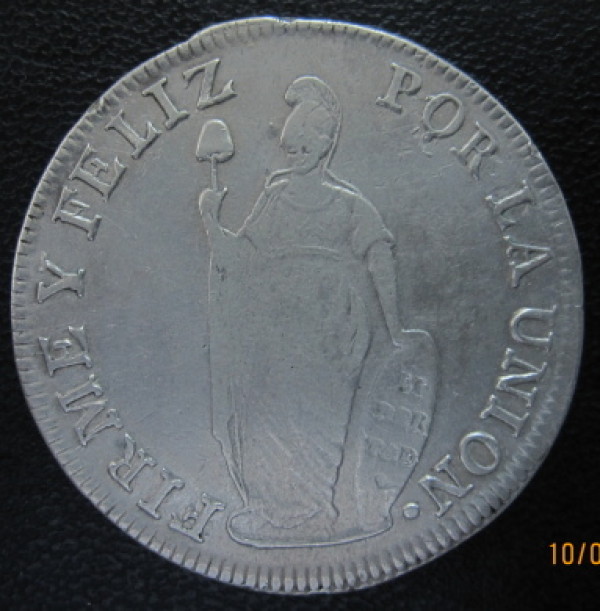 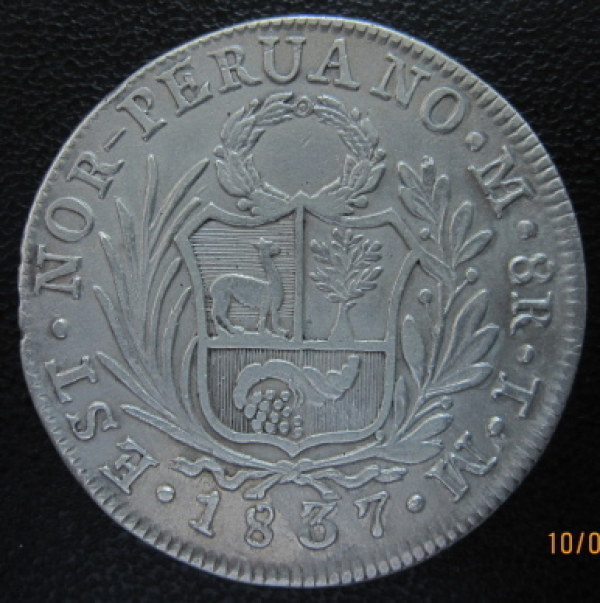 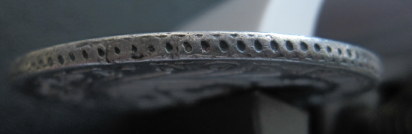 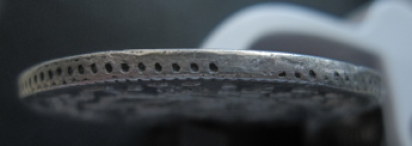 |
|
Pillar of the Community
Hong Kong
1270 Posts |
Hello swamperbob - I agree that photograph is the preliminary way to rule out counterfeit from real but can never be a way to confirm its authenticity. Examination in person is always the best way to make the final decision. According to your quote for Riddell reports ...1838 North Peru (540 fine), I can't say it is true or not because I have the same year coin and find its hitting sound (Ring test) is the same as my 1836 and 1837 North Peru 8R shown in the previous posts) but different from my 1828 (I deem it is a low silver piece) Peru 8R. My conclusion is the 1838 North-Peru 8R should be a high silver piece if it is real. Please have a look and see it is a counterfeit or real, Bob. The coin is 40mm in diameter and weighs 26.73 grams. 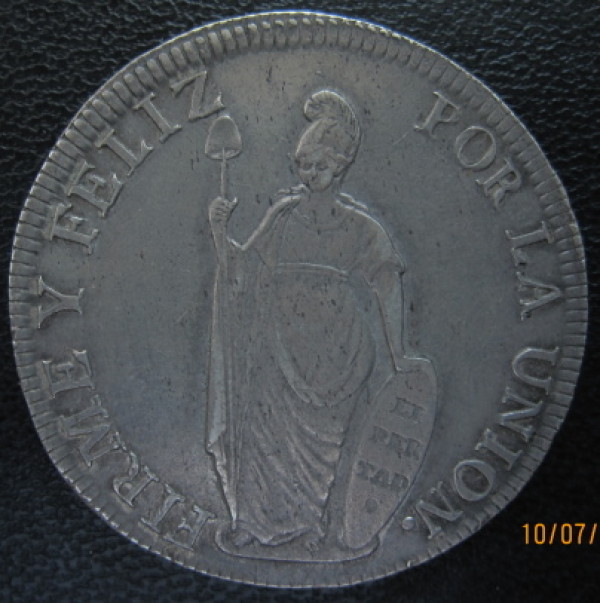  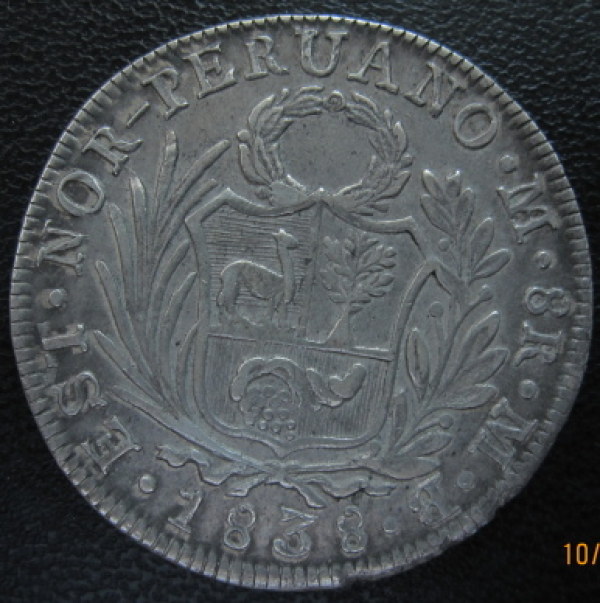 The Year "1838" was not doubly struck; just the effect of shading. 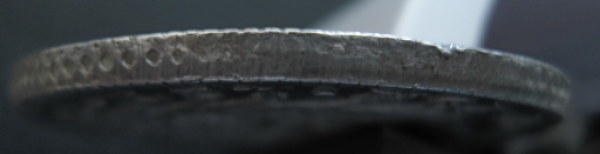 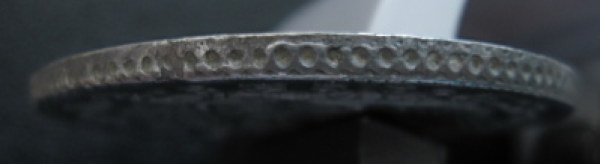 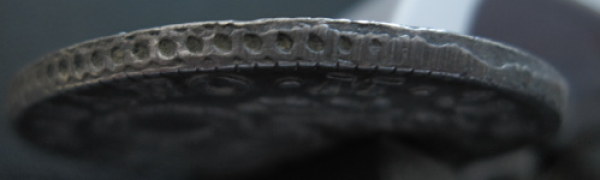 |
|
Pillar of the Community
United States
5362 Posts |
Regarding a ring test, I have several comments.
First it is best used to detect "clunker coins" they types made with lead, pewter, zinc and other non-ringing metals.
When you are dealing with two coins made of silver and copper in different proportions, I think the ring test is highly over rated. Theoretically, if you had perfect pitch you might be able to detect the difference in frequency which is effected by alloy.
However, the composition of typical 8R coins is NOT uniform. The planchets were rolled from cast ingots so entrapped air or dirt is possible. In addition, the strike might cause hairline cracks in the metal. In any even ring will be altered slightly by all of the above.
In doing research for our book I discovered that inland Chinese merchants used the ring test along with color, chopping and weight to confirm the alloy of silver 8Rs until the 1860's or so. The test was not adequate to disclose silver alloys that were 16% low in silver by weight.
Specific gravity tests are far better for verification of assay and easily reveal a 16% change in silver. A coin made with 903 fine silver has an SG of 10.31 while one using 750 fine silver is 10.03. That is an easily detected differential.
|
|
Pillar of the Community
 France
1591 Posts |
Well, the ring test give a good idea if everything is 'in order' imho - but no more than a clue if it doesn't ring properly (to me, it means more checks)
Regarding the coin I've posted, its weight is 25.95g.
|
|
Pillar of the Community
United States
648 Posts |
|
|
Pillar of the Community
Hong Kong
1270 Posts |
Hello MathieuMa, can you tell the 25.95 grams is for the first or second coin you posted.
|
|
Pillar of the Community
France
1591 Posts |
The second one, without the counterstamp on it.
For the first one, I have to get it from the safe - I'm quite busy lately.
|
|
Pillar of the Community
Hong Kong
1270 Posts |
MathieuMa, Yours Peruvian 8R 1837 is 25.95 grams while mine is 27.49 grams. I compare yours and my coins; I find a very trivial difference on the reverse side - the position of the small double-ring cicle of the wreath is different. On the whole it is hard to say the differece between the two coins in appearance. My coin was not certified so it might be a high grade counterfeit in accordance with its abnormal high weight. Peruvian 8R (at the period 1830-1840) is terrible! As they were usually crudely struck and edge design was too simple; both made it easier to make counterfeit. I show another counterfeit of a North-Peru 8R 1836, which is holed, 41mm, 27.65 grams, also bought in ebay about 3 years ago. Besides the letters are thicker and the coin is too heavy, I think this is a high grade counterfeit. Anyway I can't be sure it is a modern or contemporary counterfeit. Who have the experience to tell? 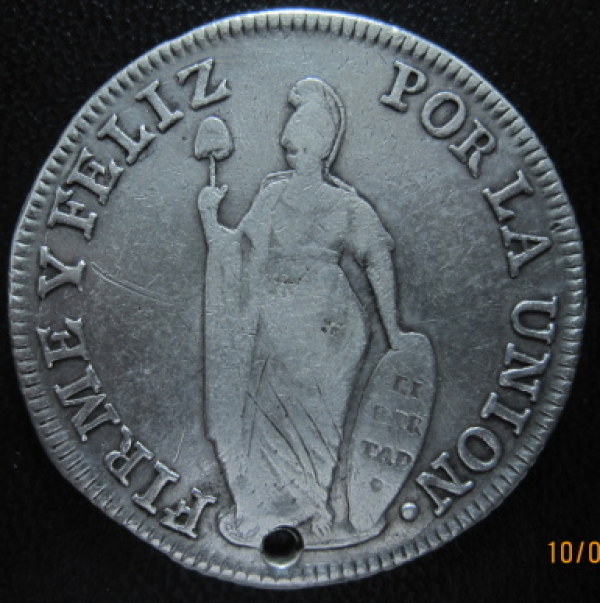 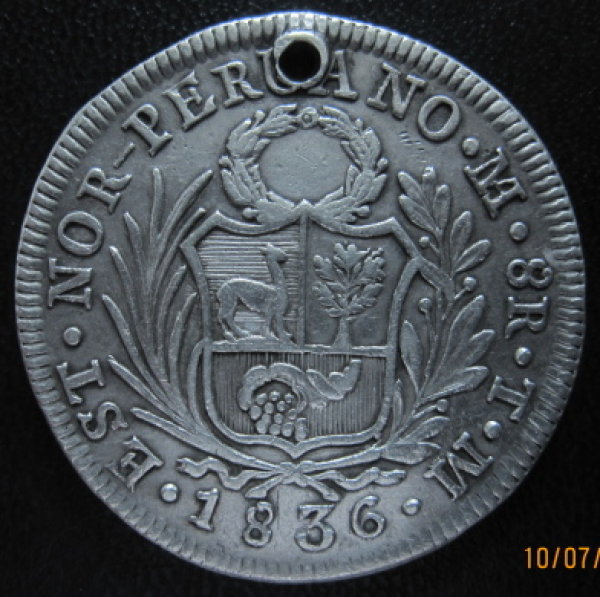 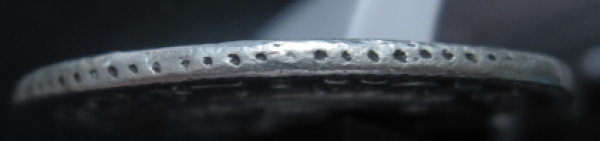 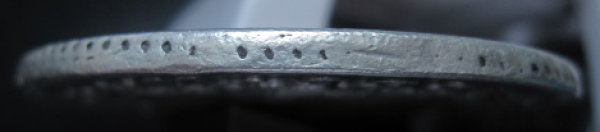 One more, a low grade North Peruvian 8R 1837 counterfeit as follows: a non-silver alloy, ugly letters, also bought in ebay. 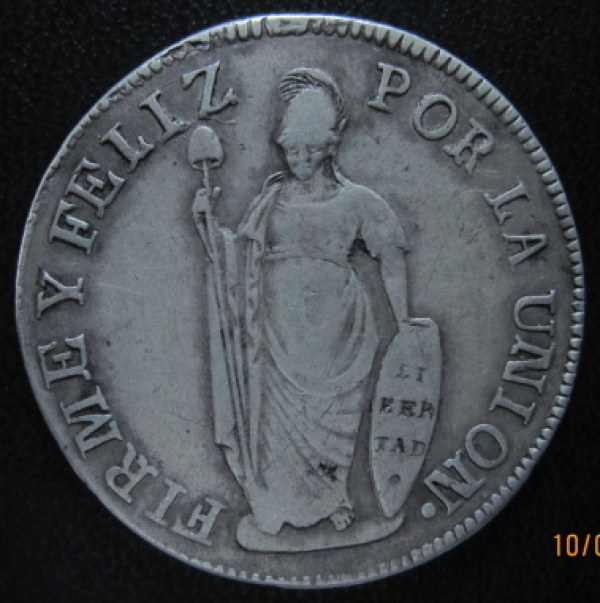 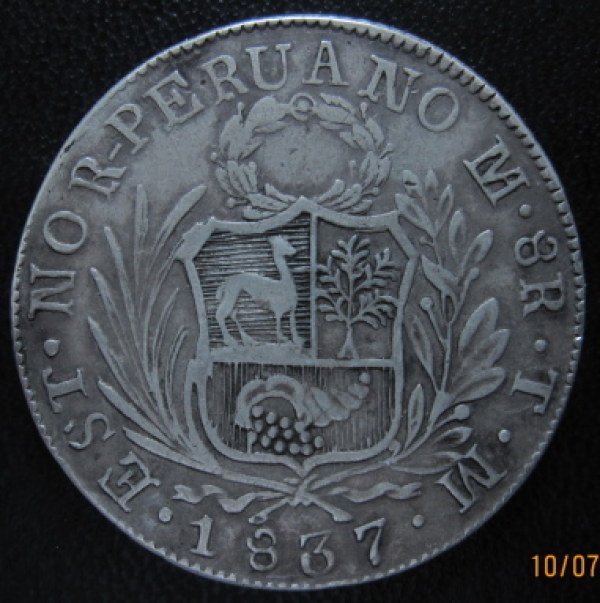 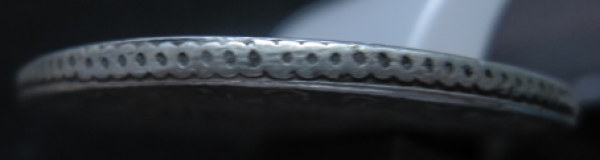 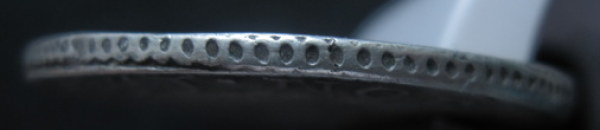
|
|
Pillar of the Community
United States
5362 Posts |
The first coin - the one drilled seems to have some of the same characteristics as the two 1832 coins - I believe it is a Modern (or relatively modern copy).
But the second coin is in my opinion a Class 1 style and if it is an off metal it should be documented as such. The off metal strikes from Peru are very scarce. Definitely a coin I would bid high for.
|
|
Pillar of the Community
United States
5362 Posts |
I just realised that "off metal" is a term that may need a bit of explanation to non-counterfeit collectors. Off metal is not the same as Debased.
Silver coins were usually a mix of copper and silver, so a debased coin adds copper and reduces silver content. You can have a debased coin that is 99% copper and 1% silver. Under 20% silver is usually referred to a billion. A truly OFF metal coin would not have either silver or copper as a predominant component. It could be a tin coated nickel or a pewter or a zinc antimony mix. The color of the 1828 looks like either a debased alloy OR a German Silver variety.
But it would definitely be worth testing.
|
|
Pillar of the Community
United States
1962 Posts |
That 1837 is a very interesting piece... I definitely think that's a contemporary counterfeit, and like Bob said, you don't ever see goofy/crude old fakes like this (of the Peru LIBERTAD issues).
Do you remember where in the world it came from?
|
|
Pillar of the Community
Hong Kong
1270 Posts |
Quote:
But the second coin is in my opinion a Class 1 style and if it is an off metal it should be documented as such. The off metal strikes from Peru are very scarce. Definitely a coin I would bid high for. swamperbob, which second coin, the first 1837 or the second 1837? Quote:
That 1837 is a very interesting piece... I definitely think that's a contemporary counterfeit realeswatcher, which one, the first or the second 1837 you are indicating? Dear friends, I hope you, both are not talking my second 1837. I was too careless to buy this second 1837 Peruvian 8R, this is a low grade counterfeit, wrong version, wrong letters and poor strike of the coin. No need to discuss any more on it. If anyone like my second 1837 coin, I will send him as a gift. Please comment on the other two 1837 Peruvian 8R; can you give any clue to indicate it is a counterfeit? |
| |
Replies: 54 / Views: 17,616 |








 First Page


 Posted 07/09/2012 8:49 pm


