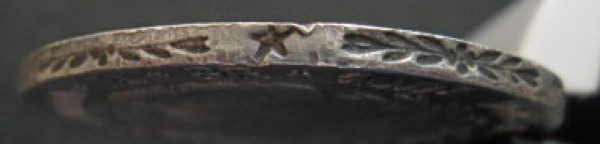
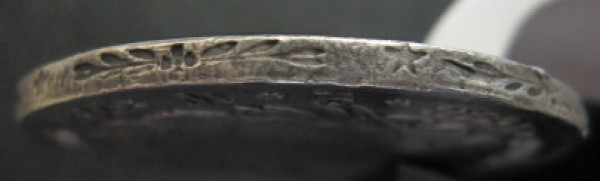
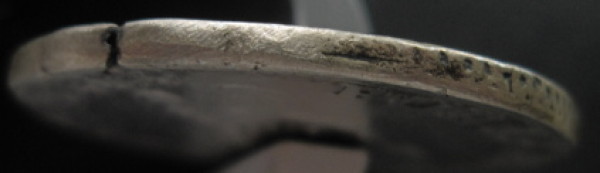
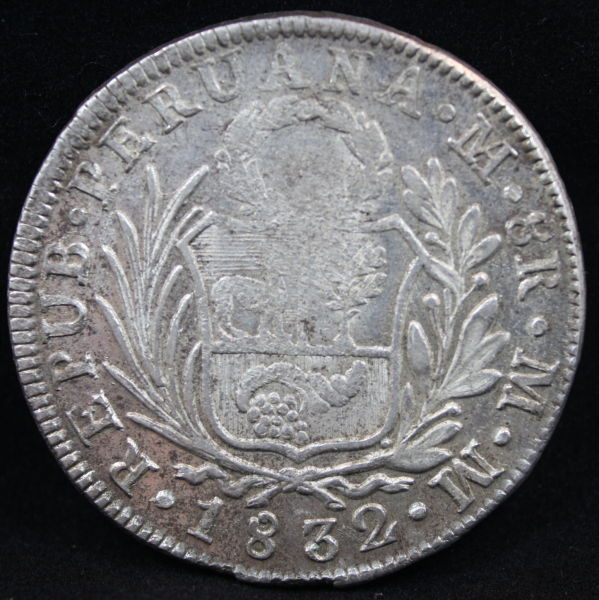
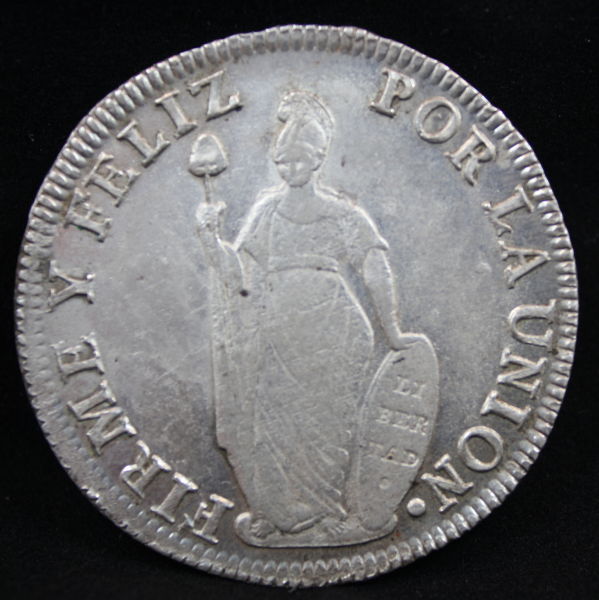
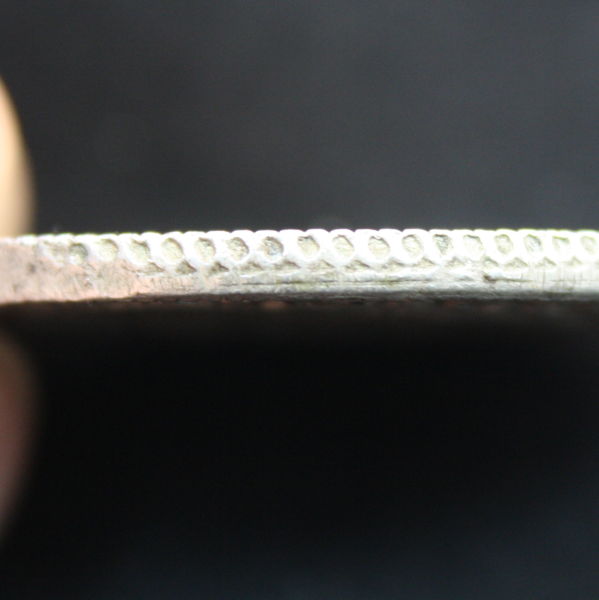
Realeswatcher Yes the two coins are the first 2 1832 coins that appear in the thread. They both have incorrect surfaces. I say incorrect because the better of the two coins actually has fairly intact surfaces that betray the fraud rather clearly. This is the one with the fins visible at the rim on the date side. This coin weighs 27.71 grams and is nearly perfect in terms of silver. Modern fake pretty decent would fool many people.
The second 1832 is actually more deceptive because I kept going back and forth because it looked good but there were serious bad signs like the weight 28.34 grams. Henry had said 27.43 but I weighed it on different scales and 28.3 and 28.34 were the results. It is only 81 % silver and is cambered. That is the extra touch that got me second guessing myself. The die maker knew his stuff on that one. But my second far longer review found a couple "perfect" errors that are signs of modern fakes. So I convinced myself. I returned the first one to Henry. The second is in my possession.
Henry In your first of the two recent letters you ask,
Quote:
Remind you, the first coin I weighed is 27.70 grams and the second is 27.43 grams. I will mail you another coin after receiving the book.
Let me guess the purpose of performing S.G. of a coin:
1) to know the mass of silver content in a coin.
2) knowing the silver content of a coin so we might use this information to determine the coin is modern forgery or contemporary counterfeit.
3) any more...
That means if a counterfeiter is willing to pay the amount of silver consumed in making a coin and he has the World Coin Catalog as a reference, he can know all the relative weight of silver of all coins. Then, does this imply he can produce all sort of forgeries by doing the S.G. of a coin correct?
First of all as I noted above I did not get the same weights as you did for the two coins. The first was 27.71 (you had 27.70 which is OK) but the second you had 27.43 and I got 28.34 and I did the weight a total of 6 times on 2 scales to make sure I was not reading it wrong. The coin is super heavy. Which is why I preferred it.
The purpose of testing for SG is to confirm the silver content of a coin. It was a test that was introduced to the Schroffs in China by outside authorities in about 1853 to stop the use of under alloy silver restrikes. As soon as they tested using SG the silver content went from 80% to 90% immediately. Up to the 1850's the schroffs relied on colr, ring and weight to confirm assay.
The second purpose of SG is to HELP determine if a coin is a modern counterfeit or not. Modern forgers are trying to fool collectors who know how to do an SG test. So they tend to use good silver. It costs more but they get more for their coins. Older fakes made when the coins still had a face value needed to be short on silver. SG can sometimes be the factor that decides how you distinguish the two.
When coins were mined to remove the silver inside SG tests would sometimes be able to pick up the change in density caused by entrapped air in a coin partly filled with lead.
SG is a handy tool that goes back to the Greeks many years BC.
The third value of SG is to establish the actual value of forgeries. If a forgery has 1/2 ounce of silver it has a melt value. So I tend to pay melt plus a small amount for silver forgeries.
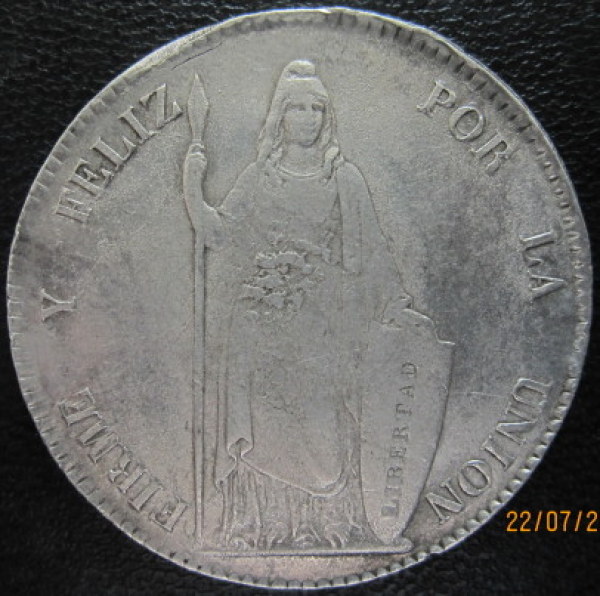
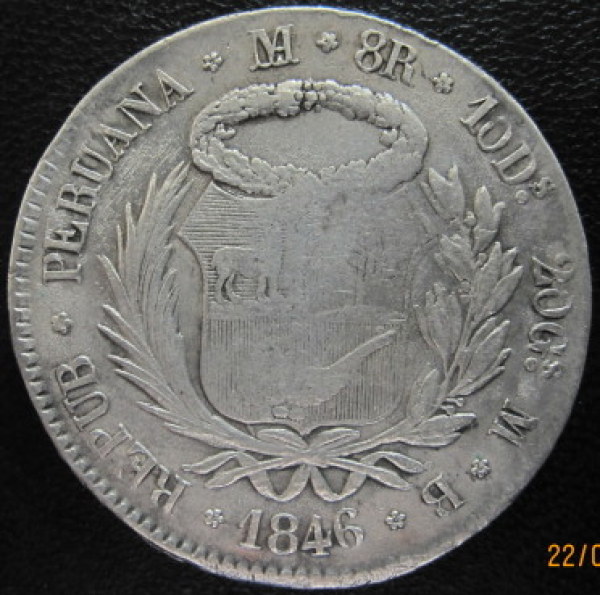
Henry - you are exactly correct about the last group - the 1846 is a modern transfer copy, has all of the classic features.
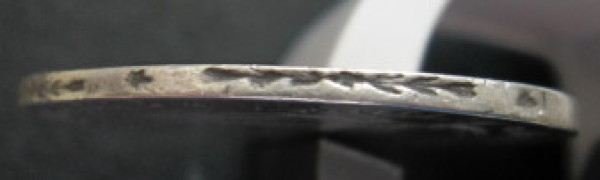
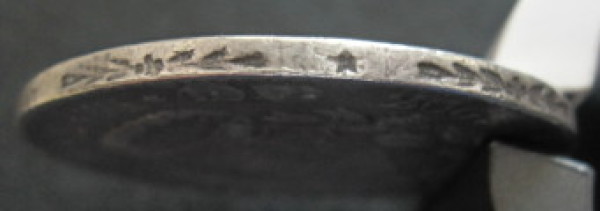
Very bad edge which does not match the faces in terms of wear. The edge is also a bit eccentric and rolled on poorly - possibly the die and coin were not at right angles.
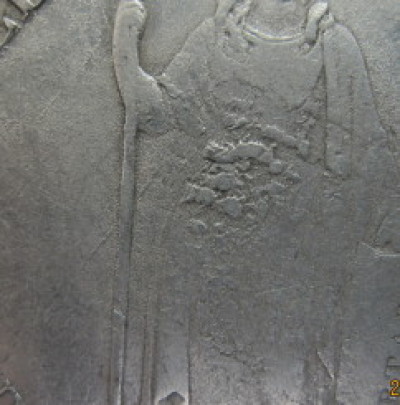
The fields display a typical wet removal feature caused when a fine grained liquid plastic medium fails to gain full plasticity before removal. The removal from the host causes that surface breakage. (Especially the type near Lady Liberty's waist).
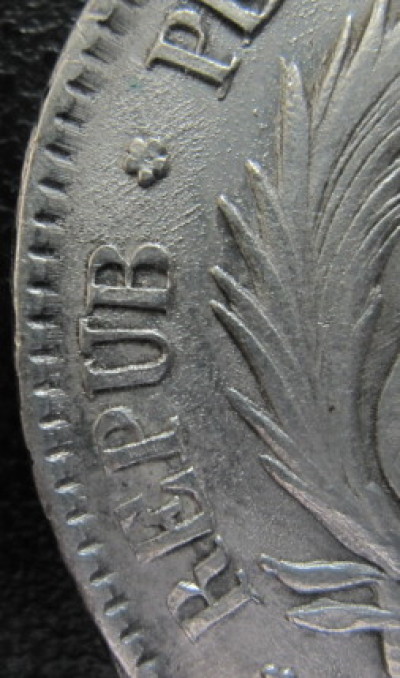
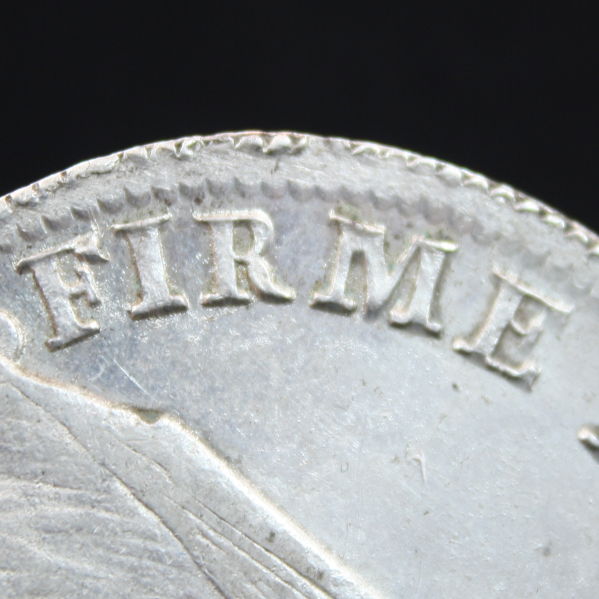
The dentils at the edge are poorly formed and of distinctly different depths and shapes - horrible job with finishing the die face perimeter.
It is clearly a MODERN forgery made by a novice in casting with plastic or made back before plastic technologies were perfected as well as they are today.
Decent counterfeit coin has nice details to explain forgery clues. Good teaching piece.
You ask if the forger can get the SG right by using a book like Krause? - Yes, that is how they do SG but they also need dimensions so they usually get a real coin to begin with. They are willing to spend $25 on metal to get $100 for a fake. Most people except for novice collectors can spot off metal fakes by using a scale and measuring the coin. But SG forces them to use silver.
However EVEN THEN XRF tests can defeat that unless the forgers actually melt original coins to get their metal. Now it gets even more costly to fake older coins. The old metal costs too much in some cases.








 First Page
 Previous Page


 Posted 07/13/2012 2:33 pm


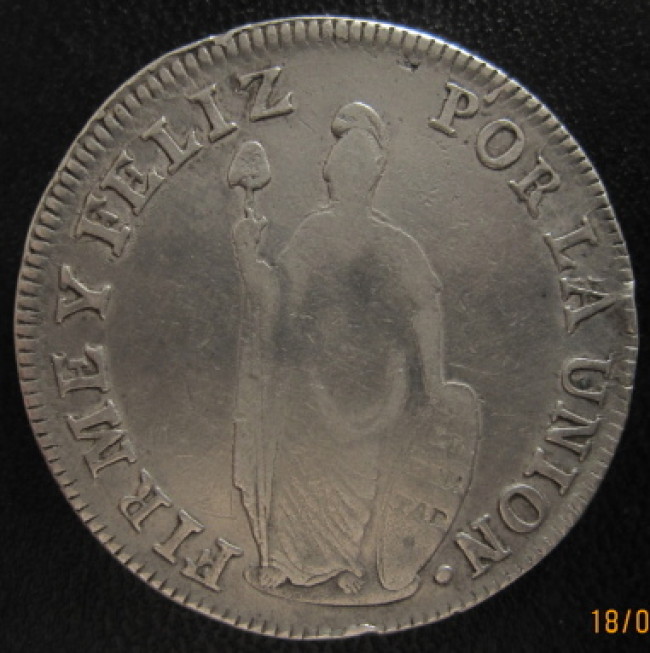
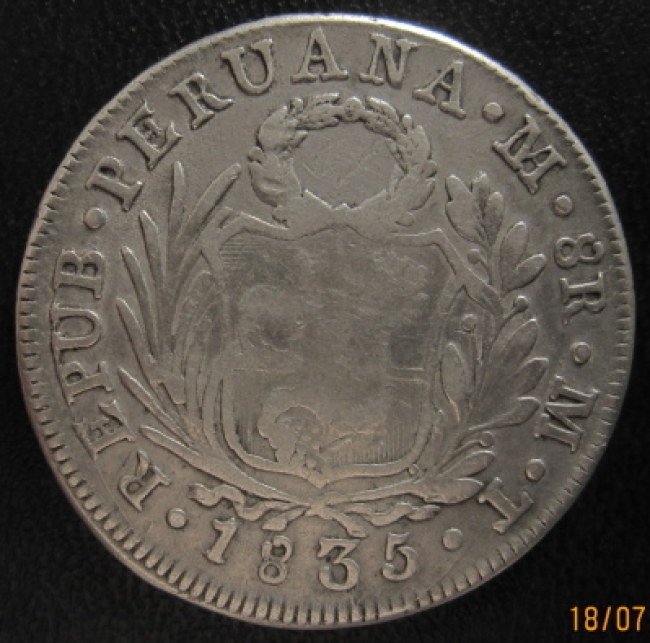
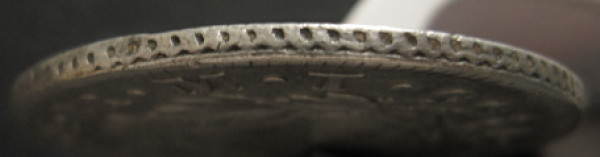
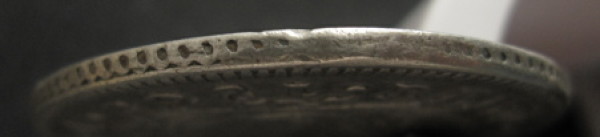
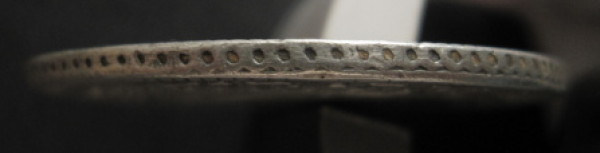
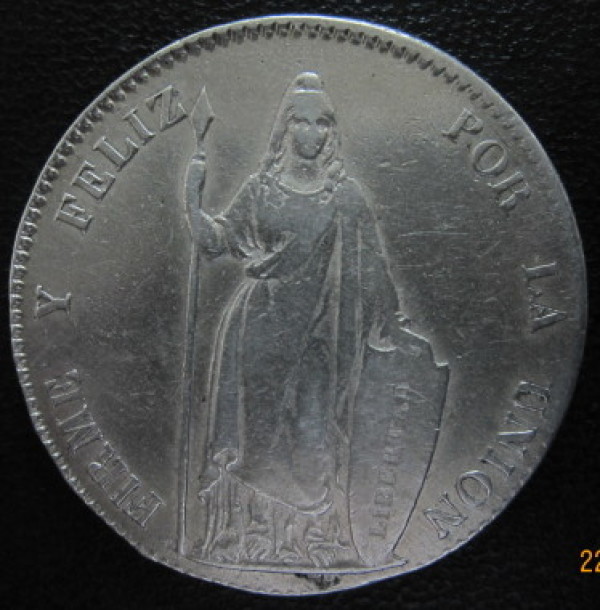
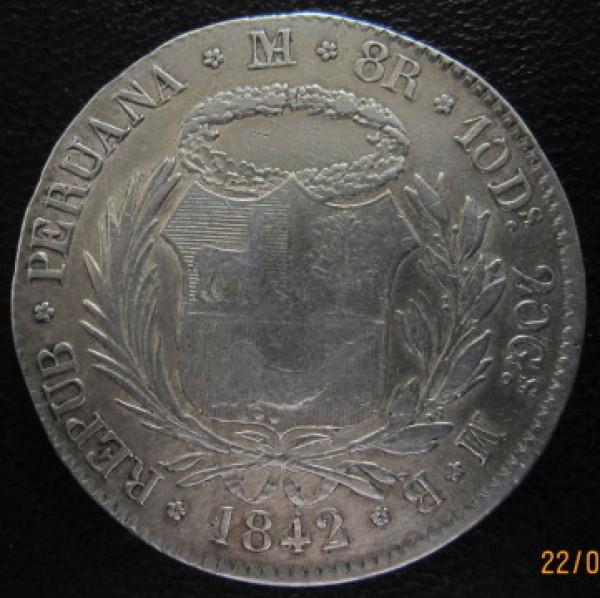
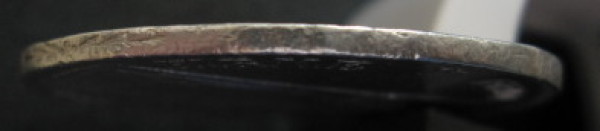
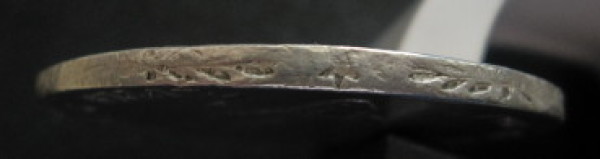
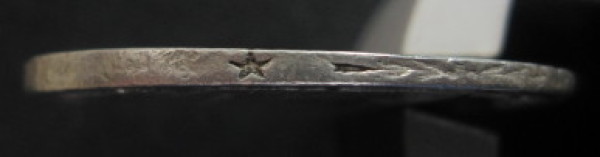
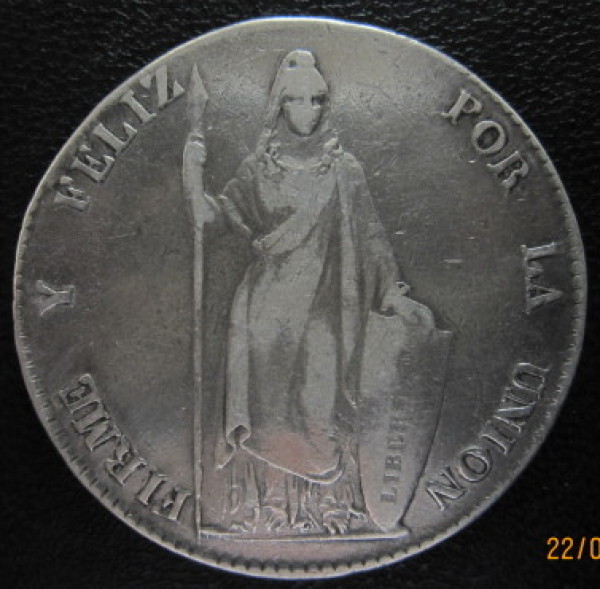
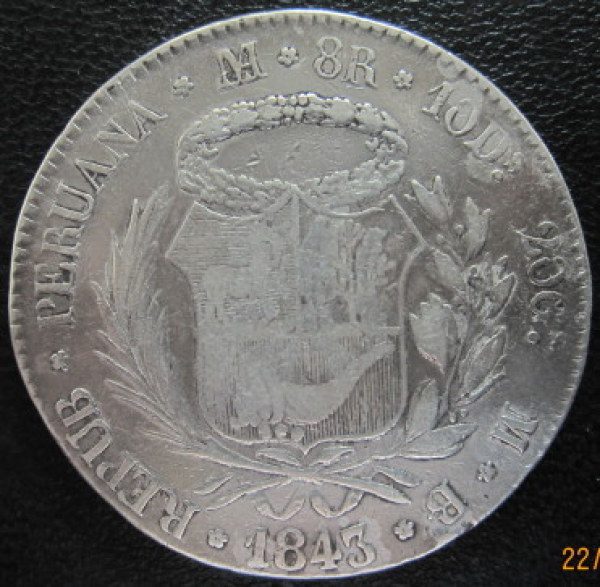
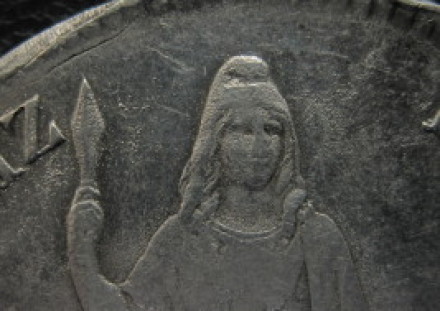
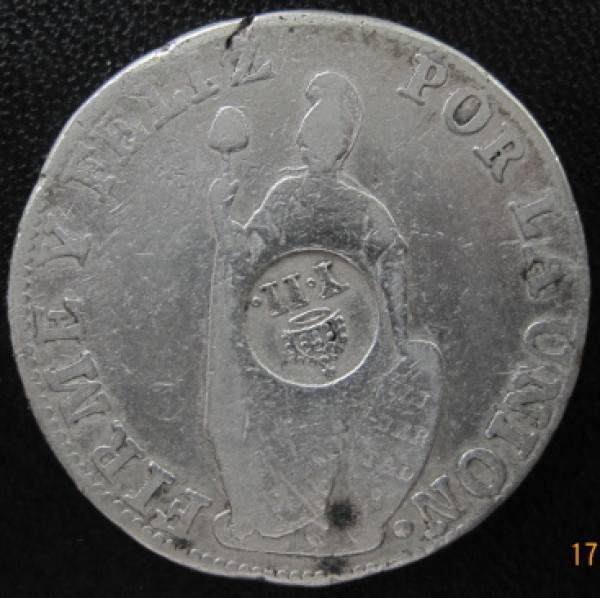
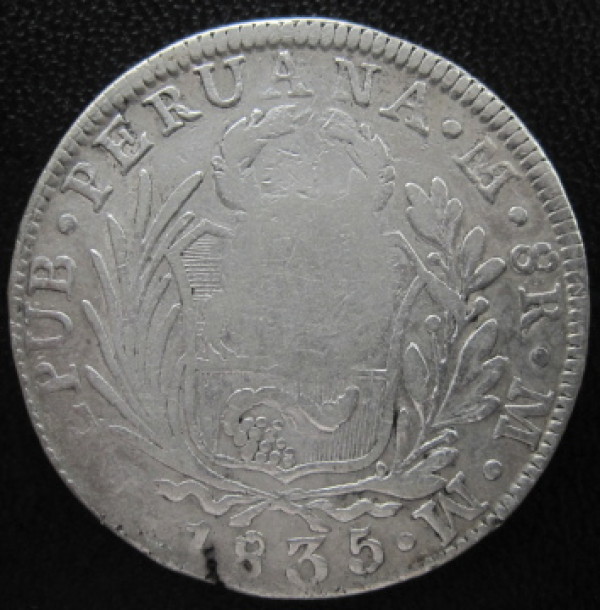
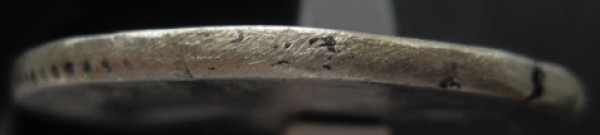
 - although weakly on the ovberse (date side) central devices. Thanks for any help! Eric


