| Author |
 Replies: 9 / Views: 2,371 Replies: 9 / Views: 2,371 |
|
|
Pillar of the Community
United States
556 Posts |
Hi, I'm fairly new to coin collecting and I've heard that cleaning coins typically reduces their value, so I was wondering if any of the more experienced members could give me any tips in identifying coins that have been cleaned. Thank you.
|
|
|
|
Pillar of the Community
United States
9810 Posts |
This is certainly true and one of the harder things to tell. A cleaned coin generally has a look of too clean, and light hairlines scratches on it. An over dipped coin (using a tarnish removal solution) will have a minuscule amount metal stripped away and this leaves the coin quite dull. The best way to tell a cleaned uncirculated coin is to rotate it slightly while viewing under a high intensity lamp or light source, a natural uncleaned coin will have a cartwheel like effect of light a cleaned coin will show breaks in the cartwheel of light. Other methods of cleaning are more obvious such as polishing which produces a too bright coin, and usually the coin will show signs of obvious wear from the polishing tool. Some cleaned coins are very misleading, and years of experience is required to tell them from uncleaned coins. There is no one way to tell, but as most of us that have been in the hobby or coin business for more than a decade or so will tell you it just doesn't look right, that comes form seeing 100's or 1000's of examples over the years.
"Buy the Book Before You Buy the Coin" - Aaron R. Feldman - "And read it" - Me 2013! ANA Life Member #3288 in good standing since 1981, ANS, Early American Coppers Member (EAC), Colonial Coin Collectors Club member (C4), Conder Token Collector Club member (CTCC), Civil War Token Society (CWTS) member, Liberty Seated Collectors Club (LSCC) & Numismatic Bibliomania Society member (NBS), USMex, Member in good standing, 2¢ variety collector. See my want page: http://goccf.com/t/140440 |
|
Pillar of the Community
United States
5854 Posts |
Westcoin has said it well. There are telltale signs but the key here is knowing what an original coin should look like and that means looking at lots of coins. You could probably head over to a local dealer or coin show and they should be able to help you. Everything that has been said will start to make sense.
|
|
Bedrock of the Community
United States
20753 Posts |
One method of learning more about cleaned coins is to use the Search tab at the top and type in cleaning coins, coin cleaning, or cleaned coins.
One of the most common methods is if the coin has a lot of wear and there is no dirt inside the letters or numbers, most likely cleaned. By that I mean inside letters like an e or o or numbers like 9 or 8. With relatively new coins, only a few years old, that becomes a problem since they usually don't accumulate dirt that fast. Many dealers will take a high graded coin, very little wear, and clean it since that makes the selling price better. Coins of very little wear are really difficult to spot claning.
|
|
Pillar of the Community
United States
1227 Posts |
Is there ever an appropriate time (and way) to clean a coin? e.g. if you dig one out of the ground, you're not expected to just leave it with the dirt and worms still attached, are you?
|
|
Bedrock of the Community
United States
20753 Posts |
Quote:
Is there ever an appropriate time (and way) to clean a coin? e.g. if you dig one out of the ground, you're not expected to just leave it with the dirt and worms still attached, are you? Dirt maybe. Worms should never be messed with. They borrow through the ground airating it so our plants can grow better. AND if you replace that coin, with the dirt and worms intack, you may well get a coin tree someday.  In reality, just remember that you can do whatever you want with whatever you own. If you never, ever plan on selling a coin, you can wash it, drill holes in it, bend it, melt it and/or even plant it for a possible, someday coin tree. IF, however, you think someday you'll sell it, give to another collector, leave it to someone that cares, if and when, best leave well enough alone. For a coin found in the dirt, a rinse with distilled water and/or Acetone should do whatever is needed. |
|
Pillar of the Community
United States
4132 Posts |
This is typical of the cleaned coins I see: 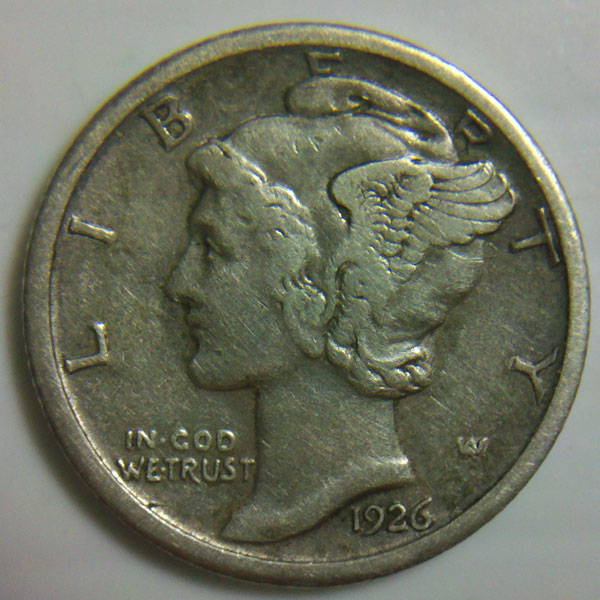 See all the bright hairlines? Somebody thought the coin was too dirty or dark and thought they'd brighten it up with a scrubbing. The high points and open areas of the fields are covered in hairlines, but the recesses show the original patina. You can tell that it's not marks from circulation because they're too uniform (circulation marks would vary randomly in size, direction, depth, etc.) Also, they're too bright for a coin that has this much post-circulation patina. |
|
Valued Member
United States
51 Posts |
Thanks for the photo @CaptainFwiffo! Can anyone post a photo or video showing this "cartwheel effect" on uncleaned coins vs. "breaks in the cartwheel of light" in cleaned coins? Photos & video show so much more information than words. Quote:
westcoin...
The best way to tell a cleaned uncirculated coin is to rotate it slightly while viewing under a high intensity lamp or light source, a natural uncleaned coin will have a cartwheel like effect of light a cleaned coin will show breaks in the cartwheel of light. Other methods of cleaning are more obvious such as polishing which produces a too bright coin, and usually the coin will show signs of obvious wear from the polishing tool. Another post asking how to identify cleaned coins... https://goccf.com/t/116270 |
|
Bedrock of the Community
United States
20037 Posts |
What I tell newbies is to clean some coins yourself. Take some common coins and experiment with household chemicals, soaps/detergents, brillo pads, etc. and take note of what happens to them.
Lincoln Cent Lover!VERDI-CARE™ INVENTOR https://verdi.care/
|
|
Pillar of the Community
United States
4778 Posts |
Quote:
Is there ever an appropriate time (and way) to clean a coin? e.g. if you dig one out of the ground, you're not expected to just leave it with the dirt and worms still attached, are you? Ancient coins are an excellent example. Most of them will come out of the ground with a layer of dirt, gunk, and crust so for the sake of at least identifying them cleaning is a must. And the value will actually rise when the end result of the cleaning is a nice and detailed ancient coin (though not always depending on their condition). Edited by VisigothKing
05/30/2012 3:00 pm
|
| |
Replies: 9 / Views: 2,371 |
|










 Posted 04/16/2012 12:20 am


