| Author |
 Replies: 57 / Views: 16,217 Replies: 57 / Views: 16,217 |
|
Valued Member
Australia
51 Posts |
The following images are of a selection of authentic & copy Melbourne Centennial florins. Can you tell which is which? I'll give you a few days to guess then I'll let you know which ones were real. 1 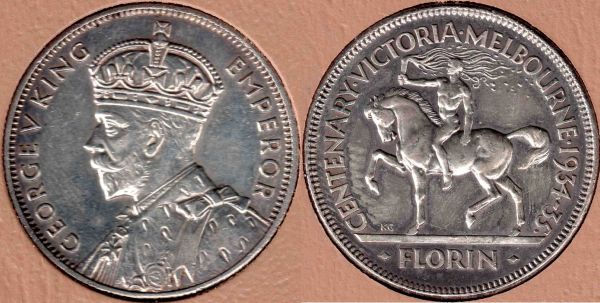 2 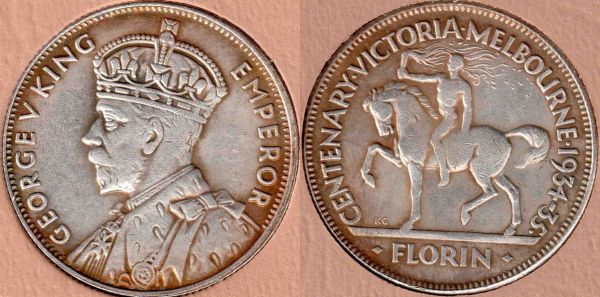 3 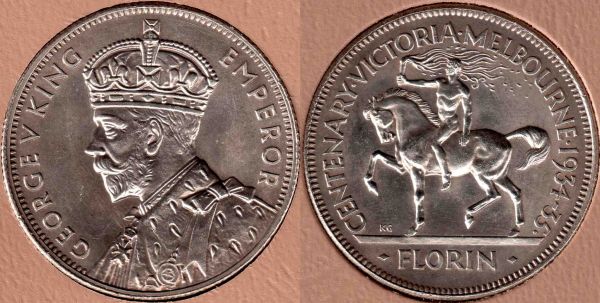 4 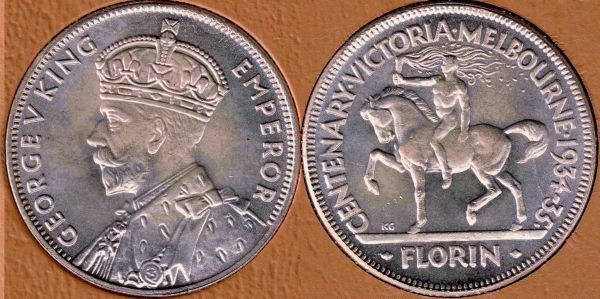 5 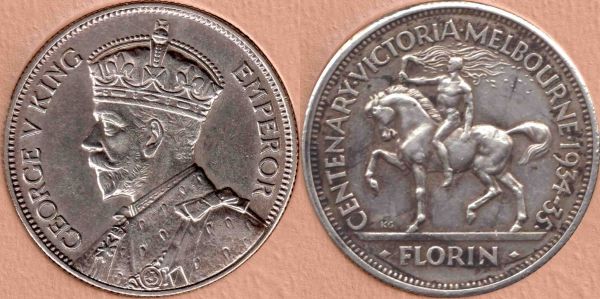 6 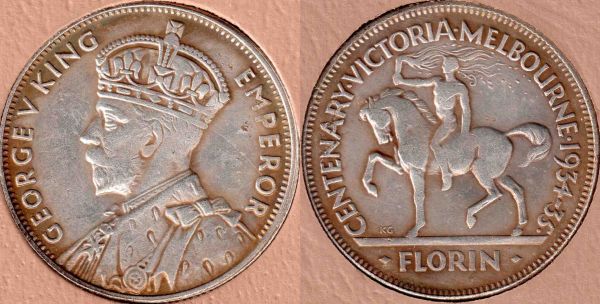 |
|
|
|
Pillar of the Community
Australia
541 Posts |
Real, fake, real, fake, real, fake
|
|
Pillar of the Community
Australia
1607 Posts |
|
|
Formerly nancyc
Australia
5385 Posts |
I'd say 2 and 6 are fakes, and I'm undecided about 4. If it's a fake, it's better than the other two.
life is a mystery to be lived not a problem to be solved
|
|
Valued Member
Australia
243 Posts |
I'm with nancyc, I reckon 2 and 6 are most likely fakes, but I am not to sure about 4.
|
|
Bedrock of the Community
Australia
21789 Posts |
 with wwwww. To make a fake, copy, forgery, counterfeit or what have you, an original is needed. It does not matter if the copy is cast or die struck, the original information has to come from an original. In the copying process, some of the original information is always lost. The same thing can be found in porcelain figurines. The generational copying philosophy is the same as hubbing for coins. An original is made, then master copies then copies off those to be sold. This is done with Royal Doulton figurines. The amount of detail inherited from the original gives an indication of how many generational copies off copies have been made. That is the case here. That is why wwwww is right. You look very carefully for lost detail. In this case, that is all you have got to form an opinion. That also explains why I always like to have an expensive coin in hand and examine it with a 10 x loupe. I don't have that opportunity here, just the pictures. I also do not have access to weigh them, do a comparison ring test, and to closely examine the reeding on the edge of each coin with a 10 x loupe. Any professional dealer worth his salt will carry out ALL of these tests, and some others as well, if deemed necessary. |
|
Pillar of the Community
Australia
1046 Posts |
The sharp nose is genuine,1,3 & 5(i think!).There are a lot of 1930+ era fake Shillings/Florins floating around on ebay,from what I can understand a guy in Hong Kong is selling them to personal shoppers only,some have copy on the back,some don't. |
|
Valued Member
 Australia
51 Posts |
So what criteria are you guys using to make your determinations?
|
|
Pillar of the Community
Australia
1607 Posts |
#4 the MELB is different, that what I noticed first anyway.
|
|
Valued Member
Australia
318 Posts |
#5 Is Different
The 'G' in KING - the G sits at the bottom bead around the crown, whereas the other coins the G sits around the 3rd or so bead up in the bead -
Does that make sense?
I don't know if that means it is a fake, or if the others are all fakes and thats real or whatever, but that positioning jumped out to me bigtime
|
|
Valued Member
Australia
157 Posts |
yep 2,4,6 are fakes  |
|
Pillar of the Community
Australia
541 Posts |
Quote:
#5 Is Different
The 'G' in KING - the G sits at the bottom bead around the crown, whereas the other coins the G sits around the 3rd or so bead up in the bead -
Does that make sense?
I don't know if that means it is a fake, or if the others are all fakes and thats real or whatever, but that positioning jumped out to me bigtime Excellent observation, that's not an M.C. obverse (probably an N.Z. florin). |
|
Bedrock of the Community
Australia
21789 Posts |
There is a distinct difference in the crown no.5, obv., shouldn't be too hard to figure out what is going on here, I will leave THAT to others......
Superimposed images produced by a USB microscope show stylistic differences up very obviously. These gadgets can be had for less than $100 and can be a powerful diagnostic tool, available to ALL collectors.
|
|
Pillar of the Community
Australia
2830 Posts |
in my opinion, and with the benefit of all that's been said already, I think No.3 is real, and all of the others are fakes.
If No.1 is genuine, it has been heavily cleaned on the reverse.
No.6 looks "worn", but the 1934~35 was NCLT, and was issued at a premium above face, so I can't imagine that many circulated, and they not for long.
Lost detail is the major test, of course, but there are limits to the pics allowed on CCF, so, in this exercise, we can only rely on lost detail in the clearest cases.
I also rely on the fact that the genuine article is sterling silver, and lustre & toning have to be silver-like. Most of these are not.
it's scary that SD was able to put so many fakes together ...
|
|
Pillar of the Community
Australia
1046 Posts |
Quote:
So what criteria are you guys using to make your determinations? To my non-qualified eye the Kings Nose is different,only slightly but it jumps off the scan to me. I have shudders buying scarce coins now,esp. off ebay.My Father told me a guy was arrested in Melbourne in the 1950's forging Gold Soverigns,he had shoebox's full of them,so whats happening in 2012 with the price of gold?.... |
|
Valued Member
Australia
216 Posts |
Hmmm..
Real = 1,3,5
Fake = 2,4,6
based on shape of the dot between IA and M on reverse, the interaction of the kings cloak to denticles and shape of the nose.
|
| |
Replies: 57 / Views: 16,217 |







 Posted 04/22/2012 01:04 am





