











 Posted 04/22/2012 7:55 pm


from the ANDA Guide to ... -
"Grading Commonwealth coins
Next to it being authentic, correct grading is a fundamentally important
aspect when purchasing a coin. This fact applies particularly so with
coins in a high grade of preservation. If scarcity is an additional factor,
then the difference in value between one grade and another can mean
many thousands of dollars.
A guide to the adjectival way of grading Australian Commonwealth Coins ..."
http://www.anda.com.au/documents/re...%20coins.pdf
the better catalogues (the American RedBook, France's Gadoury) devote a few pages to photographs of the various grades, sometimes supplemented by written descriptions.
You wrote: "Grading can be so subjective ..."
- the whole point of grading is that it is not subjective.
and "I have difficulty with coins I think are borderline between grades."
- no difficulty - always grade it down.
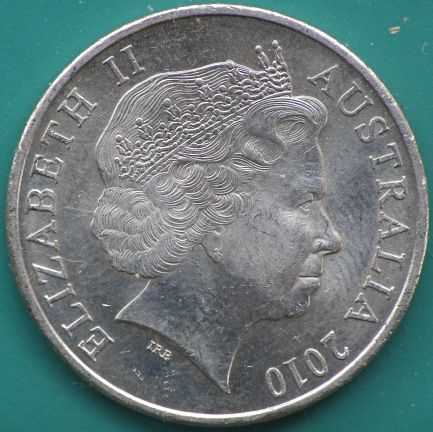
Your 2010-20-cent:
1. plenty of bagmarks on the field;
2. dings on the rim and some of the legend;
3. a big thumb mark;
4. unpleasant toning (common on CuNi);
5. almost no wear to the design elements of H.M.'s effigy
if you're selling on ebay, focus on No.5, and call it "Gem Unc."
if you're buying, focus on Nos. 1 to 4, and call it "good Fine".
The problem being the thumbprint and the toning - if you do anything about either or both, it descends to having been "cleaned".
"Grading Commonwealth coins
Next to it being authentic, correct grading is a fundamentally important
aspect when purchasing a coin. This fact applies particularly so with
coins in a high grade of preservation. If scarcity is an additional factor,
then the difference in value between one grade and another can mean
many thousands of dollars.
A guide to the adjectival way of grading Australian Commonwealth Coins ..."
http://www.anda.com.au/documents/re...%20coins.pdf
the better catalogues (the American RedBook, France's Gadoury) devote a few pages to photographs of the various grades, sometimes supplemented by written descriptions.
You wrote: "Grading can be so subjective ..."
- the whole point of grading is that it is not subjective.
and "I have difficulty with coins I think are borderline between grades."
- no difficulty - always grade it down.
Your 2010-20-cent:
1. plenty of bagmarks on the field;
2. dings on the rim and some of the legend;
3. a big thumb mark;
4. unpleasant toning (common on CuNi);
5. almost no wear to the design elements of H.M.'s effigy
if you're selling on ebay, focus on No.5, and call it "Gem Unc."
if you're buying, focus on Nos. 1 to 4, and call it "good Fine".
The problem being the thumbprint and the toning - if you do anything about either or both, it descends to having been "cleaned".


