| Author |
 Replies: 20 / Views: 4,602 Replies: 20 / Views: 4,602 |
|
Pillar of the Community
United States
570 Posts |
This is a 1943 I penny that has been broadstruck. I took it to a dealer and he offered me $20. The only ones I have seen that are offered for sale are QEII pennies. Are George VI pennies with a broadstrike scarce? What would this be worth to collectors in Australia? It still has a little red in it as well, so I'm thinking it would grade AU.   |
|
|
|
Pillar of the Community
Australia
1607 Posts |
Nice Coin,shame about the few spots of Verdigris on it though. On ebay you would get better money for it,somewhere in the $30 to $50 range, maybe a little more on a good day as it is'nt really spectacular like some broadstrikes you see. |
|
Pillar of the Community
Australia
4411 Posts |
If appleangel is accurate with an ebay price estimate then I think $20 is a fair offer from a dealer seeing as it saves you messing around on ebay. I dont think you could get an aUNC grade put on it though. Maybe VF would be closer to actual? |
|
Pillar of the Community
 United States
570 Posts |
Quote:
Maybe VF would be closer to actual? Not sure how a VF coin could still have red in it  . The dealer that offered to buy it also said it was AU. Maybe later I will try to take better pics. |
|
Pillar of the Community
Australia
7096 Posts |
Too much wear for an AU grade I agree with enworb with VF, $5 book for VF with the broad strike $20 is a fair offer. The trace of red could be from cleaning or acid  Us Aussies are pretty self critical with our coins and we only grade as we see |
|
Pillar of the Community
Australia
852 Posts |
Coin looks better than VF but waaay short of AU. Somewhere in the gVF to aEF range to me as almost no dings.
|
|
Pillar of the Community
Australia
4411 Posts |
US grading is much more lenient than Australian standards mmmprgan. I stand by the grade of VF maybe gVF. Thats not to say it isn't a nice error coin obviously worth more than a standard coin.
|
|
Pillar of the Community
United States
570 Posts |
Thanks for the responses. I read that Australia grading standards are more stringent than American standards. It's always good to get others honest opinions. Everyone on CCF will tell you the truth about a coin. That's why I'm asking on here. All you guys are great  |
|
Pillar of the Community
Australia
1295 Posts |
I am going to buck the trend here and suggest that your coin could be better than VF bit it's pretty much impossible to grade accurately from your image. Generally wear on those coins would show as discolouration in most images and I see very little of it on your coin. There's certainly very little colour break in the hair above the ear and the top of the ear is still all there. The same is true of the kings's hair (it's pretty much all there) and there's very little scuffing visible on the high points of the roo.
If we're grading to the ANDA standard then a VF coin will show "flat spots on the high points of the design" where as an EF coin "light wear is apparent on the high points of the design on both sides" and "lustre may still be present but if so then only in the legend around the rim". To my eyes, at least based on the image supplied the coin tends more to an EF grade with a spot or two rather than a VF coin. An Australian EF grade is also more consistent with the OP's US grade of AU.
Edited by markn
04/21/2012 7:04 pm
|
|
Pillar of the Community
Australia
1295 Posts |
Here's a properly graded VF 1943I penny (images courtesy of Stuart Andersen Coins) so you can compare the differences. Note in particular the difference in the King's hair detail, the flatness at the top of the ear, and the roo's leg and hip :   |
|
Pillar of the Community
Australia
4411 Posts |
I find with the KGVI portrait its very hard to tell from photographs the degree of wear to the 'side burns'? to the left of the ear. When I grade these I look for that area and the detail to be only a little worn. To make EF its needs to have very little to no wear around there. The best way to tell is in hand where it can be tilted so the light can make shadows around that area.
Markn youre very good a photography of coins so do you find these the hardest obverse of Aussie coins to accurately capture? I cant get them looking nice for the life of me.
|
|
Pillar of the Community
Australia
1295 Posts |
They are come up OK in images. I find the hardest (and most common error) is picking the difference between strike weakness and wear.
|
|
Valued Member
Australia
51 Posts |
There is a very useful book called "The Standard Guide to Grading British Coins" by Derek Francis Allen & published by Rotographic which publishes a number of other books to do with British coins. I ordered my copy through AbeBooks & the best price about a year ago was US$ 16.74 with free shipping from The Book Depository (Guernsey, GY, United Kingdom). This book contains pictures of every encountered grade of all obverses & reverses of every British pre-decimal coin from 1797 to 1970. Although I have an interest in British coins & a fair representation of examples, they are not my main collecting focus. However, because we used the same T.H Paget portrait of George VI & Mary Gillick portrait of Elizabeth II on our pre-decimal coins, as well as being useful for my British coins, this book is directly relevant to the grading of equivalent Australian coins. This is especially so because the ANDA pamphlet, while an excellent description of grading, only uses George V examples. As a review, attached are the scans for obverses of George VI to give you a taste of what is on offer & which are immediately pertinent to the current discussion. 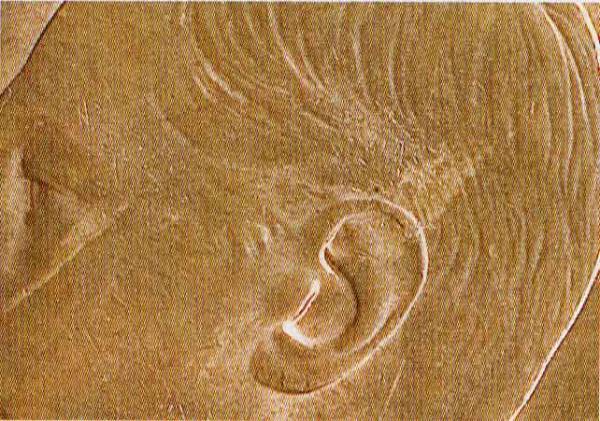 AU (about uncirculated) with bag abrasions 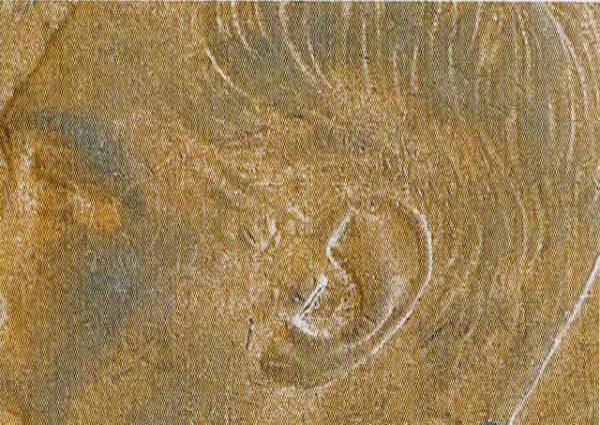 EF (extremely fine) discolouration showing location of early wear 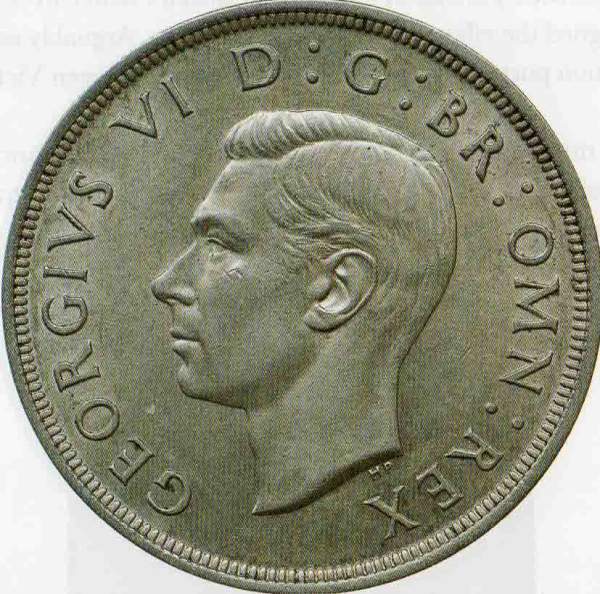 EF (extremely fine) All of the fine hairlines running from top to bottom of the portrait should be visible. The first place for the coin to wear tends to be the eyebrow. 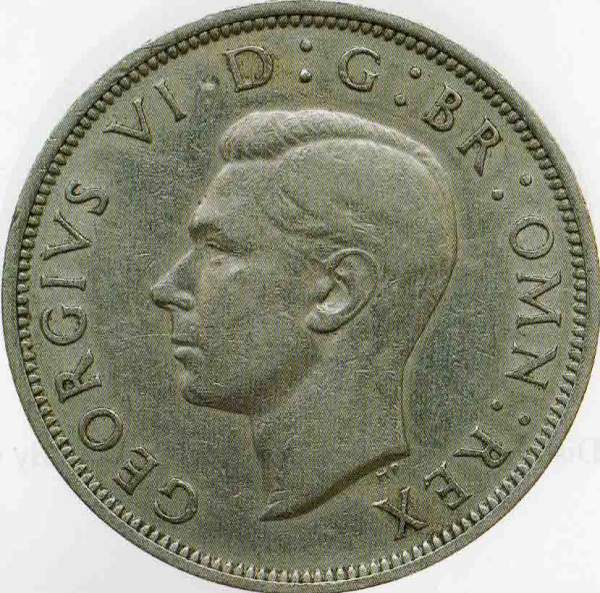 VF (very fine) Many of the less pronounced hairlines will have disappeared, although those above the parting should still be visible, as well as coarse lines running from left to right above the ear. 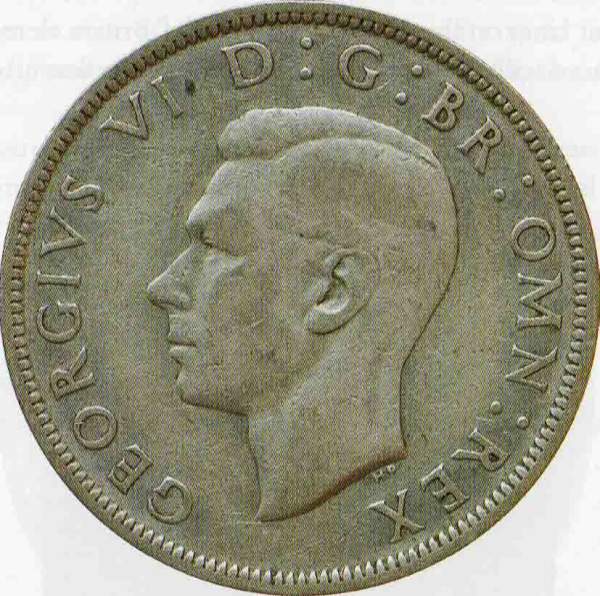 F (fine) Signs of substantial wear on side of face, although the coarse hairlines above remain just visible. 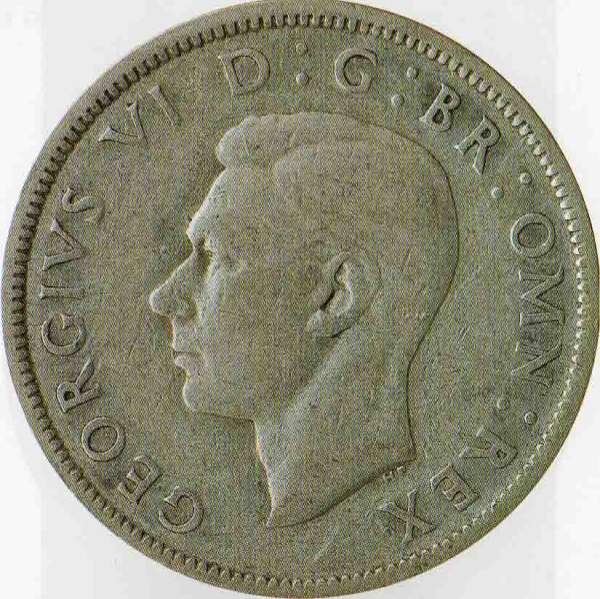 Fair (equivalent to our rather misleading VG -- very good) Little detail still visible, even the ear is becoming less defined. Few coins wore more than that depicted here. |
|
Pillar of the Community
Australia
4411 Posts |
Going by that I would go with a little better than VF for this coin but cant see EF in it.
|
|
Pillar of the Community
Australia
1295 Posts |
A British book using British standards cannot be used to arrive at a grade using the ANDA standard any more than than the Sheldon scale can. Still and interesting book and one I'll look to purchase.
|
|
Valued Member
Australia
51 Posts |
 with enworb From the image presented, mmorgan22's coin seems to be a bit better than the VF example that markn posted but not as good as the EF example in my post. I also agree that it's very hard to tell from photographs the difference between strike weakness and wear so you'd really need the coin in hand to determine this. As it is, I'd grade it as gVF but the detracting verdigris would be a bit of a worry. Of course, the fact that it's broadstruck would attract a premium & maybe bump up the price for me to a grade higher. For a 1943-I penny 2010 Macca's says VF = $6 & EF = $26 so I wouldn't pay more than $30 so a dealer's offer of $20 is probably reasonable given that he needs to make a profit. Re markn's comment: I don't know about British standards in general but I find the photo's in D.F. Allen's book to be pretty consistent with how I'd grade coins but maybe that's just my non-professional inexperience. Edited by Sovereign Debt
04/22/2012 6:20 pm
|
| |
Replies: 20 / Views: 4,602 |






 Posted 04/19/2012 8:31 pm





