| Author |
 Replies: 14 / Views: 2,784 Replies: 14 / Views: 2,784 |
|
|
Valued Member
United States
97 Posts |
I'm leaning toward MD, but it looks like the image in the Red Book, so I am wondering what you all think. 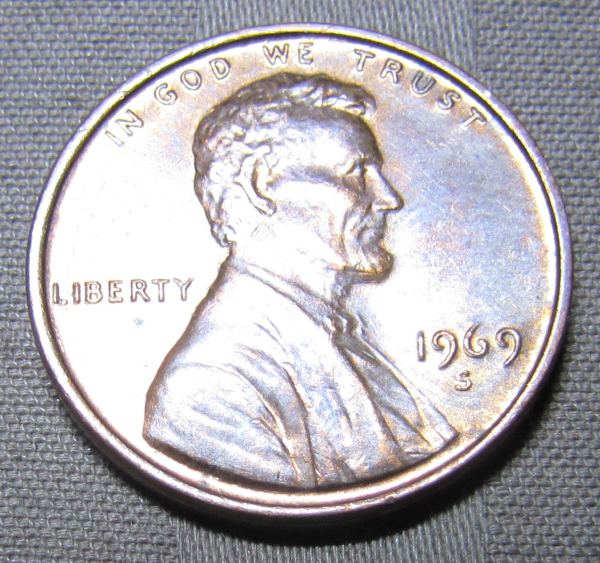 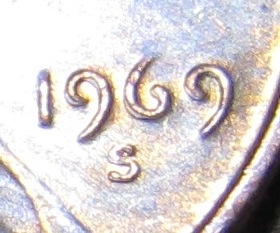 |
|
|
|
Valued Member
United States
168 Posts |
|
|
Bedrock of the Community
United States
62064 Posts |
Edited by coop
05/04/2012 4:00 pm
|
|
Valued Member
United States
207 Posts |
I have an pretty extreme example of a 1969-s MD. Kinda makes your heart sink a bit at first glance. :) I actually have two of them. Pretty common as coop said.
|
|
Pillar of the Community
United States
1137 Posts |
I would have thought DD so how do you tell the difference? I believe that I see edging and separate lines, is it because the thickness of the numbers are almost unchanged?
|
|
Pillar of the Community
United States
744 Posts |
|
|
Pillar of the Community
United States
1137 Posts |
it is a very nice example of MD. The thickness does come into play, you need all three to have DD, thanks guys!
|
|
Valued Member
494 Posts |
Absent notching. It's shelf-like.
|
|
Valued Member
 United States
97 Posts |
I just wasn't sure.. It's hard to see notching on a curved number :)
|
|
Pillar of the Community
United States
1137 Posts |
from the pics they have shared in the forum an other sites, the best place to identify notching is at the tips of the digits. The first "9" from the left looks like notching at the end of the top curve but that could be the pic distortion. These pros in here have much better eyes than I, although I have 20/20, it does not seen to help much with coins, just video games!
|
|
Valued Member
494 Posts |
Not really... just found this one the other day - inverted the colors so you can see the notching better on the curved numbers. It's one of the ways to be sure it's a doubled die. 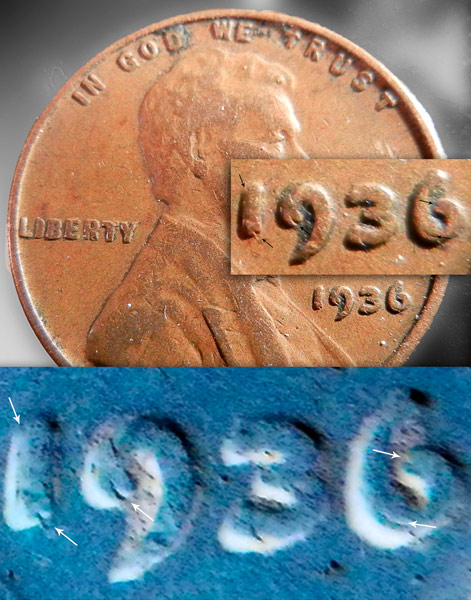 |
|
Pillar of the Community
United States
1137 Posts |
I said the best place not the only place!
|
|
Valued Member
494 Posts |
Quote:
I said the best place not the only place! Sorry... was "Not Really'ing" to the post before yours, and even then wasn't trying to be snarky... :) |
|
Pillar of the Community
United States
4132 Posts |
Here's an example of a doubled die I found:  Machine Doubling Machine Doubling will make elements narrower, an actual doubled die will make them wider (except for the most extreme doubled dies where the doubled elements become completely separated).* Machine Doubling is flat and shelf-like for one of the doubles. Doubled dies show a normal, rounded shape for both images. Here's a diagram:  Also, doubled dies will not show doubling on mint-marks on coins minted before the late-80s. Prior to then, mint-marks were added to individual dies after hubbing, so the mint-marks wouldn't get hub-doubled (though they could also be an RPM, but that's a whole 'nuther ball of wax). Nowadays, mint-marks are put on the master die, so they can end up hub-doubled. Machine Doubling can show up on mint-marks, as it did on your coin. Machine Doubling is VERY common on 1969-S cents, and because of the rare doubled-die for the date, many people are given false hope. * It's actually the reverse for incuse elements like the lettering on the shield on the reverse of shield cents, but that's a small number of cases. |
|
Pillar of the Community
United States
808 Posts |
Great Info CaptainF !  that diagram is a big help !! |
| |
Replies: 14 / Views: 2,784 |
|










 Posted 05/04/2012 04:13 am


