










 Posted 05/14/2012 9:18 pm


Hello and welcome. 
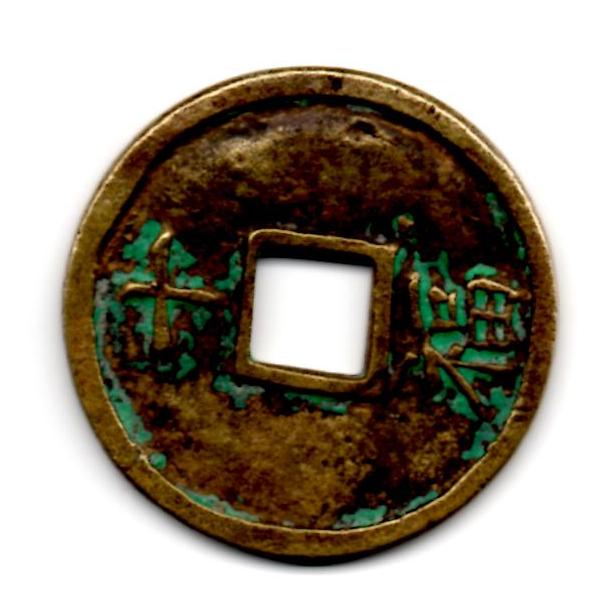
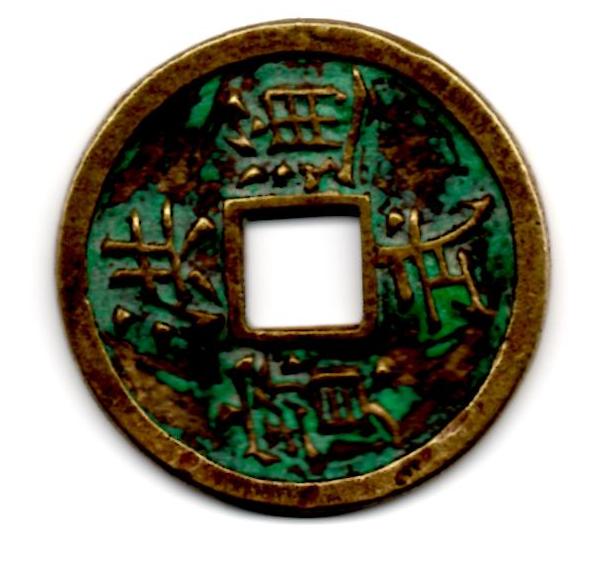
The obverse legend (bottom pic, rotate 90 degrees clockwise) in Chinese transliterates to "Hong Wu tong bao", the legend given on the coins of the first Chinese emperor of the Ming Dynasty (AD 1368-1399). The two characters on the reverse are "10" - the denomination mark, 10 cash - and "Fu", the mintmark for Fujian Province. Example from Zeno.ru. However, I strongly suspect that your coin may be a more recent reproduction; "unofficial coins" and charms with this same inscription have been made in for centuries in Vietnam (where the inscription would transliterate as "Hong Vu thong bao").
Compare the weight and size with the weight and size given in the Zeno link above (10.2 grams, 38.6mm across). If it's a close match, your coin might be a legit Ming Dynasty piece.
The obverse legend (bottom pic, rotate 90 degrees clockwise) in Chinese transliterates to "Hong Wu tong bao", the legend given on the coins of the first Chinese emperor of the Ming Dynasty (AD 1368-1399). The two characters on the reverse are "10" - the denomination mark, 10 cash - and "Fu", the mintmark for Fujian Province. Example from Zeno.ru. However, I strongly suspect that your coin may be a more recent reproduction; "unofficial coins" and charms with this same inscription have been made in for centuries in Vietnam (where the inscription would transliterate as "Hong Vu thong bao").
Compare the weight and size with the weight and size given in the Zeno link above (10.2 grams, 38.6mm across). If it's a close match, your coin might be a legit Ming Dynasty piece.
Don't say "infinitely" when you mean "very"; otherwise, you'll have no word left when you want to talk about something really infinite. - C. S. Lewis


