After being at this a while - it will become easier to spot these rather common forgeries. But the thing that is OFTEN most wrong (as it is in this case) is the relative wear between the host and the stamps. This is a particular concern in this case because these coins if real are VERY valuable but the hosts are junk silver.
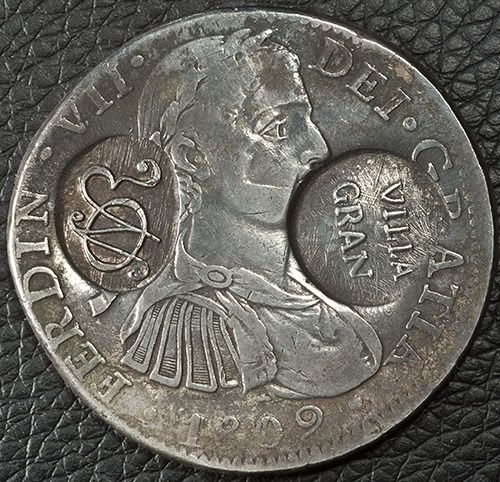
Focusing on the first coin presented with the OVERLAPING stamps - the coin is asking me to believe something that is nearly unbelievable and virtually historically impossible.
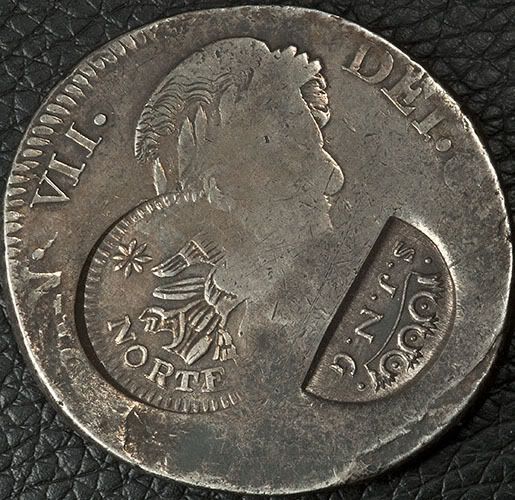
The host is dated 1811 and was produced in Mexico City. So far so good because it is a known variety for the Ensaie counterstamp. However, the host coin shows a great deal of wear which in reality does not occur overnight. I start wondering how did an 1811 coin get so worn BEFORE it was stamped?
Thinking more along this line - the date of application of the two insurgent stamps occurred WHEN? If it happened as most experts believe before 1815 - then all of the wear on the host happened in no more than 3 years and the JML stamp is ON TOP. The
LMC coins are mostly believed to come earlier than 1815 and the later issues were made AFTER the original defence as memorabilia. (As such the 1815 issues are usually not associated with OTHER stamps).
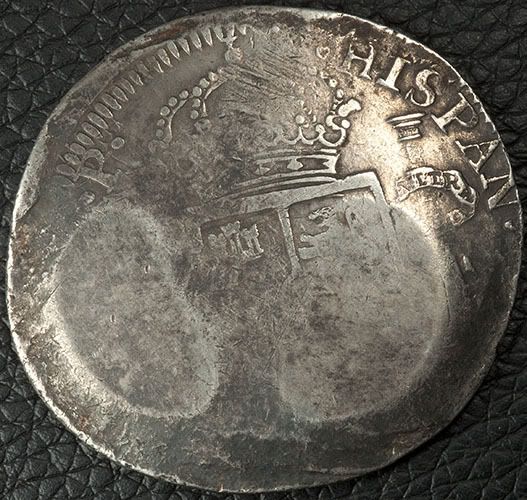
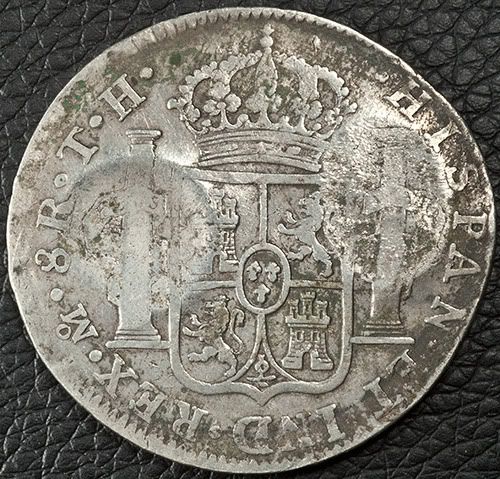
There are TWO stamps which purport to come from two different insurgent groups. These were geographically separate but operated within the same time frame. But if you notice both are PRISTINE. There was no wear of the host coin between applications. Doesn't this seem to be incredible? The wear is most noticeable on the reverse where the coin was positioned on a flat anvil.
The percussive shape on the reverse of the coin - when as pristine as these examples is really what SCREAMS at me.
The pressure needed to develop that shape is EXTREME in my own opinion.
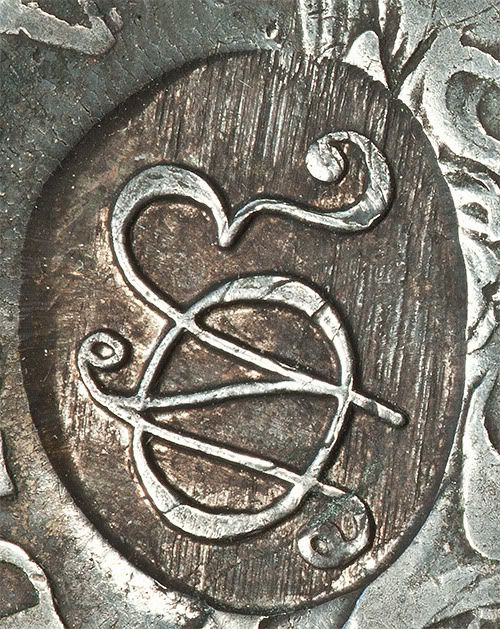
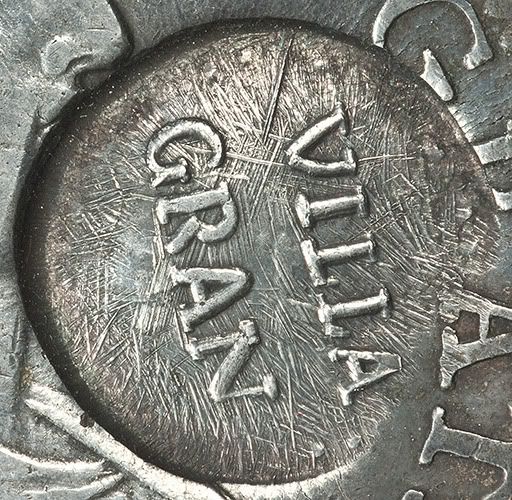
These punches were originally applied under crude conditions in manners that are not at all clear to us today BUT here the application is DEEP SET and picks up the background fields of the punches themselves. Original period punches are RARELY complete - RARELY deep set like this - and Rarely show the surfaces of either the die fields or the anvil as clearly as this.
I believe the stamps were applied at the same time in the same workshop to a cull silver coin to increase it's value as a numismatic coin by several hundred percent.
So to me the SCREAM comes from the fact that the punches were applied with EXCESSIVE FORCE.
Finally for those collectors experienced with the way these punches were prepared - the designs are WRONG. The designs I see here are boldly cut into the punch faces - they look as if they were tooled out with an electric hand tool. They are not shallow engravings made with a hand powered graving tool as they should be. They LOOK MODERN but crudely done in an INCORRECT fashion. To me they look crude by design not by technique. I would focus your review of the punches on the stamp of Jose Maria Liceaga - in reality there was a flag engraved on a pole on the original punches - not a series of heavily engraved crude lines that kind of resemble a surrealistic rendering of a flag.
That punch is TOTAL GARBAGE. It is simply unbelievable on its face.
As was pointed out by someone - the published pictures enhance the story and may mislead the novice but they make me wonder what catalog the coins appeared in. It is an auction house that I would really love to contact.
One of the best ways to pass a fake is to get one copy authenticated (or merely commented upon) by an expert (or a trusted source) and then to quote that individual as proof of originality. Here the authority of the Catalogue could be anything. There is no citation or documentation. It could be a forgery catalog.
Be careful
tewcd all is not as it seems and there are wolves in the bushes.








 Posted 06/26/2012 3:34 pm