| Author |
 Replies: 15 / Views: 2,333 Replies: 15 / Views: 2,333 |
|
|
Pillar of the Community
Luxembourg
588 Posts |
I'm very proud to show my latest acquisition. It's relatively a common type in a very average quality. These coins have been minted in Bordeaux during the blokus of Paris in 1870. They did no more receive the dies from Paris and had to produce by themselves. For the obverse of this coin the mint worker made a mistake in the name of the Engraver and the signature reads A. E. OUDINE. instead of E. A. OUDINE. The variety has only been detected in 1889 (almost 20 years later) and since that time sought for. The die is of poor quality and all the coins known show the same defects. Only around 15 coins are known to have survived. It is supposed that this die was breaking very fast which explains the small number of coins. I got this one in a public auction for a mere price as it has not been described as what it is. 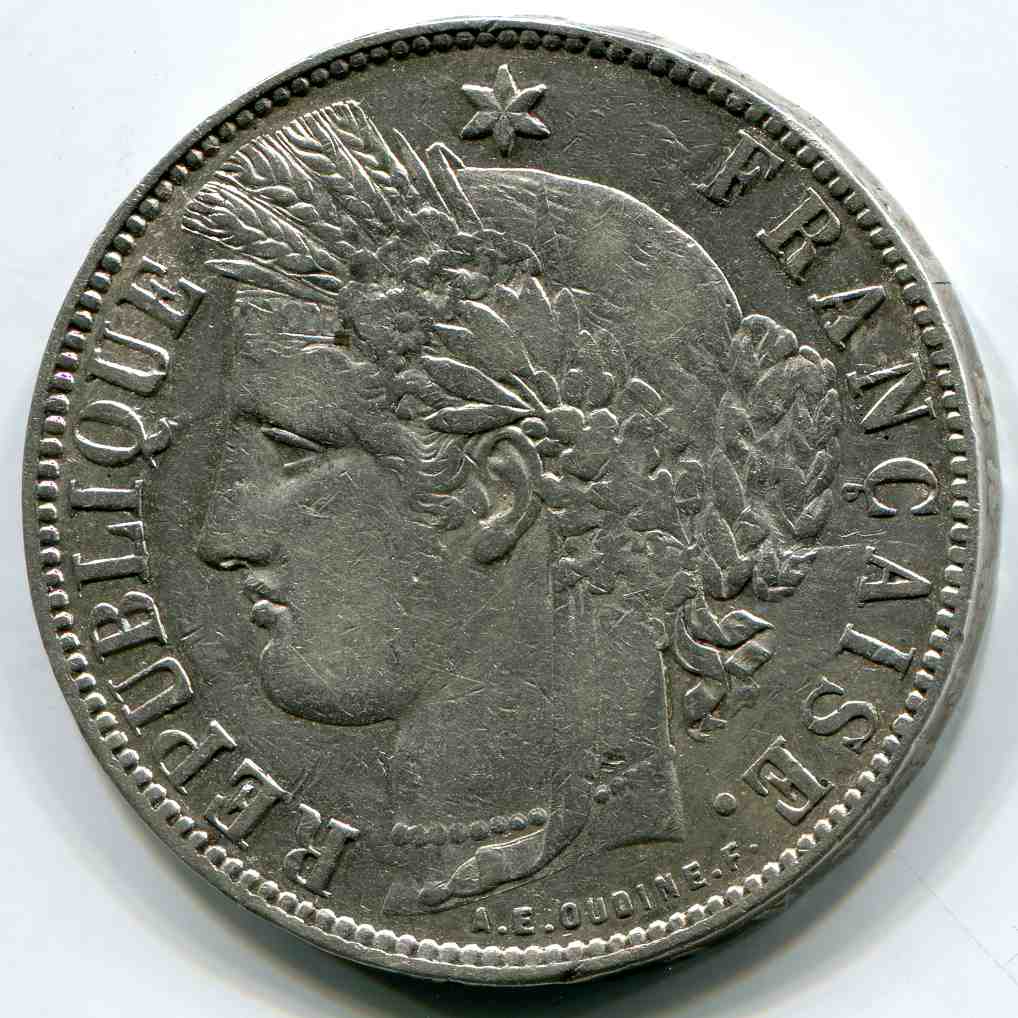 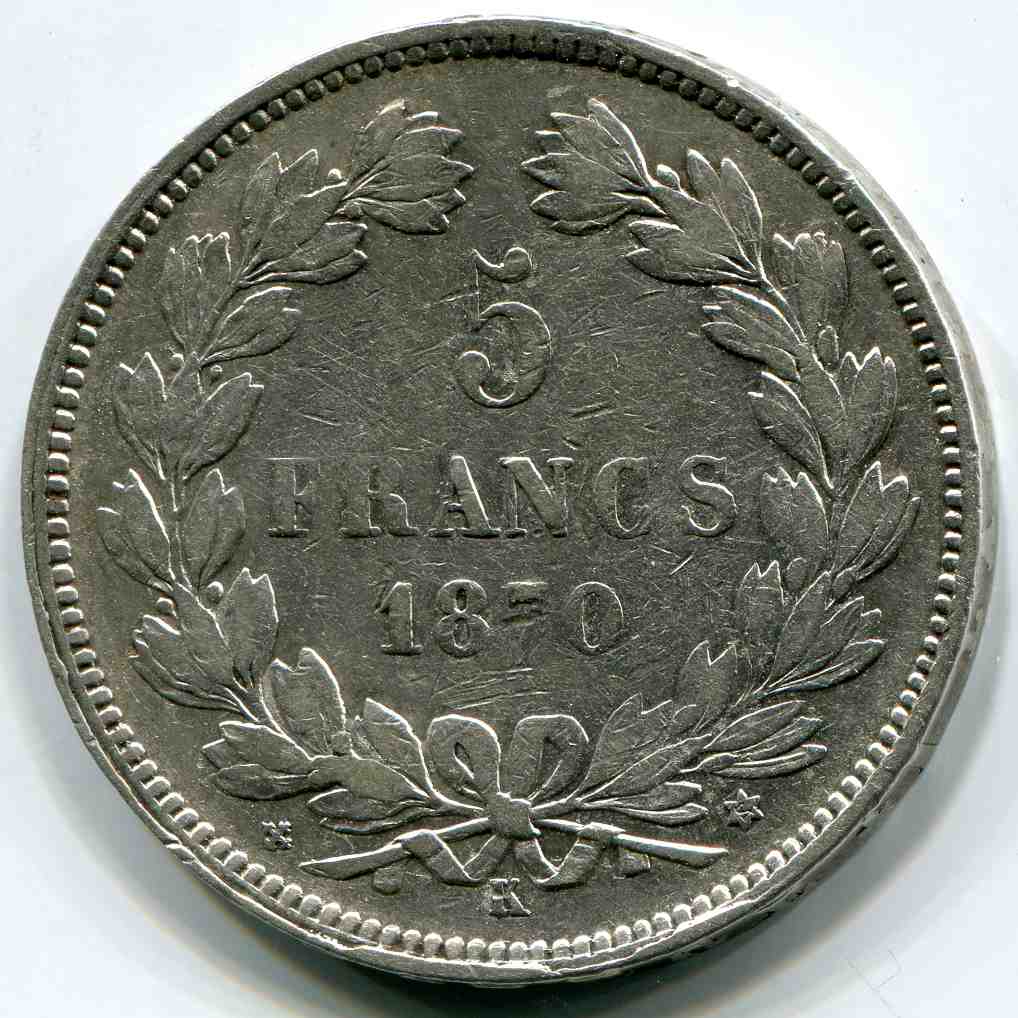 |
|
|
|
Pillar of the Community
United Kingdom
2490 Posts |
Bravo! Absolument merveilleux
|
|
Pillar of the Community
614 Posts |
Great coin! Especially with some history behind it!
|
|
Rest in Peace
United States
7075 Posts |
That is a lovely coin.
Thank you for sharing the photos..
|
|
Pillar of the Community
Australia
2830 Posts |
thankyou: very interesting story; excellent pics.
|
|
Pillar of the Community
France
1591 Posts |
Excellent story, I was not aware of this !
What a find, congratulations !
|
|
Pillar of the Community
Australia
585 Posts |
You were rewarded for your knowledge  |
|
Pillar of the Community
 Luxembourg
588 Posts |
All dies produced in Bordeaux can be recognized by the general engravers sign M in the star.
It does only exist in 1870 and 1871 with the 2 and 5 francs.
The false signature variety is, I believe, well known by collectors.
But it is important to know that manipulated coins do exist.
|
|
Pillar of the Community
United States
1064 Posts |
Great looking example, and always good to learn something new! Thanks again.  |
|
Valued Member
Australia
262 Posts |
Nice one maudry! Nothing better than a man who knows his coins.
|
|
Pillar of the Community
Luxembourg
588 Posts |
|
|
Valued Member
United States
98 Posts |
Very cool, and thanks for sharing, I learn something new everytime I log on!
|
|
Pillar of the Community
Mexico
1304 Posts |
Wow, thank you for the education. Congradulations!
|
|
Pillar of the Community
Hong Kong
1270 Posts |
Thank you to let me see such an valuable coin. More information about this coin (correct me if I am wrong): This coin was struck after the defeat of France in the battle of Sedan (Sept. 1 1870), the third Republic was proclaimed. The reverse side of this piece shows two kinds of plants, laurel branch (which represents glory) and olive branch (which represents peace). Also, there is not any inscriptions. When compare with another piece (shown below), also a five Franc of 1870 but before the defeat in the battle of Sedan, the revese shows only one kind of plant - two laurel branches (no more olive branch) and the inscription: Liberty, Equality and Fraternity. 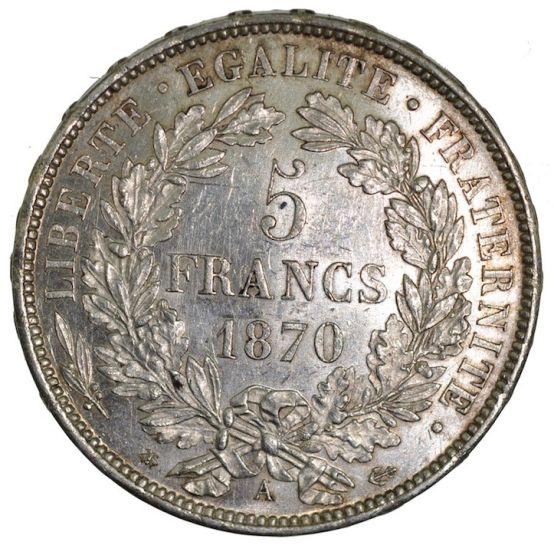 Please confirm or reject my observation and reasoning. In addition, who can tell me the meaning of the 6-corner star above the goddess. Thank you, Henry |
|
Pillar of the Community
Luxembourg
588 Posts |
The coin without legend has been minted after Napoleon has left the country.
This type has been created by using an obverse froom the 2nd republic and the reverse of the coins from Louis Philippe.
Nothing had really been prepared and they had to act in the emergency. I do not think you have to seek another meaning in the choice of the plants. They had to take what was available...
I do not knoy about the meaning of the 6-corner star.
|
|
Pillar of the Community
Hong Kong
1270 Posts |
maudry, thank you your information. Yes, you are right. I will try to seek the information about the 6-angle star.
|
| |
Replies: 15 / Views: 2,333 |
|







 Posted 06/26/2012 7:33 pm





