| Author |
 Replies: 9 / Views: 1,934 Replies: 9 / Views: 1,934 |
|
|
New Member
United States
16 Posts |
This one is interesting.  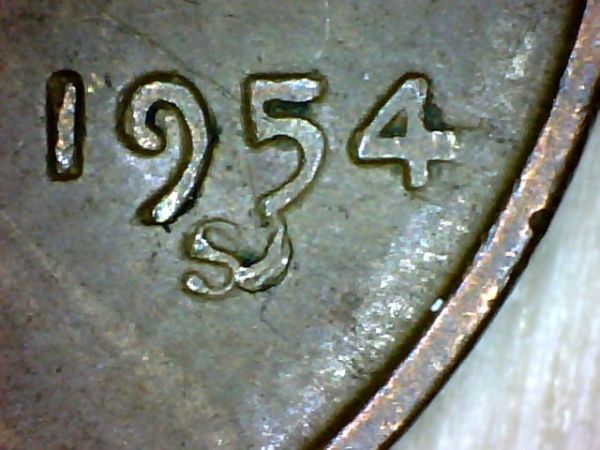 Edited by kbTexas79
08/17/2012 04:06 am
|
|
|
|
Moderator
 United States
56855 Posts |
I don't see an error, I see a die crack/chip. Somewhat common. John1  |
|
New Member
 United States
16 Posts |
The SJ error...  |
|
New Member
United States
16 Posts |
John1 not trying to challenge you, but actually I'm confused.  I feel that the answers to my questions since I've joined, which wasn't long ago are somewhat disappointing. How come everywhere I go (on the internet) I get conflicting information? First it's the SJ Error, then double die, then die break, and now die crack. This is just too much. Where is a numismatic school with live people? |
|
Pillar of the Community
Canada
1166 Posts |
I agree that it's a die chip. Some may call it a die gouge or die break. The "SJ error" was a joke. You'll have to filter out the posts that are for humor. If you study coin production, you'll get a better understanding of what happens during the process. On a die, everything is in reverse to what you see on a coin. That is, all the raised areas on a coin are incused on a die. The raised areas on the die can chip or break at the weaker points (usually between letters and numbers) that give you the commonly found things like filled numbers or the "BIE" cent etc.. Through use, the die can begin to crack and eventually shatter. These cracks in the die give the raised die cracks on the coin. Most of the anomalies you find on coins can be explained by thinking about where they may have occurred ie. on the die or on the planchet. That gives you a good starting point to determine whether it was something that happened at the mint or if it was post mint damage ( PMD). |
|
Rest in Peace
United States
3039 Posts |
 kbTexas79. Please read ikandiggit's reply. This is a great learning site. We all started here as newbies and weren't quite sure what we had with an unusual looking coin. Even those of us on here a while still hope we have something on a coin that we don't really have. Just because there's something different on a coin doesn't make it valuable. Anything can be collectible if you want to collect it. Again, welcome to the forum, keep reading & learning and relax and have a good time! |
|
Pillar of the Community
United States
808 Posts |
 with John1, ikandiggit, and numismo. ikandiggit well said!  |
|
Bedrock of the Community
United States
62064 Posts |
That one is a die crack. Some called it the "San Jose" cent. But a late die state coin.
|
|
Moderator
United States
56855 Posts |
kbTexas79,The reason your getting so many different opinions on the same coin question is because different people are giving their opinions.A non pro will be wrong more often then a pro will. I am no pro but I have been roll searching since 1971 and have looked through about 1.3 million cents. There are a few pros here on CCF and I think coop is one of them but there are more.Most coin terms are not interchangeable, a die crack is a die crack, a die break is a die break not a die crack.IMHO. I pretty much agree with what ikandiggit said except I think it's a die crack. John1 |
|
New Member
United States
16 Posts |
ikandiggit Thank you for taking the time to explain in detail. Was getting a little nervous here.  I definitely have a lot to learn and will read on coin production. I definitely have a lot to learn and will read on coin production.
numismo thank you for the welcome.
looking forward to learning and sharing my finds with the rest of the community. |
| |
Replies: 9 / Views: 1,934 |
|




 Posted 08/17/2012 06:21 am





