| Author |
 Replies: 10 / Views: 1,809 Replies: 10 / Views: 1,809 |
|
|
New Member
United States
4 Posts |
I'm newly interested in coin collecting. Is there a top-5 or top-10 list of errors to look for among coins currently in circulation? I'm not concerned with high value, just the fun of the hunt. I'd appreciate any ideas of variations that I might have a decent chance of coming accross -- particularly if they are visible without magnification.
Thanks in advance.
Jack
|
|
|
|
Pillar of the Community
United States
1915 Posts |
|
|
New Member
United States
36 Posts |
One of the easiest to spot, if you have a loupe, are 2009 DDRs. There are literally hundreds of varieties, so you have a good chance of finding something neat. Without a lens, always keep an eye out for MADs, Cuds, clips, and rotated dies. |
|
Bedrock of the Community
United States
12437 Posts |
 Errors can be difficult to find in change since may of them have a non-standard size or appearance(clips, off-centers, broadstrikes, missing clad layers, etc) that gets them noticed quickly and pulled. Die varieties such as doubled dies and repunched mintmarks tend to escape scrutiny since they usually need magnification to be seen or involve minor design differences. That is not to say that finding one is an easy task but the most likely finds are the Wide and Close AM proof reverses on LMCs and one of the numerous DDRs found on the 2009 Formative Years cents(look for thumb/finger doubling on the hand in the middle of the reverse). Repunched mintmarks have not been possible since 1989 due to the way dies are now produced so they are getting harder to find in the wild but if you get a bulk bag of wheaties, you are almost certain to find a few RPMs in there. Edited by biokemist6
09/05/2012 4:45 pm
|
|
Moderator
 United States
56855 Posts |
to CCF.Get the book:strike it rich with pocket change.I think that's what it's called,it will help you out. John1  Edited by John1
09/05/2012 04:56 am
|
|
Valued Member
United States
88 Posts |
Ken Potters website is a good place to fine what errors look like. I get lost there. He is also one of the authors of Strike it Rich.
|
|
New Member
 United States
4 Posts |
Thanks for the great ideas of how to get started. I'll familarize myself with the variations you've described. This will make it much more fun going through coins just looking for dates and mint marks to fit in a folder gap...
On a side note... I do have a loupe, but I was wondering if anyone can recommend a standing magnifying lens with a built-in light. Also what power for basic scanning -- later to follow up with loupe. Standing by the kitchen window switching back and forth between my glasses, magnifying glass and loupe is a cluster!
Thanks,
Jack
|
|
Moderator
United States
56855 Posts |
As far as standard,a 5x would do. Then you should use a 10x and for the up-close a 14x. I use a 14x doublet loupe and if I need more I use a usb microscope. John1 |
|
Pillar of the Community
United States
2224 Posts |
If you come across a 1960-d Lincoln you have an excellent chance of getting a repunched mintmark. Coppercoins.com lists over 160 different.
|
|
Bedrock of the Community
United States
62064 Posts |
Errors are a one time thing most of the time. die caps, struck throughs, broadstruck, brockage, wrong metals, incomplete planchets, laminations, unplated, missing clad, ETC. You usually find just one example. Die aging Die deteriation/die wear, die cracks, chips, breaks, dot, gouges, abraded dies, over polished, clashes are just normal cents that the dies are showing age. Just because we get wrinkles, that don't make us in more demand. Die age and some collect stuff that is really just die aging. Some think these have a high premium for them, but I don't by it. Varieties are created on the dies before they are used. These are often called errors, but they were created a variety while hubbing the die or punching the mint marks. Sometimes alignment of the hubbing process was correct. Sometimes they used a different hub when making the die. (Which is a three step process for cents.) Sometimes the hub was worn between hubbings or was warped during the hubbimg process. (Each die made is not just one die, but hundreds at a time. The next time around a different hub maybe used/hub might have aged/hug may have warped.) Mint marks are punched to a desired depth and the location may be to close to other devices, thus the second, third (Or more) punchings were not where they want it. 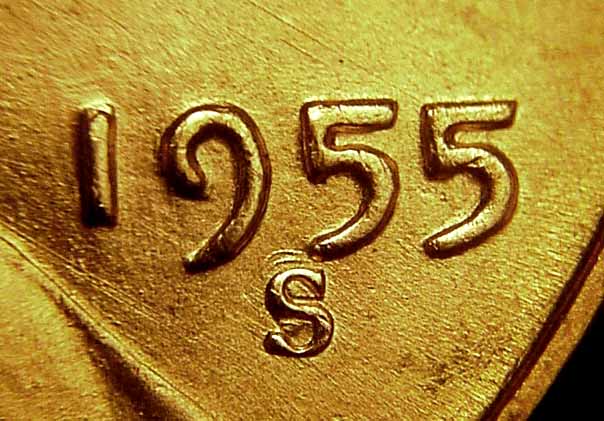 So note they lowered the punching to the desired position making multiple punches in the desired area to achieve the depth they wanted. Varieties are made from coin number one till the dies retired. Errors are really a one in a kind example. Die wear is progressive and in the VLDS die states it is undesired by most variety collectors. Varieties start with the first coin and affect all coins made with that die. The doubled dies made only be seen on EDS/MDS on varieties next to the rim, but center devices show the variety as the die ages. Hope this clears this up a little. |
|
Pillar of the Community
United States
2624 Posts |
Try this; Go to this site http://www.coppercoins.com/advsearch.phpEnter 2008 in the date box Hit enter. The first photo is "Doubling of the 7th column". This type of variety is fairly common in "newer" dates. Then back space and enter 2009,have fun. |
| |
Replies: 10 / Views: 1,809 |
|










 Posted 09/04/2012 11:24 pm


