| Author |
 Replies: 11 / Views: 3,823 Replies: 11 / Views: 3,823 |
|
|
New Member
United Kingdom
24 Posts |
|
|
|
|
Pillar of the Community
United States
1701 Posts |
1. These are really pretty coins.
2. What, besides weight, makes you think it is a fake?
|
|
Pillar of the Community
United States
3345 Posts |
Honestly, looks ok to me. What is the weight supposed to be? Reeds look evenly placed, details in lettering look good. I would only ask about the lack of detail in the Liberty's face, but assume that is just wear
|
|
Pillar of the Community
United States
1088 Posts |
After looking at it, I would say it doesn't look too bad.
|
|
Pillar of the Community
Australia
2830 Posts |
looks cleaned, but nothing ele about it scares me.
All French coins are beautiful.
|
|
Valued Member
United States
230 Posts |
The extra 0.64 grams is only 2.37% off the spec weight. Typically, how close were they to the exact weight? Is that within tolerance?
If I could only be correct 97.63% of the time!
|
|
Pillar of the Community
United States
511 Posts |
Nothing about it screams 'fake' to me. But then I am so hesitant to buy these that I would not pick one up in a hurry, either. If it is fake it is well made.
If the weight is the only thing that bothers you try weighing it on different scales or checking that your scale is calibrated with some reference weights.
-wheatiefan
|
|
Pillar of the Community
614 Posts |
I love this coin design, especially Liberties tail.  |
|
New Member
 United Kingdom
24 Posts |
To be honest, it was mostly the weight - although the reverse denticles seemed a bit weak. The lettering concerned me for a bit, but it seems to almost exactly match some legitimate examples from the period (albeit different years). How does the edge reeding look? I had read somewhere that it could be a bad sign if the reeding tends to spread into the rims as it turns 90 degrees into the obverse and reverse of the coin. p.s. I turns out that my scale is a bit off, as it measures a somewhat worn Buffalo nickel (perhaps VF) at exactly 5 grams, the weight of a newly minted one. I'll update if and when I get it calibrated. -Bjorn Edited by bjorn
10/11/2012 08:27 am
|
|
Bedrock of the Community
Australia
21789 Posts |
Bjorn: You have alluded to a problem that your scales may be inaccurate; that may be so.
If it weighs the same or slightly heavier than a genuine coin and IS a fake, it should be slight thicker than a genuine example. .900 silver alloy has a density of about 10.35 g / cc. A copper lead alloy could be made to achieve the same density, but it would have to be silver plated to look like a silver coin. Any small impairment in the silver plating would be obvious under 10x magnification.
Vernier calipers are a useful tool for determining thickness in this case. With a bit of luck it isn't to hard to find someone measure the thickness for you.
One of my favorite tests to detect a modern fake is to do a comparison ring tone test against a known genuine example. Costs nothing, only problem is that a known genuine example needs to be available.
You may need to take it to a dealer to test against an example in a dealer's inventory.
The pictures presented seem to show a genuine coin to my eye, but if you are doubtful, some simple tests are available.
Edited by sel_69l
10/11/2012 08:51 am
|
|
Pillar of the Community
Hong Kong
1270 Posts |
bjorn, your coin looks ok and I don't think it is fake. It looks like made by silver. The date of your coin is not rare and I don't believe the counterfeiter will use real silver to produce a fake coin. Of course, a S.G. test will confirm the fineness of silver of the coin. I would like to show you a counterfeit and a real piece of the same year 1908 for your comparison. Specification of the counterfeit coin below: 26.51 grams (target 27.0) 39.50mm (by caliper) S.G. 8.66 (far from std. 10.2-10.3); so not made of silver 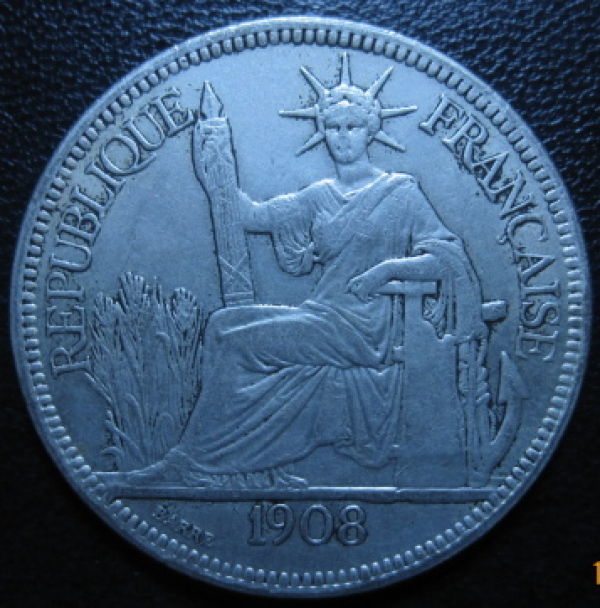 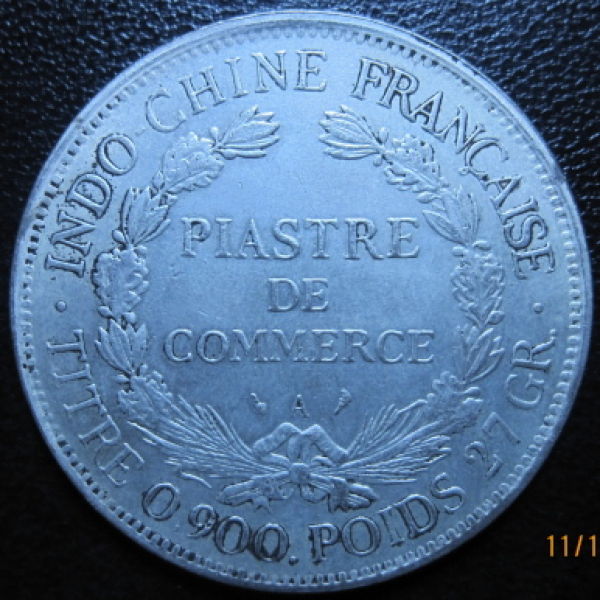 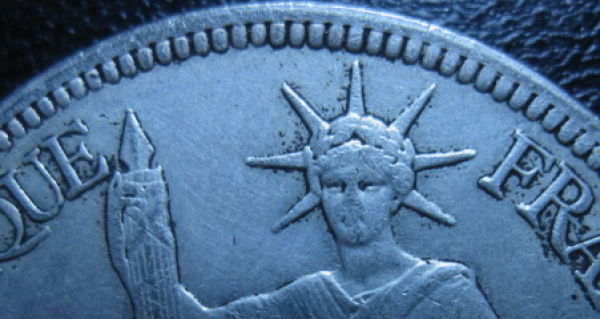 Specification of the real piece (below): 26.83 grams 39.0 mm S.G. not measured because I am sure it is real. 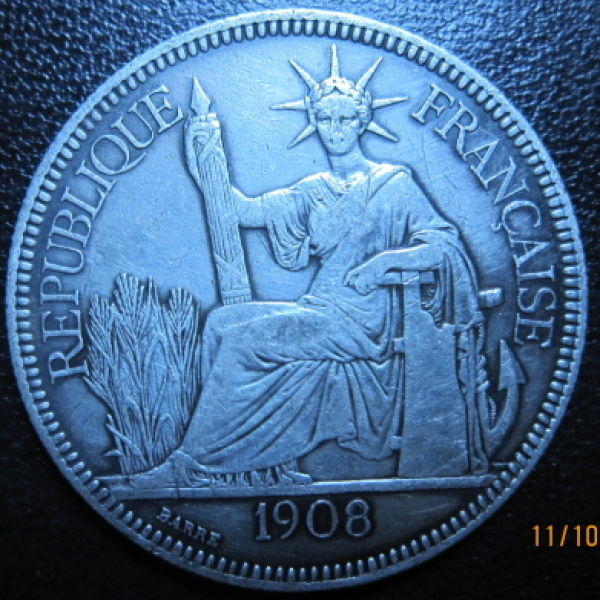 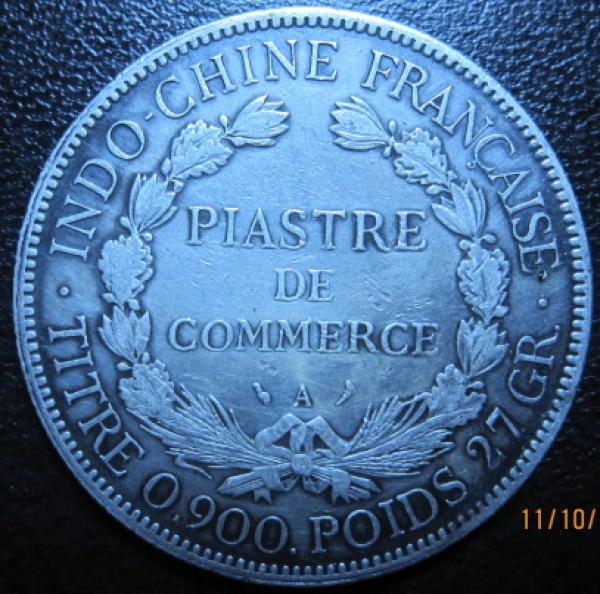 As the counterfeit is not made by silver so it is thicker than the real piece to attain a closer standard weight. The lower one of the scan below is the counterfeit coin. 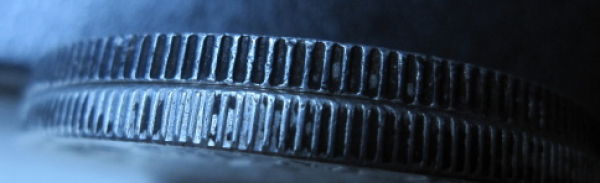 If you still believe your coin is fake, you can sell it to me. I will suppose your coin is an error coin or you have to weigh it again to make sure you are correct. Henry
|
|
Pillar of the Community
Hong Kong
1270 Posts |
Sorry, one more. The counterfeit coin is medal alignment while the real one is coin alignment.
|
| |
Replies: 11 / Views: 3,823 |
|










 Posted 10/10/2012 9:56 pm


