| Author |
 Replies: 21 / Views: 3,062 Replies: 21 / Views: 3,062 |
|
Pillar of the Community
United States
1721 Posts |
I have two coins that could use help and I was wondering if Acetone would work or what else you could recommend. The 1883 Liberty V nickel, No Cents, has a nice strong detail but she's covered with a spotty green patina (I have 3 that look like this). The other problem is my 1860 Indian penny with great detail. She has one tiny green spot on the obverse. Looks like a green pimple. What could I do? I guess I would need specific remedies for each coin. I apologies if I'm beating the proverbial deceased horse with this post. Thanks. 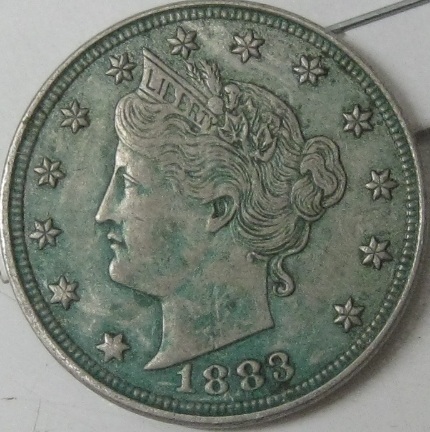 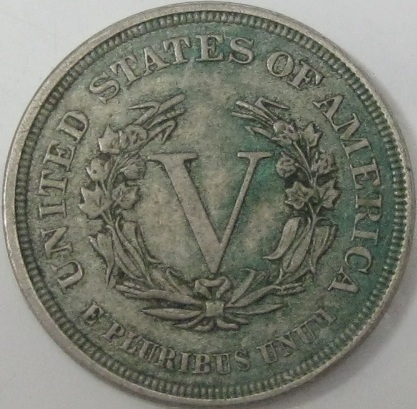 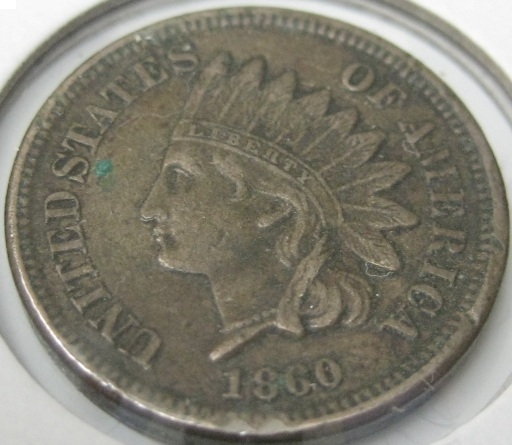 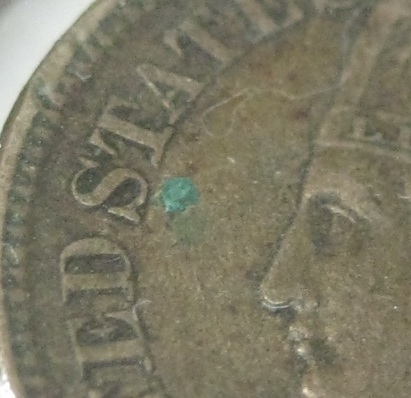 Edited by mds308
10/19/2012 8:30 pm
|
|
|
|
Valued Member
Pakistan
207 Posts |
That there would be verdigris, at least on the first coin. Acetone won't really help with that. There is a user here who created this solution that works, but...since I don't remember his name (BadThud?Thud?), or the solution's name (verdigone?), I guess you should wait for someone more knowledgeable to tell you  . |
|
Pillar of the Community
 United States
1721 Posts |
|
|
Bedrock of the Community
13014 Posts |
Pretty sure Badthad is his screen name and the solution is called verdicare. Barbar was right to use that for the verdigris and thats also the concensus opinion on the forum. Actually I've never seen someone post bad things about it
|
|
Moderator
 United States
23522 Posts |
The V nickels need to be introduced to acetone. Research its' usage on this forum - we've talked about it a lot - and get them an acetone bath stat. Apologies if you've already done that due diligence. The IHC needs Verdicare. Buy it, and use it. Buy it on ebay; you'll be buying direct from BadThad if you do. Everything you've shown here is a progressive disease. It will further damage the coin if you ignore it, to the point of rendering them worthless. The IHC infestation is small, but active, and it'll leave a ruinous pit in its' wake on a relatively-valuable example. Edit: After thinking about it, Verdicare might be just as good with the nickels as the IHC. But do something. |
|
Bedrock of the Community
Australia
21789 Posts |
I would NOT be inclined to get rid of the green pimple on the IHC. The problem is that localised cleaning will show up where you have been working. That is my advice to anyone, except myself. The basic approach to decision making to clean coins to myself is this: 'This coin is so bad that I really have nothing to loose, so let's try something.' If I can't employ this rationale, I don't clean. This coin is too valuable for that. IF I was tempted to try, I would NOT reccomend the following approach to anyone else. I would attempt to lightly scrape the verdigris off with a round edged implement, using a loupe, then wipe the area with an olive oil soaked rag on the end of a match. I would then gently wipe the whole coin with acetone. Would I improve the appearance of the coin? There is a strong possibility that I may not. Would that worry me? Perhaps not, but that is MY loss. Edited by sel_69l
10/20/2012 09:34 am
|
|
Pillar of the Community
United States
1721 Posts |
BadThad  , payment sent PayPal. I super-sized. I'd also like to hear what you have to say about preserving these ladies. Thanks. |
|
Moderator
United States
23522 Posts |
Quote:
The problem is that localised cleaning will show up where you have been working That is a very valid point, my friend, and I only disagree because what we're looking at here is active and will certainly become worse if left untouched. Yes, making it go away will be a visible scar. It's active verdigris. Especially if done right, which is to say, only addressing the specific problem and not the whole coin. The alternative, in my mind, is worse. This is a coin of relative importance - pre-1864 IHC's will have importance going forward - and it deserves enough attention to survive both of us for future collectors. |
|
Bedrock of the Community
13014 Posts |
Quote:
The problem is that localised cleaning will show up where you have been working Couldnt you avoid that problem with a full coin dip or just doing the whole coin? |
|
Moderator
United States
23522 Posts |
Quote:
Couldnt you avoid that problem with a full coin dip or just doing the whole coin? No. I'm guessing you're not using the term "dip" in the silver, thiourea sense, but rather in the sense of using Verdicare or similar, which is intended to be used that way as well. The "dip" will only affect the area where verdigris is active; the rest of the coin will remain untouched. Unfortunately, what's left under that verdigris is going to look different from the rest of the coin. That's already an unchangeable reality. The only thing left possible is to minimize the long-term damage. Aside: If you're going to use a "tool" on the infection - recommended in this case, if you can adhere to strict procedure - use a rose thorn. They are incomprehensibly sharp, while also too soft to scratch the coin. |
|
Bedrock of the Community
13014 Posts |
Quote:
No. I'm guessing you're not using the term "dip" in the silver, thiourea sense, but rather in the sense of using Verdicare or similar, which is intended to be used that way as well. The "dip" will only affect the area where verdigris is active; the rest of the coin will remain untouched. Unfortunately, what's left under that verdigris is going to look different from the rest of the coin. That's already an unchangeable reality. The only thing left possible is to minimize the long-term damage. Thats very interesting to know. I was using the term more of a submerging the coin like you assumed. I've never used verdicare my self as so far I've been fortunate to avoid the verdigras problem (knock on wood) I just know a lot of members are very fond of the product. I think I was assuming it was more like acetone than a specific spot cleaner for lack of a better term. I do agree 100% even knowing itll give it a different look its 100 percent better to stop the problem and have that look than let it continue to spread and ruin the coin more |
|
Bedrock of the Community
Australia
21789 Posts |
The green pimple is mostly a verdigris problem, but not entirely.
The salts of nickel as well as those of copper, are green.
The alloy is of copper nickel and should be more chemically stable, but is still clearly sensitive to localised verdigris attack, as the picture clearly shows.
BTW, I have not seen much written regarding the preservation of ancient bronze coins, using Verdicare. Why is that?
Long term soaking of ancient bronze coins in olive oil IS popular, but that treatment tends to darken or even blacken ancient bronzes. Verdicare when used on U.S. bronze coins seems to be much better in this regard.
|
|
Pillar of the Community
United States
4085 Posts |
I have had really great results with the Verdicare on situations like the 1860 Indian. Yes, you will likely see a difference in toning where the verdigris was, but it will be a major major improvement as well as preserving the coin against future damage.
|
|
Moderator
United States
23522 Posts |
Quote:
BTW, I have not seen much written regarding the preservation of ancient bronze coins, using Verdicare. Why is that?
Long term soaking of ancient bronze coins in olive oil IS popular, but that treatment tends to darken or even blacken ancient bronzes. Verdicare when used on U.S. bronze coins seems to be much better in this regard.
VerdiGone (the first generation) and VerdiCare are pretty new products. They're quite popular here because BadThad shared their development here at CCF, posting his development progress and imaged results in the forum. We've been in since the ground floor, for that reason. It's been too short of a time for really widespread results, especially with the relatively-small proportion of Ancients collectors. |
|
Bedrock of the Community
United States
20037 Posts |
The V coin could very well have PVC damage. I would first try soaking in acetone for 24 hours (sealed container) to make sure that there's no plasticizer residue. After that, I would soak it in VC for 24 hours and then use the toothpick method (outlined in the VERDI-CAREâ„¢ FAQ). Nickel verdigris is VERY tough because it's composed of both copper AND nickel salts. The nickel salts are much more difficult to remove but light to moderate levels can be addressed with some work. I would spot treat the IHC. Simply apply a tiny drop of VC to cover the spot. Let it stand for around 5-10 minutes then use the toothpick method. If needed, you can repeat a few times, but it anything remains after 3 tries, I'd leave it. It's usually not a good idea to remove heavy verdigris because the surface underneath will be pitted. VC will stop the active corrosion process - DO NOT RINSE after treatment, simply dab off the excess VC and let it dry at least 24 hours after conservation. If anyone ever wants to buy VC, they can send me a PM. I offer a discount to CC forum members. Lincoln Cent Lover!VERDI-CARE™ INVENTOR https://verdi.care/
|
|
Pillar of the Community
United States
1721 Posts |
BadThad, or as you were called in the begining of the thread, BadThud  , I missed the discount coupon. That's OK, in this economy we can all use the extra green. I've got the nickel soaking acetone. I think the vertipoop will be a bear to remove  . When I get the Verticare I'll try that too. I will post before and after picks in the future. Before=  After=  I hope! BadThad or anyone else every send a coin to PCGS (or other service) after an acetone bath? If so, what were the results? I would also assume any rubbing on the coin would be bad. This includes old toothbrushes or Q-Tip swirling. |
| |
Replies: 21 / Views: 3,062 |






 Posted 10/19/2012 8:33 pm





