| Author |
 Replies: 13 / Views: 2,217 Replies: 13 / Views: 2,217 |
|
|
Pillar of the Community
2087 Posts |
I am sure some other collectors are like me.....after a few years of collecting one finds it appropriate to add fakes to the collection just as a reference. I have hunted out a number of fakes but the one I was actually excited to find is this one. Its an intriguing piece: with my limited knowledge it appears to have been sand cast. The obverse is from a 1817 - 1840s Venice mint strike, while the obverse is from an 1780 -1797 Guenzburg strike. The metal is either billon or pewter. What I find interesting is, based on the dating of the reverse and obverse, this item is unlikely to have been been produced after the 1840s. Most likely the fake dates to circa 1820. I suspect because of the sand casting it is of Yemeni or Ethiopian manufacture(Less likely to be Sudanese because the MTT only became accepted in that area in the period 1830 - 1850). 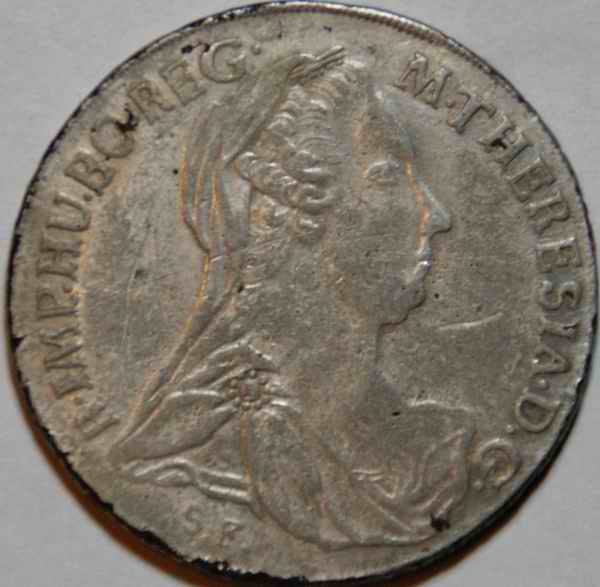 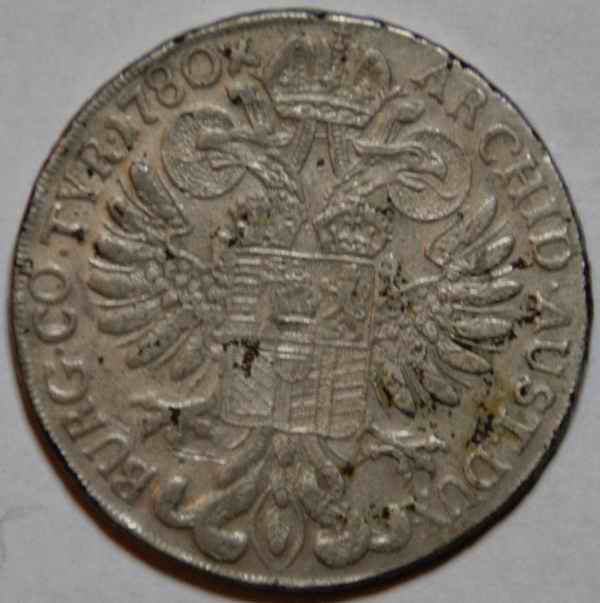 |
|
|
|
Pillar of the Community
United States
1768 Posts |
I do not think it billon, sand cast or pewter but possibly a type of Sheffield Silver plating - is that peeling on the surface over a possible debased alloy of copper or toned brass? - if so date it to 19thC.. Billon does not exist as silver over copper but as a mixed alloy which the principal metals silver and copper does not seperate out from one another. Pewter is generally 85-99% tin and this piece its not of this alloy. Its not a modern fake (20thC - Chinese) in my opinion.
John Lorenzo
United States
Edited by colonialjohn
11/21/2012 11:40 am
|
|
Pillar of the Community
United Arab Emirates
557 Posts |
I have a favorite fake too. Notice how off the reverse is? 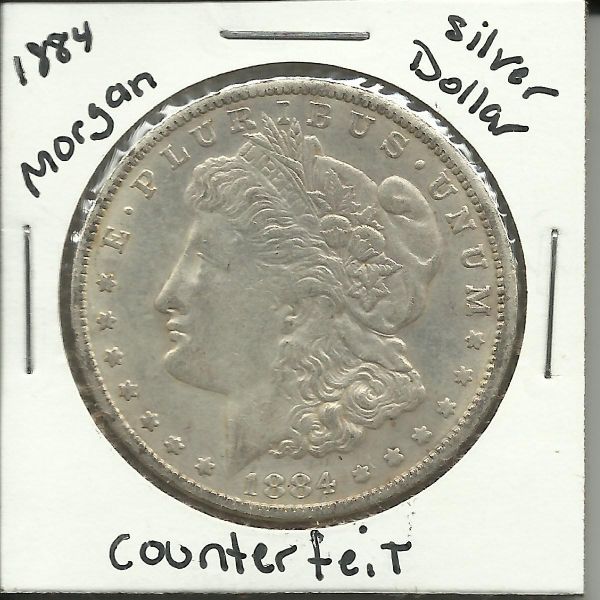 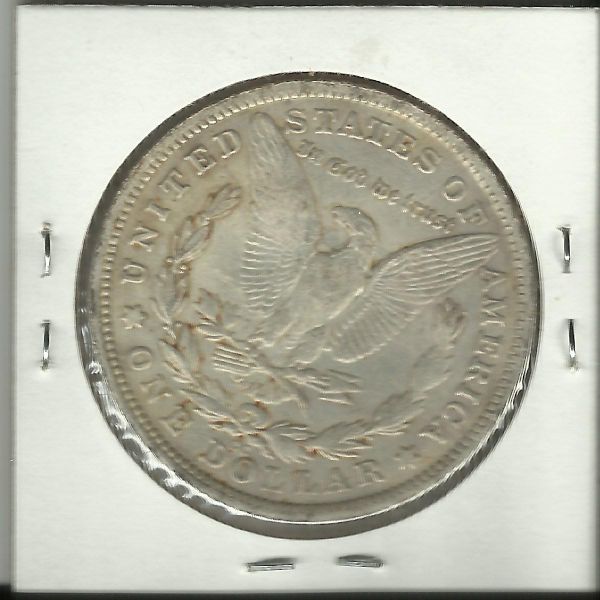 Edited by BLadd
11/21/2012 11:56 am
|
|
Pillar of the Community
 2087 Posts |
Quote:
is that peeling on the surface over a possible debased alloy of copper or toned brass? Unfortunately{ I would love to find an old Sheffield plate fake} the reddish color is a result of my poor photographic skills. In real life the coin is an even dull silver grey color typical of Ottoman billon coins. |
|
Pillar of the Community
United States
5362 Posts |
Nice fake - MTT's are not all that common.
Looks typical of late 1800's or early 1900's made for circulation as bullion. That is based on the die making technique which looks like a strengthened impact transfer. Not Numismatic at least and unlikely from after 1920. From the eye appearance it looks a bit like it could have come from China. Lots of "heavy" exaggerated eyes made in China.
A Sheffield Plate of an MTT is likely worth MUCH more than a Period original. The heyday of Sheffield plate forgeries was about 1780 to 1830 but the die work here excludes that possibility. It could be a late use of a Sheffield technology however. Are the dark spots external corrosion NOT undercolor?
An early Sheffield made before 1820 would be classified as a Circulating Contemporary counterfeit - it would in my personal opinion be a MONSTER Counterfeit. I have never seen one. But I have been hunting only since 1965. That was when I got my first real MTT and started hunting for a contemporary counterfeit.
Edited by swamperbob
11/26/2012 8:23 pm
|
|
Pillar of the Community
United States
5362 Posts |
Just in case anyone wonders what my favorite fake is? It is likely my most recent buy. I love discovery. But overall my avatar is my first and my all time favorite a Riddell # 237 an 1834 Zs OM 8 Reales in 70% silver. Which I personally believe was made in Attleboro, Mass but which I have never been able to conclusively prove. The 1884 Morgan dollar appears to be a recently made Chinese forgery (my guess would be nickel or copper-nickel) made by casting (centrifugal - pressure) and edged with a ring die. The mold made of the original coin was made with a plastic matrix material that shrank when it cured requiring an extra wide raised rim. This technology has been typical for the past 25-30 years. Edited by swamperbob
11/26/2012 8:30 pm
|
|
Bedrock of the Community
Australia
21792 Posts |
I like collecting fakes, provided they are sold to me as fakes.
Having a decent and separate collection of fake coins and the study of them, is the best way to gain experience in the identification and exposing of them.
I am still not confident enough to buy ancient gold coins, unless it is from a dealer or auction house with an internationally recognised reputation.
A few ways to identify a fake:
1. comparison ring tone test against a known genuine coin
2. measurement of weight
3. measurement of diameter
4. texture of surface under macroscopic examination
5. comparison of style against known genuine coins of the same series
6. identification of impossible die combinations or mint mark combinations for date and / or type
7. identification against an established data base
8. discussion of a doubted coin on forums such as the CCF
9. knowledge of how fake or forged coins are manufactured or are altered
10. X ray florescence analysis
11. test with a magnet
12. identification of a group of coins with all of the same dies (applies mostly to ancient coins)
13. macroscopic close examination of the edge for rim joins or characteristic flan cracking (ancients) or lettering or edge milling (modern coins)
14. detail softness, characteristic of a copying process.
15. questionable style of the type or lettering
16. identification of casting sprues and their tooling for removal.
I would appreciate it if others add to this list, for the benefit of us all.
Edited by sel_69l
11/26/2012 9:00 pm
|
|
New Member
United States
38 Posts |
I have an 1817 8 Reales Sheffield Plate fake.
|
|
New Member
United States
38 Posts |
|
|
Bedrock of the Community
Australia
21792 Posts |
I have an 1804 and tradie dollars, and although they are both reasonably good, I wouldn't bother with any of the tests mentioned above.
I have a genuine tradie, but if I want an 1804, it's the fake that it has to be. At least, I only paid $10 for it. Probably cost more than that to make!
|
|
Pillar of the Community
Hong Kong
1270 Posts |
Is this another "beautiful" fake MTT? 40.8mm, 28.29 grams 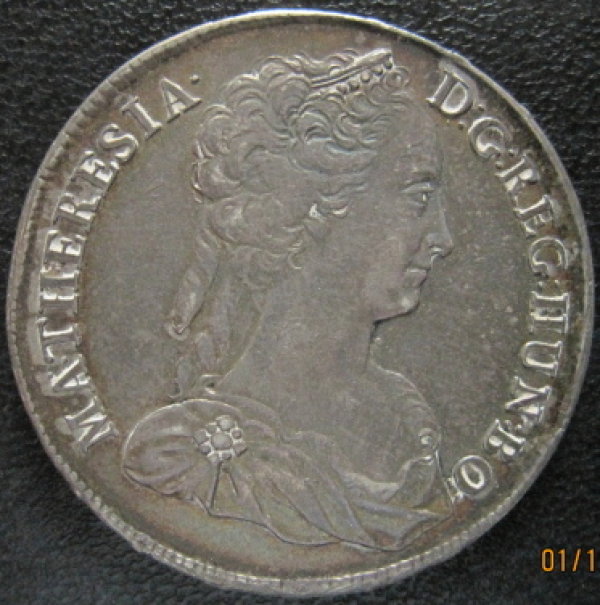 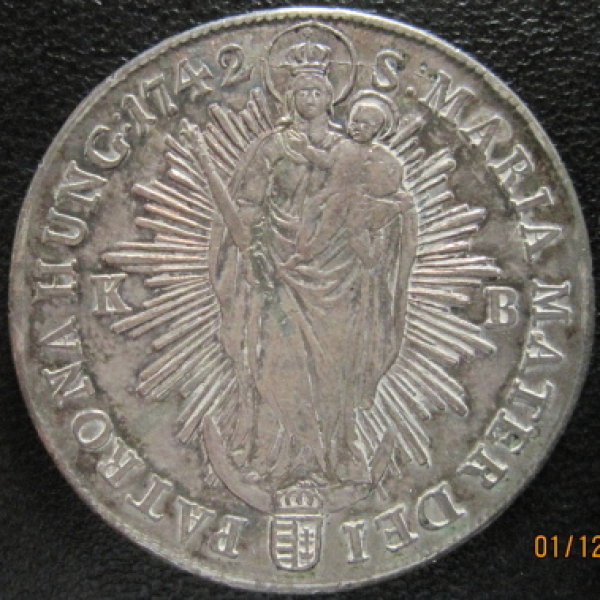 The following is a real one. 41.2-41.7mm, 28.69 grams. Better edge and clear edge lettering. When I bought a fake carelessly, I would like to buy a real one of the same year for comparison and mark it a lesson to me. 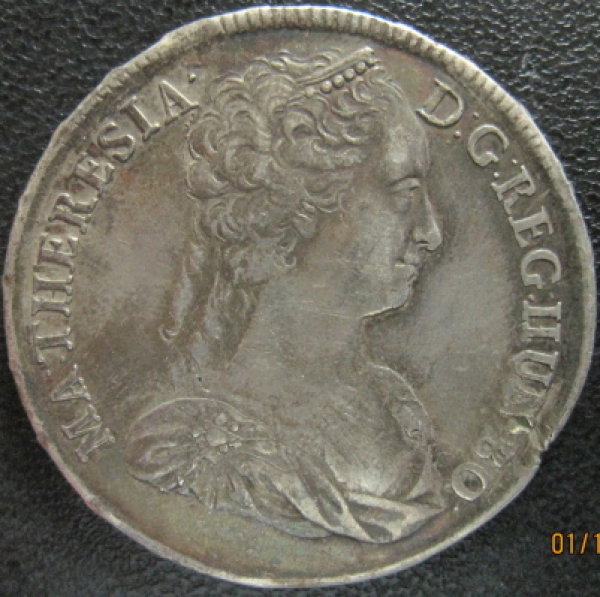 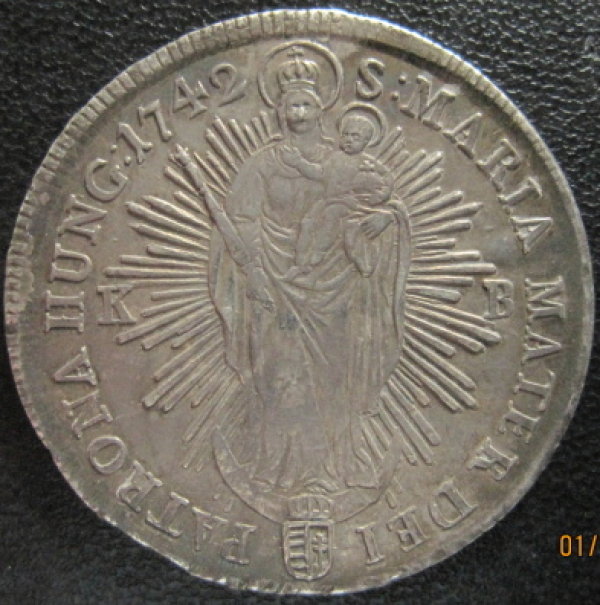 |
|
Pillar of the Community
2087 Posts |
With 18th century Thalers the third side is key. Although the motto on the edge remained the same (For Maria Theresia the motto was J(I)USTITIA Et CLEMENTIA) decorative elements between the words were mint specific.
|
|
Pillar of the Community
United States
5362 Posts |
The coins both have very high upset rims - not at all normal for open collar strikes. Does anyone know for sure the type of press employed in 1742? Did they use a three part collar that early?
If these are supposed to be open sided strikes from a screw press - they would be fakes - unless the edge design was added post strike.
However, if they were already using a three part collar than I am at a loss to explain the slight eccentricity.
Just ramdom thoughts - I have not studied the Austrian state of the art in 1742.
|
|
Valued Member
Austria
194 Posts |
for the moment, this coin is my most interesting fake coin. contemporary counterfeit of a spanish 1 escudo 1791 (madrid). it is struck in platinum instead of gold. it is very very rare, more than the 2, 4 or 8 escudos. 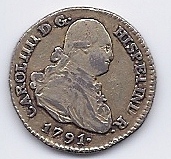 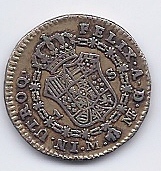 |
| |
Replies: 13 / Views: 2,217 |
|







 Posted 11/21/2012 11:55 am





