It was a good season for me this numismactic wise!;) I received two
US Large Cents, an 1802 & a an 1831, for my US type set! You can see them in the US Classic Coin Grading section.
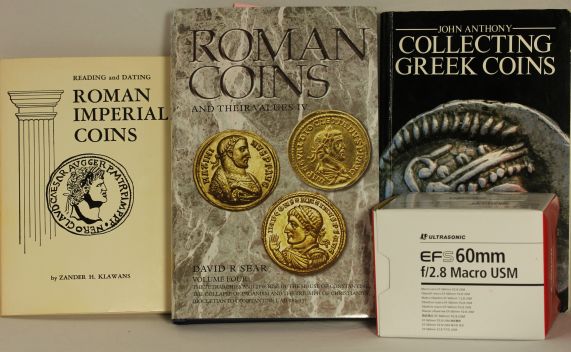
As far as ancients go I received a Volusian, 60mm lens, and the ancient coin books pictured below! I also have A Dictionary of Ancient Roman Coins by John Melville Jones on the way!:)
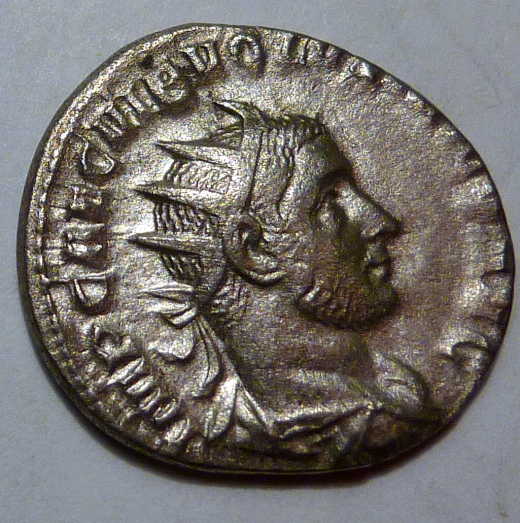
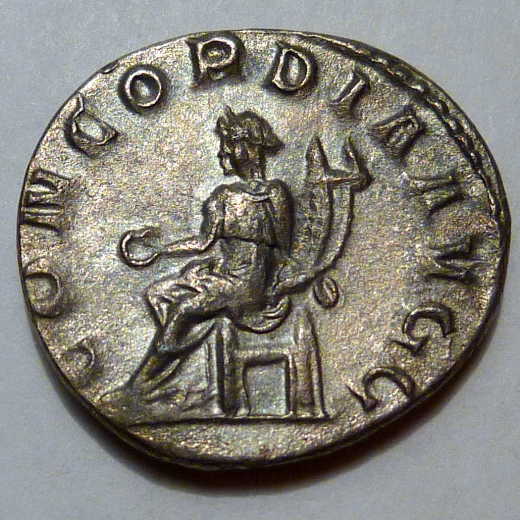
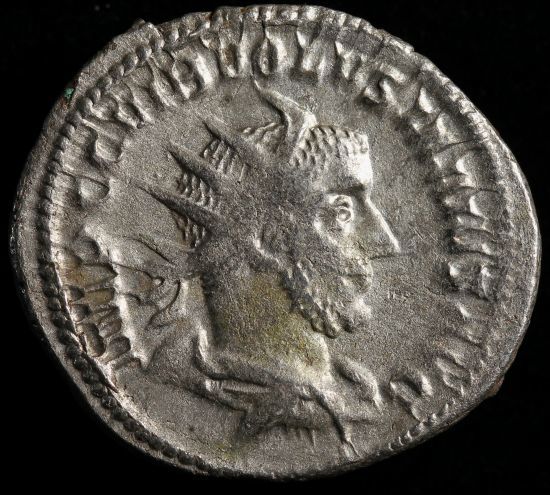
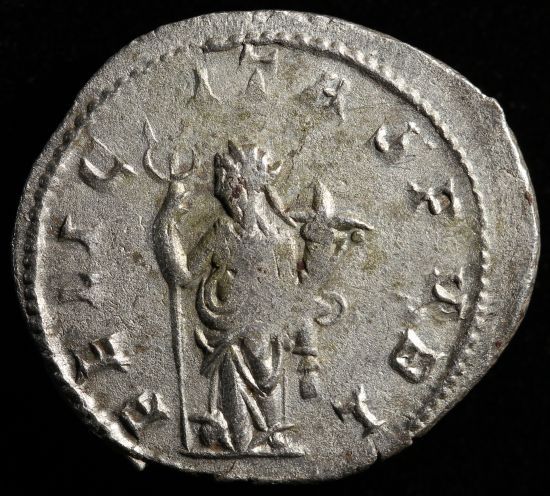
Volusian, AD 251-253AD (only two years; term limits were rough back then;) AR Antoninianus.
O: IMP CC VIB VOLUSIANUS AVG, Draped radiate bust rt.
Rx: FELICITAS AVG, Felicitas standing left holding long caducues and cornucopia
Quote:
wiki quote: Volusianus (Latin: Gaius Vibius Volusianus Augustus;[1] died August 253), also known as Volusian, was a Roman Emperor from 251 to 253.
He was son to Gaius Vibius Trebonianus Gallus by his wife Afinia Gemina Baebiana. He is known to have had a sister, Vibia Galla.
The death of Decius in early June 251 led to Trebonianus Gallus' elevation to the throne. Gallus adopted Decius' son Hostilian and made him co-ruler. Volusianus was named Caesar and Princeps Juventutis. Later in 251 Hostilian died of the plague and Volusianus replaced him as Augustus and co-ruler.
Father and son were both killed in 253 by mutinous troops in Interamna.
Quote:
wiki quote: ...both Herennius and Decius died in the Battle of Abrittus and became the first two emperors to be killed by a foreign army in battle. The armies in the Danube acclaimed Trebonianus Gallus emperor, but Rome acknowledged Hostilian's rights. Since Trebonianus was a respected general, there was fear of another civil war of succession, despite the fact that he chose to respect the will of Rome and adopted Hostilian. But later in 251, the Plague of Cyprian broke out in the Empire and Hostilian died in the epidemic. He was the first emperor in 40 years to die of natural causes, one of only 13. His death opened the way for the rule of Trebonianus with his natural son Volusianus.
Quote:
Quote from Alaric Watson, "Aurelian, and the Third Century"
"...(Trajan) Decius and a considerable portion of the army were cut to pieces by the Goths in at Abrittus... The remnant of the Danubian army chose one of Decius' generals, Trebonianus Gallus, to succeed him. Powerless to intervene, Gallus allowed the the Goths to return home with their ill-gotten gains. The elder of Decius' two sons...had shared his fathers fate (he died). The younger Hostillianus...still survived. Gallus immediately reached a compromise with him, whereby Gallus, his own son (Volusian) and Hostillianus formed a triumvirate. Hostillianus soon disappeared, murdered or perhaps succumbing to the plague. The military pressures in the region continued...










 Posted 01/01/2013 1:12 pm


 ..
..