| Author |
 Replies: 13 / Views: 3,127 Replies: 13 / Views: 3,127 |
|
|
New Member
Costa Rica
46 Posts |
|
|
|
|
Pillar of the Community
Australia
9765 Posts |
|
|
Pillar of the Community
Canada
695 Posts |
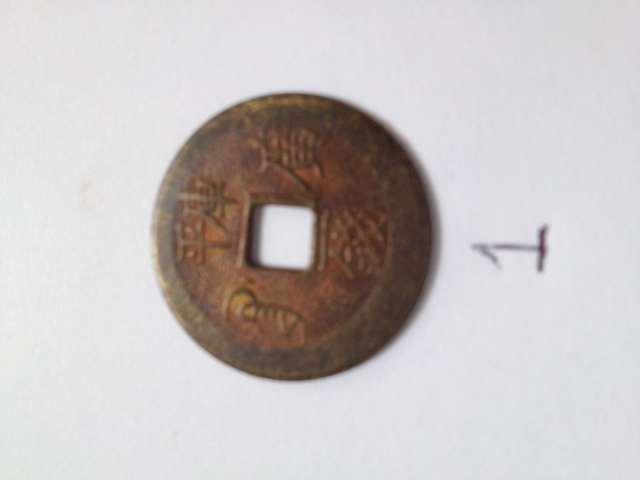
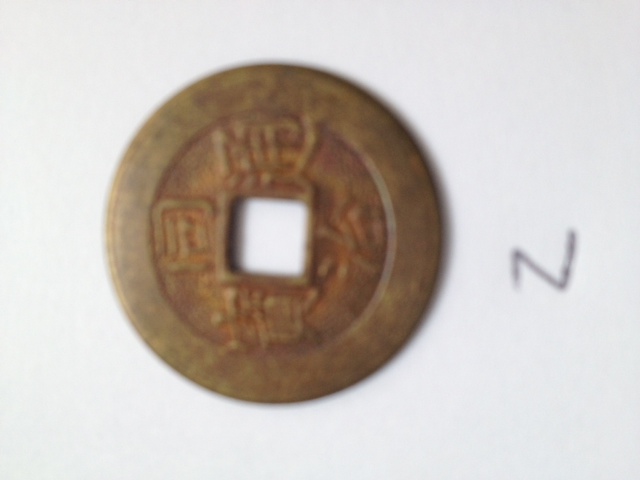
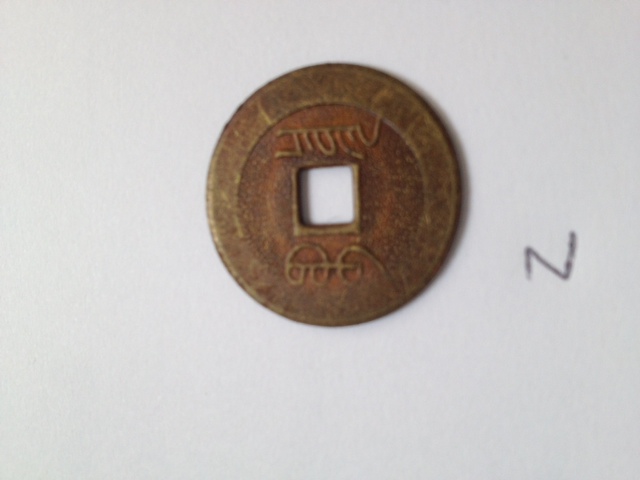
As Steve says the pics are a bit fuzzy. Coin #2 appears to be from the Qing Dynasty. Emperor Mu Tsung 1862-1875. A Tung Chih Chung Pao coin from the Board of Revenue Mint - Peking.
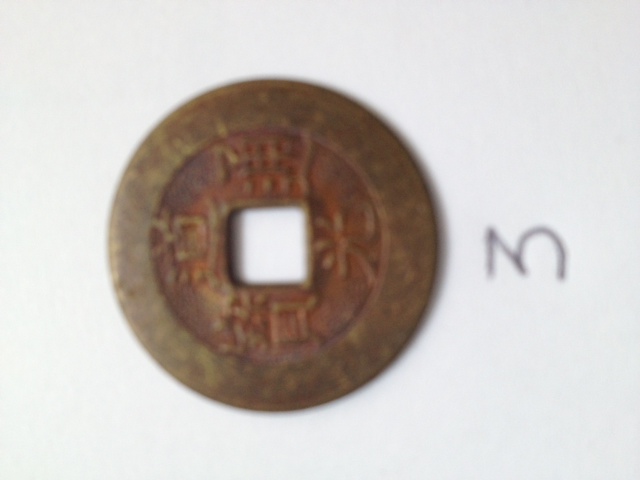
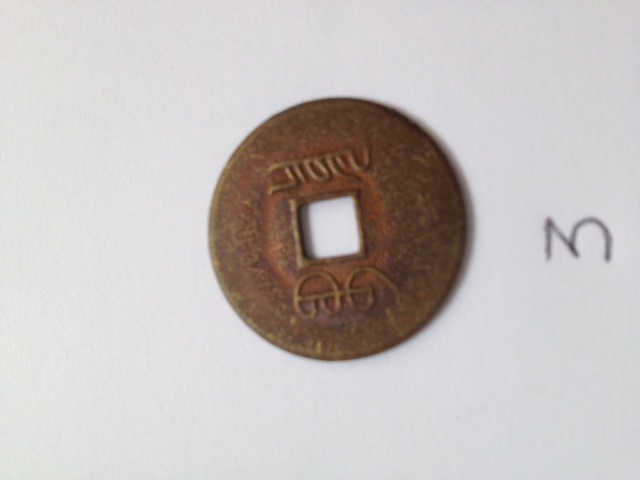
Coin #3 appears to be also from the Qing Dynasty. Emperor Hsuan Tsung 1821-1850. A Tao Kuang Tung Pao from the same mint as coin #2.
|
|
New Member
 Costa Rica
46 Posts |
Thank you guys! I need to get a scanner so I can start scanning my coin collection but as of now all I have is my iPhone to take pics of the coins. I'll try that website Steve! Thanks
|
|
Pillar of the Community
United Kingdom
2928 Posts |
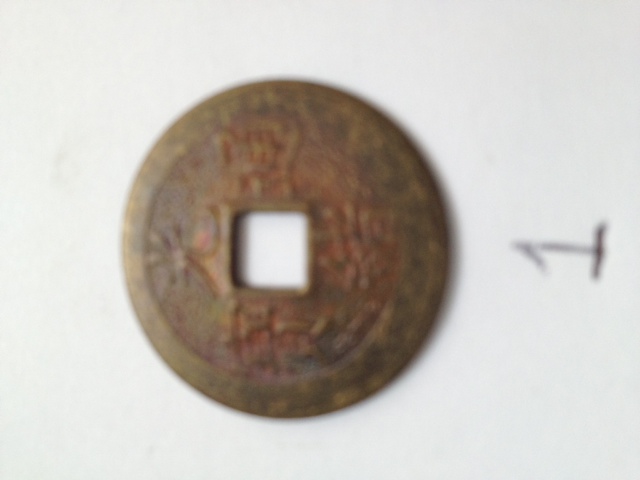
To be honest I think they are all modern reproductions - the kind you get in "good luck" sets etc.
|
|
Pillar of the Community
Canada
695 Posts |
I'm curious, Bacchus, what makes you think they are modern reproductions?
|
|
Pillar of the Community
United Kingdom
2928 Posts |
It's the fabric of their make up - the rather thin lettering, the poorly formed, or non existant, rims, the colour.
|
|
Pillar of the Community
Canada
695 Posts |
During that time period in China's history coin production was tied to a silver standard. Because a great amount of silver was leaving the country as a result of the opium trade the casting of bronze coins exceeded their face value. As result those coins produced tended to be smaller and of poorer quality than those from the earlier part of the century. This may account for the appearance of those coins illustrated in this topic. But without seeing them 'in-hand' we shall never know for sure.
|
|
Pillar of the Community
United Kingdom
2928 Posts |
Nobody could be 100% certain from those pictures - so I'll have to settle for just being 99% certain :)
|
|
New Member
Costa Rica
46 Posts |
The collection I have is an inheritance and I've found a few more of these in the collection and I must agree with Bacchus, I'm 99% certain they must be reproductions. They're all different but they have the exact same diameter and the square whole in all of them is exactly the same and they seem to weigh the same. Don't know much about these type of coins but I'm inclined to believe they're reproductions. Thank you all for the help!
|
|
Pillar of the Community
United States
567 Posts |
#1 (Kuang hsu) should be milled. The others, like the Dao Guang (#3) should be cast. Nearly identical Qing cash are common to find and are not a determinant of whether or not they are fake.
Look for a lip on the edge of cast coins which would give away a struck counterfeit of a cast coin. Look for casting beads on a cast counterfeit of a milled coin.
Just to add to the fun, the same coin from the same mint can be observed in differing diameters.
All should be brass (mix used was Cu, Sn, Pb in varying proportions). Cast fakes I have seen in various metals, typically made for crafters and souveneirs. Even if real the ones you have posted are worth no more than 50 cents each, less in resale. I have several hundred Qing cash sitting in a drawer at home.
|
|
New Member
Costa Rica
46 Posts |
Thank you jcmworld. The cash value of the coins is not the primary importance now, I just want to make a catalog of what I have. I'm quite sure these are all reproductions but when I get a chance I'll get a scan of all of them and post it here so I can get another opinion.
|
|
Moderator
 Australia
16982 Posts |
#2 and #3 are definitely reproductions, with the distinctive "slanted Manchu" script on the reverse which I have commonly seen on machine-struck copies. #1 also does not quite look right, but the pics are too fuzzy for me to be sure.
Don't say "infinitely" when you mean "very"; otherwise, you'll have no word left when you want to talk about something really infinite. - C. S. Lewis
|
|
New Member
United States
7 Posts |
I'm afraid they're all modern replica.
|
| |
Replies: 13 / Views: 3,127 |
|











 Posted 01/10/2013 5:36 pm


