| Author |
 Replies: 13 / Views: 4,349 Replies: 13 / Views: 4,349 |
|
|
Pillar of the Community
Australia
539 Posts |
love to hear your thoughts on this one, it weights 9.06g is the right size accross but is thick, as you can see it ia on the left of a mint state coin. wrong planchet? hollow coin? (its in freezer now, hope it splits :)) 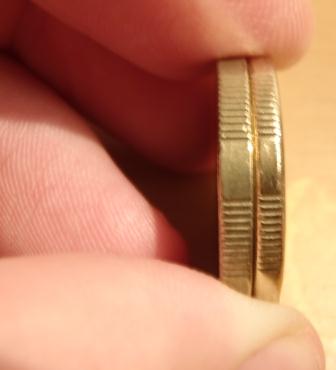 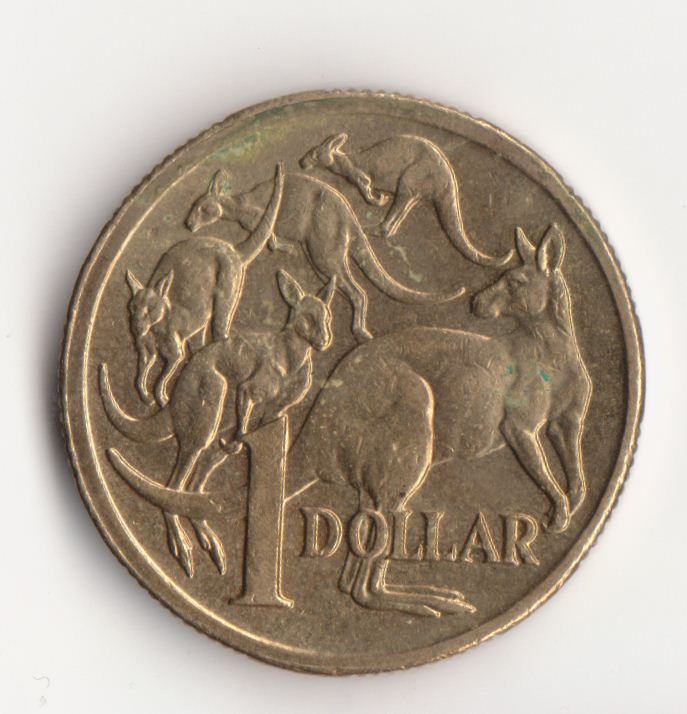 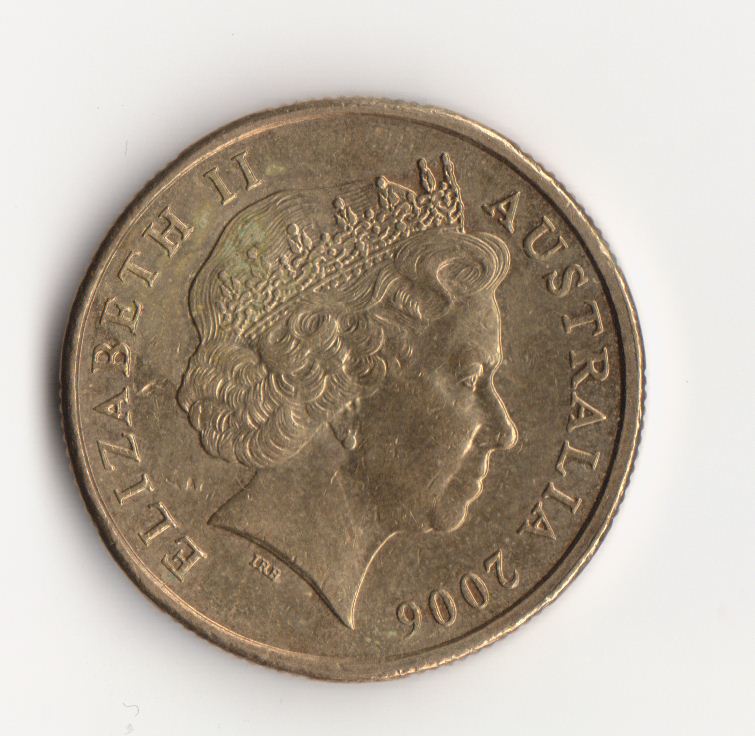 |
|
|
|
Valued Member
Australia
165 Posts |
well its different. first one I have seen.
Edited by CoinStew
01/29/2013 04:56 am
|
|
Pillar of the Community
Australia
750 Posts |
Serial, do you have scales accurate enough to see if there is any difference in weight between the coins  |
|
Pillar of the Community
 Australia
539 Posts |
yes I do and it is exactly the same weight as a normal one. it is like it is lighter metal... or hollow?
|
|
Pillar of the Community
Australia
2180 Posts |
Interesting. Someone posted recently that 2006 20c pieces had a different ring to them. Perhaps they have a slightly different size like this $1.
|
|
Pillar of the Community
Australia
750 Posts |
Sorry serial, I can see now that you posted the weight to 1/100th of a gram precision in the initial post.  |
|
Pillar of the Community
Australia
750 Posts |
Mr T, I've still got those comparison 20c coins from the 2006 vs 2008 weight around so I'll check some group thicknesses as well. Serial, the hollow theory sounds good, but I thought you might see some evidence of cracks around the rim. Is the depth from top of rim to the field further than a comparison coin? (Like a really really heavy strike leaving a thin field and higher rims). I can see what appears to be a small amount of rim raising on the left of the reverse possibly due to a slightly misaligned die, but nothing else really. Or perhaps it was stored in PVC? Read the second last paragraph in the following link: http://www.news.com.au/lifestyle/he...xzz2JMVT9NV6 |
|
Pillar of the Community
Australia
539 Posts |
"Perhaps they have a slightly different size like this $1"
nope the comparison coin is a 2006
"Is the depth from top of rim to the field further than a comparison coin? (Like a really really heavy strike leaving a thin field and higher rims).
I can see what appears to be a small amount of rim raising on the left of the reverse possibly due to a slightly misaligned die"
no if anything the strike is shallow, and you are right, there is a bit of raised rim like a mis-aligned die, its what brought my attention to the coin.
but it is noticably thiker but the same weight, go figure
so theories? or ideas where to find out more?
|
|
Valued Member
Canada
189 Posts |
Cool find. Might be rare, I am not sure...
|
|
Bedrock of the Community
United States
12437 Posts |
The thickness of a coin's rim is a function of striking pressure- the higher the striking pressure, the thicker the rim. Of course, this is not to say that the planchet itself is actually thicker, only that a full strike will completely form the rim. Compare the edge of a proof coin with that of a business strike, the proof should appear to be thicker. In the US, proofs are struck at least twice at a higher pressure and I assume the same applies to modern Aussie proofs as well.
|
|
Pillar of the Community
Australia
869 Posts |
I have one too. Which I got when 2006 $1 first started circulating. My thought was that perhaps some of the UNC $1 (maybe even a specimen) from the RAM Mint sets were released into circulation. The one I have got is in GEM cond. Not a bag mark or anything. That's all I can add.
|
|
Valued Member
Australia
318 Posts |
Does the mint apply some sort of roller to the blanks to round off the edges on the 'gold' coins? You can see it on the $2 coins too, they seem to have a rounded edge normally. Maybe yours missed this stage before getting into circulation?
Another 'different' coin from 2006......first the 20, now the dollar..
|
|
Valued Member
Australia
248 Posts |
I just found one of these in a pile of coins I'd set aside for having Cud on them, and it really is no thicker than an ordinary $1 coin. The only difference I can see is that the edges are much squarer than normal, which gives the coin an illusion of thickness. As such,  with penny dreadful. |
|
Moderator
 Canada
10473 Posts |
Well, since someone raised this thread from the dead, I can certainly speak to it. One was fully struck and one was weakly struck. Most people forget that there are three dies that strike a coin: hammer die, anvil die and collar die. Sometimes, the serrations are formed in the rimming phase (to create a Type 2 planchet) and sometimes the serrations and reeding are formed by the collar die. The roundness of the coin on the right, and the incompleteness of the serrations, speaks volumes of a weak collar die strike, creating the illusion of a thinner coin. If you measure the thickness of the coin somewhere on the fields with callipers, you'll see that both coins are roughly equal in thickness...
"Discovery follows discovery, each both raising and answering questions, each ending a long search, and each providing the new instruments for a new search." -- J. Robert OppenheimerContent of this post is licensed under a Creative Commons Attribution-NonCommercial 3.0 Unported License. See: http://creativecommons.org/licenses...0/deed.en_USMy eBay store
|
| |
Replies: 13 / Views: 4,349 |
|







 Posted 01/29/2013 05:15 am





