| Author |
 Replies: 15 / Views: 1,580 Replies: 15 / Views: 1,580 |
|
|
Pillar of the Community
Australia
3841 Posts |
Inspired by a collector called Jim Rugh who collects coins and medals in various elements, I decided to give this set a go. This set would only include coins that were issued (no private mint tokens / medals). Personally I didn't think it was that hard other than it being expensive as you would include precious metals in it as well. Turns out I was quite wrong! While I bought all of my precious metals many years ago when gold was 700 dollars and silver at 5 dollars (yes it was that long ago), there was just one element that remained illusive for many many years. This element is antimony. 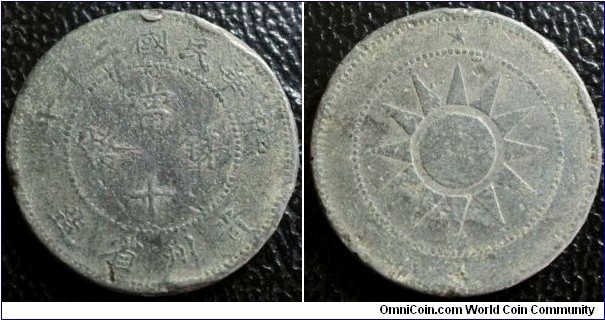 I'm missing coins struck in these three elements: manganese, titanium, niobium. I figured I can get them any time as there are plenty of examples floating around - except I don't quite agree with the prices. Here's my couple other favourites:  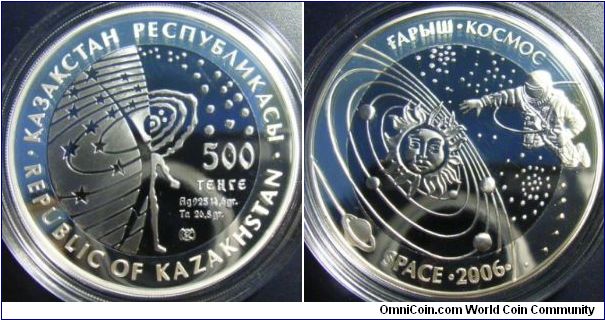 Hunting these coins might have made me a metal head but I think it made me appreciate how different metals were used for various reasons whether it's economical reasons, marketing ploy, novelty and such. Maybe this might spark an interest in you in doing a similar set? |
|
|
|
Pillar of the Community
United States
1761 Posts |
No coin is pure (100%) with any metal but I do admire your mind set ... I really do ... antimony is seen with white metal pieces from the 1500-1600 period in contemporary counterfeit silver European pieces such as in Great Britain ... this piece you exibit does look like its high with Sb ...
John Lorenzo
United States
|
|
Pillar of the Community
United States
5904 Posts |
niobium?
You never cease to amaze me your collection gxseries!
|
|
Pillar of the Community
Germany
1238 Posts |
Austria for example has issued bimetallic coins with a silver ring and a (pure) titanium or niobium pill. If that counts ... :)
Also, why would no coins be "pure" in terms of metals used? Yes, alloys are much more common, but there are pure Ni, Fe, Cu, Zn, Al ... coins.
Christian
|
|
Pillar of the Community
United States
1761 Posts |
OK. Send me JUST one for XRF analysis. Here: www.edax.com Any metal brings with it metal refining impurities like silver with platinum, gold and lead ... ITS IMPOSSIBLE ... its only a question of how pure or impure ... this collecting is sort of a collector being duped by generic metal classifications like a Lincoln Cent is copper or a dime is silver ... don't get me wrong collecting 98-99.99% pure metals is intriguing ... but you need to understand its limitations on what you actually own ... you will always possess IMPURITIES ... and "multiple" metals making up this WORD. John Lorenzo United States Edited by colonialjohn
03/10/2013 9:15 pm
|
|
Bedrock of the Community
Australia
21792 Posts |
For me, a pure metal for coinage purposes just needs to nominally pure. I would be satisfied with 98%+.
I have a sneaking suspicion that the Chinese stibnium coin pictured here may be around the 98% purity. OK by me!
|
|
Pillar of the Community
Germany
1238 Posts |
OK, was just wondering as various catalogs list some coins as "Au 9999" or "Ag 999", or "Al 99 Mg 01" for example, but list others as "Fe", "Zn", "Cu", etc. without any further info. In the latter cases I would assume "purity". :)
Christian
|
|
Bedrock of the Community
Australia
21792 Posts |
High purity really only becomes into consideration for bullion coins, and as an extension to this, for some NCLT precious metal coins as well.
Who really cares all that much if an iron, zinc, aluminium or lead coin is less than nominally 100% pure?
|
|
Pillar of the Community
United States
1761 Posts |
Like I said - its a KOOL chase - but REALIZE the end product. What is the rarest contemporary counterfeit alloy coin EVER? Answer tomorrow by 12 Noon EST. Any guesses?
|
|
Pillar of the Community
United States
5362 Posts |
The machine ate my comment.
Anyway - I will pass on guessing I may know.
But I did want to pass on a warning about handling coins with antimony. It is a poison just like arsenic and almost as deadly. There are several metals found particularly in counterfeits that are dangerous.
I would love to see counterfeits all placed in slabs AFTER complete analysis so that no one accidentally gets poisoned.
|
|
Pillar of the Community
United States
5362 Posts |
Just wondering if you have compressed tea money?
There are some severe odd ball things.
I have a silver electroplate on red plastic.
Cardboard
Bakelite
Porcelain
Wood
But I don't have
leather
Salt
Mica (used to cover stamps in period postage coins)
or carbon
Edited by swamperbob
03/11/2013 9:24 pm
|
|
Bedrock of the Community
Australia
21792 Posts |
That would have to be a NATURAL alloy of copper nickel in a tetradrachm of the post Alexander The Great Kingdom of Baktria.
Definitely the EARLIEST copper nickel coin. Could be the rarest as well.
It must be remembered that nickel was not identified and isolated until the 19th Century.
Bronze is an alloy of copper and tin, and has been in use since pre historic times for much more than just coins.
It could well be that a bronze contemporary counterfeit ancient Greek coin could fit the definition of the question.
|
|
Pillar of the Community
United States
1761 Posts |
Probably the Isabel II issues of Spain: Gold over Platinum - all escudo denominations.
|
|
Pillar of the Community
Russian Federation
5186 Posts |
Supposedly, Soviet 50 kopek coins from 1923 were made of paper. In practice, it appears that they were actually square pieces of paper with coin-like images printed on them. So might not count as coins. Coins made of cardboard, of course, are known from elsewhere  |
|
Pillar of the Community
 Australia
3841 Posts |
january1may - do you mean this?  My partial coin collection http://www.omnicoin.com/collection/gxseriesMy numismatics articles and collection: http://www.gxseries.com/numis/numis_index.htmRegularly updated at least once a month. |
|
Pillar of the Community
Russian Federation
5186 Posts |
Exactly.
They were, however, mentioned on the Russian Wikipedia in a list of various coin materials (a rather incomplete list - e.g. the antimony coin wasn't there - and one focusing more on specific alloys than on individual elements).
|
| |
Replies: 15 / Views: 1,580 |
|





 Posted 03/10/2013 05:15 am





